


 Se i rummet
 Send
Send Del
Del
 Detaljer
 Studieguide til kunstværker

 Download
 Lignende værker
 Røntgenundersøgelse
 Se diasshow
 Statistik
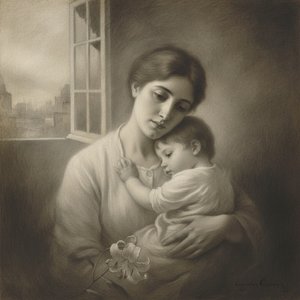
Maternity


Experience Eugène Carrière’s ‘Maternity,’ a poignant monochrome portrait of a nursing mother and child, capturing tender gestures and spiritual resonance. This iconic Symbolist work by the ‘painter of Breast-Feeding’ invites contemplation on domestic tranquility and inner light.
 Læs mere
"Dansk meta beskrivelse": "Udforsk Eugène Carrières stemningsfulde, monocrome malerier fra slutningen af det 19. århundrede – en nøglefigur i den franske symbolisme, kendt for sine intime portrætter og indflydelse på kunstnere som Picasso."
Giclée / Kunsttryk
Giclée- eller lærredstryk i museumskvalitet med hurtig produktion og fleksible muligheder for finish. ( Bestil håndmalet reproduktion Skift til digitalt billede)




P118B Dkr10

P118H Dkr10

P118W Dkr10

P438Z Dkr10

P508JH Dkr12

P508YH Dkr12

P805H Dkr10

P805Z Dkr10

P919BZ Dkr10

P919G Dkr10

P919XJ Dkr10

P959ZH Dkr10

P968JZ Dkr12

W106C Dkr8

W218G Dkr10

W218JH Dkr8

W218Y Dkr10

W307PJ Dkr10

W316G Dkr10

W316PJ Dkr8

W316Y Dkr10

W398PJ Dkr8

W4111J Dkr10

W500HY Dkr15

W500JH Dkr15

W692G Dkr12

W849H Dkr8

W940BG Dkr15

W953PJ Dkr8




Standardstørrelse
speciallavet
CM
INCH
Vælg mellem vores forudindstillede størrelser, der matcher kunstværkets originale proportioner.
Loading sizes...

bredde
højde
Indtast den bredde og højde, du har brug for, så det passer til din ramme eller din væg. Et print kan kun beskæres, aldrig gøres større end billedet, så en størrelse med en anden form vil miste en del af motivet. Vi sender dig en digital mockup til godkendelse, før vi printer noget. Billedet vist på denne side viser ikke den faktiske beskæring — det er kun mockuppen, der gør.
Verdensomspændende levering () på 2 uger i stedet for de sædvanlige 4/5 uger. (27 oktober)

Gratis ekspresforsendelse til hele verden

Lærred af linned i høj kvalitet

Komplet transportforsikring

Garanti for refusion af told og importafgifter

Garanti for autentisk farvegengivelse

100 dages returret ved fabrikationsfejl

100% fuld returret

Mængderabat ved flere køb
 Glasmulighed er kun tilgængelig i størrelser under 110 cm

Maternity
Giclée / Kunsttryk
Reproduktionsstørrelse
-


Samlet pris
Dkr 460
A Portrait of Maternal Reverence: Eugène Carrière’s Maternity
Eugène Anatole Carrière stands apart from his contemporaries—Monet, Degas, Cézanne—not merely in stylistic preference but in a profound philosophical commitment to capturing the essence of human experience. Born in 1849 in Gournay-sur-Marne, France, he embarked on an artistic journey marked by unwavering dedication to exploring themes of spirituality and domestic tranquility. His formative years were shaped by exposure to Rubens’s luminous palette and the crucible of imprisonment in Dresden, experiences that instilled within him a sensitivity to light and color—though he would ultimately abandon them for a distinctive monochrome aesthetic. This singular approach cemented his reputation as “the painter of Breast-Feeding,” a genre he pursued with fervent conviction throughout his prolific career. ### The Monochrome Palette: A Symbol of Inner Light Carrière’s artistic signature is undeniably his masterful manipulation of color—or rather, the deliberate absence thereof. Rejecting the Impressionist obsession with capturing fleeting moments of visual sensation, he sought to distill emotion into its purest form: a subdued brown hue that permeated nearly all his canvases. This stylistic choice wasn't simply an aesthetic preference; it represented a deeply held belief in the primacy of inner contemplation and spiritual illumination. As Edmond de Goncourt eloquently observed during Carrière’s lifetime, “This Carrière really is the painter of Breast-Feeding.” He meticulously studied gestures and expressions, striving to convey not just what he saw but what he felt—a palpable resonance with the viewer's own emotional landscape. The monochromatic palette served as a conduit for conveying profound psychological depth, mirroring the stillness and serenity of domestic life. ### Maternity: A Study in Tender Gestures and Spiritual Resonance “Maternity,” completed in 1890, exemplifies Carrière’s artistic vision at its zenith. This evocative portrait depicts a woman cradling her infant child, bathed in soft light emanating from an unseen source—a deliberate allusion to divine grace and nurturing compassion. The composition is strikingly simple yet powerfully expressive: the woman's gaze directs upwards, suggesting contemplation of something beyond the immediate physical realm; her hands are outstretched, conveying warmth and protection. Two figures flank the central scene, adding depth and subtly hinting at the broader context of familial devotion. Véronique Milin Dumesnil, Carrière’s granddaughter, recounted that the models for Maternity were his wife and one of their seven children—Jean René or Leon—underscoring the artist's personal connection to the subject matter. ### Technique and Historical Context: Embracing Rubensian Influence Carrière’s technique is characterized by meticulous detail and painstaking layering of paint—a testament to his unwavering commitment to capturing nuanced textures and tonal variations. He achieved this remarkable effect through a process of gradual buildup, applying thin glazes over thicker underlayers to create an illusion of depth and luminosity despite the absence of color. This approach harkens back to Rubens’s masterful use of chiaroscuro—the dramatic interplay between light and shadow—a technique that Carrière adopted with unwavering fidelity. The painting emerged during a period marked by growing interest in Symbolism, a movement that sought to transcend mere representation and delve into realms of psychological and spiritual significance. Like many Symbolist artists, Carrière aimed to evoke emotion rather than depict reality objectively, inviting viewers to contemplate the profound mysteries of human existence. ### Legacy and Emotional Impact: A Timeless Expression of Maternal Love “Maternity” remains a captivating masterpiece—a testament to Carrière’s artistic genius and his unwavering belief in the transformative power of art. Its enduring appeal lies not only in its exquisite craftsmanship but also in its ability to resonate deeply with audiences across generations. The painting captures the essence of maternal tenderness, conveying a sense of serenity and spiritual contemplation that transcends time and culture. It serves as an inspiring reminder of the beauty and significance of familial bonds—a timeless expression of love, compassion, and faith.Spørgsmål & svar
Hvordan kan jeg få en digital fil af "Maternity" af Eugène Anatole Carrière?
Et digitalt billede af "Maternity" af Eugène Anatole Carrière kan købes på dens Digitalt billede-side: et højtopløseligt digitalt billeddownload.
Hvilken printstørrelse og orientering anbefales til "Maternity"?
Til "Maternity" er den anbefalede printopsætning en størrelse på Large og en Portrait orientering.
Hvem har skabt "Maternity", og i hvilket år?
"Maternity" blev skabt af Eugène Anatole Carrière i 1880.
Om kunstneren
Opvækst og kunstnerisk dannelse
Eugène Anatole Carrière, en berømt fransk symbolistisk kunstner, blev født den 16. januar 1849 i Gournay-sur-Marne, Seine-Saint-Denis. Han studerede ved École des Beaux-Arts i Paris og senere under Cabanel, hvilket lagde fundamentet for hans fremtidige kunstneriske bedrifter.Kunstnerisk stil og inspirationskilder
Carrières malerier er mest berømte for deres særprægede, monokrome brune palet, som har fascineret utallige kunstelskere gennem tiden. Hans værk var dybt påvirket af Peter Paul Rubens' kunst, som han blev eksponeret for under sin tid som fange i Dresden; denne indflydelse er tydelig i de glødende farver, der pryder hans tidlige værker. Den unge moder (1879), et af Carrières tidligste mesterværker, findes i dag på Musée des Beaux-Arts de Rouen. Dette værk markerede begyndelsen på hans fokus på det hjemlige liv – et tema, der skulle blive selve kendetegnet for hans kunstneriske stil.Værker og udstillinger af betydning
- Det syge barn (Montargis)
- Den første kommunion (Toulon)
- Portræt af Louis-Henri Devillez (1887), et højt priset værk, der demonstrerer Carrières evne til at indfange sine subjekters essens.
Eftermæle og indflydelse på den moderne kunst
Carrières monokrome stil kan genfindes i værker af Pablo Picasso, især under hans blå periode. Denne forbindelse er et vidnesbyrd om Carrières varige aftryk på den moderne kunsthistorie.- Se flere af Carrières værker hos TopImpressionists.com/eugène anatole carrière
- Udforsk Musée des Beaux-Arts de Rouen, som huser nogle af Carrières tidlige værker, ved at opdage Musée des Beaux-Arts de Carcassonne (Frankrig)
- Lær mere om symbolismen og dens indflydelse på kunsten via den symbolistiske kunstbevægelse

Eugène Anatole Carrière
1849 - 1906 , Frankrig
Hurtige fakta
- Artistic Movement Or Style: Symbolisme, Monokrom
- Artists Or Movements Influenced By This Artist: ['Pablo Picasso']
- Artists Who Influenced This Artist: ['Peter Paul Rubens']
- Date Of Birth: 16 januar 1849
- Date Of Death: 27 marts 1906
- Full Name: Eugène Anatole Carrière
- Nationality: Fransk
- Notable Artworks:
- The Sick Child
- Young Mother
- First Communion
- Place Of Birth: Gournay-sur-Marne, Frankrig
Relaterede artikler

The Evocative Realm of Symbolism: Exploring Meaning & Mysticism in Late 19th-Century Art
Explore the captivating world of Symbolism art! Discover key artists, defining themes & its lasting influence on modern movements. A deep dive into late 19th-century masterpieces.

Monochrome Visions: Exploring the Aesthetic & Historical Significance of Black & White Photography
Explore the rich history & artistic power of black and white photography. From early techniques to iconic masters like Ansel Adams, discover why monochrome continues to captivate art lovers today. Expert insights for collectors.

The Subtleties of Shade: Exploring Monochrome's Enduring Power in Art History & Contemporary Practice
Explore the captivating world of monochrome painting! Discover its rich history, from Renaissance chiaroscuro to contemporary minimalism. Uncover the emotional power and artistic techniques behind this enduring art form.
Eugène Carrière: The 'Peintre d'Âme' & Symbolist Portraiture’s Intimate Vision
Explore the haunting world of Eugène Carrière, a pivotal French Symbolist artist known for his deeply intimate portraits & 'peinture d'âme'. Discover his life, style, and lasting influence on modern masters like Picasso. Shop high-quality reproductions at TopImpressionists.

Late Medieval Masterpieces: 10 Artworks That Defined an Era | TopImpressionists
Journey through 10 defining Late Medieval masterpieces – from Giotto's frescoes to Jan van Eyck’s realism. Explore the stories, techniques & vibrant colors of Gothic art. Find museum-quality reproductions and elevate your home decor with TopImpressionists.com! Discover all masterpieces on TopImpressionists.com