


 Se i rummet
 Del som kort
 Del
Del
 Detaljer
 Guide
Guide

 Download
 Lignende værker
 Røntgenundersøgelse
 Diasshow
 Q&A
Q&A Statistikker
Façade


Filippo Brunelleschi (1377-1446) revolutionized Renaissance architecture with his innovative dome design for Florence Cathedral and pioneering use of linear perspective, leaving an indelible mark on art history.
 Vis mere
Filippo Brunelleschi (1377-1446): Arkitekt & ingeniør bag Firenze Domkirkes kuppel, pioner indenfor lineært perspektiv! En sand innovator der formed Renaissance!
Giclée / Kunsttryk
Giclée- eller lærredstryk i museumskvalitet med hurtig produktion og fleksible muligheder for finish. ( Køb håndmalet maleri Skift til digitalt billede)




P118B Dkr10

P118H Dkr10

P118W Dkr10

P438Z Dkr10

P508JH Dkr12

P508YH Dkr12

P805H Dkr10

P805Z Dkr10

P919BZ Dkr10

P919G Dkr10

P919XJ Dkr10

P959ZH Dkr10

P968JZ Dkr12

W106C Dkr8

W218G Dkr10

W218JH Dkr8

W218Y Dkr10

W307PJ Dkr10

W316G Dkr10

W316PJ Dkr8

W316Y Dkr10

W398PJ Dkr8

W4111J Dkr10

W500HY Dkr15

W500JH Dkr15

W692G Dkr12

W849H Dkr8

W940BG Dkr15

W953PJ Dkr8




Standardstørrelse
speciallavet
CM
INCH
Vælg mellem vores forudindstillede størrelser, der matcher kunstværkets originale proportioner.
Loading sizes...

bredde
højde
Indtast den bredde og højde, du har brug for, så det passer til din ramme eller din væg. Et print kan kun beskæres, aldrig gøres større end selve billedet, så en størrelse med et andet format vil medføre, at dele af motivet går tabt. Vi sender dig en digital mockup til godkendelse, før vi printer noget. Billedet vist på denne side viser ikke den faktiske beskæring — det er kun mockuppen, der gør.
Verdensomspændende levering () på 2 uger i stedet for de sædvanlige 4/5 uger. (29 oktober)

Gratis ekspresforsendelse til hele verden

Lærred af linned i høj kvalitet

Fuld transportforsikring

Garanti for refusion af told og importafgifter

Garanti for præcis farvegengivelse

100 dages returret ved fabrikationsfejl

100% fuld returret

Mængderabat ved flere køb
 Glasmulighed er kun tilgængelig i størrelser under 110 cm

Façade
Giclée / Kunsttryk
Størrelse på reproduktion
-


Samlet pris
Dkr 461
Introduction
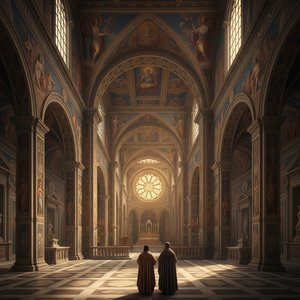
The façade of the Basilica di San Lorenzo in Florence, Italy, is a renowned example of Renaissance architecture designed by Filippo Brunelleschi. Completed in 1470, the façade showcases Brunelleschi's innovative use of linear perspective and geometric harmony. This masterpiece is a testament to Brunelleschi's architectural genius and his significant contribution to the development of Renaissance architecture.Background
Filippo Brunelleschi was commissioned to design the façade by Giovanni de' Medici, the head of the powerful Medici family. The Medici family wanted to transform the basilica into a symbol of their wealth and influence. Although Brunelleschi died before the façade's completion, his design had a profound impact on Renaissance architecture.Design
The façade is divided into three horizontal sections, each featuring a central door and two windows. The lower section boasts six Corinthian columns, while the upper sections are adorned with pilasters and friezes. Brunelleschi's mastery of linear perspective and geometric harmony is evident in the subtle variations in column size and shape, as well as the careful placement of windows and doors.Influence
The façade of San Lorenzo had a significant influence on Renaissance architecture. It inspired other architects to adopt linear perspective and geometric harmony in their designs. The façade also served as a model for subsequent renovations of the basilica, including the addition of the Cappelle Medicee (Medici Chapels) by Michelangelo.Visiting the Façade and Obtaining Reproductions
To admire the façade in person, visit the Basilica di San Lorenzo in Florence, Italy. For those unable to visit, hand-made oil paintings reproductions are available from TopImpressionists.com. These reproductions capture the subtle details and rich colors of the original façade, allowing you to appreciate its elegance and beauty from the comfort of your own home. You can also explore other works by Filippo Brunelleschi, such as the Dome of the Cathedral, on TopImpressionists.com.For more information on Filippo Brunelleschi and his works, visit TopImpressionists.com.
Spørgsmål og svar
Hvor kan jeg købe en håndmalet reproduktion af "Façade" af Filippo Brunelleschi?
Håndmalede kopier af "Façade" af Filippo Brunelleschi kan købes hos denne hjemmeside: en håndmalet oliereproduktion på lærred af hør, via deres Håndmalet reproduktion-side.
Hvordan balancerer "Façade" lys og mørke?
De registrerede værdier for "Façade" af Filippo Brunelleschi er: balanced lysstyrke og Soft Shadow luminans.
Hvad er formatet på "Façade"?
"Façade" af Filippo Brunelleschi er en Landscape komposition. Det er værd at tjekke proportionerne, før du vælger en printstørrelse.
Kunstnerbiografi
En Renæssancens Pioner: Filippo Brunelleschis Liv og Eftermæle
Filippo Brunelleschi, født i Firenze i 1377, står som en monumental figur, der brobygger mellem middelalderen og den spirende renæssance. Oprindeligt bestemt til et liv i overensstemmelse med sin fars juridiske erhverv, gjorde unge Filippos kunstneriske tilbøjeligheder hurtigt indtryk. Han blev oplært hos en guldsmed, et håndværk der finpudsede hans omhyggelige opmærksomhed på detaljer og beherskelse af materialer – færdigheder der viste sig uvurderlige i hans senere arkitektoniske bestræbelser. Denne tidlige træning var ikke blot teknisk; den fremmede en forståelse for form, proportioner og det udtryksfulde potentiale, der lå i at manipulere fysiske stoffer. Hans deltagelse i konkurrencen om Firenze Domkirkes døre i 1401, selvom han til sidst tabte til Lorenzo Ghiberti, afslørede et spirende talent og en dristig kunstnerisk vision. Denne oplevelse, der oprindeligt var skuffende, viste sig at være afgørende og omdirigerede hans energi mod arkitektur – et felt hvor han uudsletteligt ville forme vestlig kunst og ingeniørkunst.Arkitektoniske Innovationer og Genfødelsen af Klassiske Idealer
Brunelleschis arkitektoniske bedrifter er intet mindre end revolutionerende. Han byggede ikke blot strukturer; han løste tilsyneladende uoverstigelige problemer, der skubbede grænserne for, hvad der blev anset for muligt. Hans mest berømte triumf er utvivlsomt kuplen på Firenze Domkirke – en bedrift, der havde forvirret arkitekter i årtier. Projektets enorme størrelse og kompleksitet krævede innovative løsninger, og Brunelleschi leverede dem i overflod. Han opgav traditionelle stilladsmetoder og udviklede i stedet en selvbærende dobbelt skalstruktur, der anvendte geniale hejsemekanismer og sammenlåste murstensmønstre for at fordele vægten og sikre stabiliteten. Dette var ikke blot et ingeniørmæssigt vidunder; det var et bevis på menneskelig opfindsomhed og et symbol på Firenzes ambitioner. Ud over kuplen championed Brunelleschi en tilbagevenden til klassiske principper i sine designs. Han studerede omhyggeligt romerske ruiner, absorberede deres følelse af proportioner, harmoni og rumlig organisation. Denne indflydelse er tydelig i værker som den gamle sakristi i San Lorenzo, hvor han anvendte symmetriske layouts, rundbuede buer og klassisk ornamentering for at skabe rum fyldt med ro og balance. Andre bemærkelsesværdige projekter – Spedale degli Innocenti (findlingshospitalet), Palazzo Rucellai og Basilica di San Lorenzo – bærer alle kendetegnene ved hans karakteristiske stil: en harmonisk blanding af klassisk inspiration og innovative strukturelle løsninger.Daggryet for Lineær Perspektiv
Brunelleschis indflydelse strækker sig langt ud over arkitektur; han krediteres med at genopdage og formalisere principperne for lineært perspektiv, en teknik der fundamentalt ændrede kunsthistoriens gang. Før Brunelleschi manglede fremstillinger af rum et konsistent system til at repræsentere dybde og realisme. Hans omhyggelige undersøgelser i optik og geometri førte ham til at udvikle en metode til at skabe illusioner af tredimensionelt rum på en todimensionel overflade. Dette involverede fastlæggelse af et forsvindingspunkt – et enkelt punkt på horisontlinjen, hvor alle parallelle linjer konvergerer – og brug af matematiske beregninger til nøjagtigt at repræsentere rumlige forhold. Implikationerne var dybtgående. Lineært perspektiv gav kunstnere et kraftfuldt værktøj til at opnå større realisme og følelsesmæssig effekt i deres arbejde, der påvirkede generationer af malere og billedhuggere. Det handlede ikke blot om teknisk nøjagtighed; det handlede om at skabe en mere fordybende og overbevisende visuel oplevelse for beskueren.Indflydelser og en Varig Historisk Betydning
Brunelleschis geni opstod ikke i et vakuum. Han hentede inspiration fra forskellige kilder, syntetiserede dem til noget helt nyt. Den antikke romerske arkitektur, han studerede, dannede grundlaget for klassiske principper, mens hans eksponering for gotiske strukturer gav ham en forståelse af strukturelle udfordringer og innovative byggeteknikker. Afgørende var det, at renæssancens spirende humanistiske bevægelse – med sit fokus på menneskeligt potentiale og præstationer – genlød dybt hos Brunelleschis egen innovative ånd. Han troede på kraften i fornuft, observation og eksperimentering, kvaliteter der lå til grund for hans banebrydende arbejde. Hans eftermæle er enormt. Han betragtes med rette som en af de faderlige figurer i renæssancen, en central person, der indledte en ny æra med kunstnerisk og intellektuel blomstring. Hans ingeniørmæssige innovationer informerer fortsat moderne byggepraksis, mens hans udvikling af lineært perspektiv forbliver et hjørnesten i repræsentativ kunst. Men måske vigtigst af alt legemliggjorde Brunelleschi en ny måde at tænke på – en tro på menneskelig opfindsomhed, en forpligtelse til rationel undersøgelse og en fejring af skønheden og ordenen i den naturlige verden. Han ændrede ikke blot horisonten i Firenze; han ændrede måden, vi ser verden på.
Filippo Brunelleschi
1377 - 1446 , Italien
Kort om kunstneren
- Artistic Movement Or Style: Tidlig renæssance
- Artists Or Movements Influenced By This Artist:
- Renæssancearkitektur
- Lineær perspektiv kunstnere
- Artists Who Influenced This Artist: ['Antikke romerske arkitekter']
- Date Of Birth: 1377
- Date Of Death: 1446
- Full Name: Filippo Brunelleschi
- Nationality: Italiensk
- Notable Artworks:
- Domkuplen i Firenze
- Gammelt sakristi San Lorenzo
- Spedale degli Innocenti
- Palazzo Rucellai
- Place Of Birth: Florence, Italien
Relaterede artikler

Civic Virtue and Artistic Rivalry: Patronage and Innovation in the Italian Renaissance Republics, 1400–1600
Explore the Italian Renaissance! Discover how competitive patronage & humanist ideals fueled artistic innovation in republics like Florence & Venice. Expert insights for art lovers and collectors.

Galleria degli Uffizi: Top 25 Kunstværker – Renæssancens Mestre | TopImpressionists.dk
Oplev Galleria degli Uffizi's 25 mest ikoniske kunstværker! Dyk ned i renæssancens mestre som Leonardo da Vinci, Michelangelo & Botticelli. Find inspiration til din indretning og køb museumskvalitets reproduktioner på TopImpressionists.com.
Mastering Depth: The Architectural Power of Linear Perspective in Renaissance Masterpieces
Explore the profound impact of linear perspective on Renaissance art. Discover how masters like Brunelleschi and Uccello used mathematical precision to create breathtaking depth and spatial illusion in iconic historical masterpieces.

Drama and Light: A Definitive Guide to the Italian Baroque Masterpieces and the Revolution of Chiaroscuro
Explore the dramatic world of Italian Baroque art. Discover how masters like Caravaggio used chiaroscuro and tenebrism to revolutionize painting through light, shadow, and profound realism. A definitive guide for history lovers and art collectors.

The Flourishing of Humanism: A Comprehensive Exploration of the Italian Renaissance Art Movement
Explore the Italian Renaissance! Discover humanist ideals, iconic masterpieces by Leonardo, Michelangelo & Raphael, and lasting artistic innovations. A comprehensive guide for art enthusiasts.