Se i rummet
 Del som kort
 Del
Del
 Detaljer
 Guide
Guide

 Download
 Lignende værker
 Røntgenundersøgelse
 Diasshow
 Spørgsmål og svar
 Statistikker
Triptych


Experience the vibrant Early Renaissance depth of Lippi's Triptych, featuring Madonna and Child scenes with meticulous detail; discover this masterpiece today.
 Vis mere
Filippo Lippi (1406-1469): En kontroversiel florentinsk maler kendt for sine smukke Madonner, naturalisme og innovative kompositioner. Inspirerede Botticelli & formede Quattrocento kunst.
Giclée / Kunsttryk
Giclée- eller lærredstryk i museumskvalitet med hurtig produktion og fleksible muligheder for finish. ( Køb håndmalet maleri Skift til digitalt billede)




P118B Dkr10

P118H Dkr10

P118W Dkr10

P438Z Dkr10

P508JH Dkr12

P508YH Dkr12

P805H Dkr10

P805Z Dkr10

P919BZ Dkr10

P919G Dkr10

P919XJ Dkr10

P959ZH Dkr10

P968JZ Dkr12

W106C Dkr8

W218G Dkr10

W218JH Dkr8

W218Y Dkr10

W307PJ Dkr10

W316G Dkr10

W316PJ Dkr8

W316Y Dkr10

W398PJ Dkr8

W4111J Dkr10

W500HY Dkr15

W500JH Dkr15

W692G Dkr12

W849H Dkr8

W940BG Dkr15

W953PJ Dkr8




Standardstørrelse
speciallavet
CM
INCH
Vælg mellem vores forudindstillede størrelser, der matcher kunstværkets originale proportioner.
Loading sizes...

bredde
højde
Indtast den bredde og højde, du har brug for, så det passer til din ramme eller din væg. Et print kan kun beskæres, aldrig gøres større end selve billedet, så en størrelse med et andet format vil medføre, at dele af motivet går tabt. Vi sender dig en digital mockup til godkendelse, før vi printer noget. Billedet vist på denne side viser ikke den faktiske beskæring — det er kun mockuppen, der gør.
Verdensomspændende levering () på 2 uger i stedet for de sædvanlige 4/5 uger. (6 november)

Gratis ekspresforsendelse til hele verden

Lærred af linned i høj kvalitet

Fuld transportforsikring

Garanti for refusion af told og importafgifter

Garanti for præcis farvegengivelse

100 dages returret ved fabrikationsfejl

100% fuld returret

Mængderabat ved flere køb
 Glasmulighed er kun tilgængelig i størrelser under 110 cm

Triptych
Giclée / Kunsttryk
Størrelse på reproduktion
-


Samlet pris
Dkr 468
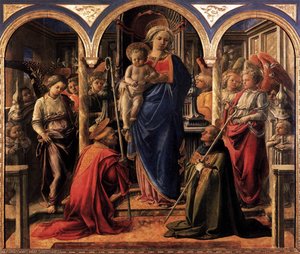
A Vision in Tempera: Exploring Fra Filippo Lippi's Triptych
To stand before a work like this Triptych by Fra Filippo Lippi is to step directly into the luminous heart of the Early Renaissance. Dating from 1437, this piece transcends mere decoration; it is a profound meditation on faith, humanity, and divine mystery, rendered with an exquisite delicacy that speaks volumes of its creator's genius. The very structure—the three distinct yet harmoniously connected panels—invites the viewer into a narrative journey, guiding the eye from one sacred moment to the next.
Lippi, a master whose life was as complex as his art, captured the burgeoning spirit of humanism within deeply religious iconography. His ability to imbue monumental subjects with such palpable tenderness is what makes this triptych so enduringly captivating. The meticulous application of tempera paint allows for a jewel-like vibrancy in the colors, while the underlying structure speaks to an emerging mastery of perspective, giving weight and believable depth to every figure.
Composition and Sacred Narrative
The genius of the composition lies in its tripartite division, each panel serving as a self-contained yet related devotional scene. In the central focus, we encounter the Madonna and Child, a timeless tableau where Mary’s serene blue cloak speaks of purity, cradling the vibrant life symbolized by the infant Jesus robed in red. Flanking this core mystery are supporting figures—on the left, perhaps a bishop or cardinal holding scripture, grounding the scene in scholarly tradition; and on the right, another saintly figure contemplating sacred texts.
The architectural elements visible in the background, reminiscent of grand Gothic cathedrals, serve not only as setting but as symbolic anchors to the enduring Church. These scenes are richly framed by elaborate gold borders, which do more than simply adorn; they elevate the depicted moments to an almost ethereal plane of opulence and sanctity.
Technique and Material Brilliance
The choice of tempera medium is crucial to appreciating this artwork's technical brilliance. This egg-based paint allowed Lippi unparalleled control, enabling him to achieve those breathtakingly fine details—the folds in the drapery, the delicate rendering of halos, the subtle expressions on the faces.
When considering a reproduction of such a piece for your home or collection, understanding this technique is key. The luminosity achieved by tempera is unlike oil paint; it possesses a matte, jewel-toned richness that speaks to centuries of careful craftsmanship. It is a testament to the artist's hand, where every brushstroke feels deliberate and imbued with purpose.
Symbolism and Emotional Resonance
Beyond the narrative, the triptych pulses with deep symbolism. The interplay between the rich blues, the passionate reds, and the solemn greens creates a visual vocabulary of divinity, humanity, and sacrifice. It is an artwork that does not merely depict holiness; it evokes the *feeling* of reverence. For the modern collector or designer, this piece offers more than just aesthetic beauty; it offers a focal point for contemplation—a quiet corner imbued with historical weight and spiritual depth.
To bring such a masterpiece into your space is to invite a dialogue between Renaissance artistry and contemporary life. It suggests an appreciation for enduring narratives, meticulous skill, and the profound beauty found at the intersection of art and faith.
Spørgsmål og svar
Kan jeg undersøge "Triptych" mere detaljeret?
Røntgenoptagelse-siden til "Triptych" af Filippo Lippi er en interaktiv viewer, der lader dig glide gennem elleve optiske lag af værkets billede, herunder en visning i røntgenstil.
Hvilken periode i Filippo Lippis karriere tilhører "Triptych"?
"Triptych" tilhører Early Renaissance i Filippo Lippis karriere. Denne klassificering knytter værket til kunstnerens udvikling.
Hvilken farvetone dominerer i "Triptych"?
Den dominerende nuance i "Triptych" af Filippo Lippi er Golden Yellow Range. Nuancen er den underliggende tone i farvepaletten.
Kunstnerbiografi
Filippo Lippi: En Rebel og Kunstens Poet
Filippo di Tommaso Lippi, bedre kendt som Fra Filippo Lippi, var en mand hvis liv var lige så komplekst og fascinerende som hans kunst. Han var ikke blot en dygtig maler i den tidlige renæssance, men også en figur præget af kontrovers, passion og et mod til at bryde med traditionerne. Født i Firenze omkring 1406, var Lippi allerede fra en ung alder omgivet af tab – hans forældre døde kort efter fødslen, og han blev vokset op under sin aunts pleje. Denne tidlige oplevelse af ensomhed og usikkerhed synes at have haft en dybtgående indflydelse på hans liv og kunstneriske udtryk.Fra Klosterets Mure til Firenze’s Palads
Lippis rejse begyndte i det florentinske karmeliterkloster, hvor han blev optaget som munk i 1420. Det var her, i de stille, religiøse omgivelser, at hans talent for maleri først blomstrede. Han lærte af Masaccio, en revolutionerende kunstner der havde skabt et nyt billede af perspektiv og lys, og denne indflydelse er tydeligt synlig i Lippi’s tidlige værker, som *Tarquinia Madonna*. Men Lippi var ikke blot en kopi af Masaccio; han udviklede hurtigt sin egen unikke stil – en stil kendetegnet ved en poetisk elegance, delikate farver og en dyb følelsesmæssig intensitet. Han begyndte at skildre religiøse scener med et menneskeligt element, der var sjældent set i den tidlige renæssance.En Kontroversiel Livsstil
Lippis liv var langt fra det idylliske billede af en munk. Han blev involveret i utallige juridiske problemer, økonomiske vanskeligheder og, mest sensationelt, et forhold til Lucrezia Buti, en nonne fra Prato. Efter år med skandaler og modstand giftede han sig med hende, hvilket var en dybt chokerende handling for tiden. Denne livsstil, præget af både begær og religiøs tvivl, er et fascinerende eksempel på en mand der forsøgte at finde balance mellem sin pligt som munk og sine menneskelige ønsker.Mesterværker og Indflydelse
På trods af sine mange problemer var Lippi en af de mest eftertragtede malere i Firenze. Han modtog kommissioner fra magtfulde familier, herunder Medici-familien, og skabte værker som *Annunciationen* og *Sankt Johannes Døberen med seks andre helgener*. Hans *Kongekroningen*, udført i 1441 for nonnerne i Sant’Ambrogio, er særligt bemærkelsesværdig – den indeholder et selvportræt, der viser Lippi som en mand der står stærkt og bevidst om sin egen kunstneriske identitet. Han var også en væsentlig mentor for andre store kunstnere, herunder Sandro Botticelli og Francesco di Pesello (Pesellino), der videreførte hans stil og teknik til deres egne værker.Et Poetisk Arv
Filippo Lippi døde i Spoleto i 1469, men hans arv lever videre. Hans kunst er kendt for sin lyriske skønhed, sine levende farver og sin evne til at fange menneskelige følelser på en unik måde. Han var en mand der levede livet fuldt ud – med alle dets glæder og sorger – og hans kunst er et vidnesbyrd om denne komplekse og fascinerende personlighed. Lippi repræsenterer en bro mellem den tidlige renæssances naturalisme og den senere, mere raffineret æstetik, og han vil altid blive husket som en af de mest originale og inspirerende kunstnere fra sin tid.
Filippo Lippi
1406 - 1469 , Italien
Kort om kunstneren
- Artistic Movement Or Style: Tidlig Renæssance
- Artists Or Movements Influenced By This Artist: ['Botticelli']
- Artists Who Influenced This Artist: ['Masaccio']
- Date Of Birth: 1406
- Date Of Death: 1469
- Full Name: Filippo di Tommaso Lippi
- Nationality: Italiensk
- Notable Artworks:
- Tarquinia Madonna
- Annunciatio
- Kongevietelse
- Place Of Birth: Firenze, Italien
Relaterede artikler

Divine Love: A Curated Guide to the Most Iconic Madonna and Child Masterpieces in Art History
Embark on a sophisticated journey through art history with our curated guide to the most iconic Madonna and Child masterpieces. Discover the profound beauty, theological depth, and enduring legacy of these sacred Renaissance treasures.

Filippino Lippi: Renaissance Innovation Bridging Faith & Humanism
Explore the captivating world of Filippino Lippi, a Renaissance master bridging faith & humanism through innovative art. Discover his key works, influences, and lasting legacy with TopImpressionists.

Fra Angelicos 25 Mesterværker: Renæssancekunst til Dit Hjem | TopImpressionists.dk
Oplev Fra Angelicos 25 mest ikoniske renæssancemalerier. Fordyb dig i historien bag disse religiøse mesterværker, fresker og altertavler. Find inspiration til din indretning & køb museumskvalitets reproduktioner på TopImpressionists.com.

Raphaels 25 Mesterværker: Kunst, Historie & Inspiration til Dit Hjem | TopImpressionists
Oplev Raphaels 25 mest ikoniske værker! Dyk ned i renæssancens kunsthistorie, fra 'Skolen i Athen' til smukke madonna-malerier. Find inspiration & køb museumskvalitets reproduktioner på TopImpressionists.com.

Filippo Lippi: Bridging Renaissance Devotion & Artistic Innovation
Explore the life & revolutionary art of Filippo Lippi, a pivotal Renaissance painter. Discover his masterpieces, influence on Botticelli, and investment potential. Expert analysis at TopImpressionists.
Udforsk kunstværker organiseret efter temaer, stilarter og karakteristika.