

 Se i rummet
 Del som kort
 Del
Del
 Detaljer
 Guide
Guide

 Download
 Lignende værker
 Røntgenundersøgelse
 Diasshow
 Statistikker
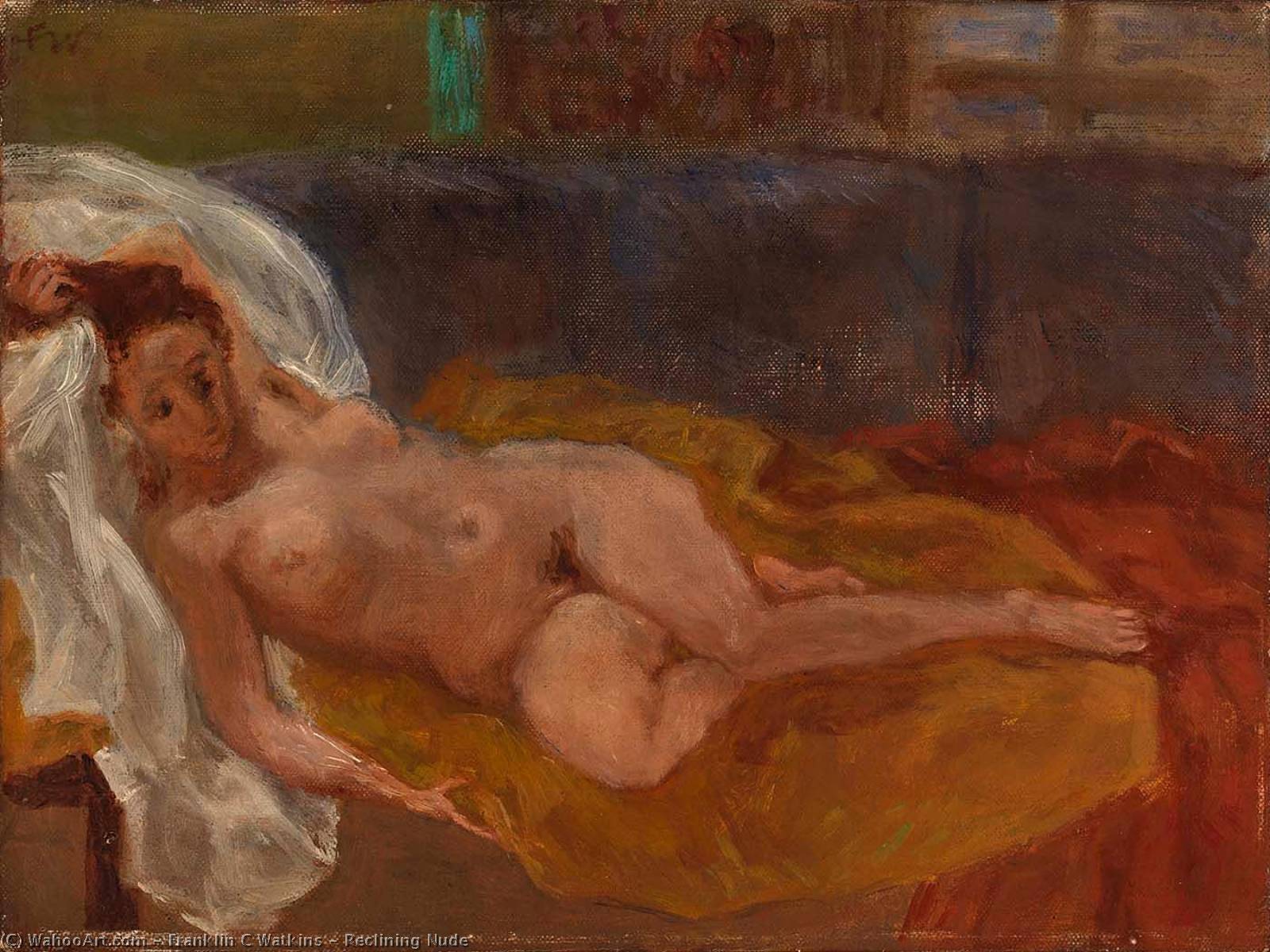
Reclining Nude
 Post-Impressionism
 23.0 x 31.0 cm
Reclining Nude by Franklin C. Watkins: An impressionistic masterpiece featuring a sensual female figure in warm tones. Explore post-impressionism & timeless beauty.
Explore the iconic architecture of Franklin C. Watkins! This American architect designed over 240 schools & buildings in the West, including Carnegie libraries. Discover his legacy.
 Vis mere
Få en printklar fil, der rækker langt ud over web-forhåndsvisningen. Hvert digitalt billede, vi sælger, stammer fra en højopløst master i vores database — typisk mellem 5.000 og 15.000 pixels i bredden — så du med selvtillid kan printe stort, beskære tæt eller gengive fine detaljer.
Ingen fil forlader vores studie uden at være blevet behandlet. En digital ekspert kontrollerer farverne i forhold til det originale maleri og korrigerer dem efter behov, hvorefter klarhed og detaljer forbedres med professionelle retoucheringsværktøjer — altid med fuld respekt for kunstnerens penselstrøg og stil. Resultatet er et billede, der ligner maleriet, og ikke blot et scannet billede med et filter.
Du godkender, før vi er færdige: vores ekspert sender billedet via e-mail inden for 72 timer til din gennemgang. Ikke tilfreds? Bed om forbedringer eller rettelser, eller anmod om en refundering, hvis kvaliteten ikke lever op til forventningerne.
Dette er den kvalitet, som forlag, designstudier, gallerier og trykkerier stoler på.
Digitalt billede
Download en højopløselig fil til personlig fremvisning, print og kreative projekter. ( Skift til printsalg Køb håndmalet maleri)
Inkluderet i alle ordrer på digitale billeder
Ekspertise i digital levering, garanteret
Når du vælger TopImpressionists.com, får du ikke blot et billede – du modtager et professionelt optimeret digitalt kunstværk, skabt med præcision og sikret med en tilfredshedsgaranti. Her er alt, hvad din ordre automatisk indeholder:

Hurtig levering via e-mail
Din højtopløselige digitale billedfil sendes til din e-mail inden for 72 timer efter bestilling – klar til øjeblikkelig brug.

AI-optimeret digital fil
Dit kunstværk optimeres professionelt ved hjælp af avancerede AI-værktøjer og manuel redigering, hvilket sikrer maksimal detaljegrad, klarhed og farvenøjagtighed.

Gratis livslang genlevering
Har du ved en fejl slettet eller mistet din fil? Ingen bekymring – vi sender den igen til enhver tid, helt gratis.

Ingen importgebyrer – nogensinde
Nyd dit kunstværk med det samme uden told, afgifter eller leveringsgebyrer – digitale downloads er altid skattefrie.

Garanteret farvenøjagtighed
Vi sikrer, at dit digitale billede gengiver de originale farver så præcist som muligt ved hjælp af professionelle værktøjer og farvestyring.

100 dages tilfredshedsgaranti
Hvis du ikke er tilfreds med dit digitale billede, vil vi revidere det eller refundere 100% inden for 100 dage – uden spørgsmål.

100% Pengene tilbage-garanti
Ik tilfreds? Få fuld refusion inden for 100 dage efter modtagelse af din digitale fil – uden spørgsmål.

Mængderabat ved storkøb
Køb 3 billeder, spar 10% - Køb 5, spar 15% - Køb 10+, spar 20%. Ideelt til kreative projekter, gallerier og bureauer.
Lignende kunstværker


Kunstnerens biografi
A Legacy Etched in Stone: The Architectural Vision of Franklin C. Watkins
Franklin C. Watkins stands as a pivotal, yet often unsung, figure in the architectural landscape of the American West. His name isn’t immediately recognizable to many outside specialist circles, but his influence is profoundly visible – etched into the brick and mortar of over 240 schools, libraries, and public buildings that define towns and cities across Utah, Idaho, Wyoming, Nevada, and beyond. Born in a time of rapid expansion and community building, Watkins dedicated his career to crafting structures that weren’t merely functional spaces but embodiments of civic pride and educational aspiration. He wasn't an architect who sought grand monuments to personal glory; instead, he focused on the practical needs of burgeoning communities, leaving behind a remarkable portfolio of buildings that speak volumes about the spirit of the Intermountain West during the late 19th and early 20th centuries.Early Life and Formative Influences
Details surrounding Watkins’s earliest life remain somewhat scarce, a testament to his unassuming nature and dedication to his work rather than self-promotion. What is known is that he established his architectural practice in Salt Lake City, Utah, around the turn of the 20th century. This location proved crucial to his development as an architect. The region was experiencing significant growth fueled by railroad expansion, mining booms, and agricultural settlements. The demand for public buildings – schools to educate a growing population, libraries to foster intellectual pursuits, and commercial structures to support economic activity – was immense. Watkins quickly recognized this need and positioned himself to become a leading provider of these essential services. His early work demonstrates a clear understanding of prevailing architectural styles of the time, particularly those influenced by Victorian eclecticism and the emerging Prairie School movement. However, he wasn’t simply a mimic; he adapted these styles to suit the unique climate, materials, and cultural context of the Intermountain West.The Carnegie Library Boom & Watkins's Signature Style
Watkins truly distinguished himself through his prolific work designing Carnegie libraries. Andrew Carnegie’s philanthropic efforts provided funding for over 1,600 libraries across the United States, and Franklin C. Watkins secured a significant number of commissions to design these institutions throughout the West. This partnership allowed him to refine his architectural vision and develop a signature style characterized by practicality, durability, and understated elegance. His Carnegie libraries weren’t imposing structures; they were welcoming community hubs designed to encourage learning and civic engagement. He frequently employed red brick construction – readily available and well-suited to the region's climate – and incorporated large windows to maximize natural light. A hallmark of his designs was a symmetrical façade, often adorned with simple yet refined detailing such as decorative brickwork, cornices, and prominent entrances that emphasized the library’s role as a public institution. Beyond Carnegie libraries, Watkins designed numerous schoolhouses, courthouses, commercial buildings, and even residences, consistently applying these principles of functional design and regional sensitivity.A Commitment to Intermountain Design
Watkins's architectural philosophy was deeply rooted in a commitment to the specific needs and characteristics of the Intermountain West. He understood that buildings designed for eastern cities wouldn’t necessarily translate well to this rugged landscape. He prioritized materials that were locally sourced, construction techniques that were appropriate for the climate, and designs that reflected the cultural values of the communities he served. This pragmatic approach extended beyond mere aesthetics; Watkins was known for his meticulous attention to detail, ensuring that his buildings were structurally sound, energy-efficient, and adaptable to changing needs. He often incorporated features such as wide eaves to protect against harsh sunlight and snow loads, and strategically placed windows to maximize ventilation.- Schoolhouse Designs: Watkins designed hundreds of schoolhouses, each tailored to the specific size and needs of the local community.
- Courthouse Architecture: His courthouses were often built in a classical revival style, symbolizing justice and civic authority.
- Commercial Buildings: Watkins’s commercial structures blended functionality with aesthetic appeal, contributing to the economic vitality of western towns.
