


 Se i rummet
 Send
Send Del
Del
 Detaljer
 Studieguide til kunstværker

 Download
 Lignende værker
 Røntgenundersøgelse
 Se diasshow
 Statistik
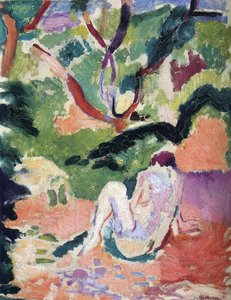
On the Grass
 Oil On Panel
- Impressionism
 1911
1911- Modern
 36.0 x 51.0 cm
 Ashmolean Museet for Kunst og Arkæologi
A serene Impressionist scene of two women relaxing in a lush field by Frederick Etchells captures the tranquility of 1911 through rich oil textures, inviting you to bring this peaceful masterpiece into your home.
 Læs mere
Frederick Etchells (1886-1973) was a British artist & architect linked to Vorticism, Omega Workshops, and Modernism. Known for early abstract paintings, book translations of Le Corbusier, and pioneering modernist architecture like 232 High Holborn. E
Køb et højopløst, optimeret digitalt billede i en kvalitet, der er langt overlegen i forhold til online-forhåndsvisningen.
Hver fil er omhyggeligt forberedt af vores interne specialister ved hjælp af avancerede værktøjer og ekspertmæssig manuel retuschering. Vi sikrer, at hvert billede har enestående klarhed, præcis farvegengivelse og fine detaljer.
Den endelige fil leveres via e-mail inden for 72 timer og er optimeret til øjeblikkelig brug i professionelle, redaktionelle og trykte miljøer. Det er den samme kvalitet, som førende designstudier, forlag og gallerier har tillid til.
Digitalt billede
Download en højopløselig fil til personlig fremvisning, print og kreative projekter. ( Skift til printversion Bestil håndmalet reproduktion)
Inkluderet i alle ordrer på digitale billeder
Professionel digital levering, garanteret
Når du vælger TopImpressionists.com, får du ikke blot et billede – du modtager et professionelt optimeret digitalt kunstværk, skabt med præcision og sikret med en tilfredshedsgaranti. Her er alt, hvad din ordre automatisk indeholder:

Hurtig levering via e-mail
Din højtopløselige digitale billedfil sendes til din e-mail inden for 72 timer efter bestilling – klar til øjeblikkelig brug.

AI-forbedret digital fil
Dit kunstværk optimeres professionelt ved hjælp af avancerede AI-værktøjer og manuel redigering, hvilket sikrer maksimal detaljegrad, klarhed og farvenøjagtighed.

Gratis livslang genlevering
Har du ved en fejl slettet eller mistet din fil? Ingen bekymring – vi sender den igen til enhver tid, helt gratis.

Ingen importgebyrer – nogensinde
Nyd dit kunstværk med det samme uden told, afgifter eller leveringsgebyrer – digitale downloads er altid skattefrie.

Garanteret farvenøjagtighed
Vi sikrer, at dit digitale billede gengiver de originale farver så præcist som muligt ved hjælp af professionelle værktøjer og farvestyring.

100 dages tilfredshedsgaranti
Hvis du ikke er tilfreds med dit digitale billede, vil vi revidere det eller refundere 100% inden for 100 dage – uden spørgsmål.

100% Pengene tilbage-garanti
Ik tilfreds? Få fuld refusion inden for 100 dage efter modtagelse af din digitale fil – uden spørgsmål.

Mængderabat ved storkøb
Køb 3 billeder, spar 10% - Køb 5, spar 15% - Køb 10+, spar 20%. Ideelt til kreative projekter, gallerier og bureauer.
A Moment Suspended in Time
In the gentle embrace of a sun-drenched afternoon, Frederick Etchells’ 1911 masterpiece, On the Grass, invites the viewer into a sanctuary of profound stillness. This exquisite oil on panel captures a fleeting instance of quiet companionship, where the frantic pace of the modern world seems to dissolve into the lush greenery of an English meadow. Two women are nestled within the verdant landscape; one is lost in the silent dialogue of a book, while the other rests in a state of contemplative observation, her gaze drifting toward her companion. It is a scene that transcends mere depiction, offering instead a window into a world defined by leisure, intimacy, and the restorative power of nature.
The composition breathes with an organic rhythm, as the soft textures of the grass and the surrounding foliage envelop the figures, creating a sense of protective seclusion. There is a subtle, poetic tension between the intellectual engagement of reading and the passive beauty of simply being present. This duality reflects a classic theme in art history—the celebration of the pastoral life—yet Etchells imbues it with a specific, early 20th-century sensibility that feels both timeless and deeply personal.
Mastery of Light and Impressionistic Grace
Technically, On the Grass is a triumph of color and texture. Utilizing the rich, receptive surface of oil on panel, Etchells employs a technique that bridges the gap between classical precision and the fluid spontaneity of Impressionism. The artist demonstrates a remarkable ability to manipulate light, allowing it to filter through the unseen canopy above, dappling the meadow with warmth and depth. Each brushstroke contributes to a sense of tactile reality; one can almost feel the coolness of the shade and the gentle sway of the blades of grass.
The palette is a sophisticated arrangement of verdant greens, earthy ochres, and soft, luminous highlights that breathe life into the scene. This mastery of tone draws inspiration from the great masters of light, such as John Singer Sargent, yet Etchells maintains a unique focus on the structural harmony of the landscape. For the discerning collector or interior designer, this painting offers a remarkable versatility; its serene color story and balanced composition make it an ideal centerpiece for spaces intended to evoke calm, sophistication, and a connection to the natural world.
An Invitation to Serenity
Beyond its aesthetic brilliance, the emotional resonance of On the Grass lies in its ability to act as a visual meditation. In an era characterized by constant movement and digital noise, Etchells’ work serves as a poignant reminder of the importance of stillness. The painting does not demand attention through grand gestures or dramatic conflict; instead, it seduces the viewer through subtlety and grace. It is a piece that rewards slow looking, revealing new layers of tranquility with every encounter.
Whether displayed in a quiet study, a sunlit living room, or a curated gallery space, a high-quality reproduction of this work brings more than just decoration to a home—it brings an atmosphere. It is an invitation to pause, to breathe, and to rediscover the simple, profound joy found in a moment of peace amidst the greenery. For those seeking to curate an environment of elegance and emotional depth, Etchells’ vision remains an enduring source of inspiration.
Spørgsmål & svar
Hvor bør en reproduktion af "On the Grass" af Frederick Etchells hænges op?
Formatet Landscape til "On the Grass" af Frederick Etchells anbefales til en Wellness Center. Format og rumstørrelse er tilsammen vejledende for placeringen af en reproduktion.
Kan jeg bruge augmented reality til at se "On the Grass" af Frederick Etchells i mit eget rum?
"On the Grass" har en augmented reality-forhåndsvisning: kunstværkets AR-forhåndsvisning-side viser det i dit eget rum på en kompatibel enhed.
Hvilken teknik blev brugt til "On the Grass", og hvornår blev den skabt?
"On the Grass" blev skabt i 1911 med Oil On Panel.
Lignende kunstværker




Kunstnerbiografi
The Architect of the Avant-Garde: The Life and Legacy of Frederick Etchells
Born in the industrial heart of Newcastle upon Tyne in 1886, Frederick Etchells emerged as a singular force in the British twentieth-century landscape, a man whose creative spirit refused to be confined by the boundaries of a single discipline. His journey began within the hallowed halls of the London School of Kensington, now the Royal College of Art, where he studied under the tutelage of masters like Arthur Beresford Pite and William Lethaby. This rigorous architectural training provided him with a structural foundation that would later inform his visual art, yet it was his immersion in the intellectual ferment of the Bloomsbury Group that truly ignited his creative consciousness. Through connections with luminaries such as Clive Bell and Roger Fry, Etchells found himself at the epicenter of a cultural revolution, navigating the delicate tension between classical tradition and the radical abstractions of a new age.
The trajectory of Etchells’s career is defined by a restless pursuit of the "new," a quality that led him from the decorative experiments of the Omega Workshops to the jagged, energetic frontiers of Vorticism. While his early involvement with the Omega workshops connected him to the aesthetic sensibilities of the Blooms and the craft-oriented ideals of the era, it was his subsequent break with Wyndham Lewis that signaled his true arrival as a provocateur. Alongside Lewis, Etchells helped establish the Rebel Art Centre, a sanctuary for those seeking to dismantle the stagnant conventions of Impressionism in favor of something more visceral and dynamic. This period of intense experimentation saw his illustrations grace the pages of BLAST magazine, where the sharp, geometric rhythms of Vorticism found their visual voice. His paintings from this era, such as the evocative Hip Bath, reflect a fascination with form and the psychological weight of modern life, capturing a sense of movement and tension that mirrored the turbulent spirit of the pre-war years.
A Synthesis of Form: From Canvas to Concrete
As the decades progressed, Etchells underwent a profound metamorphosis, transitioning from the experimental canvases of a painter to the enduring structures of an architect. This was not a departure so much as an evolution; he sought to translate the rhythmic complexities and structural boldness of his early modernism into the very fabric of London’s skyline. His architectural achievements stand as monuments to this synthesis of art and utility. In works such as 232 High Holborn and the Crawford's Advertising Building, one can observe the lingering echoes of his Vorticist roots—a preference for clean lines, functional clarity, and a modern aesthetic that embraced the industrial pulse of the city. He became a pioneer of modernist architecture in Britain, proving that the radical energy of the avant-garde could be anchored in permanent, habitable stone and steel.
Beyond his physical constructions, Etchells played a vital role as a cultural conduit, bridging the gap between Continental theory and British practice. His scholarly dedication led him to translate the seminal works of Le Corbusier, including Vers Une Architecture and Urbansime, into English. By bringing these revolutionary ideas to an English-speaking audience, he helped lay the intellectual groundwork for the widespread adoption of Modernism in the United Kingdom. This dual legacy—as both a creator of visual meaning and a translator of architectural thought—ensures his historical significance remains profound. Whether through the serene, textured landscapes of On the Grass or the commanding presence of his urban structures, Frederick Etchells remains an essential figure whose work continues to resonate with the enduring power of structural innovation and artistic courage.

Frederick Etchells
1886 - 1973 , United Kingdom
Hurtige fakta
- Full Name: Frederick Etchells
- Nationality: British
- Date Of Birth: 1886
- Date Of Death: 1973
- Place Of Birth: Newcastle upon Tyne, United Kingdom
- Notable Artworks:
- The Dead Mole
- Hip Bath
- Artistic Movement Or Style: Vorticism, Modernism
- Artists Who Influenced This Artist: ['Arthur Beresford Pite']
- Artists Or Movements Influenced By This Artist: ['Le Corbusier']