


 Se i rummet
 Send
Send Del
Del
 Detaljer
 Studieguide til kunstværker

 Download
 Lignende værker
 Røntgenundersøgelse
 Se diasshow
 Statistik
A Day in June


Experience 'A Day in June' by George Bellows! This vibrant 1913 painting captures a lively park scene with diverse figures, showcasing the artist’s dynamic style and urban realism. A must-see masterpiece!
 Læs mere
George Bellows (1882-1925) var en amerikansk maler, kendt for sine rå og dynamiske billeder af NYC's liv – fra boksekampe til gadebilleder. Ashcan School-pionér med et unikt blik på det moderne Amerika.
Håndlavet oliereproduktion
Håndmalet olie på lærred i din valgte størrelse og ramme, udført efter bestilling af vores kunstnere. ( Skift til printversion Skift til digitalt billede)




P118B Dkr10

P118H Dkr10

P118W Dkr10

P438Z Dkr10

P508JH Dkr12

P508YH Dkr12

P805H Dkr10

P805Z Dkr10

P919BZ Dkr10

P919G Dkr10

P919XJ Dkr10

P959ZH Dkr10

P968JZ Dkr12

W106C Dkr8

W218G Dkr10

W218JH Dkr8

W218Y Dkr10

W307PJ Dkr10

W316G Dkr10

W316PJ Dkr8

W316Y Dkr10

W398PJ Dkr8

W4111J Dkr10

W500HY Dkr15

W500JH Dkr15

W692G Dkr12

W849H Dkr8

W940BG Dkr15

W953PJ Dkr8




Standardstørrelse
speciallavet
CM
INCH
Vælg mellem vores forudindstillede størrelser, der matcher kunstværkets originale proportioner.
Loading sizes...

bredde
højde
Indtast den bredde og højde, du har brug for, så det passer til din ramme eller din væg. Da dette er håndmalet, kan kunstneren ved en anden form på størrelsen male lidt mere rundt om billedet eller skære lidt væk — det er op til dig. Vi sender dig et digitalt mockup til godkendelse, før maleriet påbegyndes. Billedet, der vises på denne side, viser ikke det endelige resultat — det er kun mockuppet, der gør.
Eksempler på tilpasningsmuligheder: Udskift ansigt med kundens eget foto; Tilføj kæledyr (f.eks. udskift kat med hund); Inkluder en skjult besked i baggrunden; Ændr baggrundslandskab eller elementer.
Efter bestilling vil TopImpressionists.com team sende en e-mail til kunden for at indhente instruktioner og fremsende et udkast til gennemgang.
Efter bestilling vil TopImpressionists.com team sende en e-mail til kunden for at indhente instruktioner og fremsende et udkast til gennemgang.
Levering i hele verden () på 3-4 uger i stedet for de standard 5 uger. (27 oktober). Ingen kompromiser med kvaliteten.

Gratis ekspresforsendelse til hele verden

Lærred af linned i høj kvalitet

Komplet transportforsikring

Garanti for refusion af told og importafgifter

Garanti for autentisk farvegengivelse

100 dages returret ved fabrikationsfejl

100% fuld returret

Mængderabat ved flere køb
 Glasmulighed er kun tilgængelig i størrelser under 110 cm

A Day in June
Reproduktionsmateriale
Reproduktionsstørrelse
-


Samlet pris
Dkr 1768
A Moment Frozen in Time: "A Day in June" by George Wesley Bellows
George Wesley Bellows’ “A Day in June” isn't merely a depiction of a park scene; it’s a vibrant snapshot of American leisure and social interaction captured with the bold, unapologetic energy that defined his career. Painted in 1913, during a period of rapid industrialization and shifting social landscapes, this canvas offers a glimpse into a world where the rhythms of urban life momentarily yielded to the pleasures of a sun-drenched afternoon. The painting immediately draws the eye with its dynamic composition – a carefully orchestrated gathering of figures sprawled across an open field, bathed in the golden light of a summer day.
Bellows, a key figure in the Ashcan School movement, rejected the idealized representations prevalent in academic art, instead choosing to portray everyday life—often gritty and unvarnished—with unflinching honesty. “A Day in June” exemplifies this approach. The subjects aren’t posed for a grand narrative; they are simply *being*, engaged in conversation, reclining on blankets, or lost in their own thoughts. The artist masterfully uses loose brushstrokes and vibrant color to convey the feeling of warmth and spontaneity—a deliberate contrast to the often-stiff formality of traditional portraiture.
A Study in Light and Movement
Technically, Bellows’ technique is remarkably fluid. He employs a broken color approach, layering thin washes of paint to create an illusion of depth and luminosity. Notice how he captures the dappled sunlight filtering through the trees – not with precise detail, but with suggestive strokes that evoke the play of light and shadow across the scene. The figures themselves are rendered with a sense of movement; their postures suggest relaxation, conversation, and shared enjoyment. Bellows’ use of color is particularly striking—a rich palette of greens, blues, and yellows dominates, punctuated by the warm tones of skin and clothing. This creates a visually arresting effect, drawing the viewer into the heart of the scene.
The composition isn't symmetrical; it feels deliberately unbalanced, mirroring the casual, unscripted nature of the gathering itself. The figures are arranged in a loose cluster, with some closer to the foreground and others receding into the distance, creating a sense of depth and inviting the viewer to become part of the scene.
Echoes of an Era: Context and Symbolism
“A Day in June” was painted during a period of significant social change in America. The early 20th century witnessed rapid urbanization, immigration, and the rise of consumer culture. Bellows’ work reflects these shifts, capturing the spirit of a nation grappling with modernity while simultaneously celebrating its traditions. The painting can be interpreted as an affirmation of American leisure—a moment of respite from the pressures of industrial life.
The title itself is significant. “June” evokes images of summer, warmth, and abundance – all associated with carefree enjoyment. Furthermore, the scene’s depiction of a diverse group of people engaged in social interaction speaks to the growing sense of inclusivity that was beginning to emerge in American society during this period. The painting subtly hints at the complexities of urban life—the juxtaposition of leisure and labor, wealth and poverty—without offering easy answers or moral judgments.
A Legacy of Realism
George Wesley Bellows’ “A Day in June” remains a powerful testament to his artistic vision. It's more than just a pretty picture; it’s a window into the soul of America, capturing a fleeting moment of joy and connection amidst the challenges of a rapidly changing world. Reproductions of this iconic work offer an opportunity to bring this vibrant scene into your home or office, serving as a reminder of the enduring appeal of Bellows' distinctive style—a bold blend of realism, energy, and social commentary.
Spørgsmål & svar
Hvilken placering passer til formatet på "A Day in June" af George Wesley Bellows?
Format (Landscape) og anbefalet rum (Living Room) er de to placeringsoplysninger, der er registreret for "A Day in June" af George Wesley Bellows.
Hvad deler "A Day in June" med resten af George Wesley Bellowss produktion?
I George Wesley Bellowss værk placerer "A Day in June" sig i American Realism-stilen, sammen med temaerne omkring ashcan school influence, urban life depiction, social commentary themes, boxing scene portrayal, american modernism focus.
Hvad forestiller "A Day in June" af George Wesley Bellows, og hvilken stemning formidler det?
"A Day in June" af George Wesley Bellows kombinerer park scene, outdoor gathering, people, leisure, summer day, socializing, urban landscape med en Dramatic atmosfære.


Om kunstneren
George Wesley Bellows: En Kraftfuld Stemme fra Amerikas Moderne Tid
George Wesley Bellows, et navn der er synonymt med den rå energi og den spirende modernitet i det tidlige 20. århundredes Amerika, opstod som en central figur i realistisk maleri. Hans rejse fra atletisk lovende til kunstnerisk berømmelse er et vidnesbyrd om passionens magt og en utrættelig dedikation. Selv før formel uddannelse viste den unge George en indfødt talent for tegning, fyldende notesbøger med skitser, der antydede det observerende blik og den spirende dygtighed inden i ham. Hans opvækst var ikke udelukkende fokuseret på kunst; han udmærkede sig også indenfor sport, både baseball og basketball ved Ohio State University – en dualitet, der ville have en dybtgående indflydelse på hans kunstneriske perspektiv, og dermed imødekomme hans arbejde med en følelse af dynamisk bevægelse og fysisk tilstedeværelse. Denne atletiske baggrund gav ham ikke kun disciplin, men også en værdsætning for det menneskelige form i aktion – et tema, der ville blive centralt i hans mest berømte malerier. Han droppede ud af universitetet kort før han dimitterede, drevet af en uimodståelig tiltrækning til New York City og løftet om kunstnerisk træning.Indvirkningen af Ashcan School og Robert Henri
Ankomsten til New York i 1904 fandt Bellows hurtigt mentorer i Robert Henri, en førende figur i Ashcan School. Denne gruppe af kunstnere – herunder John Sloan, William Glackens og George Luks – vendte bevidst ryggen til akademiske konventioner og valgte i stedet at male de grusomme realiteter af bylivet: overfyldte lejligheder, travle gader og den daglige kamp for arbejderklassen. Bellows omfavnede denne ethos med entusiasme, og afspejlede i første omgang Henri’s løse penselstrøg og engagement i social realisme. Men han var ikke tilfreds med blot at efterligne sin lærer’s stil; han besad en ambition om at forme sin egen distinkte kunstneriske stemme. Han etablerede et atelier med den talentfulde kunstner Edward Keefe i 1906, hvilket markerede begyndelsen på en produktiv periode med eksperimentering og udvikling. Bellows’s tidlige værker, der blev udstillet i 1908, modtog blandede reaktioner – nogle kritikere fandt dem grove, mens andre genkendte deres dristige originalitet og innovative ånd. Hans emner var ofte kontroversielle for sin tid, udfordrende eksisterende opfattelser af hvad der udgjorde “acceptabel” kunst. Han tøvede ikke i at male de mindre glamourøse aspekter af bylivet, og fangede scener med fattigdom, arbejde og fritid med en uforfængelig ærlighed. Henri’s indflydelse var tydelig – hans fokus på almindelige amerikanere, hans brug af farver og kompositioner, samt hans løse penselstrøg, var alle elementer, der blev integreret i Bellows’s kunstneriske praksis.Arenaen for Livet: Boxning og Byens Spektakel
Selvom Bellows’s oeuvre omfattede en bred vifte af emner – portrætter, landskaber, havscener – er han måske bedst kendt for sine kraftfulde billeder af boksekampe. Disse var ikke blot sportsbegivenheder for ham; de var mikrokosmos af menneskelig drama, der udtrykte temaer som kamp, modstandskraft og de instinkter, der driver konkurrence. Han tilbragte mange timer i røgfyldte bokseklubber, studerede omhyggeligt kæmpernes bevægelser, deres intense blik og den rå energi i publikum. Malerier som *Both Members of This Club* (1909) og *Stag at Sharkey’s* (1909) er glimrende eksempler på hans evne til at fange denne atmosfære, ved hjælp af dramatisk belysning, dynamiske kompositioner og en tydelig følelse af spænding. Boksescenerne var ikke blot om sporten selv; de var metaforer for livets kampe, der afspejlede den sociale darwinisme, der var udbredt i det amerikanske samfund på denne tid. Udover boksekampe fandt Bellows også inspiration i andre spektakler af byliv – parader, cirkus og overfyldte gader – alle tilbyder muligheder for at udforske temaer som bevægelse, energi og den kollektive oplevelse.Udvikling af Stil og Et Arv
Efterhånden som Bellows modnede som kunstner, udviklede hans stil sig subtilt men betydeligt. Selvom han bevarede sit engagement i realisme, begyndte han at bevæge sig væk fra de løse penselstrøg i sine tidlige år og adopterede en mere stiliseret æstetik karakteriseret af glatte kurver, monumentale former og en forøget følelse af drama. Denne skift er tydelig i senere værker som *Dempsey and Firpo* (1924), et monumentalt lærred, der fanger det klimaktiske øjeblik af en legendarisk boksekamp med betagende intensitet. Han eksperimenterede også med litografi, og skabte en imponerende serie af tryk, der viste hans mesterskab inden for linje og tone. På trods af at have opnået betydelig succes i løbet af sit liv – herunder valg til National Academy of Design i 1913 – forblev Bellows dedikeret til at presse kunstneriske grænser og udfordre konventionelle normer. Hans pludselige død i 1925 i en alder af 42 år afbrød en lovende karriere, men hans arv lever videre som en af Amerikas mest betydningsfulde realistiske malere. *Han efterlod sig et værk, der fortsat resonerer hos publikum i dag*, og giver et kraftfuldt og uforfængeligt portræt af det amerikanske liv i de tidlige 20. århundrede – en verden fyldt med energi, konflikt og den vedvarende ånd af menneskeheden. Hans indflydelse kan ses i efterfølgende generationer af kunstnere, der søgte at fange dynamikken og kompleksiteten af det moderne byliv.Vigtige værker & Anerkendelse
- *Both Members of This Club* (1909) – Et banebrydende værk, der fanger atmosfæren i en bokseklub.
- *Stag at Sharkey’s* (1909) – En anden ikonisk scene af et boksekamp, kendt for sin dramatiske belysning og komposition.
- *Men of the Docks* (1912) – Et kraftfuldt portræt af arbejderklassen, der viser Bellows’s evne til at fange fysik og tekstur.
- *The Germans Arrive* (1918) – En serie litografier, der skildrer de grusomme handlinger begået under Første Verdenskrig, hvilket demonstrerer hans engagement i sociale og politiske spørgsmål.
- *Dempsey and Firpo* (1924) – Et monumentalt lærred, der fanger det klimaktiske øjeblik af en legendarisk boksekamp, der viser Bellows’s udviklede stil og mesterskab inden for komposition.

George Wesley Bellows
1882 - 1925 , USA
Hurtige fakta
- Artistic Movement Or Style: Realist, Ashcan
- Artists Or Movements Influenced By This Artist: ["Henri's skole"]
- Artists Who Influenced This Artist: ['Robert Henri']
- Date Of Birth: 1882
- Date Of Death: 1925
- Full Name: George Wesley Bellows
- Nationality: Amerikansk
- Notable Artworks:
- Both Members
- Stag Sharkey
- Mænd i havnen
- Place Of Birth: Columbus, USA
Relaterede artikler
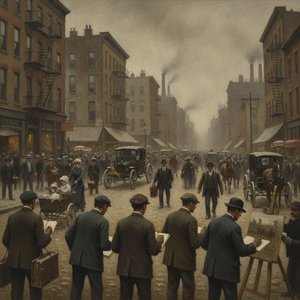
The Ashcan School: Capturing the Raw, Unfiltered Soul of Urban Life through American Realism
Discover the raw beauty of the Ashcan School. Explore how masters like Bellows and Henri captured the gritty, vibrant soul of early 20th-century New York through profound American Realism and evocative urban landscapes.

The Unvarnished Truth: A Cultural Journey Through the Soul of American Realism
Explore the profound beauty of American Realism. From the Ashcan School's urban grit to intimate portraits, discover how artists captured the authentic soul of a nation through unvarnished truth and masterful observation.
Udforsk kunstværker organiseret efter temaer, stilarter og karakteristika.
