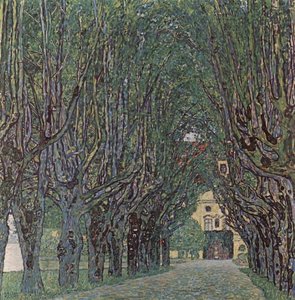
A Serene Escape: Unveiling Gustav Klimt’s “Island”
Gustav Klimt's "Island," painted around 1907-1908, is a captivating example of his mature style – a harmonious blend of Symbolism, Art Nouveau, and the profound influence of Japonisme. This evocative landscape offers not merely a depiction of nature, but an invitation to contemplation and emotional resonance.
Subject & Composition
The painting presents a tranquil scene: a small island nestled within a body of water, likely a lake or calm sea. A solitary female figure is subtly integrated into the composition, almost merging with the surrounding foliage. The foreground features lush vegetation, while the background dissolves into hazy atmospheric perspective, creating a sense of depth and mystery. Klimt deliberately flattens the pictorial space, characteristic of his approach, reducing forms to decorative shapes reminiscent of Japanese woodblock prints. This technique emphasizes pattern and surface design over traditional illusionistic representation.
Style & Technique
“Island” exemplifies Klimt’s mastery of modernist techniques. He employs a limited palette dominated by muted greens, blues, and golds, creating a harmonious and soothing effect. The application of paint is loose and fluid, with visible brushstrokes contributing to the painting's textural richness.
Abstraction,
simplification, and
stylization are key features – forms are reduced to their essential elements, and details are minimized in favor of overall decorative impact. The influence of
Japonisme is particularly evident in the flattened perspective, asymmetrical composition, and emphasis on linear patterns.
Historical Context & Japonisme
The late 19th and early 20th centuries witnessed a surge of interest in Japanese art and culture within Europe – a phenomenon known as
Japonisme. Klimt, along with other artists associated with the Vienna Secession, was deeply inspired by the aesthetic principles of Japanese prints. These included bold compositions, flattened perspectives, decorative patterns, and a focus on natural motifs. “Island” reflects this influence through its stylized forms, harmonious color palette, and overall sense of tranquility. Klimt’s work also emerged within the broader context of
Art Nouveau, characterized by sinuous lines, organic forms, and a celebration of beauty and craftsmanship.
Symbolism & Emotional Impact
While seemingly straightforward in its depiction of nature, “Island” is rich in symbolic meaning. The island itself can be interpreted as a symbol of isolation, refuge, or the feminine principle. The female figure, partially obscured by foliage, embodies sensuality and mystery. The painting evokes a sense of peaceful solitude and invites viewers to escape from the pressures of modern life. Its muted colors and harmonious composition create a calming atmosphere, fostering contemplation and emotional well-being.
Collecting & Interior Design
A reproduction of Klimt’s “Island” would be a stunning addition to any art collection or interior space. Its serene palette and elegant design make it particularly well-suited for bedrooms, living rooms, or studies. The painting's harmonious composition complements both modern and traditional décor styles. Its subtle symbolism adds depth and intrigue, making it a conversation starter and a source of ongoing inspiration.
- Ideal for creating a calming and sophisticated atmosphere.
- Complements a variety of interior design aesthetics.
- A timeless piece that will enhance any art collection.



 Preview
 Bestil maleri
 Del
Del Del
Del
 Detaljer

 Download
 Lignende værker
 Røntgenundersøgelse
 Diasshow
 Se mere






































 Glasmulighed er kun tilgængelig i størrelser under 110 cm