

 Se i rummet
 Del som kort
 Del
Del
 Detaljer
 Guide
Guide

 Download
 Lignende værker
 Røntgenundersøgelse
 Diasshow
 Q&A
Q&A Statistikker
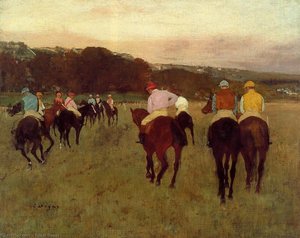
Racehorses


Experience Edgar Degas's masterful Racehorses – an iconic Impressionist painting capturing movement and elegance with vibrant colors and meticulous detail. Explore its history & significance at TopImpressionists.
 Vis mere
Edgar Degas: En revolutionerende fransk kunstner kendt for sine fængslende balletdanser, parisanske scener og innovative teknikker – en sand mester i moderne kunst.
Giclée / Kunsttryk
Giclée- eller lærredstryk i museumskvalitet med hurtig produktion og fleksible muligheder for finish. ( Køb håndmalet maleri Skift til digitalt billede)




P118B Dkr10

P118H Dkr10

P118W Dkr10

P438Z Dkr10

P508JH Dkr12

P508YH Dkr12

P805H Dkr10

P805Z Dkr10

P919BZ Dkr10

P919G Dkr10

P919XJ Dkr10

P959ZH Dkr10

P968JZ Dkr12

W106C Dkr8

W218G Dkr10

W218JH Dkr8

W218Y Dkr10

W307PJ Dkr10

W316G Dkr10

W316PJ Dkr8

W316Y Dkr10

W398PJ Dkr8

W4111J Dkr10

W500HY Dkr15

W500JH Dkr15

W692G Dkr12

W849H Dkr8

W940BG Dkr15

W953PJ Dkr8




Standardstørrelse
speciallavet
CM
INCH
Vælg mellem vores forudindstillede størrelser, der matcher kunstværkets originale proportioner.
Loading sizes...

bredde
højde
Indtast den bredde og højde, du har brug for, så det passer til din ramme eller din væg. Et print kan kun beskæres, aldrig gøres større end selve billedet, så en størrelse med et andet format vil medføre, at dele af motivet går tabt. Vi sender dig en digital mockup til godkendelse, før vi printer noget. Billedet vist på denne side viser ikke den faktiske beskæring — det er kun mockuppen, der gør.
Verdensomspændende levering () på 2 uger i stedet for de sædvanlige 4/5 uger. (1 november)

Gratis ekspresforsendelse til hele verden

Lærred af linned i høj kvalitet

Fuld transportforsikring

Garanti for refusion af told og importafgifter

Garanti for præcis farvegengivelse

100 dages returret ved fabrikationsfejl

100% fuld returret

Mængderabat ved flere køb
 Glasmulighed er kun tilgængelig i størrelser under 110 cm

Racehorses
Giclée / Kunsttryk
Størrelse på reproduktion
-


Samlet pris
Dkr 465
The Pulse of the Turf: Degas’s Mastery of Motion
In the heart of 1884, Edgar Degas captured a moment that transcends the mere spectacle of sport, offering instead a profound meditation on vitality and the fleeting nature of time. “Racehorses” is not simply a depiction of a sporting event; it is a rhythmic symphony of muscle, speed, and light. As the jockeys surge across the verdant expanse of the countryside, the viewer is pulled into a world where the boundaries between man and beast blur under the shared intensity of the race. Degas, a master of observing the unscripted moments of modern life, utilizes the landscape not just as a backdrop, but as a stage for an epic display of kinetic energy. The presence of two birds soaring serenely above the fray provides a poignant contrast, a touch of celestial stillness that emphasizes the earthbound thunder of the galloping hooves.
To gaze upon this work is to experience the very essence of Impressionism through a lens of rigorous realism. While many of his contemporaries sought to dissolve form into light, Degas maintained a steadfast devotion to anatomical precision. In “Racehorses,” one can trace the deliberate tension in the horses' limbs and the focused posture of the riders, a testament to his deep study of movement. His technique involves a sophisticated use of broken brushstrokes, applying thin, luminous layers of oil paint that allow light to dance across the textured surfaces of the horses' coats and the lush, grassy terrain. This method creates a palpable sense of depth, guiding the eye from the immediate foreground through a middleground of action into a soft, atmospheric distance.
A Fusion of Traditions and Modernity
The brilliance of this piece lies in its unexpected synthesis of diverse artistic influences. Degas was deeply moved by the Ukiyo-e woodblock prints of Japan, which championed bold outlines and unconventional perspectives. In “Racehorses,” we see the echoes of this Eastern aesthetic in the way he manipulates space and composition, creating a sense of immediacy that feels almost photographic. Yet, beneath this modern arrangement lies a foundation of classical training. His ability to render the subtle shifts in shadow and the rich, earthy palette of the landscape speaks to a lifetime spent studying the masters of the Louvre. This duality—the tension between the structured and the spontaneous—is what gives the painting its enduring emotional resonance.
For the discerning collector or interior designer, “Racehorses” offers more than just aesthetic beauty; it brings an atmosphere of adventure and unbridled freedom into a space. The painting serves as a window into a bygone era of elegance and excitement, making it a commanding centerpiece for any curated collection. Whether placed in a sunlit gallery or a sophisticated study, the work’s vibrant energy and masterful execution invite continuous contemplation. It is an invitation to pause and witness the breathtaking beauty of life caught in mid-motion, a timeless tribute to the spirit of the race.
Spørgsmål og svar
Hvilken type værk er "Racehorses"?
I kataloget er "Racehorses" af Hilaire-Germain-Edgar Degas registreret som WallArt. Kategorien hjælper med at finde lignende værker.
Hvilken følelsesmæssig tone ledsager Impressionistic Movement-stilen i "Racehorses"?
Den Calm stemning i "Racehorses" ledsager dens Impressionistic Movement stil.
Hvordan relaterer farverne i "Racehorses" af Hilaire-Germain-Edgar Degas sig til værkets følelsesmæssige udtryk?
Den Dark farvepalet i "Racehorses" af Hilaire-Germain-Edgar Degas harmonerer med værkets Calm følelsesmæssige tone. Farven er en af de måder, et værk formidler følelser på.
Lignende kunstværker



Kunstnerbiografi
En Liv Immerseret i Bevægelse
Edgar Degas, født Hilaire-Germain-Edgar De Gas i Paris i 1834, var en kunstner af fascinerende modsætninger. Selvom han ofte er grupperet sammen med Impressionisterne – Monet, Renoir og andre, der revolutionerede maleriet i det sene 1800-tal – nægtede han aktivt at blive betragtet som en del af denne bevægelse, idet han hellere identificerede sig som en realist. Denne forpligtelse skyldtes hans omhyggelige observation af verden omkring ham og en dedikation til at portrættere den med upartisk ærlighed. Degas’s tidlige liv var komfortabelt bourgeois; hans far var bankmand, og hans mor kom fra en kreolsk familie i New Orleans. Denne baggrund gav ham adgang til uddannelse og kunstnerisk træning, selvom han ofte grublede over akademiske begrænsninger. Han begyndte oprindeligt ved Lycée Louis-le-Grand, men sin egentlige uddannelse begyndte, da han begyndte at kopiere værker i Louvre, hvorved han skar sine færdigheder og antændte en livslang passion for klassisk kunst. Dog var Degas’s vej ikke én af streng overholdelse af tradition; den var præget af konstant spørgsmål og omvurdering af kunstneriske normer. Han besad et uafhængigt åndssæt, der ville definere hele hans karriere.Uden for Impressionismen: En Unik Kunstnerisk Vision
Mens samtidige som Monet jagte de flygtende effekter af lys udendørs, arbejdede Degas primært inden for grænserne for sit atelier, omhyggeligt konstruerede scener fra observation og hukommelse. Hans emner var bestemt moderne – et fald fra historiske eller mytologiske temaer, som foregudstrukket af mange akademiske malere. Han fandt inspiration i de daglige liv af parisianere: vasketrættere, cabaret-sangerinder, hattemakere og, mest fremtrædende, balletdanser. Det er denne fascination med ballet, der definerer meget af hans oeuvre. Degas malede ikke blot smukke balleriner; han fangede den slidende virkelighed af deres profession – de endeløse prøver, den fysiske anstrengelse, de flygtige øjeblikke af elegance midt i en verden af hårdt arbejde. Hans kompositioner er ofte ukonventionelle, hvor figurer klippes på uventede måder og bruger asymmetriske arrangementer for at skabe en følelse af dynamik og øjeblikkelighed. Han var en mester i at fange bevægelse, ikke gennem slørede linjer eller tågede effekter, men gennem præcis observation og omhyggelig gengivelse af form. *Dancer, A Group of Dancers* og *Women Combing Their Hair* er eksempler på denne dedikation til at portrættere det menneskelige væsen i bevægelse og afsløre kompleksiteten af moderne liv. Han var ikke interesseret i overfladisk skønhed; han søgte at afsløre sandheden under overfladen.Indflydelser og Kunstnerisk Udvikling
Degas’s kunstneriske rejse blev formet af en mangfoldighed af indflydelse. Hans tidlige uddannelse lagde vægt på klassiske principper, især arbejdet fra Jean-Auguste-Dominique Ingres, hvis betoning på håndværk og præcis form efterlod et varigt indtryk. Dog beundrede Degas også Realisterne, såsom Gustave Courbet, der udfordrede akademiske normer og fremmede portrætteringen af nutidig liv. Et centralt øjeblik i hans udvikling kom gennem hans tilknytning til Camille Pissarro, en førende Impressionist, der introducerede ham for andre kunstnere og opfordrede ham til at eksperimentere med nye teknikker. Han blev betaget af japanske tryk – Ukiyo-e – som påvirkede hans brug af asymmetriske kompositioner, fladperspektiver og dristige mønstre. Han omfavnede også fotografi, anerkendte dets potentiale som et værktøj til at studere bevægelse og fange flygtende øjeblikke i tiden. Denne villighed til at inkorporere forskellige indflydelser i sit arbejde er det, der gør Degas unik og bidrager til karakteren af hans kunst. Han var ikke bange for at låne fra forskellige kilder og syntetisere dem til noget helt nyt.Vigtigste Opnåelser og Historisk Betydning
Edgar Degas døde i Paris i 1917, efterlod sig et værk, der fortsat fanger og inspirerer publikum i dag. Hans innovative tilgang til komposition, hans mesterlige håndværk og hans upartiske portrættering af moderne liv har haft en dybtgående indvirkning på kunsthistorien. Han banede vejen for fremtidige generationer af kunstnere, der søgte at bryde med traditionelle konventioner og udforske nye måder at repræsentere verden omkring dem. Hans indflydelse kan ses i arbejdet fra Pablo Picasso og Henri Matisse blandt andre. Museer over hele verden – herunder Musée d'Orsay og Musée de l’Orangerie i Paris – huser betydelige samlinger af hans malerier, pasteller, skulpturer og tryk, hvilket sikrer, at hans arv vil bestå for kommende generationer. Degas var ikke blot en maler af balleriner eller heste; han var en skarp observatør af menneskelig natur, en mester i form og bevægelse og en sand innovator, der omdefinerede mulighederne for kunst.
Hilaire-Germain-Edgar Degas
1834 - 1917 , Frankrig
Kort om kunstneren
- Artistic Movement Or Style: Impressionisme, Realisme
- Artists Or Movements Influenced By This Artist:
- Picasso
- Matisse
- Artists Who Influenced This Artist:
- Ingres
- Courbet
- Pissarro
- Date Of Birth: 1834
- Date Of Death: 1917
- Full Name: Hilaire-Germain Edgar De Gas
- Nationality: Fransk
- Notable Artworks:
- Danser og Tamburin
- Balletklasse
- Degas i grøn jakke
- Samleren
- Place Of Birth: Paris, Frankrig
Relaterede artikler

The Noble Steed on Canvas: A Historical & Artistic Exploration of Horse Painting Across Cultures
Explore the rich history of horse painting! Discover masterpieces from Stubbs to Munnings & learn about symbolism, techniques & artists. Find museum-quality reproductions at TopImpressionists.

Impressionismens Mestre: Top 10 Kunstværker til Dit Hjem – TopImpressionists.dk
Oplev impressionismens magi! Dyk ned i top 10 kunstværker af Monet, Renoir & Degas. Lær historierne bag disse ikoniske malerier og find inspiration til din indretning. Museumskvalitet reproduktioner på TopImpressionists.com – udforsk samlingen online!

Top 10 Impressionistiske Mesterværker: Kunst der Forandrede Verden |
Oplev de 10 mest ikoniske impressionistiske mesterværker! Dyk ned i Monet, Renoir og Degas' verden. Lær historierne bag disse berømte malerier & find inspiration til din indretning på . Udforsk samlingen online!

Edgar Degas: Capturing Modern Life – A Study of Movement, Observation, and the Parisian Belle Époque
Explore the captivating world of Edgar Degas! Discover his innovative techniques, iconic ballet paintings, and unique portrayal of Parisian life in this insightful art history study.

Impressionismens Mestre: Top 10 Kunstværker der Definerede en Epoke – TopImpressionists.dk
Oplev impressionismens magi! Dyk ned i historierne bag 10 ikoniske malerier fra Monet, Degas og Renoir. Find inspiration til din indretning med smukke kunsttryk af høj kvalitet på TopImpressionists.com – museumskvalitet direkte til dit hjem. Udforsk samlingen online!
Udforsk kunstværker organiseret efter temaer, stilarter og karakteristika.


