

Vist: · Inklusive ramme:
 Se i rummet
 Del som kort
 Del
Del
 Detaljer
 Guide
Guide

 Download
 Lignende værker
 Røntgenundersøgelse
 Diasshow
 Spørgsmål og svar
 Statistikker


Dkr 1795
Håndlavet oliereproduktion
Håndmalet olie på lærred i din valgte størrelse og ramme, udført efter bestilling af vores kunstnere. ( Skift til printsalg Skift til digitalt billede)
Størrelse
·Standardstørrelse
speciallavet
CM
INCH
Vælg mellem vores forudindstillede størrelser, der matcher kunstværkets originale proportioner.
Indlæser størrelser...

bredde
højde
Indtast den bredde og højde, du har brug for, så det passer til din ramme eller din væg. Da dette er håndmalet, kan kunstneren ved en anden form på størrelsen male lidt mere rundt om billedet eller skære lidt væk — det er op til dig. Vi sender dig et digitalt mockup til godkendelse, før maleriet påbegyndes. Billedet, der vises på denne side, viser ikke det endelige resultat — det er kun mockuppet, der gør.
 Læs mere
Afslut
·
Hvid kant Dkr1

Udvasket kant Dkr1

Fortsat motiv Dkr1

P118B Dkr10

P118H Dkr10

P118W Dkr10

P438Z Dkr10

P508JH Dkr12

P508YH Dkr12

P805H Dkr10

P805Z Dkr10

P919BZ Dkr10

P919G Dkr10

P919XJ Dkr10

P959ZH Dkr10

P968JZ Dkr12

W106C Dkr8

W218G Dkr10

W218JH Dkr8

W218Y Dkr10

W307PJ Dkr10

W316G Dkr10

W316PJ Dkr8

W316Y Dkr10

W398PJ Dkr8

W4111J Dkr10

W500HY Dkr15

W500JH Dkr15

W692G Dkr12

W849H Dkr8

W940BG Dkr15

W953PJ Dkr8

H24-GOLD Dkr30

H24-SILVER Dkr30

H36-GOLD Dkr45

H36-SILVER Dkr45
Sendes i et beskyttende rør, klar til at blive indrammet hos din egen indrammer.
Over 105 cm sendes rammen som et sæt til en professionel indrammer — læs detaljerne.
Tillægsydelser
valgfritHvad indeholder de ekstra tilvalg?
Eksempler på hvad kan ændres: Udskift ansigt med kundens eget foto; Tilføj kæledyr (f.eks. udskift kat med hund); Inkluder skjult besked i baggrunden; Skift baggrundslandskab eller elementer.
Efter bestilling vil TopImpressionists.com-teamet sende en e-mail til kunden for at få instruktioner og levere et udkast til forhåndsvisning
Efter bestilling vil TopImpressionists.com-teamet sende en e-mail til kunden for at få instruktioner og levere et udkast til forhåndsvisning
Verdensomspændende levering () på 3-4 uger i stedet for de standard 5 uger. (7 november). Ingen kompromiser med kvaliteten.
Beskyttende fernis
Navneskilt
Detaljer om indgraveret bronzeskilt
This elegant plaque features the artist's name and the title of the artwork, finely engraved for a timeless presentation.
It is made from bronze with a refined, elegant finish. The text is precisely laser-engraved for a sharp and permanent result. Measuring 9x2 cm, the plaque is compact yet easy to read. It's built to be durable and scratch-resistant, offering a professional, museum-quality look. Mounting is simple thanks to the included adhesive backing.
Detaljer om gennemsigtig akrylplade
The plaque includes essential engraved details such as the artist's name, the title of the artwork, the date it was created, the type of media used-like oil on canvas or watercolor-a brief description of the piece, and a QR code that links to the complete artwork information.
It is crafted from clear acrylic, offering a sleek, modern appearance. The text is UV-engraved in black to ensure strong visual contrast. With a size of 10x15 cm, it ensures optimal readability. It comes equipped with two metal hooks for secure wall mounting. The plaque is designed to be weather-resistant, making it suitable for various environments, and it includes interactive features that work seamlessly with smartphone scanning.
Detaljer om sort akrylplade
This elegant plaque includes engraved information such as the artist's name, the title of the artwork, the date it was created, the type of media used (like oil on canvas or watercolor), a short description of the artwork, and a QR code for quick access to more information.
The plaque itself is made from refined black acrylic with a premium finish. The text is laser-engraved in white for high contrast and readability. Its size is 10x15 cm, designed to be easy to read. It comes with two metal hooks for professional mounting. The design is sleek and fits any interior style. It is also weather-resistant and durable, with built-in digital integration for mobile compatibility.
Glasmulighed er kun tilgængelig i størrelser under 110 cm
 Glasmulighed er kun tilgængelig i størrelser under 110 cm
- Gratis ekspresforsendelse til hele verden
- Lærred af linned i høj kvalitet
- Fuld transportforsikring
- Garanti for refusion af told og importafgifter
- Garanti for præcis farvegengivelse
- 100 dages returret ved fabrikationsfejl
- 100% fuld returret
- Mængderabat ved flere køb


Beskrivelse af samlerobjektet
Admire Johann Zoffany’s ‘George III,’ a stunning 1771 royal portrait showcasing the King's power & elegance. A historical masterpiece by a renowned artist, now available as a handmade oil painting.
Kunstnerbiografi
"Dansk meta beskrivelse": "Johan Zoffany var en dansk-tysk maler kendt for sine levende samtalebilleder fra det 18. århundrede, der fanger aristokratiets liv og kultur. Hans mest berømte værk er Tribunaen i Uffizi, et mesterværk af detalje og observation."
Om maleriet
The Majesty of a King: An Exploration of Zoffany’s ‘George III’
Johann Zoffany's “George III” is more than just a portrait; it’s a meticulously constructed tableau vivant, a frozen moment brimming with historical significance and subtle theatricality. Completed in 1771, this oil on canvas painting offers a rare glimpse into the life of King George III during a period of profound political and personal upheaval. Zoffany, a German-born artist who found his most enduring success in England, masterfully blended elements of Italian portraiture with the burgeoning conventions of the ‘conversation piece’ – a genre that favored informal group settings and layered symbolism.
The painting immediately commands attention through its opulent setting. The King is seated within a richly appointed room, reminiscent of an Italian villa or a grand salon, complete with a meticulously rendered violoncello, a symbol of musical refinement and aristocratic leisure. However, the true brilliance lies in the details – the intricate patterns on the wallpaper, the carefully chosen objects adorning the walls, each contributing to a complex web of meaning. This isn’t merely a depiction of royalty; it's an assertion of power, a visual declaration of George III’s status as both a sovereign and a cultivated gentleman.
A Stage for Power: Symbolism and Context
Zoffany was acutely aware of the political climate surrounding his subject. George III inherited a throne beset by challenges – a fragile peace following the Seven Years' War, mounting debts, and growing tensions with the American colonies. The King’s posture, his gaze directed towards an unseen observer (often interpreted as a young boy), conveys a sense of both authority and vulnerability. He is dressed in the formal attire of a General, complete with medals and a sash – emblems of military prowess and royal rank. The inclusion of the Order of the Garter, one of the most prestigious chivalric orders in Britain, further reinforces his position as a key figure within the nation’s elite.
Beyond the obvious symbols of power, Zoffany employs subtle visual cues to suggest the complexities of George III's reign. The presence of the violoncello, for instance, is not simply decorative; it alludes to the King’s musical interests and his patronage of artists and musicians – a carefully cultivated image designed to project an aura of sophistication and refinement. The inclusion of a young boy in the painting has been interpreted as representing the future of the monarchy, but also perhaps hinting at the challenges George III faced in securing a legitimate heir.
Technique and Artistic Legacy
Zoffany’s skill lies not only in his ability to capture likenesses with remarkable accuracy but also in his masterful use of light and shadow. The dramatic lighting highlights the King's face, emphasizing his features and conveying a sense of gravitas. The artist employs a technique reminiscent of both Italian portraiture and Dutch genre painting, creating a rich, textured surface that is both visually engaging and historically informative. His attention to detail is astonishing – from the folds in the fabric to the reflections on the polished surfaces – demonstrating a deep understanding of his subject matter and a commitment to realism.
“George III” stands as one of Zoffany’s most celebrated works, alongside “Queen Charlotte and Her Six Eldest Children.” Reproductions of this iconic painting continue to captivate art lovers today, offering a window into the world of Georgian England and the complex personality of its King. The Royal Collection Trust holds the original, ensuring that this remarkable piece of history remains accessible for generations to come.
Further Information:
Spørgsmål og svar
Hvornår blev "George III" skabt, og hvilken stilart tilhører det?
"George III" blev skabt i 1771 som et værk inden for Neoclassicism-bevægelsen. Datoen og stilen forankrer kunstværket i kunsthistorien.
Hvor intense er farverne i "George III" af Johan Zoffany?
Farverne i "George III" af Johan Zoffany har en Monochromatic intensitet.
Hvilket motiv og hvilken stemning forener "George III" af Johan Zoffany?
"George III" af Johan Zoffany skildrer portrait, royalty, british history, 18th century, military, formal, dignified, zoffany i en Elegant stemning. Motiv og atmosfære beskriver tilsammen værket.
Hurtige fakta og kunstquiz
Om Johan Zoffany

Johan Zoffany
1733 - 1810, Tyskland
Kunstnerbiografi
Johan Zoffany: Et Vindue Ind i Det Britiske Samfund
Johan Zoffany, født Johannes Josephus Zaufallij i Freiburg i 1733, var en tysk-født maler, der opnåede international anerkendelse primært i England og Italien. Hans tidlige liv forbliver dog noget sparsomt beskrevet, men det er kendt, at han modtog kunstnerisk uddannelse fra en ung alder. Han begyndte sin karriere som elev hos en skulptør, muligvis Melchior Paulus i Ellwangen, før han studerede under Martin Speer i Regensburg. Denne tidlige træning lagde grundlaget for hans senere succes og evne til at fange essensen af menneskelige interaktioner.
I 1750 rejste Zoffany til Rom, hvor han blev optaget i atelieret hos Agostino Masucci – en italiensk mester kendt for sin dybe forståelse af lys og farve. Her finpudsede han sine færdigheder indenfor den italienske kunsttradition. Senere, i 1760, flyttede han til England, hvor han i første omgang tjente som dekorationsmaler for ure fremstillet af Stephen Rimbault. Denne periode markerede et skelsætningspunkt, da han begyndte at opbygge forbindelser og vinde anerkendelse i London’s kunstscene.
Royal Patronage og Kunstnerisk Udvikling
Zoffany fangede hurtigt opmærksomheden hos Kong Georg III og Dronning Charlotte, og blev dermed en foretrukken portrætmaler for den kongelige familie. Hans evne til at skildre uformelle øjeblikke – som det ikoniske billede af Queen Charlotte and Her Two Eldest Children (1765) – adskilte ham fra mere formelle hofmalere. Han var også populær blandt den østrigske kejserlige familie og blev udnævnt til baron i Det Hellige Romerske Rige i 1776 af Kejserinde Maria Theresa.
Mesteren af ‘Samtalebilleder’
Zoffany blev berømt for sine “samtalebilleder,” eller *conversazione* – uformelle gruppebilleder, der skildrer sociale sammenkomster. Han udmærkede sig ved at fange personligheder og interaktioner indenfor disse scener, ofte med prominente figurer fra samfundet, teatret og litteraturen. Hans værker som The Cope Family (1775) illustrerer denne stil, og giver et indblik i livet for hans kunder. Disse billeder er ikke blot portrætter; de er miniature-scener af det sociale liv, der fanger øjeblikke af samtale, latter og intimitet.
Vigtigste Resultater og Bemærkelsesværdige Værker
- Tribuna of the Uffizi (1772–1778): Hans mest berømte værk, en minutiøst detaljeret gengivelse af Uffizi-galleriet i Firenze. Dette billede er et mesterværk inden for arkitektonisk præcision og historisk dokumentation.
- Dr William Hunter Teaching Anatomy at the Royal Academy (1779): Et fascinerende portræt af medicinsk uddannelse og videnskabelig undersøgelse, der giver et unikt indblik i den akademiske verden på det tidspunkt.
- George III (1771): Et kongeligt portræt, der viser Kong Georgs magt og værdighed.
- Colonel Mordaunt's Cock Match (1784–1786): En livlig gengivelse af koloniale forhold i Indien, der fanger en unik kulturel begivenhed.
År i Indien og Senere Liv
Fra 1783 til 1789 boede Zoffany i Indien, hvor han malede portrætter af fremtrædende figurer som Warren Hastings og Asaf-ud-Daula. Hans oplevelser der bidrog til hans kunstneriske stil og emnevalg. En bemærkelsesværdig historie fra denne periode handler om et skibbrud i Andamanerne, hvor overlevende var tvunget til at anvende ekstreme forholdsregler for at overleve.
Indflydelser og Arv
Zoffany’s værker afspejler indflydelse fra både tysk præcision og italiensk kunst. Han blev påvirket af kunstnere som Agostino Masucci og trak inspiration fra den barokke tradition. Hans stil, derimod, har haft en betydelig indflydelse på samtidige kunstnere, der var interesserede i portrætter og social kommentar. Han broderede kunstneriske traditioner sammen og efterlod et vedvarende aftryk på 1700-tallets kunst.
Historisk Betydning
Johan Zoffany’s malerier giver værdifulde indsigter i det sociale skikke, intellektuelle livet og de kulturelle værdier i hans tid. Hans “samtalebilleder” tilbyder intime portrætter af prominente individer og deres verden, mens hans gengivelser af Indien bidrager til vores forståelse af kolonihistorien. Han er en betydningsfuld figur i kunsthistorien, der fejres for sin tekniske dygtighed, sine skarpe observationer og hans unikke kunstneriske vision.
Hurtige fakta om Johan Zoffany
- Artistic Movement Or Style: Neoklassisk, Realisme
- Artists Or Movements Influenced By This Artist: ['Zoffanis stil påvirkede senere kunstnere']
- Artists Who Influenced This Artist:
- Agostino Masucci
- Martin Speer
- Date Of Birth: 13. marts 1733
- Date Of Death: 11. nov. 1810
- Full Name: Johann Zoffany
- Nationality: Tysk
- Notable Artworks:
- Tribuna Uffizi
- Dr. William Hunter
- Kong Georg III
- Colonel Mordaunt
- Place Of Birth: Frankfurt, Tyskland
Udforsk kunstværker organiseret efter temaer, stilarter og karakteristika.
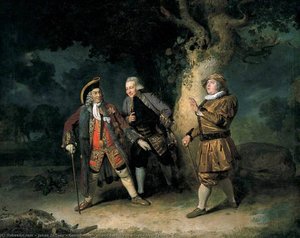


Johan Zoffany
George III
() ·
Inklusive ramme: · Håndmalet med olie på lærred
Totalbeløb