

 Se i rummet
 Del som kort
 Del
Del
 Detaljer
 Guide
Guide

 Download
 Lignende værker
 Røntgenundersøgelse
 Diasshow
 Spørgsmål og svar
 Statistikker
Landscape


Explore John Henry Twachtman’s ‘Landscape’ (1887). An atmospheric Impressionist painting of a rural cottage & hills, showcasing visible brushwork & muted tones. Discover Tonalist beauty!
 Vis mere
John Henry Twachtman (1853-1902): En pioner inden amerikansk impressionisme og tonalistisk landskabsmaleri. Oplev hans atmosfæriske værker, herunder 'Arques-la-Bataille', og hans indflydelse på kunstens udvikling.
Giclée / Kunsttryk
Giclée- eller lærredstryk i museumskvalitet med hurtig produktion og fleksible muligheder for finish. ( Køb håndmalet maleri Skift til digitalt billede)




P118B Dkr10

P118H Dkr10

P118W Dkr10

P438Z Dkr10

P508JH Dkr12

P508YH Dkr12

P805H Dkr10

P805Z Dkr10

P919BZ Dkr10

P919G Dkr10

P919XJ Dkr10

P959ZH Dkr10

P968JZ Dkr12

W106C Dkr8

W218G Dkr10

W218JH Dkr8

W218Y Dkr10

W307PJ Dkr10

W316G Dkr10

W316PJ Dkr8

W316Y Dkr10

W398PJ Dkr8

W4111J Dkr10

W500HY Dkr15

W500JH Dkr15

W692G Dkr12

W849H Dkr8

W940BG Dkr15

W953PJ Dkr8




Standardstørrelse
speciallavet
CM
INCH
Vælg mellem vores forudindstillede størrelser, der matcher kunstværkets originale proportioner.
Loading sizes...

bredde
højde
Indtast den bredde og højde, du har brug for, så det passer til din ramme eller din væg. Et print kan kun beskæres, aldrig gøres større end selve billedet, så en størrelse med et andet format vil medføre, at dele af motivet går tabt. Vi sender dig en digital mockup til godkendelse, før vi printer noget. Billedet vist på denne side viser ikke den faktiske beskæring — det er kun mockuppen, der gør.
Verdensomspændende levering () på 2 uger i stedet for de sædvanlige 4/5 uger. (5 november)

Gratis ekspresforsendelse til hele verden

Lærred af linned i høj kvalitet

Fuld transportforsikring

Garanti for refusion af told og importafgifter

Garanti for præcis farvegengivelse

100 dages returret ved fabrikationsfejl

100% fuld returret

Mængderabat ved flere køb
 Glasmulighed er kun tilgængelig i størrelser under 110 cm

Landscape
Giclée / Kunsttryk
Størrelse på reproduktion
-


Samlet pris
Dkr 468
A Symphony of Light and Earth: Rediscovering Twachtman’s Landscape
In the quiet corners of American art history, few works capture the ephemeral breath of nature as poignantly as John Henry Twachtman’s 1887 Landscape. This evocative oil painting serves as a window into a pivotal era when the rigid structures of academic realism began to dissolve, giving way to the luminous, atmospheric possibilities of American Impressionism. At first glance, the viewer is greeted by a rural sanctuary—a weathered cottage nestled deeply within a cradle of dense foliage and rolling hills. Yet, to look closer is to enter a world where form is secondary to feeling. The composition does not demand your attention through sharp lines or dramatic focal points; instead, it invites you into a soft, overcast dreamscape where the boundaries between the earth and the sky seem to blur under a heavy, contemplative mist.
The subject matter, while seemingly humble, carries a profound sense of tranquility and a whisper of melancholy. The small dwelling, tucked away amongst the undulating terrain, evokes themes of solitude and the enduring relationship between humanity and the natural world. There is no grand spectacle here, only the quiet dignity of a rural life existing in harmony with the seasons. For the collector or interior designer, this piece offers more than mere decoration; it provides an emotional anchor, a sense of peace that can transform a modern living space into a sanctuary of reflection.
The Mastery of Texture and Tonalism
Twachtman’s technical prowess is most evident in his masterful use of the wet-on-wet technique. By applying pigment to a still-moist canvas, he achieved a seamless fluidity that allows colors to bleed into one another, mimicking the way light diffuses through a humid, cloudy atmosphere. This method creates subtle gradations of tone that are essential to the painting's depth. The artist utilizes a thick impasto application, particularly within the foliage and the textured walls of the cottage, which lends a tactile, three-dimensional quality to the work. When light hits a high-quality reproduction of this piece, these raised textures catch the eye, creating a dynamic interplay of shadow and highlight that breathes life into the canvas.
The color palette is intentionally muted, leaning into the traditions of Tonalism—a style characterized by its use of neutral, atmospheric hues such as soft grays, deep blues, and earthy browns. This restrained approach prevents any single element from overpowering the scene, ensuring that the overall mood remains cohesive and immersive. The organic, flowing lines of the hills and trees guide the eye in a rhythmic dance across the canvas, suggesting a world in constant, gentle motion. It is this delicate balance of heavy texture and soft color that makes the work so captivating for those who appreciate the nuanced complexities of Post-Impressionist influence.
An Enduring Legacy for the Discerning Collector
Owning a piece inspired by Twachtman is an engagement with the very roots of American modernism. As a member of the influential "The Ten," Twachtman pushed the boundaries of what landscape painting could achieve, moving away from literal representation toward an expressive, personal vision. This 1887 masterpiece stands as a testament to that rebellion—a rejection of the idealized in favor of the authentic and the atmospheric. For those seeking to curate a collection that speaks to sophistication and historical depth, this landscape offers an unparalleled opportunity.
Whether placed in a sunlit gallery or a moody, contemporary study, the painting’s ability to evoke a sense of timelessness is unmatched. It does not merely depict a scene; it captures a mood, a moment of stillness in an ever-changing world. For the interior designer, it serves as a sophisticated centerpiece that complements both classical and minimalist aesthetics, bringing with it a storied past and a profound, quiet beauty that continues to resonate more than a century after its creation.
Spørgsmål og svar
Hvor lys eller mørk fremstår "Landscape" af John Henry Twachtman?
Den oplevede lysstyrke i "Landscape" af John Henry Twachtman er shadow. Den kan tilpasses lyset i det tiltænkte rum.
Hvor og til hvilket formål anbefales "Landscape"?
"Landscape" af John Henry Twachtman anbefales til Mood, ideelt set i et Wellness Center. Anvendelse og rum skaber sammen rammen om, hvor en reproduktion passer ind.
Hvilken national oprindelse ligger bag Impressionism i "Landscape"?
"Landscape" forbinder Impressionism-bevægelsen med USA gennem skaberens fødested.
Lignende kunstværker


Kunstnerbiografi
John Henry Twachtman: En Pioner af Amerikansk Impressionisme
John Henry Twachtman, født i Cincinnati, Ohio, den 4. august 1853, står som en central figur i udviklingen af amerikansk impressionisme. Hans rejse fra akademisk uddannelse til en unikt personlig stil afspejler ikke kun hans kunstneriske udvikling, men også de bredere skift, der fandt sted i det amerikanske kunstmiljø i slutningen af det 19. og begyndelsen af det 20. århundrede. Twachtmans historie er en fortælling om konstant udforskning, en rastløs søgen efter at fange atmosfære og følelser gennem farve og lys – et strejf, der har sat sit præg på landskabstraditionen. Hans tidlige kunstneriske grundlag kom under Frank Duveneks vejledning i hjembyen, en formative oplevelse, der indgydede ham en dedikation til direkte observation og en afvisning af overidéaliserede repræsentationer. Denne tidlige uddannelse lagde fundamentet for hans senere omfavnelse af mere progressive teknikker.Europæiske Indflydelser og Omfavnelse af Tonalisme
Drevet af et ønske om at forfine sine færdigheder og udvide sit kunstneriske horisont, rejste Twachtman på studietur til Europa, der viste sig at være transformativ. Mellem 1875 og 1877 deltog han i Kunstakademiet i München, hvor han absorberede principperne for en løst penslet, skyggefuld teknik, der var udbredt på det tidspunkt. Et efterfølgende besøg i Venedig med William Merritt Chase fik yderligere ild til hans passion for at fange lysets nuancer og atmosfære. Disse europæiske erfaringer var afgørende for at forme hans kunstneriske vision, men Twachtman kopierede aldrig blot det, han mødte i udlandet; snarere syntetiserede han disse indflydelser til noget helt unikt. Perioden mellem 1883 og 1885 fandt ham på Académie Julian i Paris, et vendepunkt, hvor hans stil begyndte at samle sig omkring en blødere, mere atmosfærisk tilgang – en bevægelse, der ville definere hans signaturæstetik. Det var under denne parisiske interlude, at han fuldt ud omfavnede Tonalisme, karakteriseret ved dæmpede farver og en betoning på at skabe stemning og atmosfære. Arbejder som *Arques-la-Bataille*, nu bevaret i Metropolitan Museum of Art, illustrerer denne periode og viser hans mesterskab med tonal harmonier og evokende landskaber.Cos Cob Colony og en Personlig Impressionistisk Stil
Efter hjemkomsten til Amerika etablerede Twachtman sig i Connecticut og købte en gård i Greenwich, der blev både hjem og kunstnerisk frirum. Hans tilstedeværelse i den spirende Cos Cob art colony var afgørende, hvilket fremmede et levende kreativt fællesskab, hvor ideer blev udvekslet frit og eksperimentering opmuntredes. Han var ikke blot en kunstner, der boede i kolonien; han blev en katalysator, der inspirerede sine venner og elever med sine innovative teknikker og filosofiske tilgang til maleri. Denne periode så Twachtman bevæge sig ud over streng Tonalisme mod en meget personlig form for Impressionisme. Selvom han bevarede vægtningen af atmosfære og lys, viser hans senere værker en mere dristig brug af farve og en mere dynamisk penselstrøg. Han malede ofte sneklædte landskaber fra sin gård og have, hvilket omdannede velkendte scener til poetiske meditationer om naturens skønhed. Hans serie af livlige billeder i Gloucester, Massachusetts, forudså en mere modernistisk sansning i amerikansk kunst, og antydede de abstrakte udforskninger, der skulle komme efterfølgende.Et Arv af Atmosfære og Emotion
Twachtmans værker er kendetegnet ved deres evne til at fange øjeblikke i tiden, ikke som fotografiske gengivelser, men som udtryk for følelser og oplevelser. Han var en mester i at skabe atmosfæriske landskaber, der indfanger lysets flygtige nuancer og den subtile farvepalet. Hans kunst er ofte beskrevet som melankolsk og eftertænksom, men også fyldt med en dyb følelse af ærefrygt for naturen. Han var en vigtig figur i udviklingen af amerikansk impressionisme, og hans arbejde har inspireret generationer af kunstnere. Hans malerier er ikke blot repræsentationer af steder; de er evokende billeder af stemning, atmosfære og den følelsesmæssige forbindelse mellem menneskeheden og naturen.Vigtigste Arbejder
- Landscape 3 (c. 1894-1902): Et quintessential eksempel på Twachtmans Tonalist periode, der viser hans mesterskab med atmosfærisk perspektiv og subtile farveharmonier.
- Arques-la-Bataille (1885): Malet under sin tid i Paris, illustrerer dette værk de franske impressionisters indflydelse på hans stil.
- Reflections (c. 1902): Et roligt billede af en kajskovscene, der fanger lysets og skyggens leg på vandet.
- Brook among the Trees (1891): En fængslende pastel, der viser Twachtmans evne til at udtrykke fred og naturlighed.
- The Holland Dyke (c. 1886-1890): Demonstrerer hans færdigheder i at fange atmosfæriske effekter og subtile tonal variationer.

John Henry Twachtman
1853 - 1902 , USA
Kort om kunstneren
- Artistic Movement Or Style: Impressionisme, Tonalisme
- Artists Or Movements Influenced By This Artist: ['Amerikansk Impressionisme']
- Artists Who Influenced This Artist:
- Frank Duveneck
- William Chase
- Date Of Birth: 4. august 1853
- Full Name: John Henry Twachtman
- Nationality: Amerikansk
- Notable Artworks:
- Landscape 3
- Arques-la-Bataille
- Reflections
- Place Of Birth: Cincinnati, USA
Relaterede artikler

Capturing the Soul: The Most Emotionally Moving Impressionist and Post-Impressionist Masterpieces
Discover the profound emotional depth of Impressionist and Post-Impressionist masterpieces. Explore how legends like Monet, Van Gogh, and Gauguin captured light and soul through evocative landscapes and vibrant brushwork for a timeless connection to art history.
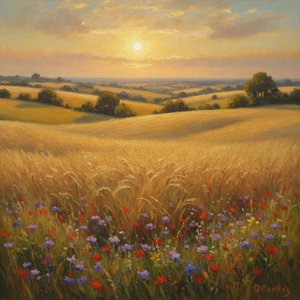
Golden Fields & Sun-Drenched Meadows: Capturing the Soul of Impressionist Landscapes
Immerse yourself in the luminous world of Impressionist landscapes. Discover how masters like Monet and Gauguin captured ephemeral light through plein air painting, and learn to bring the soul of sun-drenched meadows into your home with exquisite, hand-painted oil reproductions.
Udforsk kunstværker organiseret efter temaer, stilarter og karakteristika.


