


 Se i rummet
 Send
Send Del
Del
 Detaljer
 Studieguide til kunstværker

 Download
 Lignende værker
 Røntgenundersøgelse
 Se diasshow
 Statistik
Chamouni, Rocks and Vegetation


John Ruskin's 'Chamouni, Rocks and Vegetation' (1854) is a breathtaking watercolor depicting a mountainous alpine scene dominated by rocky cliffs and lush plant life. Executed in the style of Millais’ portrait of Ruskin, it exemplifies Ruskin’s championing of naturalism and represents a pivotal piece within his artistic legacy.
 Læs mere
John Ruskin var en dansk kunsthistoriker og filosof, hvis arbejde udforskede forholdet mellem kunst og samfund samt vigtigheden af natur og æstetik. Hans mest kendte værker inkluderer landskabsmalerier som "Dawn, Coniston" og analyser af gotisk arkitektur samt hans indflydelsesrige essays om etik og miljøbevidsthed.
Håndlavet oliereproduktion
Håndmalet olie på lærred i din valgte størrelse og ramme, udført efter bestilling af vores kunstnere. ( Skift til printversion Skift til digitalt billede)




P118B Dkr10

P118H Dkr10

P118W Dkr10

P438Z Dkr10

P508JH Dkr12

P508YH Dkr12

P805H Dkr10

P805Z Dkr10

P919BZ Dkr10

P919G Dkr10

P919XJ Dkr10

P959ZH Dkr10

P968JZ Dkr12

W106C Dkr8

W218G Dkr10

W218JH Dkr8

W218Y Dkr10

W307PJ Dkr10

W316G Dkr10

W316PJ Dkr8

W316Y Dkr10

W398PJ Dkr8

W4111J Dkr10

W500HY Dkr15

W500JH Dkr15

W692G Dkr12

W849H Dkr8

W940BG Dkr15

W953PJ Dkr8




Standardstørrelse
speciallavet
CM
INCH
Vælg mellem vores forudindstillede størrelser, der matcher kunstværkets originale proportioner.
Loading sizes...

bredde
højde
Indtast den bredde og højde, du har brug for, så det passer til din ramme eller din væg. Da dette er håndmalet, kan kunstneren ved en anden form på størrelsen male lidt mere rundt om billedet eller skære lidt væk — det er op til dig. Vi sender dig et digitalt mockup til godkendelse, før maleriet påbegyndes. Billedet, der vises på denne side, viser ikke det endelige resultat — det er kun mockuppet, der gør.
Eksempler på tilpasningsmuligheder: Udskift ansigt med kundens eget foto; Tilføj kæledyr (f.eks. udskift kat med hund); Inkluder en skjult besked i baggrunden; Ændr baggrundslandskab eller elementer.
Efter bestilling vil TopImpressionists.com team sende en e-mail til kunden for at indhente instruktioner og fremsende et udkast til gennemgang.
Efter bestilling vil TopImpressionists.com team sende en e-mail til kunden for at indhente instruktioner og fremsende et udkast til gennemgang.
Levering i hele verden () på 3-4 uger i stedet for de standard 5 uger. (22 oktober). Ingen kompromiser med kvaliteten.

Gratis ekspresforsendelse til hele verden

Lærred af linned i høj kvalitet

Komplet transportforsikring

Garanti for refusion af told og importafgifter

Garanti for autentisk farvegengivelse

100 dages returret ved fabrikationsfejl

100% fuld returret

Mængderabat ved flere køb
 Glasmulighed er kun tilgængelig i størrelser under 110 cm

Chamouni, Rocks and Vegetation
Reproduktionsmateriale
Reproduktionsstørrelse
-


Samlet pris
Dkr 1763
Ruskin’s Alpine Reverie: A Study in Texture and Moral Vision
John Ruskin's "Chamouni, Rocks and Vegetation," painted in 1854, stands as a testament to the Pre-Raphaelite movement’s fascination with capturing the sublime beauty of the natural world—a pursuit inextricably linked to ethical contemplation. More than just a landscape depiction, it embodies Ruskin’s profound belief that art should serve as a conduit for moral enlightenment, mirroring his broader philosophical stance on humanity's relationship with God and creation.- Subject Matter: The painting portrays the towering granite peaks of Mont Blanc (Chamouni), bathed in diffused sunlight—a quintessential Alpine vista meticulously rendered by Ruskin’s hand.
- Style & Technique: Ruskin championed a style characterized by painstaking detail and luminous color, prioritizing observation over idealized representation. He employed watercolor on paper, layering thin washes to build up texture and capturing the subtle nuances of light and shadow. The artist's deliberate brushstrokes convey a sense of immediacy and reverence for the grandeur of the mountain landscape.
- Historical Context: Created during Ruskin’s formative years as an art critic and intellectual, “Chamouni” reflects his burgeoning interest in geology and his conviction that understanding the physical world illuminates spiritual truths. It aligns perfectly with Millais's ambitious portrait of Ruskin at Glenfinlas, commissioned shortly after—a visual embodiment of Ruskin’s commitment to portraying nature with uncompromising honesty.
- Symbolism: The jagged rocks symbolize resilience and permanence against the relentless forces of time and decay – mirroring Ruskin’s broader moral concerns about confronting mortality and embracing virtue. The sparse vegetation represents the delicate balance between beauty and fragility, prompting viewers to consider humanity's responsibility for safeguarding the natural environment.
- Emotional Impact: Viewing “Chamouni” evokes a feeling of awe and contemplation—a desire to reconnect with the sublime grandeur of God’s creation. Ruskin aimed not merely to depict a mountain scene but to inspire a deeper appreciation for beauty, truth, and moral integrity—goals that continue to resonate powerfully with audiences today.
Detailed Examination: Texture and Color Palette
Ruskin's masterful watercolor technique is evident in the meticulous layering of washes that create an astonishingly realistic depiction of rock formations. The artist painstakingly captures the variations in tone and texture—from the rough granite surfaces to the smoother patches where lichen clings to the stone—demonstrating a dedication to observation unparalleled for his time. Furthermore, the color palette—dominated by muted blues, greens, and yellows—reflects the atmospheric conditions prevalent during Mont Blanc’s summers—a subtle yet crucial element in conveying Ruskin's vision of natural beauty.Connections to Millais’ Glenfinlas Portrait
The painting shares a striking stylistic kinship with Millais’ celebrated portrait of Ruskin at Glenfinlas, completed the following year. Both artists prioritized capturing the essence of their subject—Ruskin himself—within a landscape setting that served as a backdrop for intellectual and spiritual reflection. This deliberate juxtaposition underscores Ruskin's conviction that art should illuminate moral truths alongside aesthetic splendor—a principle that continues to inform artistic endeavors across disciplines.Legacy & Enduring Relevance
“Chamouni, Rocks and Vegetation” remains an influential work of art, anticipating the burgeoning interest in environmentalism and sustainability that would characterize the latter half of the 19th century. Ruskin’s insistence on portraying nature with uncompromising honesty—a stance rooted in his profound moral sensibility—continues to inspire artists and thinkers today—serving as a timeless reminder of the transformative power of beauty and contemplation.Spørgsmål & svar
Hvilket stemningsleje og hvilke følelser udtrykker "Chamouni, Rocks and Vegetation" af John Ruskin?
Den indfangede stemning i "Chamouni, Rocks and Vegetation" af John Ruskin er Serene, og dens følelsesmæssige tone er Tranquil.
Hvor kan jeg købe et digitalt billede af "Chamouni, Rocks and Vegetation" af John Ruskin?
For at få en digital fil af "Chamouni, Rocks and Vegetation" af John Ruskin, skal du bestille et højtopløseligt digitalt billeddownload på dens Digitalt billede-side.
Hvad er den anbefalede printstørrelse til "Chamouni, Rocks and Vegetation" af John Ruskin?
Den anbefalede trykstørrelse til "Chamouni, Rocks and Vegetation" af John Ruskin er Large.
Om kunstneren
A Polymath of Vision: The Life and Legacy of John Ruskin
John Ruskin, født i London den 8. februar 1819, var langt mere end blot en kunstkritiker; han var en viktoriansk polymat, hvis indflydelse gennemtrængte områderne æstetik, social reform, økonomi og miljøaktivisme. Hans liv blev præget af en fascinerende dualitet – den pragmatiske kommercielle verden af hans far, John James Ruskin, en succesfuld sherryhandler, og den fervente evangelisk pietet af hans mor, Margaret Cock. Denne kontrastfyldte opvækst indså i ham både et skarpt observationsøjeblik for detaljer og en dybt moralsk følelse, der skulle definere hele hans værk. Fra en tidlig alder var Ruskins uddannelse omhyggeligt kurateret hjemmefra, præget af bibelsk studie og eksponering for romantisk litteratur, især værkerne af Byron og Walter Scott. Disse formative indflydelser lagde grundlaget for et sind, der konstant søgte forbindelser mellem skønhed, sandhed og etik i livet. Hans akademiske rejse fortsatte ved Christ Church, Oxford, hvor han begyndte at udtrykke sine spirende ideer om kunst og dets forhold til samfundet.The Dawn of an Art Historian: Early Writings and Influences
Ruskins fremkomst som en betydelig stemme i kunstverdenen begyndte med *Modern Painters* (1843-1860), et monumentalt fembinds værk oprindeligt koncepteret som en forsvar af J.M.W. Turner mod hvad Ruskin betragtede som uretfærdig kritik. Dog udviklede *Modern Painters* sig hurtigt til noget langt mere dybtgående – en omfattende traktat om kunstens natur selv. Han argumenterede passioneret for “sandhed til naturen,” hvorved han fremhævede, at stor kunst ikke blot handlede om dygtig repræsentation, men om kunstnerens ærlige og empatiske engagement med den naturlige verden. Dette koncept var revolutionerende på tiden, udfordrende dominerende akademiske standarder og banebrydende vej for nye kunstneriske sansninger. Ruskin analyserede ikke kun teknik; han dykkede ned i kunstens åndelige og moralske kvaliteter, hvorved han mente, at ægte skønhed afspejlede en dydig sjæl. Hans præcise beskrivelser af landskaber, klippeformationer og botaniske detaljer afslører ikke kun hans skarpe observationsfærdigheder, men også hans dybe ærbødighed for naturen som et udtryk for guddommelig skabelse. Denne tidlige værk fastslog Ruskin som en formidable kritiker og satte scenen for hans senere udforskninger indenfor arkitektur og sociale spørgsmål. Han var dybt påvirket af Pre-Raphaelittenes Broderskab, hvorved han støttede deres engagement i detaljeret observation og afvisning af akademiske konventioner.Beyond Aesthetics: Social Commentary and The Guild of St. George
Efter Ruskins modenhed udvidede hans interesser sig ud over kunstens rene æstetik. Dybt bekymret for de sociale uligheder han vidste under den industrielle revolution begyndte han at anvende sin kritiske linse på de økonomiske og politiske strukturer af viktoriansk England. *Unto This Last* (1860), en serie af essays oprindeligt udgivet i *The Cornhill Magazine*, markerede et vendepunkt i hans karriere. I dette værk kritiserede Ruskin vehementt utilitaristisk økonomi og argumenterede for en mere human og retfærdig social orden baseret på principper om fællesskab og håndværk. Han hævdede, at arbejdsghedens ære var essentiel til et blomstrende samfund og at ægte rigdom lå ikke i materielle ejendomme, men i kvaliteten af menneskelige relationer. Denne overbevisning førte ham til at grundlægge *Fors Clavigera* (1871-1884), en månedlig serie af breve adresseret “Til arbejderne og arbejdsløserne i Storbritannien,” hvor han udtrykte sine sociale og politiske ideer med karakteristisk entusiasme. Fra disse breve opstod Guild of St. George, grundlagt i 1871, en organisation dedikeret til fremme af håndværk, landbrugsindustrier og uddannelse blandt arbejdergrupper. Guilden havde til hensigt at skabe et modelsamfund baseret på Ruskins idealer, hvorved han fremmede kunstnerisk færdighed, etik i arbejde og en harmonisk relation til naturen.A Lasting Impression: Ruskin's Enduring Legacy
John Ruskin døde i Coniston, Lancashire, den 20. januar 1900, efterladende sig et enormt værk, der fortsætter med at resonere i dag. Hans indflydelse udvides langt ud over kunsthistorien og kritikken. Han forudså mange af de bekymringer, der definerer nutidens tanker – miljøaktivisme, bæredygtigt levevis og vigtigheden af håndværk. Hans skrivninger om arkitektur havde dybtgående effekt på Arts and Crafts bevægelsen, hvorved han inspirerede arkitekter som William Morris til at afvise industriel masseproduktion til fordel for håndlavede designs rodfæstet i traditionelle teknikker. Ruskins fokus på kunstens forbindelse til natur og menneskelige relationer forbliver bemærkelsesværdigt relevant i en alder, der kæmper med miljøkriser og sociale uligheder. Han var en visionær, der modtog sig konventionel visdom og argumenterede for et samfund, hvor både kunstnerisk udtryk og menneskelig værdighed værdsættes.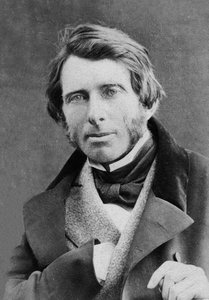
John Ruskin
1819 - 1900 , Storbritannien
Hurtige fakta
- Artistic Movement Or Style: Victorian Art, Kunstkritik
- Artists Or Movements Influenced By This Artist: ['Pre-Raphaelites']
- Artists Who Influenced This Artist: ['J.M.W. Turner']
- Date Of Birth: Februar 8, 1819
- Date Of Death: Januar 20, 1900
- Full Name: John Ruskin
- Nationality: Britisk
- Notable Artworks:
- Dawn, Coniston
- Fors Clavigera
- Place Of Birth: London, UK
Relaterede artikler

The Pre-Raphaelite Brotherhood: Rediscovering Beauty, Romance, and Medieval Magic in Victorian Art
Embark on a journey through the Pre-Raphaelite Brotherhood. Discover the romantic symbolism, medieval magic, and radical beauty of Rossetti and Burne-Jones in this expert exploration of Victorian art history.