


 Se i rummet
 Send
Send Del
Del
 Detaljer
 Guide
Guide

 Download
 Lignende værker
 Røntgenundersøgelse
 Se diasshow
 Statistik
Sonata


Marcel Duchamp's Sonata captures the harmonious interplay of four musicians—violinist, pianist, and two singers—in a meticulously crafted watercolor scene reflecting proto-cubism’s geometric abstraction.
 Læs mere
Marcel Duchamp: Revolutionerende kunstner der udfordrede kunstens definition med Dadaismen & readymades som 'Fountain'. Udforsk hans ikoniske værker og filosofiske indflydelse.
Håndlavet oliereproduktion
Håndmalet olie på lærred i din valgte størrelse og ramme, udført efter bestilling af vores kunstnere. ( Skift til printversion Skift til digitalt billede)




P118B $10

P118H $10

P118W $10

P438Z $10

P508JH $12

P508YH $12

P805H $10

P805Z $10

P919BZ $10

P919G $10

P919XJ $10

P959ZH $10

P968JZ $12

W106C $8

W218G $10

W218JH $8

W218Y $10

W307PJ $10

W316G $10

W316PJ $8

W316Y $10

W398PJ $8

W4111J $10

W500HY $15

W500JH $15

W692G $12

W849H $8

W940BG $15

W953PJ $8




Standardstørrelse
speciallavet
CM
INCH
Vælg mellem vores forudindstillede størrelser, der matcher kunstværkets originale proportioner.
Loading sizes...

bredde
højde
Du kan indtaste dine egne mål for at passe til en bestemt ramme eller plads. Hvis den valgte størrelse ikke stemmer overens med det originale billedes proportioner, vil vi enten beskære kunstværket eller udvide maleriet med yderligere håndmalede elementer. En digital skitse sendes til din godkendelse, før produktionen påbegyndes.
Bemærk venligst, at forhåndsvisningen på skærmen ikke afspejler den faktiske beskæring eller udvidelse. Kun skitsen vil nøjagtigt vise den endelige komposition.
Selvom specialmål er mulige, anbefaler vi at vælge en dimension fra den foruddefinerede liste for at bevare de originale proportioner.
Eksempler på tilpasningsmuligheder: Udskift ansigt med kundens eget foto; Tilføj kæledyr (f.eks. udskift kat med hund); Inkluder en skjult besked i baggrunden; Ændr baggrundslandskab eller elementer.
Efter bestilling vil TopImpressionists.com team sende en e-mail til kunden for at indhente instruktioner og fremsende et udkast til gennemgang.
Efter bestilling vil TopImpressionists.com team sende en e-mail til kunden for at indhente instruktioner og fremsende et udkast til gennemgang.
Levering i hele verden () på 3-4 uger i stedet for de standard 5 uger. (23 september). Ingen kompromiser med kvaliteten.

Gratis ekspresforsendelse til hele verden

Lærred af linned i høj kvalitet

Komplet transportforsikring

Garanti for refusion af told og importafgifter

Garanti for autentisk farvegengivelse

100 dages returret ved fabrikationsfejl

100% fuld returret

Mængderabat ved flere køb
 Glasmulighed er kun tilgængelig i størrelser under 110 cm

Sonata
Reproduktionsmateriale
Reproduktionsstørrelse
-


Samlet pris
$ 269
A Symphony of Fractured Light
In the quiet evolution of modernism, few moments capture the tension between tradition and revolution as poignantly as Marcel Duchamp’s 1911 watercolor, Sonata. At first glance, the viewer is invited into an intimate domestic scene—a musical gathering where four women are immersed in the rhythmic beauty of performance. Yet, as the eye lingers, the familiar boundaries of reality begin to dissolve. This is not merely a depiction of a concert; it is a profound exploration of proto-Cubist thought, where the artist begins to dismantle the physical world to reveal its underlying geometric soul. The composition breathes with a sense of spatial dynamism, as if the very air in the room is vibrating in harmony with the instruments being played.
Duchamp’s technique in Sonata serves as a bridge between the soft, atmospheric legacies of Impressionism and the sharp, intellectual rigor of Cubism. Using the delicate medium of watercolor, he employs a palette of muted, earthy tones—predominantly browns and whites—interspersed with strategic, luminous yellow accents that guide the viewer through the fractured landscape. The artist utilizes orthogonal lines and intersecting planes to break the figures into geometric segments, creating a visual puzzle that challenges the eye to reconstruct the scene. This deliberate fragmentation allows for a simultaneous viewpoint, where the depth of the room and the solidity of the chairs are reimagined through a lens of abstraction, offering a sense of movement that feels both structured and ethereal.
The Architecture of Sound and Spirit
Beyond its technical brilliance, Sonata carries a deep symbolic weight, representing the transition from "retinal art"—art intended only for the eye—to a more conceptual mode of expression. The musical theme is not incidental; it serves as a metaphor for the mathematical and rhythmic precision found within the Cubist movement. Just as a sonata is composed of structured movements that coalesce into a unified whole, Duchamp arranges his subjects—the violinist, the pianist, and their companions—into a carefully orchestrated arrangement of shapes and shadows. The presence of the two chairs, positioned to anchor the composition, provides a structural counterpoint to the fluid, breaking forms of the musicians, grounding the experimental abstraction in a recognizable human experience.
For the discerning collector or interior designer, this piece offers an unparalleled opportunity to introduce a sense of intellectual depth and historical significance into a space. Sonata is more than a decorative element; it is a conversation starter that evokes the avant-garde spirit of early 20th-century Paris. Its sophisticated use of neutral tones and geometric rhythm makes it a versatile masterpiece, capable of complementing both minimalist contemporary settings and richly textured classical interiors. To possess a reproduction of this work is to hold a fragment of the moment when art decided to break free from the mirror of reality and begin dreaming in geometry.
Om kunstneren
Marcel Duchamp – En Revolutionær Ånd
Marcel Duchamp, født Henri-Robert-Marcel Duchamp i 1887 i Blainville-Crevon, Normandien, var mere end blot en kunstner; han var en filosofisk provokatør, der fundamentalt ændrede kunstens kursus og efterlod sig et varigt præg på moderne kunsthistorie. Hans tidlige liv afslørede allerede en ånd af ikonoklasme – opdraget inden for en familie, der værdsatte kunstnerisk udtryk både med hans brødre som succesfulde kunstnere – hvilket antydede den kommende udfordring til traditionelle kunstnormer. Duchamp begyndte sin kunstneriske uddannelse ved at mestre klassiske teknikker og eksperimentere med postimpressionistiske stilarter, men denne akademiske baggrund tjente ikke som en slutning i sig selv, snarere som et springbræt til spørgsmål om kunstens natur, dens formål og dets definition. Han var ikke tilfreds med blot at gengive verden; han søgte efter at udfordre vores perception af den og hvad der udgør kunstnerisk værdi. Denne rastløse intellektuelle nysgerrighed ville blive hans prægede karriere.Fra Kubisme til Dada – Afvisning af Konvention
Duchamp’s kunstneriske rejse var præget af konstant udvikling, en bevidst afstandtagen fra etablerede normer. Hans første engagement med kubismen, hvilket ses i værker som *Portræt af Skakspillere* (1911), viste interesse for fragmenterede former og flere perspektiver – et væsentligt brud med traditionel repræsentation. Alligevel bevægede han sig hurtigt ud over blot æstetiske bekymringer, erkendende at simpel omstrukturering af visuelle elementer ikke var nok til at adressere de dybere spørgsmål, der hvilede inden i ham. De horrors af Første Verdenskrig nærede denne utilfredshed og førte Duchamp til omfavnelse af dadaismen – en bevægelse født af disillusionment og afvisning af logik, grundighed og traditionelle kunstværdier. Det var inden for dadaistens rammer, at Duchamp virkelig begyndte at nedbryde konventionelle forståelser af kunst. Han var ikke interesseret i at skabe smukke objekter; han ønskede efterlade sig refleksion, udfordre antagelser og afsløre arbitræreheden af æstetisk vurdering. Denne periode så fødslen af hans mest radikale innovation: ‘readymaden’.Readymaden – Kunstens Omvendelse
‘Readymaden’ var Duchamp’s mest betydningsfulde bidrag til det 20. århundrede og repræsenterede en fuldstændig omvendelse fra traditionel kunstproduktion. Disse var ikke blot fundne objekter; de var bevidste handlinger af kunstnerisk subversion. Ved at vælge et almindeligt fremstillet objekt – som et urinal (*Fountain*, 1917) – underskrive det “R. Mutt” og præsentere det på en kunstudstilling, udfordrede Duchamp selve kunstens definition og ophavsmandskab. Var det kunstnerens hånd, der skabte værket, eller var det kunstnerens idé? Dette spørgsmål blev centralt for hans praksis og lagde grundlaget for konceptuel kunst. Hans mest ikoniske værk *L.H.O.O.Q.* (1919), hvor Mona Lisas smil blev defaceret med en skjult moustache og goatee, var ikke blot et satirisk udfald mod kunsthistorie og kulturelle ikoner; det var et symbol på Dadaismen’s kamp mod traditionelle værdier og en udfordring til vores forståelse af skønhed. Disse værker var ikke beregnet til at blive beundret for deres æstetiske kvaliteter, men til at fremprovokere debat og tvinge publikum til at omdefinere deres prækoncepter om hvad kunst er.Eftervirkninger og Et Varigt Eftertryk
Marcel Duchamp’s indflydelse på efterfølgende generationer af kunstnere er enorm og hans arbejde fortsætter med at inspirere kunstnere i dag. Han ændrede fundamentalt vores forståelse af kunst og banede vejen for bevægelser som konceptuel kunst, minimalism og popkunst – blandt andre. Hans fokus på kunstnerens idé – konceptet bag værket – fremfor dets æstetiske kvaliteter fortsætter med at udfordre os og inspirere os til refleksion. Han blev en pioner inden for kubistisk skulptur og hans arbejde har efterladt sig et varigt præg på kunsthistorien, hvilket cementerede hans status som en af de mest betydningsfulde kunstnere i det 20. århundrede. Hans udfordring til traditionelle kunstnormer og hans fokus på konceptuel kunst vil fortsætte med at forme kunstens udvikling i fremtiden.
Marcel Duchamp
1887 - 1968 , Frankrig
Hurtige fakta
- Artistic Movement Or Style:
- Kubisme
- Dadaisme
- Konceptuel kunst
- Artists Or Movements Influenced By This Artist:
- Kubisme
- Pop kunst
- Minimalisme
- Date Of Birth: 28 juli 1887
- Date Of Death: 2 oktober 1968
- Full Name: Marcel Duchamp
- Nationality: Fransk-Amerikaner
- Notable Artworks:
- Fontæne
- L.H.O.O.Q.
- Det Store Glas
- Boîte-en-valise
- Place Of Birth: Blainville, Frankrig
Relaterede artikler

Ephemeral Visions: Exploring the Artistic Legacy & Contemporary Practice of Watercolor Painting
Explore the captivating world of watercolor painting! Discover its rich history, essential techniques, influential artists & collecting tips. A comprehensive guide for art enthusiasts from TopImpressionists.
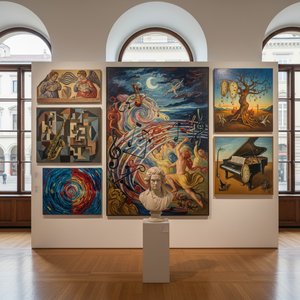
Harmonies on Canvas: Exploring the Visual Representation of Music in Art History
Explore the fascinating history of music's visual representation in art! From ancient symbolism to modern abstraction, discover how artists have captured sound and emotion on canvas. Expert insights & stunning examples.

Ephemeral Visions: Exploring the Artistic Legacy & Nuances of Watercolor Painting
Explore the captivating world of watercolor painting! Discover its rich history, essential techniques, influential artists & collecting tips from art experts. A comprehensive guide for enthusiasts.

Ephemeral Visions: Exploring the History & Emotional Resonance of Watercolor Painting
Explore the captivating history of watercolor painting, from ancient techniques to modern masters like Kandinsky & Blake. Discover essential artists, collecting tips & the emotional power of this luminous medium. Expert insights for art enthusiasts.

Top 10 Akvarelmesterværker: Kunst der Ændrede Historien | TopImpressionists.dk
Oplev de 10 mest legendariske akvarelmesterværker, der har ændret kunsthistorien! Fra Turner til Monet – lær om teknikken og historierne bag ikoniske værker. Find museumskvalitets reproduktioner & inspiration til din indretning på TopImpressionists.com.
Udforsk kunstværker organiseret efter temaer, stilarter og karakteristika.


