

 Se i rummet
 Send
Send Del
Del
 Detaljer
 Studieguide til kunstværker

 Download
 Lignende værker
 Røntgenundersøgelse
 Se diasshow
 Statistik
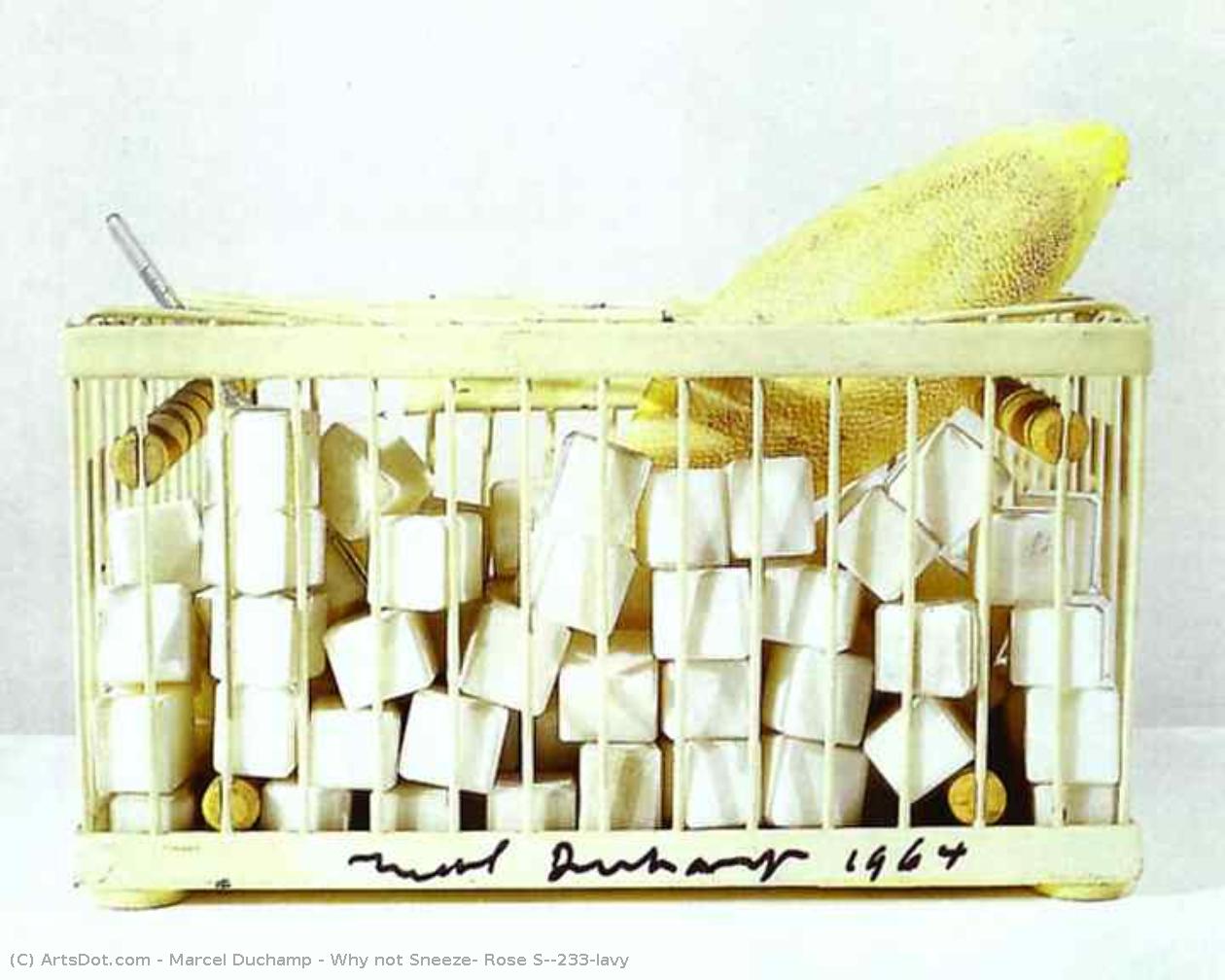
Why not Sneeze, Rose Sélavy
 Acrylic On Canvas
- WallArt
- Dada Gesamtkunstwerk
 1921
1921 12.0 x 22.0 cm
 Tate Modern
 Læs mere
Kunstværket vist på denne side er beskyttet af ophavsretsloven, hvilket betyder, at vi ikke lovligt kan skabe eller sælge en identisk reproduktion. Denne beskyttelse håndhæves i henhold til internationale aftaler som f.eks. den Bernerkonventionen og af nationale love, herunder de bestemmelser, der er fastlagt i Amerikansk ophavsretslov - Titel 17.
Som et respektfuldt og lovligt alternativ tilbyder vi skræddersyede, håndmalede kunstværker inspireret af originalen. Vores dygtige og professionelle kunstnere studerer omhyggeligt originalens stil, stemning og kunstneriske essens for at skabe et nyt, unikt værk, der fremkalder den samme følelse – samtidig med at det forbliver en original skabelse i egen ret.
Denne metode overholder fuldt ud ophavsretsreglerne, da den ikke indebærer kopiering eller duplikering af det beskyttede kunstværk. I stedet er der tale om en kreativ nytolkning – et nyt maleri, som er inspireret af det oprindelige, men ikke identisk med det.
Håndlavet oliereproduktion
Håndmalet olie på lærred i din valgte størrelse og ramme, udført efter bestilling af vores kunstnere. ( Skift til printversion Skift til digitalt billede)




P118B Dkr10

P118H Dkr10

P118W Dkr10

P438Z Dkr10

P508JH Dkr12

P508YH Dkr12

P805H Dkr10

P805Z Dkr10

P919BZ Dkr10

P919G Dkr10

P919XJ Dkr10

P959ZH Dkr10

P968JZ Dkr12

W106C Dkr8

W218G Dkr10

W218JH Dkr8

W218Y Dkr10

W307PJ Dkr10

W316G Dkr10

W316PJ Dkr8

W316Y Dkr10

W398PJ Dkr8

W4111J Dkr10

W500HY Dkr15

W500JH Dkr15

W692G Dkr12

W849H Dkr8

W940BG Dkr15

W953PJ Dkr8




Standardstørrelse
speciallavet
CM
INCH
Vælg mellem vores forudindstillede størrelser, der matcher kunstværkets originale proportioner.
Loading sizes...

bredde
højde
Indtast den bredde og højde, du har brug for, så det passer til din ramme eller din væg. Da dette er håndmalet, kan kunstneren ved en anden form på størrelsen male lidt mere rundt om billedet eller skære lidt væk — det er op til dig. Vi sender dig et digitalt mockup til godkendelse, før maleriet påbegyndes. Billedet, der vises på denne side, viser ikke det endelige resultat — det er kun mockuppet, der gør.
Eksempler på tilpasningsmuligheder: Udskift ansigt med kundens eget foto; Tilføj kæledyr (f.eks. udskift kat med hund); Inkluder en skjult besked i baggrunden; Ændr baggrundslandskab eller elementer.
Efter bestilling vil TopImpressionists.com team sende en e-mail til kunden for at indhente instruktioner og fremsende et udkast til gennemgang.
Efter bestilling vil TopImpressionists.com team sende en e-mail til kunden for at indhente instruktioner og fremsende et udkast til gennemgang.
Levering i hele verden () på 3-4 uger i stedet for de standard 5 uger. (21 oktober). Ingen kompromiser med kvaliteten.

Gratis ekspresforsendelse til hele verden

Lærred af linned i høj kvalitet

Komplet transportforsikring

Garanti for refusion af told og importafgifter

Garanti for autentisk farvegengivelse

100 dages returret ved fabrikationsfejl

100% fuld returret

Mængderabat ved flere køb
 Glasmulighed er kun tilgængelig i størrelser under 110 cm

Why not Sneeze, Rose Sélavy
Reproduktionsmateriale
Reproduktionsstørrelse
-


Samlet pris
Dkr 1754
A Provocative Pause: Unpacking “Why Not Sneeze, Rose Sélavy”
Marcel Duchamp’s "Why Not Sneeze, Rose Sélavy," painted in 1921, isn't merely a still life; it’s an audacious declaration. This deceptively simple image – a white box containing a yellow banana alongside several cups and spoons – immediately throws the viewer off balance, demanding they reconsider their assumptions about art itself. Duchamp, a pivotal figure in the Dada movement, wasn’t interested in replicating reality or expressing personal emotion through traditional means. Instead, he sought to dismantle established artistic conventions, forcing us to confront the very definition of what constitutes “art” and its role within society.
The painting's genesis lies within Duchamp’s exploration of chance and readymades – everyday objects presented as art without alteration. "Why Not Sneeze" exemplifies this approach perfectly. The choice of a banana, an utterly mundane item, elevates it to the status of subject matter through its placement within the box, transforming it into something worthy of contemplation. The inclusion of the cups and spoons further complicates the scene, suggesting a potential for consumption or ritual – elements deliberately devoid of inherent meaning, yet imbued with a subtle tension.
Dadaist Disruptions: Style and Technique
“Why Not Sneeze” is firmly rooted in the principles of Dadaism, a movement born from the disillusionment following World War I. Rejecting logic and reason, Dada artists embraced absurdity, chance, and anti-art sentiments. Duchamp’s technique reflects this ethos; he employed a precise, almost clinical approach to rendering the objects, using oil paint on canvas with a smooth, matte finish. There's no attempt at illusionistic depth or vibrant color – instead, the focus is entirely on the arrangement of the elements and their juxtaposition. The stark white box acts as a frame, isolating the objects and intensifying their impact.
Interestingly, Duchamp’s process involved a degree of chance. He reportedly placed the banana in the box after it had been emptied, allowing the positioning to be determined by accident. This element of randomness underscores the movement's core belief that art should not be dictated by conscious intention but rather emerge from unexpected encounters and unforeseen circumstances.
Symbolic Whispers: Interpretation and Context
The symbolism within “Why Not Sneeze” is deliberately ambiguous, inviting multiple interpretations. The banana itself has been suggested to represent fertility, sexuality, or even a subtle critique of consumer culture – a small, yellow object placed in an enclosed space, hinting at both abundance and confinement. The cups and spoons could symbolize hospitality, offering, or perhaps the act of consuming – again, devoid of any specific narrative but laden with potential meanings.
Furthermore, the title itself, “Why Not Sneeze?”, is a direct challenge to conventional artistic expectations. Duchamp’s question implies that there are no rules governing art, no prescribed methods for creating it. It's an invitation to embrace spontaneity and reject rigid constraints. The painting can be viewed as a meditation on the absurdity of artistic norms and a playful provocation against established aesthetic values.
A Timeless Dialogue: Emotional Impact and Legacy
Despite its seemingly simple composition, “Why Not Sneeze, Rose Sélavy” possesses a profound emotional impact. It’s unsettling, humorous, and thought-provoking – qualities that have cemented its place as one of the most significant works in modern art history. Duchamp's work continues to resonate today, prompting us to question our own perceptions of beauty, value, and the very nature of artistic expression. A reproduction of this iconic piece offers a unique opportunity to engage with a pivotal moment in art history and contemplate the enduring legacy of Marcel Duchamp’s revolutionary spirit.
Spørgsmål & svar
Er "Why not Sneeze, Rose Sélavy" tilgængelig som et fine art-print?
For at bestille et tryk af "Why not Sneeze, Rose Sélavy" af Marcel Duchamp, skal du blot gøre det på dens Fine art-print side: et fine art-print på bomuldscanvas eller arkivbestandigt lærredspapir.
Hvilket stemningsleje og hvilke følelser forenes i "Why not Sneeze, Rose Sélavy"?
I "Why not Sneeze, Rose Sélavy" ledsages en Playful stemning af en Playful følelse.
Hvor i Marcel Duchamps karriere placerer "Why not Sneeze, Rose Sélavy" sig?
"Why not Sneeze, Rose Sélavy" tilhører Dada Phase i Marcel Duchamp's karriere. Denne klassificering relaterer værket til kunstnerens udvikling.
Om kunstneren
Marcel Duchamp – En Revolutionær Ånd
Marcel Duchamp, født Henri-Robert-Marcel Duchamp i 1887 i Blainville-Crevon, Normandien, var mere end blot en kunstner; han var en filosofisk provokatør, der fundamentalt ændrede kunstens kursus og efterlod sig et varigt præg på moderne kunsthistorie. Hans tidlige liv afslørede allerede en ånd af ikonoklasme – opdraget inden for en familie, der værdsatte kunstnerisk udtryk både med hans brødre som succesfulde kunstnere – hvilket antydede den kommende udfordring til traditionelle kunstnormer. Duchamp begyndte sin kunstneriske uddannelse ved at mestre klassiske teknikker og eksperimentere med postimpressionistiske stilarter, men denne akademiske baggrund tjente ikke som en slutning i sig selv, snarere som et springbræt til spørgsmål om kunstens natur, dens formål og dets definition. Han var ikke tilfreds med blot at gengive verden; han søgte efter at udfordre vores perception af den og hvad der udgør kunstnerisk værdi. Denne rastløse intellektuelle nysgerrighed ville blive hans prægede karriere.Fra Kubisme til Dada – Afvisning af Konvention
Duchamp’s kunstneriske rejse var præget af konstant udvikling, en bevidst afstandtagen fra etablerede normer. Hans første engagement med kubismen, hvilket ses i værker som *Portræt af Skakspillere* (1911), viste interesse for fragmenterede former og flere perspektiver – et væsentligt brud med traditionel repræsentation. Alligevel bevægede han sig hurtigt ud over blot æstetiske bekymringer, erkendende at simpel omstrukturering af visuelle elementer ikke var nok til at adressere de dybere spørgsmål, der hvilede inden i ham. De horrors af Første Verdenskrig nærede denne utilfredshed og førte Duchamp til omfavnelse af dadaismen – en bevægelse født af disillusionment og afvisning af logik, grundighed og traditionelle kunstværdier. Det var inden for dadaistens rammer, at Duchamp virkelig begyndte at nedbryde konventionelle forståelser af kunst. Han var ikke interesseret i at skabe smukke objekter; han ønskede efterlade sig refleksion, udfordre antagelser og afsløre arbitræreheden af æstetisk vurdering. Denne periode så fødslen af hans mest radikale innovation: ‘readymaden’.Readymaden – Kunstens Omvendelse
‘Readymaden’ var Duchamp’s mest betydningsfulde bidrag til det 20. århundrede og repræsenterede en fuldstændig omvendelse fra traditionel kunstproduktion. Disse var ikke blot fundne objekter; de var bevidste handlinger af kunstnerisk subversion. Ved at vælge et almindeligt fremstillet objekt – som et urinal (*Fountain*, 1917) – underskrive det “R. Mutt” og præsentere det på en kunstudstilling, udfordrede Duchamp selve kunstens definition og ophavsmandskab. Var det kunstnerens hånd, der skabte værket, eller var det kunstnerens idé? Dette spørgsmål blev centralt for hans praksis og lagde grundlaget for konceptuel kunst. Hans mest ikoniske værk *L.H.O.O.Q.* (1919), hvor Mona Lisas smil blev defaceret med en skjult moustache og goatee, var ikke blot et satirisk udfald mod kunsthistorie og kulturelle ikoner; det var et symbol på Dadaismen’s kamp mod traditionelle værdier og en udfordring til vores forståelse af skønhed. Disse værker var ikke beregnet til at blive beundret for deres æstetiske kvaliteter, men til at fremprovokere debat og tvinge publikum til at omdefinere deres prækoncepter om hvad kunst er.Eftervirkninger og Et Varigt Eftertryk
Marcel Duchamp’s indflydelse på efterfølgende generationer af kunstnere er enorm og hans arbejde fortsætter med at inspirere kunstnere i dag. Han ændrede fundamentalt vores forståelse af kunst og banede vejen for bevægelser som konceptuel kunst, minimalism og popkunst – blandt andre. Hans fokus på kunstnerens idé – konceptet bag værket – fremfor dets æstetiske kvaliteter fortsætter med at udfordre os og inspirere os til refleksion. Han blev en pioner inden for kubistisk skulptur og hans arbejde har efterladt sig et varigt præg på kunsthistorien, hvilket cementerede hans status som en af de mest betydningsfulde kunstnere i det 20. århundrede. Hans udfordring til traditionelle kunstnormer og hans fokus på konceptuel kunst vil fortsætte med at forme kunstens udvikling i fremtiden.
Marcel Duchamp
1887 - 1968 , Frankrig
Hurtige fakta
- Artistic Movement Or Style:
- Kubisme
- Dadaisme
- Konceptuel kunst
- Artists Or Movements Influenced By This Artist:
- Kubisme
- Pop kunst
- Minimalisme
- Date Of Birth: 28 juli 1887
- Date Of Death: 2 oktober 1968
- Full Name: Marcel Duchamp
- Nationality: Fransk-Amerikaner
- Notable Artworks:
- Fontæne
- L.H.O.O.Q.
- Det Store Glas
- Boîte-en-valise
- Place Of Birth: Blainville, Frankrig
Relaterede artikler

Dadaism Unveiled: The Beautiful Chaos of Art's Most Rebellious Movement
Explore the profound rebellion of Dadaism. Discover how this avant-garde movement emerged from the chaos of WWI to redefine art through absurdity, anti-logic, and a legacy that shaped Surrealism and Pop Art. A deep dive into the beautiful chaos of art history for the true enthusiast.

Pop Surrealism Unveiled: The Sophisticated Intersection of Vibrant Pop Art and Dreamlike Subconscious Landscapes
Explore the captivating world of Pop Surrealism. Discover how vibrant Pop Art meets dreamlike subconscious imagery through the works of masters like Jeff Soto and Ryan Heshka. An expert guide for discerning collectors seeking to understand this profound contemporary art movement.
Udforsk kunstværker organiseret efter temaer, stilarter og karakteristika.


