


 Send
Send Del
Del
 Detaljer
 Studieguide til kunstværker

 Download
 Lignende værker
 Se diasshow
 Statistik
Swatch
 Textile
- Italian Baroque
 1949
1949- 19th Century
 42.0 x 50.0 cm
 Museo del Traje
A stunning 1949 Mariano Fortuny Swatch showcases intricate gold-stenciled plant and crown designs on rich blue velvet, inspired by 17th-century Italian Baroque tapestries. Discover this unique textile reproduction and elevate your space with a timeless classic.
 Læs mere
"Dansk meta beskrivelse": "Mariano Fortuny (1871-1949) var en spansk kunstner og designer kendt for innovative tekstiler, smukke Delphos kjoler og banebrydende scenbelysning. Udforsk hans orientalske inspiration, opfindelser og arv i kunsthistorien."
Håndlavet oliereproduktion
Håndmalet olie på lærred i din valgte størrelse og ramme, udført efter bestilling af vores kunstnere. ( Skift til printversion Skift til digitalt billede)




































Standardstørrelse
speciallavet
CM
INCH
Vælg mellem vores forudindstillede størrelser, der matcher kunstværkets originale proportioner.
Loading sizes...

bredde
højde
Indtast den bredde og højde, du har brug for, så det passer til din ramme eller din væg. Da dette er håndmalet, kan kunstneren ved en anden form på størrelsen male lidt mere rundt om billedet eller skære lidt væk — det er op til dig. Vi sender dig et digitalt mockup til godkendelse, før maleriet påbegyndes. Billedet, der vises på denne side, viser ikke det endelige resultat — det er kun mockuppet, der gør.
Eksempler på tilpasningsmuligheder: Udskift ansigt med kundens eget foto; Tilføj kæledyr (f.eks. udskift kat med hund); Inkluder en skjult besked i baggrunden; Ændr baggrundslandskab eller elementer.
Efter bestilling vil TopImpressionists.com team sende en e-mail til kunden for at indhente instruktioner og fremsende et udkast til gennemgang.
Efter bestilling vil TopImpressionists.com team sende en e-mail til kunden for at indhente instruktioner og fremsende et udkast til gennemgang.
Levering i hele verden () på 3-4 uger i stedet for de standard 5 uger. (26 oktober). Ingen kompromiser med kvaliteten.

Gratis ekspresforsendelse til hele verden

Lærred af linned i høj kvalitet

Komplet transportforsikring

Garanti for refusion af told og importafgifter

Garanti for autentisk farvegengivelse

100 dages returret ved fabrikationsfejl

100% fuld returret

Mængderabat ved flere køb
 Glasmulighed er kun tilgængelig i størrelser under 110 cm

Swatch
Reproduktionsmateriale
Reproduktionsstørrelse
-


Samlet pris
Dkr 1764
A Symphony of Blue: Exploring Mariano Fortuny’s “Swatch”
Mariano Fortuny's "Swatch," created in 1949, is more than just a textile; it’s a meticulously crafted echo of the Italian Baroque, a testament to the artist’s singular vision and revolutionary approach to design. Measuring 42 x 50 cm, this horizontal rectangle immediately draws the eye with its opulent layering of blues – from the deepest indigo to shimmering turquoise – punctuated by strategically placed gold stenciled plant and crown motifs. The piece, originally inspired by the rich velvets of the 17th century, demonstrates Fortuny’s masterful manipulation of color and texture, a hallmark of his enduring legacy.
Fortuny's Baroque Revival & Technological Innovation
Born in Reus, Spain, in 1871, Mariano Fortuny was a figure far ahead of his time. His early life, profoundly shaped by the untimely death of his father and subsequent relocation to Paris, exposed him to the world of textiles – a crucial influence that would define his career. Fortuny wasn't simply a designer; he was an inventor, a theatrical innovator, and a master colorist. He pioneered the use of indirect lighting in theater design with his “fortuny cyclorama dome,” a groundbreaking achievement that dramatically altered stagecraft. His relentless experimentation led to over twenty patents, showcasing his dedication to pushing the boundaries of artistic and technological possibilities. This pursuit of innovation is vividly apparent in "Swatch," where he meticulously controlled color variations and patterns.
The Language of Pattern: Symbolism & Technique
The intricate design of “Swatch” – a seemingly chaotic yet perfectly balanced arrangement of circles resembling fish scales – speaks to Fortuny’s fascination with natural forms and his desire to evoke the grandeur of classical antiquity. The gold stenciled plant and crown motifs, subtly integrated within the blue field, add an element of regal symbolism, referencing the opulent fabrics favored by European royalty during the Baroque period. Fortuny's technique is particularly noteworthy; he employed a complex layering process, utilizing multiple shades of blue to create a visual depth that mimics a painting. The retained selvages at the sides further enhance this effect, emphasizing the cloth’s dimensionality and tactile quality. This meticulous approach elevates “Swatch” beyond a mere decorative piece – it's a carefully constructed illusion.
A Timeless Masterpiece for Interior Design
"Swatch" remains a captivating example of Fortuny’s artistic genius and his ability to seamlessly blend historical references with innovative techniques. Its rich color palette, intricate design, and luxurious feel make it an ideal choice for discerning collectors and interior designers seeking to infuse their spaces with a touch of Baroque elegance. A hand-painted reproduction offers the opportunity to experience this remarkable artwork firsthand, bringing its beauty and sophistication into your home.
Spørgsmål & svar
Hvilken størrelse anbefales det at printe "Swatch" i?
En reproduktion i størrelsen Medium anbefales til "Swatch" af Mariano Fortuny. Størrelsen kan justeres, mens proportionerne bevares.
Kan jeg se et røntgenbillede af "Swatch" af Mariano Fortuny?
Røntgenvisningen af "Swatch" af Mariano Fortuny findes på værkets Røntgenundersøgelse-side: en interaktiv undersøgelse af billedet gennem elleve optiske lag.
Hvor kan jeg finde statistik om "Swatch" af Mariano Fortuny?
Siden Statistikker for "Swatch" af Mariano Fortuny præsenterer statistikker over offentlige besøg: månedlige besøg af dette kunstværk, en sammenligning med kunstnerens mest sete værker og hvor de besøgende kommer fra.
Om kunstneren
Early Life and Inspiration
Mariano Fortuny, en spansk kunstner og designer, blev født den 11. maj 1871 i Granada, Spanien. Hans barndom var præget af et stort tab – hans far, Mariano Fortuny y Marsal, en anerkendt genre maler, døde kun tre år efter hans fødsel. Denne tidlige sorg førte til en flytning til Paris, Frankrig, hvor hans mor introducerede ham for den verden af tekstiler og stof, der senere skulle forme hans kreative vision. Fortuny viste fra en ung alder enestående kunstneriske evner – han mestrede maleri, fotografi, skulptur, arkitektur, gravering og teaterets scenelys. Hans opfindelser, over tyve patenter mellem 1901 og 1934, revolutionerede teatret, og han er især kendt for sin fortuny-cykorama-dome, en kvart-dom formet af gips eller stof, der med indirekte belysning skabte en sømløs overgang mellem scener. Hans pamflet "eclairage scenique" (1904) beskrev hans opdagelse af at reflektere lys fra forskellige overflader, hvilket ændrede dets farve, intensitet og egenskaber. Fortuny var dybt fascineret af det orientalske, og hans rejser til Nordafrika inspirerede ham til at skabe værker, der kombinerede europæisk kunst med eksotiske motiver.Artistic Talents and Inventions
Fortunys talent blomstrede i Paris, hvor han fortsatte at udvikle sine færdigheder og eksperimentere med forskellige kunstformer. Han var en utrolig alsidig kunstner, der ikke blot malede, men også beskæftigede sig med fotografi, skulptur, arkitektur og scenografi. Hans opfindelser var banebrydende for sin tid og ændrede teatret fundamentalt. Han udviklede blandt andet fortuny-cykorama-dome, en kvart-dom formet af gips eller stof, der med indirekte belysning skabte en sømløs overgang mellem scener. Hans pamflet "eclairage scenique" (1904) beskrev hans opdagelse af at reflektere lys fra forskellige overflader, hvilket ændrede dets farve, intensitet og egenskaber. Fortuny var ikke blot en kunstner, men også en ivrig inventor, der registrerede over tyve patenter mellem 1901 og 1934, herunder en ny type spotlight og et forbedret skibspropel.Notable Contributions and Collaborations
Fortunys arbejde fik stor anerkendelse i 1920'erne, og han samarbejdede med nogle af de mest fremtrædende figurer på sin tid. Han arbejdede sammen med den tyske komponist Richard Wagner, hvis operaer inspirerede ham til at male scener. Han installerede sin dome på det berømte Scala-operahus i Milano, hvor han tilpassede den til teatret og opfandt en sugeventil for at holde den spændt. Fortuny var også tæt knyttet til den italienske kvinde, Henriette Negrin, som blev hans kone i 1924. Sammen åbnede de et atelier i Venedig, hvor de fremstillede deres berømte tekstiler og kjoler. Hans arbejde havde en enorm indflydelse på modeverdenen, og hans designs blev elsket af kendte kvinder som Eleonora Duse og Isadora Duncan. Fortuny var en visionær kunstner, der ikke blot skabte smukke værker, men også udfordrede konventionerne inden for sin tid.Legacy and Later Life
Mariano Fortuny døde den 3. maj 1949 i Venedig, Italien. Hans arbejde inspirerede den franske romanist Marcel Proust, og hans liv blev skildret i Pere Gimferrer's roman "Fortuny." Fortunys arv fortsætter med at påvirke teatrets design og modeverdenen. Han er en af de mest originale kunstnere fra det 20. århundrede, der kombinerede kunstnerisk talent med teknologisk innovation. Hans unikke stil og hans evne til at skabe smukke og funktionelle objekter vil altid blive husket og værdsat. Fortuny's arbejde er et vidnesbyrd om en kunstners passion, kreativitet og vision.
Mariano Fortuny
1871 - 1949 , Spanien
Hurtige fakta
- Artistic Movement Or Style: Orientalism kunst
- Artists Or Movements Influenced By This Artist: ['Marcel Proust']
- Artists Who Influenced This Artist: ['Richard Wagner']
- Date Of Birth: 11 maj 1871
- Date Of Death: 3 maj 1949
- Full Name: Mariano Fortuny y Marsal
- Nationality: Spansk
- Notable Artworks:
- Teagown
- Troldfruens kjole
- Place Of Birth: Granada, Spanien
Relaterede artikler

Barokkens Drama: Hvordan Storhed og Emotion Bringes Ind i Moderne Interiører
Dyk ned i barokkunstens verden! Lær om stilens historie, karakteristika og hvordan du integrerer dens drama og elegance i dit moderne hjem. Inspiration & ekspertrådgivning.

Mariano Fortuny: A Fusion of Art, Fashion & Design – Exploring a Venetian Innovator's Legacy
Explore the captivating world of Mariano Fortuny – artist, designer & innovator. Discover his revolutionary textiles, iconic Delphos gown, and lasting influence on art, fashion & interiors. A collector's guide to a Venetian master.

The Dramatic Flourish: Exploring the Baroque Movement's Enduring Legacy in Art History
Explore the dramatic world of Baroque art! Discover iconic artists like Caravaggio & Rubens, defining techniques, and its lasting impact on art history. Expert insights for collectors & enthusiasts at TopImpressionists.
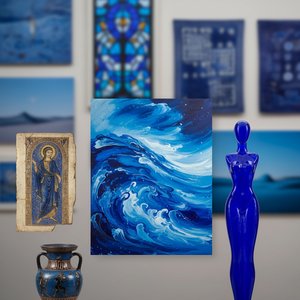
The Allure of Azure: Exploring the Symbolic & Aesthetic Depths of Blue in Art History
Explore the rich history of blue in art! Discover its symbolism, from ancient pigments to modern masterpieces by Kandinsky & Seurat. Uncover the psychological impact and cultural meanings behind this captivating hue.

Top 10 Berømte Malerier i Skønne Slate Blue Nuancer – Kunst til Dit Hjem
Oplev skønheden i 10 berømte malerier domineret af den elegante slate blue nuance. Fra Monet til Van Gogh – lær historierne bag ikoniske kunstværker og find inspiration til dit hjem. Køb museumskvalitets reproduktioner på TopImpressionists.com
Udforsk kunstværker organiseret efter temaer, stilarter og karakteristika.
