


 Se i rummet
 Send
Send Del
Del
 Detaljer
 Studieguide til kunstværker

 Download
 Lignende værker
 Røntgenundersøgelse
 Se diasshow
 Statistik
St Catherine
 Chalk
Chalk- Northern Renaissance
 1520
1520 316.0 x 215.0 cm
 Staatliche Museen zu Berlin
Admire Matthias Grünewald's 'St Catherine,' a captivating chalk drawing from 1520. Explore the Northern Renaissance master’s unique style, featuring a serene saint and symbolic details – available as a hand-painted replica.
 Læs mere
Matthias Grünewald var en tysk maler kendt for sin stærke og følelsesladede religiøse kunst, især Isenheim Altarpiecen. Hans unikke stil kombinerer middelalderens udtryk med renæssancens elementer – udforsk hans drama og betydning!
Håndlavet oliereproduktion
Håndmalet olie på lærred i din valgte størrelse og ramme, udført efter bestilling af vores kunstnere. ( Skift til printversion Skift til digitalt billede)




P118B Dkr10

P118H Dkr10

P118W Dkr10

P438Z Dkr10

P508JH Dkr12

P508YH Dkr12

P805H Dkr10

P805Z Dkr10

P919BZ Dkr10

P919G Dkr10

P919XJ Dkr10

P959ZH Dkr10

P968JZ Dkr12

W106C Dkr8

W218G Dkr10

W218JH Dkr8

W218Y Dkr10

W307PJ Dkr10

W316G Dkr10

W316PJ Dkr8

W316Y Dkr10

W398PJ Dkr8

W4111J Dkr10

W500HY Dkr15

W500JH Dkr15

W692G Dkr12

W849H Dkr8

W940BG Dkr15

W953PJ Dkr8




Standardstørrelse
speciallavet
CM
INCH
Vælg mellem vores forudindstillede størrelser, der matcher kunstværkets originale proportioner.
Loading sizes...

bredde
højde
Indtast den bredde og højde, du har brug for, så det passer til din ramme eller din væg. Da dette er håndmalet, kan kunstneren ved en anden form på størrelsen male lidt mere rundt om billedet eller skære lidt væk — det er op til dig. Vi sender dig et digitalt mockup til godkendelse, før maleriet påbegyndes. Billedet, der vises på denne side, viser ikke det endelige resultat — det er kun mockuppet, der gør.
Eksempler på tilpasningsmuligheder: Udskift ansigt med kundens eget foto; Tilføj kæledyr (f.eks. udskift kat med hund); Inkluder en skjult besked i baggrunden; Ændr baggrundslandskab eller elementer.
Efter bestilling vil TopImpressionists.com team sende en e-mail til kunden for at indhente instruktioner og fremsende et udkast til gennemgang.
Efter bestilling vil TopImpressionists.com team sende en e-mail til kunden for at indhente instruktioner og fremsende et udkast til gennemgang.
Levering i hele verden () på 3-4 uger i stedet for de standard 5 uger. (23 oktober). Ingen kompromiser med kvaliteten.

Gratis ekspresforsendelse til hele verden

Lærred af linned i høj kvalitet

Komplet transportforsikring

Garanti for refusion af told og importafgifter

Garanti for autentisk farvegengivelse

100 dages returret ved fabrikationsfejl

100% fuld returret

Mængderabat ved flere køb
 Glasmulighed er kun tilgængelig i størrelser under 110 cm

St Catherine
Reproduktionsmateriale
Reproduktionsstørrelse
-


Samlet pris
Dkr 1768
The Enigmatic Saint: Matthias Grünewald’s St Catherine
Matthias Grünewald's 1520 chalk drawing, “St Catherine,” is more than just a portrait; it’s a profound meditation on faith, scholarship, and the enduring power of medieval symbolism. This remarkable work, currently residing in the Staatliche Museen zu Berlin, offers a captivating glimpse into the artist’s unique vision – a synthesis of late Gothic sensibilities with nascent Renaissance influences. Grünewald, a pivotal figure in German art, deliberately eschewed the prevailing Italian humanist trends, instead drawing deeply from the rich traditions of Central European religious painting, resulting in an intensely personal and emotionally resonant style.
The image depicts St Catherine from the waist up, her head tilted slightly downwards as if lost in contemplation. Her posture exudes a quiet dignity, while the subtle turn of her neck invites us into her inner world. She’s dressed in a gown with voluminous sleeves – a detail that speaks to both the formality of her status and the luxurious fabrics favored by wealthy patrons during the period. Crucially, she holds two objects: an open book or manuscript, symbolizing her role as a learned scholar, and a sword raised upright, representing her martyrdom and unwavering faith. These symbols aren’t merely decorative; they are potent visual statements about Catherine's life and devotion.
A Study in Northern Renaissance Technique
Grünewald’s masterful technique is immediately apparent. The drawing is executed with exquisite detail using chalk on paper, a medium that allowed for the delicate shading and fine lines characteristic of his work. Notice the subtle gradations of tone – the way light catches on her dress, the modeling of her face, and the atmospheric haze in the background. This meticulous attention to texture and form creates a remarkable sense of depth and realism, despite the relatively small scale of the piece. The artist’s use of chalk also lends a slightly ethereal quality to the image, contributing to its contemplative mood.
Furthermore, Grünewald's style deviates significantly from the prevailing Renaissance aesthetic. Unlike the idealized figures favored by artists like Albrecht Dürer, Catherine is rendered with a certain distortion – her proportions aren’t perfectly symmetrical, and her features possess an expressive intensity. This deliberate departure from classical ideals reflects Grünewald’s commitment to conveying emotional truth rather than purely visual accuracy. The background, deliberately minimalistic, consists of only a few suggestive lines—perhaps hinting at a cloudy sky or an abstract representation of the heavens – further emphasizing the saint's presence and drawing our focus entirely onto her.
Historical Context and Symbolic Resonance
Created in 1520, “St Catherine” exists within a fascinating transitional period in art history. Grünewald was working at a time when the influence of Italian Renaissance humanism was beginning to spread across Europe, yet he remained firmly rooted in the traditions of late medieval Central European painting. The saint herself holds significant religious importance – she is venerated as a martyr and patron saint of scholars, librarians, and translators. Her story, recounted in early Christian hagiographies, details her conversion after being saved from execution by St Peter, who recognized her divine calling.
Interestingly, the figure of Catherine has been associated with intellectual pursuits for centuries. Her association with learning stems from her devotion to scripture and her role as a translator of the Bible. The book she holds in the drawing symbolizes this scholarly dedication, while the sword represents her willingness to defend her faith against persecution. The combination of these symbols creates a powerful image of a woman who embodies both spiritual strength and intellectual prowess.
A Legacy of Emotion and Innovation
“St Catherine” is a testament to Matthias Grünewald’s artistic genius – a work that seamlessly blends technical skill with profound emotional depth. It's a poignant reminder of the artist’s ability to capture not just the likeness of his subject, but also her inner world. The drawing’s enduring appeal lies in its ability to evoke a sense of quiet contemplation and spiritual yearning. As a significant example of Northern Renaissance art, it continues to inspire artists and scholars alike, offering a valuable window into the artistic and intellectual landscape of 16th-century Germany.
Spørgsmål & svar
Hvad er formatet og størrelsen på "St Catherine"?
"St Catherine" af Matthias Grünewald har proportionerne af et Portrait værk på 316 x 215 cm.
Hvad anbefales en reproduktion af "St Catherine" af Matthias Grünewald til?
En reproduktion af "St Catherine" af Matthias Grünewald anbefales til Statement. Denne anbefaling er baseret på værkets motiv, stemning og farver.
Hvilken type kunstværk er "St Catherine" af Matthias Grünewald?
"St Catherine" er et værk i form af wall art.
Om kunstneren
Matthias Grünewald: Liv og Eftermæle
Tidligt liv og kunstneriske begyndelser
Matthias Grünewald, født som Mathis Gothart Neithardt omkring 1470-14rb5 i Würzburg, Tyskland, var en skelsættende skikkelse i den tyske renæssance. Selvom han levede i en tid, der i stigende grad blev påvirket af de italienske renæssanceidealer, forblev Grünewald dybt forankret i de kunstneriske traditioner fra det senmiddelalderlige Centraleuropa. Detaljer om hans tidlige liv er sparsomme, men det er kendt, at han modtog sin træning som kunstner, sandsynligvis inden for lokale værksteder, hvilket lagde fundamentet for hans tekniske mesterskab.
Kunstnerisk udvikling og indflydelser
Grünewalds kunstneriske udvikling blev formet af de fremherskende nordeuropæiske traditioner præget af realisme, følelsesmæssig intensitet og detaljeret observation. Hans værk viser tydelige spor af indflydelse fra mestre som Albrecht Dürer og Martin Schongauer, men han banede sin egen unikke vej, karakteriseret ved dramatisk udtryk og levende farver. Han var ikke direkte involveret i de humanistiske kredse, der blomstrede i Italien; i stedet tjente hans kunst primært religiøse formål og reflekterede de åndelige bekymringer og den eksistentielle angst, der prægede hans samtid.
Hovedværker og kunstnerisk stil
- Isenheim-altertavlen (1512-1516): Dette mesterværk, som opbevares på Musée d'Unterlinden i Colmar, betragtes som Grünewalds magnum opus. Det skildrer scener fra Kristi liv med en rystende realisme, med et særligt fokus på lidelse og forløsning.
- Korsfæstelsen (ca. 1502-1503): Et tidligt værk, der demonstrerer hans spirende stil og udviser intens emotion og anatomisk præcision.
- Jomfruen ved Bebudelsen (1512-14): En studie til Isenheim-altertavlen, som afslører hans omhyggelige planlægningsproces.
- Moses (1511): En tegning, der fremhæver Grünewalds evne til at indfange ekspressive figurer og dramatiske positurer.
Grünewalds stil er særligt kendetegnet ved:
- Dramatisk komposition: Han benyttede dynamiske arrangementer for at forstærke den følelsesmæssige gennemslagskraft.
- Levende farvepalette: Hans brug af intense og ofte kontrasterende farver skabte en kraftfuld visuel oplevelse.
- Realistisk skildring af lidelse: Grünewald veg ikke tilbage fra at portrætætte den fysiske og følelsesmæssige smerte, der er forbundet med de religiøse fortællinger.
- Ekspressive figurer: Hans figurer er gennemtrængt af stærke følelser og psykologisk dybde.
Historisk betydning og eftermæle
Grünewalds arbejde står som et vidnesbyrd om den vedvarende kraft i de middelalderlige kunsttraditioner i Tyskland under renæssancen. Han byggede bro mellem den sengotiske stil og den fremspirende renæssance og skabte et unikt visuelt sprog, der resonerede dybt hos hans samtidige. Hans indflydelse kan ses hos senere tyske kunstnere, som fortsatte med at udforske temaer om religiøs hengivenhed og følelsesmæssig intensitet. Selvom han i vid udstrækning blev glemt i århundreder efter sin død i 1528, oplevede Grünewald en genfødsel i det 19. århundrede, og i dag anerkendes han som en af de vigtigste malere i den tyske renæssance. Hans kunst fortsætter med at fange beskueren med sin rå emotion, tekniske brillans og dybe spirituelle dybde.
Videre udforskning
Opdag mere om Matthias Grünewalds liv og værker hos: TopImpressionists

Matthias Grünewald
1480 - 1528 , Tyskland
Hurtige fakta
- Artistic Movement Or Style: Nordlige Renæssancen
- Artists Or Movements Influenced By This Artist: ['Tysk Kunst']
- Artists Who Influenced This Artist:
- Albrecht Dürer
- Martin Schongauer
- Date Of Birth: c. 1470-1480
- Date Of Death: 31. august 1528
- Full Name: Matthias Grünewald
- Nationality: Tysk
- Notable Artworks:
- Isenheim Altarpiece
- Kreuzigung
- Jungfrau Maria
- Place Of Birth: Würzburg, Tyskland
Relaterede artikler
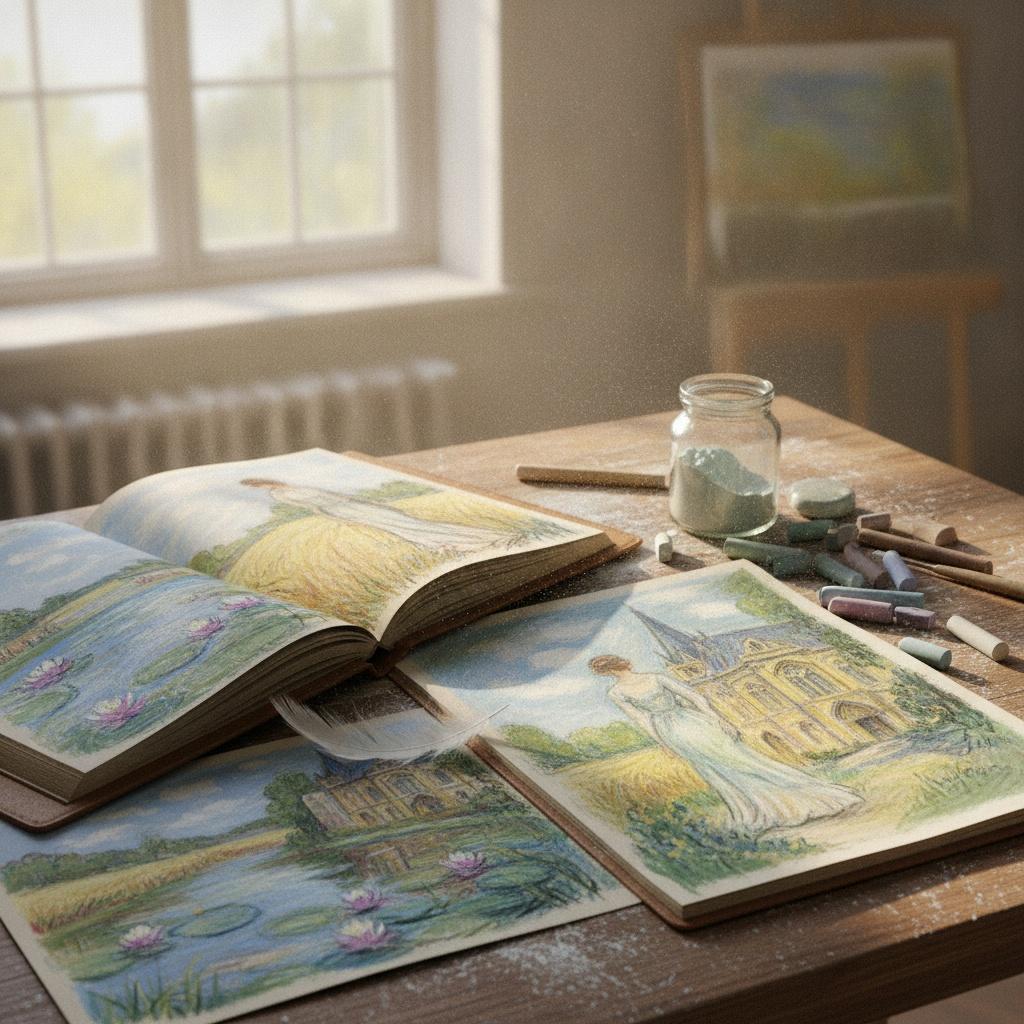
The Soft Magic of Chalk: Capturing Light, Texture, and the Ethereal Soul of Impressionist Masterpieces
Discover the ethereal beauty of pastel and chalk art. Explore how Impressionist masters like Van Gogh and Degas captured light and texture to create timeless, soulful masterpieces for the discerning collector.

Divine Light & Golden Splendor: A Journey Through the Sacred Grandeur of High Medieval Art
Embark on a soulful journey through High Medieval art. Explore the divine light of Gothic cathedrals, Byzantine splendor, and sacred masterpieces that shaped Western history with our expert-led cultural reflections.
Udforsk kunstværker organiseret efter temaer, stilarter og karakteristika.


