


 Se i rummet
 Del som kort
 Del
Del
 Detaljer
 Guide
Guide

 Download
 Lignende værker
 Røntgenundersøgelse
 Diasshow
 Q&A
Q&A Statistikker
The window


Stargazing through a blue window scene by Oleksiy Potapenko captures dreamy depth; discover this vibrant piece of Ukrainian art today.
 Vis mere
A contemporary master of evocative storytelling, Oleksiy Andriyovich Potapenko captures profound moments of heritage in works like Chest and The window, inviting you to discover the quiet beauty within his textured canvases.
Kunstværket vist på denne side er beskyttet af ophavsretsloven, hvilket betyder, at vi ikke lovligt kan skabe eller sælge en identisk reproduktion. Denne beskyttelse håndhæves i henhold til internationale aftaler som f.eks. den Bernerkonventionen og af nationale love, herunder de bestemmelser, der er fastlagt i Amerikansk ophavsretslov - Titel 17.
Denne metode overholder fuldt ud ophavsretsreglerne, da den ikke indebærer kopiering eller duplikering af det beskyttede kunstværk. I stedet er der tale om en kreativ nytolkning – et nyt maleri, som er inspireret af det oprindelige, men ikke identisk med det.
Giclée / Kunsttryk
Giclée- eller lærredstryk i museumskvalitet med hurtig produktion og fleksible muligheder for finish. ( Køb håndmalet maleri Skift til digitalt billede)




P118B Dkr10

P118H Dkr10

P118W Dkr10

P438Z Dkr10

P508JH Dkr12

P508YH Dkr12

P805H Dkr10

P805Z Dkr10

P919BZ Dkr10

P919G Dkr10

P919XJ Dkr10

P959ZH Dkr10

P968JZ Dkr12

W106C Dkr8

W218G Dkr10

W218JH Dkr8

W218Y Dkr10

W307PJ Dkr10

W316G Dkr10

W316PJ Dkr8

W316Y Dkr10

W398PJ Dkr8

W4111J Dkr10

W500HY Dkr15

W500JH Dkr15

W692G Dkr12

W849H Dkr8

W940BG Dkr15

W953PJ Dkr8




Standardstørrelse
speciallavet
CM
INCH
Vælg mellem vores forudindstillede størrelser, der matcher kunstværkets originale proportioner.
Loading sizes...

bredde
højde
Indtast den bredde og højde, du har brug for, så det passer til din ramme eller din væg. Et print kan kun beskæres, aldrig gøres større end selve billedet, så en størrelse med et andet format vil medføre, at dele af motivet går tabt. Vi sender dig en digital mockup til godkendelse, før vi printer noget. Billedet vist på denne side viser ikke den faktiske beskæring — det er kun mockuppen, der gør.
Verdensomspændende levering () på 2 uger i stedet for de sædvanlige 4/5 uger. (29 oktober)

Gratis ekspresforsendelse til hele verden

Lærred af linned i høj kvalitet

Fuld transportforsikring

Garanti for refusion af told og importafgifter

Garanti for præcis farvegengivelse

100 dages returret ved fabrikationsfejl

100% fuld returret

Mængderabat ved flere køb
 Glasmulighed er kun tilgængelig i størrelser under 110 cm

The window
Giclée / Kunsttryk
Størrelse på reproduktion
-


Samlet pris
Dkr 461
A Celestial Glimpse Through Time
Olеksiy Andriyovich Potapenko’s "The window" invites the viewer into a space that feels both intimately personal and cosmically vast. It is more than just a depiction of an opening to the outside; it is a portal, a moment suspended between the contained reality of the room and the infinite mystery of the night sky. The composition immediately draws the eye through the crisp white frame of the window, suggesting a threshold—a place where introspection meets boundless possibility. The background, rendered in deep, evocative blues, is dusted with scattered stars, lending an ethereal depth that seems to recede far beyond the physical confines of the painting itself.
Composition and Evocative Detail
The meticulous arrangement of elements within this scene elevates it from a simple still life to a carefully orchestrated narrative. Notice the interplay between the mundane objects—the stately clock on the wall, the patiently waiting chair near the sill—and the celestial drama unfolding above. These domestic anchors ground the piece, giving weight to the ephemeral quality of the starlit view. Potapenko employs a technique that balances sharp, defined architectural lines with soft, atmospheric washes of color in the sky. This contrast is key; it allows the viewer's gaze to rest comfortably on the tangible details while simultaneously being pulled upward into the shimmering expanse.
Symbolism of Light and Passage
Symbolically, "The window" resonates deeply with themes of transition and perspective. Windows have always been potent symbols in art—they represent opportunity, connection, and the boundary between known worlds and the unknown. Here, under a canopy of stars, the passage of time, marked by the clock, seems to slow down or perhaps even become irrelevant against the backdrop of eternity. The open window suggests an invitation: an invitation to pause, to look outward, and to contemplate what lies beyond the immediate moment. It speaks to the human yearning for transcendence.
Bringing Cosmic Calm Home
For collectors and designers alike, this piece offers more than mere decoration; it offers an emotional anchor. Reproducing "The window" allows one to infuse a space with a sense of quiet wonder. Imagine this artwork gracing a living room or study—it transforms the architecture itself into part of the art experience. The vibrant yet soothing palette, dominated by deep blues and contrasted by brilliant white light, promises a focal point that calms the spirit while stimulating the imagination. It is a piece designed not just to be seen, but to be felt; a breath of cool, starlit air captured forever on canvas.
Spørgsmål og svar
Hvilket stemningsleje udtrykker "The window" af Oleksiy Andriyovich Potapenko inden for Contemporary?
"The window" har en Mysterious stemning inden for Contemporary-bevægelsen.
Hvilken anvendelse og hvilket rum anbefales til "The window" af Oleksiy Andriyovich Potapenko?
"The window" anbefales til Focal, og det ideelle rum er et Lounge.
Hvor harmoniske er farverne i "The window" af Oleksiy Andriyovich Potapenko?
Farveharmonien i "The window" er beskrevet som Softly Mixed Palette.
Lignende kunstværker


Relaterede artikler

De 10 mest ikoniske malerier i dyb marineblå – Kunst til dit hjem | TopImpressionists.dk
Oplev de 10 mest ikoniske malerier i dyb marineblå! Fra Monet til Van Gogh – udforsk kunsthistorien, farvepaletten og historierne bag disse mesterværker. Find din perfekte reproduktion på TopImpressionists.dk og skab stemning i dit hjem. Se samlingen online!

Top 10 Berømte Malerier til Stuen: Kunst der Skaber Atmosfære | TopImpressionists.dk
Oplev de 10 mest berømte malerier til stuen! Fra Van Goghs 'Stjernenat' til Mona Lisa – lær historien bag ikoniske kunstværker og find inspiration til din indretning. Køb eksklusive reproduktioner på TopImpressionists.com.
The Allure of Azure: Exploring the Symbolic & Aesthetic Depths of Blue in Art History
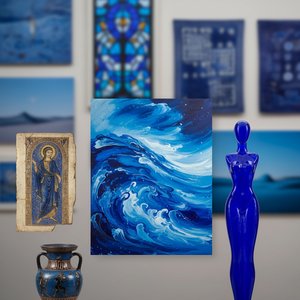
Explore the rich history of blue in art! Discover its symbolism, from ancient pigments to modern masterpieces by Kandinsky & Seurat. Uncover the psychological impact and cultural meanings behind this captivating hue.

Top 10 Berømte Malerier i Skønne Slate Blue Nuancer – Kunst til Dit Hjem
Oplev skønheden i 10 berømte malerier domineret af den elegante slate blue nuance. Fra Monet til Van Gogh – lær historierne bag ikoniske kunstværker og find inspiration til dit hjem. Køb museumskvalitets reproduktioner på TopImpressionists.com

Marianne Norths Top 25 Kunstværker: En Botanisk Rejse i Farver | TopImpressionists.dk
Oplev Marianne Norths 25 mest ikoniske malerier – en fascinerende rejse i botanisk kunst og victoriansk farvepragt. Find inspiration til dit hjem med smukke reproduktioner af hendes eksotiske landskaber & blomster på TopImpressionists.com.