


 Se i rummet
 Send
Send Del
Del
 Detaljer
 Studieguide til kunstværker

 Download
 Lignende værker
 Røntgenundersøgelse
 Se diasshow
 Statistik
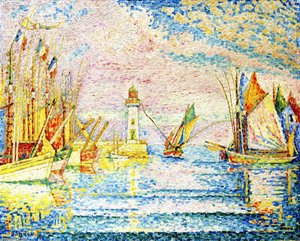
La Voile verte
 Acrylic On Canvas
- WallArt
- Neo-Impressionistic Pointillism
 1904
1904- 19th Century
 65.0 x 81.0 cm
Experience Paul Signac’s vibrant ‘La Voile verte,’ a stunning Pointillist masterpiece capturing sailboats with colorful sails in 1904. This iconic artwork, a cornerstone of Neo-Impressionism, offers a beautiful glimpse into the Harmonious Vision of Paul Signac – discover or own this timeless treasure.
 Læs mere
Paul Signac (1863-1935) var en fransk maler kendt for sin revolutionerende Pointillism-teknik og farverige maritime landskaber. Hans værker udforsker lys og farve med præcision og er et vigtigt fundament i moderne kunst.
Giclée / Kunsttryk
Giclée- eller lærredstryk i museumskvalitet med hurtig produktion og fleksible muligheder for finish. ( Bestil håndmalet reproduktion Skift til digitalt billede)




P118B Dkr10

P118H Dkr10

P118W Dkr10

P438Z Dkr10

P508JH Dkr12

P508YH Dkr12

P805H Dkr10

P805Z Dkr10

P919BZ Dkr10

P919G Dkr10

P919XJ Dkr10

P959ZH Dkr10

P968JZ Dkr12

W106C Dkr8

W218G Dkr10

W218JH Dkr8

W218Y Dkr10

W307PJ Dkr10

W316G Dkr10

W316PJ Dkr8

W316Y Dkr10

W398PJ Dkr8

W4111J Dkr10

W500HY Dkr15

W500JH Dkr15

W692G Dkr12

W849H Dkr8

W940BG Dkr15

W953PJ Dkr8




Standardstørrelse
speciallavet
CM
INCH
Vælg mellem vores forudindstillede størrelser, der matcher kunstværkets originale proportioner.
Loading sizes...

bredde
højde
Indtast den bredde og højde, du har brug for, så det passer til din ramme eller din væg. Et print kan kun beskæres, aldrig gøres større end billedet, så en størrelse med en anden form vil miste en del af motivet. Vi sender dig en digital mockup til godkendelse, før vi printer noget. Billedet vist på denne side viser ikke den faktiske beskæring — det er kun mockuppen, der gør.
Verdensomspændende levering () på 2 uger i stedet for de sædvanlige 4/5 uger. (23 oktober)

Gratis ekspresforsendelse til hele verden

Lærred af linned i høj kvalitet

Komplet transportforsikring

Garanti for refusion af told og importafgifter

Garanti for autentisk farvegengivelse

100 dages returret ved fabrikationsfejl

100% fuld returret

Mængderabat ved flere køb
 Glasmulighed er kun tilgængelig i størrelser under 110 cm

La Voile verte
Giclée / Kunsttryk
Reproduktionsstørrelse
-


Samlet pris
Dkr 460
Paul Signac’s *La Voile verte*: A Symphony of Light and Color
Paul Signac's 1904 painting, *La Voile verte*, is more than just a depiction of a serene coastal scene; it’s a meticulously constructed testament to the revolutionary principles of Neo-Impressionism. This vibrant canvas captures a fleeting moment on the water – sailboats gliding across a brilliant blue expanse – rendered with an almost scientific precision that reveals Signac's deep engagement with the burgeoning field of color theory. The painting, measuring 65 x 81 cm, immediately draws the viewer into its luminous embrace, inviting contemplation of light, movement, and the very nature of perception.
The Pointillist Technique: A Calculated Brilliance
*La Voile verte* exemplifies Signac’s mastery of Pointillism, a technique he developed in collaboration with Georges Seurat. Rather than blending colors on the palette or directly on the canvas, Signac employed thousands of tiny, distinct dots – *touches* as he called them – of pure color. These individual points, when viewed from a distance, optically blend to create an illusion of tone and hue. This method wasn’t simply a stylistic choice; it was rooted in scientific observation of how the human eye perceives color. Signac believed that by isolating and applying these pure colors, he could achieve a greater luminosity and vibrancy than traditional blending techniques allowed. The result is a shimmering surface alive with reflected light, capturing the dynamism of the water and the sails with remarkable fidelity.
Historical Context: Neo-Impressionism’s Pursuit of Scientific Beauty
Created in 1904, *La Voile verte* sits firmly within the context of Neo-Impressionism, a movement that emerged as a reaction against the subjective Impressionists. While Impressionists sought to capture fleeting moments and atmospheric effects, Signac and Seurat aimed for a more systematic approach – one grounded in scientific principles. They drew inspiration from the work of Eugène Chevreul, a chemist who had studied color perception and demonstrated how complementary colors could enhance each other’s brilliance. This pursuit of ‘scientific beauty’ sought to unlock the secrets of light and color through rigorous observation and methodical application.
Symbolism and Emotional Impact
Beyond its technical innovation, *La Voile verte* evokes a powerful sense of tranquility and leisure. The sailboats, with their billowing green sails, represent freedom, movement, and connection to nature. The bright blue water mirrors the sky, creating a harmonious balance that is both visually stunning and emotionally soothing. Signac’s meticulous attention to detail – from the reflections on the water to the subtle variations in color – invites the viewer to lose themselves in the scene, experiencing a moment of quiet contemplation amidst the bustle of modern life. This painting continues to resonate with its masterful use of light and color, offering a timeless depiction of beauty and serenity.
Spørgsmål & svar
Hvad forestiller "La Voile verte" af Paul Signac, og hvilken stemning formidler det?
"La Voile verte" af Paul Signac kombinerer sailboats, water scene, pointillism, color theory, signac artwork, blue hues, coastal painting med en Serene atmosfære.
Hvilken gennemgående nuance præger "La Voile verte" af Paul Signac?
En Green to Violet Spectrum nuance løber gennem "La Voile verte" af Paul Signac.
Hvordan downloader jeg billedet af "La Voile verte" af Paul Signac?
Billedet af "La Voile verte" af Paul Signac kan downloades fra værkets Download-side: et højtopløseligt digitalt billeddownload.
Lignende kunstværker




Om kunstneren
Paul Signac: En Harmonisk Vision i Farvernes Verden
Paul Victor Jules Signac, født i Paris i 1863, var en central figur i udviklingen af moderne kunst, uløseligt forbundet med fødslen og udviklingen af Neo-Impressionismen. Hans tidlige interesse for arkitektur blev bragt til live af et møde med Claude Monets udstilling, hvilket førte til en vedvarende passion for maleri – en vej, der skulle definere farveteknologi og kunstnerisk udtryk. Signac var mere end blot en maler; han var en dedikeret udforsker af lys, farve og den videnskabelige forståelse bag vores synsfornemmelser. Hans tidlige værker demonstrerede Impressionistiske tendenser, men udviklede sig hurtigt under Georges Seurats dybtgående indflydelse, hvilket skabte et partnerskab, der fødte Pointillismen – en teknik kendetegnet ved den omhyggelige påføring af små, distinkte farvepunkter tilsigtet at blandes optisk i betragterens øje. Dette var ikke blot æstetik; det var et forsøg på at systematisere maleriet og forankre det i videnskabelige principper og udfordre traditionelle kunstneriske normer.En Dialog med Seurat og Fødslen af Neo-Impressionismen
Mødet mellem Signac og Seurat i 1884 var transformativt for begge kunstnere. De delte en fascination over Eugène Delacroix’ skrifter om farveteknologi, især hans udforskning af komplementære kontraster og farvens emotionelle virkning. Sammen iværksatte de en grundig undersøgelse af disse principper, hvilket resulterede i en revolutionerende malerteknik. Signac omfavnede Seurats vision fuldt ud, forlod de flygtige penselstrøg fra Impressionismen til den præcise, beregnende påføring af farvepunkter. *Boulevard de Clichy* (1886) er et tidligt vidnesbyrd om denne nye tilgang og viser Signacs omhyggelige stil og hans engagement i at fange bylivets pulserende liv gennem et videnskabeligt perspektiv. Men deres samarbejde var ikke blot teknisk; det var også intellektuelt, drevet af en fælles ambition om at hæve maleriet til niveauet af en rigoristisk videnskab. Signac blev en ivrig fortaler for Seurats ideer og forsvarte Neo-Impressionismens principper med stor entusiasme.Havets Magi: Fra Paris til Saint-Tropez
Efter Seurats tragiske død i 1891, tog Signacs kunstneriske rejse en ny retning, dybt påvirket af hans passion for sejlads og den betagende appel fra Middelhavskysten. Han opdagede Saint-Tropez i 1892 og etablerede et hjem der, som blev et fristed for kunstnere og en kilde til uendelig inspiration. De skimrende farvande, solbeskinnede havne og pittoreske kystbyer udgjorde det ideelle miljø til at udforske lysets og farvens samspil. *The Red Buoy, Saint-Tropez* (1895) er et fremragende eksempel på denne periode, der viser hans mesterskab i Pointillismen ved at fange havet og dets livlige nuancer. Hans teknik udviklede sig, blev mere flydende og udtryksfuld, mens den stadig forankreds i Seurats præcise metode. Han begyndte at eksperimentere med bredere penselstrøg og en større farvepalet, bevægede sig væk fra streng overholdelse af Seurats præcise punkt-på-punkt teknik.En Patron af Avantgarden og Et Varigt Arv
Udover sine egne kunstneriske bestræbelser spillede Signac en afgørende rolle i at fremme udviklingen af moderne kunst gennem sin lederskab inden for Société des Artistes Indépendants. Som præsident fra 1908 indtil sin død i 1935, støttede han kunstnerisk frihed og skabte en platform for nye talenter, herunder Henri Matisse, André Derain og andre pionerer inden for Fauvisme og Kubisme. Han var blandt de første til at anerkende og støtte deres banebrydende arbejde. Signacs engagement i inklusion og hans villighed til at omfavne innovation bidrog til at forme kunstens retning i det 20. århundrede. Hans teoretiske skrifter, især *From Eugène Delacroix to Neo-Impressionism* (1899), forstærkede yderligere hans position som en førende intellektuel figur i kunstverdenen. Paul Signacs arv strækker sig langt ud over hans fængslende malerier; han var en visionær kunstner, en dedikeret teoretiker og en generøs patron, der dybt påvirkede generationer af kunstnere.Vigtige Datoer & Bedrifter
- 1863: Født i Paris, Frankrig.
- 1884: Co-grundede Société des Artistes Indépendants med Georges Seurat.
- 1886: Malte *Boulevard de Clichy*, et tidligt eksempel på Pointillisme.
- 1895: Skabte *The Red Buoy, Saint-Tropez*, der viser hans mesterskab i at male kystlandskaber.
- 1899: Udgav *From Eugène Delacroix to Neo-Impressionism*, en banebrydende tekst om farveteknologi.
- 1908 – 1935: Var præsident for Société des Artistes Indépendants, der fremmede avantgarde kunstnere.
- 1935: Død i Paris i alderen 72 år, efterlod han en rig kunstnerisk arv.

Paul Signac
1863 - 1935 , Frankrig
Hurtige fakta
- Artistic Movement Or Style: Neo-Impressionisme, Divisionisme
- Artists Or Movements Influenced By This Artist:
- Henri Matisse
- Fauvism
- Artists Who Influenced This Artist:
- Claude Monet
- Georges Seurat
- Date Of Birth: 11. november 1863
- Date Of Death: 15. august 1935
- Full Name: Paul Victor Jules Signac
- Nationality: Fransk
- Notable Artworks:
- Boulevard de Clichy
- Den røde fyrtårn
- La Valleuse
- Velodromen
- Place Of Birth: Paris, Frankrig
Relaterede artikler

Capturing the Light of Amsterdam: A Journey Through Impressionist Masterpieces of the Dutch Canals
Embark on a visual journey through the luminous Amsterdam canals. Discover how Impressionist masters captured the fleeting light of the Dutch landscape through evocative brushwork and color. Explore the timeless beauty of these masterpieces for your private art collection.

Dining Room Elegance: Transforming Your Space with Impressionist Masterpieces
Elevate your dining room with the luminous beauty of Impressionist masterpieces. Discover how hand-painted Claude Monet and Renoir reproductions can transform your space into a sanctuary of light, color, and timeless elegance for your home.

Capturing the Drama: How Impressionist Light and Shadow Transform Your Living Space
Discover how the luminous light and dramatic shadows of Impressionist masterpieces can transform your home. Explore expert insights on using Renoir, Monet, and Cézanne to create a serene, culturally rich sanctuary through museum-quality, hand-painted oil reproductions.
Udforsk kunstværker organiseret efter temaer, stilarter og karakteristika.


