


 Se i rummet
 Del som kort
 Del
Del
 Detaljer
 Guide
Guide

 Download
 Lignende værker
 Røntgenundersøgelse
 Diasshow
 Statistikker
Telephone Booths


Explore Richard Estes’ ‘Telephone Booths,’ a stunning photorealistic oil painting capturing urban life in 1967. Admire the detailed reflections & nostalgic charm of this iconic work.
 Vis mere
Discover Richard Estes' photorealistic paintings, capturing the essence of urban life with stunning detail and reflective surfaces. A founder of Super-Realism.
Kunstværket vist på denne side er beskyttet af ophavsretsloven, hvilket betyder, at vi ikke lovligt kan skabe eller sælge en identisk reproduktion. Denne beskyttelse håndhæves i henhold til internationale aftaler som f.eks. den Bernerkonventionen og af nationale love, herunder de bestemmelser, der er fastlagt i Amerikansk ophavsretslov - Titel 17.
Som et respektfuldt og lovligt alternativ tilbyder vi skræddersyede, håndmalede kunstværker inspireret af originalen. Vores dygtige og professionelle kunstnere studerer omhyggeligt originalens stil, stemning og kunstneriske essens for at skabe et nyt, unikt værk, der fremkalder den samme følelse – samtidig med at det forbliver en original skabelse i egen ret.
Denne metode overholder fuldt ud ophavsretsreglerne, da den ikke indebærer kopiering eller duplikering af det beskyttede kunstværk. I stedet er der tale om en kreativ nytolkning – et nyt maleri, som er inspireret af det oprindelige, men ikke identisk med det.
Håndlavet oliereproduktion
Håndmalet olie på lærred i din valgte størrelse og ramme, udført efter bestilling af vores kunstnere. ( Skift til printsalg Skift til digitalt billede)




P118B Dkr10

P118H Dkr10

P118W Dkr10

P438Z Dkr10

P508JH Dkr12

P508YH Dkr12

P805H Dkr10

P805Z Dkr10

P919BZ Dkr10

P919G Dkr10

P919XJ Dkr10

P959ZH Dkr10

P968JZ Dkr12

W106C Dkr8

W218G Dkr10

W218JH Dkr8

W218Y Dkr10

W307PJ Dkr10

W316G Dkr10

W316PJ Dkr8

W316Y Dkr10

W398PJ Dkr8

W4111J Dkr10

W500HY Dkr15

W500JH Dkr15

W692G Dkr12

W849H Dkr8

W940BG Dkr15

W953PJ Dkr8




Standardstørrelse
speciallavet
CM
INCH
Vælg mellem vores forudindstillede størrelser, der matcher kunstværkets originale proportioner.
Loading sizes...

bredde
højde
Indtast den bredde og højde, du har brug for, så det passer til din ramme eller din væg. Da dette er håndmalet, kan kunstneren ved en anden form på størrelsen male lidt mere rundt om billedet eller skære lidt væk — det er op til dig. Vi sender dig et digitalt mockup til godkendelse, før maleriet påbegyndes. Billedet, der vises på denne side, viser ikke det endelige resultat — det er kun mockuppet, der gør.
Eksempler på hvad der kan ændres: Udskift ansigt med kundens eget foto; Tilføj kæledyr (f.eks. udskift kat med hund); Inkluder en skjult besked i baggrunden; Ændr baggrundslandskab eller elementer.
Efter bestilling vil TopImpressionists.com team sende en e-mail til kunden for at indhente instruktioner og fremsende et udkast til gennemgang
Efter bestilling vil TopImpressionists.com team sende en e-mail til kunden for at indhente instruktioner og fremsende et udkast til gennemgang
Verdensomspændende levering () på 3-4 uger i stedet for de standard 5 uger. (28 oktober). Ingen kompromiser med kvaliteten.

Gratis ekspresforsendelse til hele verden

Lærred af linned i høj kvalitet

Fuld transportforsikring

Garanti for refusion af told og importafgifter

Garanti for præcis farvegengivelse

100 dages returret ved fabrikationsfejl

100% fuld returret

Mængderabat ved flere køb
 Glasmulighed er kun tilgængelig i størrelser under 110 cm

Telephone Booths
Reproduktionsmetode
Størrelse på reproduktion
-


Samlet pris
Dkr 2431
A Symphony of Glass and Light
In the heart of the urban sprawl, where the frantic energy of the city often dissolves into a blur of motion, Richard Estes captures a moment of profound stillness. His 1967 masterpiece, Telephone Booths, serves as much more than a mere depiction of mid-century street furniture; it is an invitation to peer through the veil of reality. At first glance, the viewer is met with a meticulously structured row of vintage booths, their metallic frames and glass panes acting as a complex stage for the play of light and shadow. Estes, a pioneer of the Photorealist movement, does not simply paint what he sees; he orchestrates an optical experience that challenges our very perception of depth and surface.
The composition is a masterclass in geometric precision. The rhythmic repetition of rectangular forms creates a structural backbone that anchors the viewer within the bustling intersection of Broadway and Sixth Avenue. Yet, this rigid geometry is softened by the ethereal quality of reflections. Through his unparalleled ability to render the transparency and reflectivity of glass, Estes allows us to witness two worlds simultaneously: the tangible presence of the booths in the foreground and the ghostly, shimmering echoes of the city's architecture mirrored upon their surfaces. It is a visual dance where the distinction between what is solid and what is reflected becomes beautifully blurred.
The Art of the Optical Illusion
To encounter Telephone Booths is to engage in a sophisticated game of trompe l’oeil. The technique employed by Estes is nothing short of breathtaking, involving a meticulous layering of oil paints that builds a rich, tactile texture. He captures the subtle sheen of polished metal and the crisp, sharp edges of street signs with such accuracy that the canvas seems to vibrate with life. This level of detail serves a deeper purpose than mere virtuosity; it creates a sense of hyper-reality that forces the eye to slow down, searching for clarity amidst the beautiful jumble of reflections.
The color palette is intentionally sophisticated, dominated by a cool spectrum of silvers, greys, and muted blues. These tones evoke the crisp atmosphere of a daylight city scene, yet they are punctuated by warmer, subtle hues found in the clothing of the figures nestled within the booths. This careful balance of temperature prevents the scene from feeling cold or detached, instead imbuing it with a sense of lived-in warmth and nostalgia. The artist’s background as a graphic designer is evident here, as every line and shape is placed with an intentionality that guides the viewer's gaze through the receding perspective of the urban landscape.
A Nostalgic Window into Urban Soul
Beyond its technical brilliance, Telephone Booths resonates with a deep emotional nostalgia. For the modern collector or interior designer, this piece offers a window into a vanished era of American life—a time when communication was anchored to physical spaces and the city offered quiet corners for private moments amidst the public roar. There is a certain dignity in the way Estes portrays these ordinary architectural elements, elevating the mundane to the level of high art.
For those seeking to bring a sense of intellectual depth and sophisticated calm to a contemporary space, this reproduction offers an unparalleled opportunity. It functions as a focal point that commands attention through its complexity while maintaining a serene, contemplative atmosphere. Whether placed in a minimalist gallery setting or a richly textured study, the painting acts as a transformative element, inviting anyone who lingers before it to rediscover the hidden beauty and intricate layers of the world around them.
Spørgsmål og svar
Hvor i Richard Estess karriere placerer "Telephone Booths" sig?
"Telephone Booths" tilhører Mature Period i Richard Estess karriere. Denne klassificering knytter værket til kunstnerens udvikling.
Hvem er kunstneren bag "Telephone Booths"?
"Telephone Booths" tilskrives Richard Estes.
Hvilken orientering har "Telephone Booths" af Richard Estes?
"Telephone Booths" af Richard Estes har et Landscape format. Formatet beskriver kompositionens proportioner.
Relaterede artikler
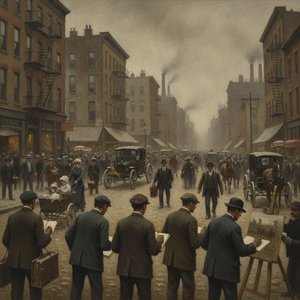
The Ashcan School: Capturing the Raw, Unfiltered Soul of Urban Life through American Realism
Discover the raw beauty of the Ashcan School. Explore how masters like Bellows and Henri captured the gritty, vibrant soul of early 20th-century New York through profound American Realism and evocative urban landscapes.