

 Se i rummet
 Del som kort
 Del
Del
 Detaljer
 Guide
Guide

 Download
 Lignende værker
 Røntgenundersøgelse
 Diasshow
 Spørgsmål og svar
 Statistikker
John

- 61.0 x 51.0 cm


A somber and direct monochrome portrait of a young boy by Ashcan School master Robert Henri captures profound emotion through expressive brushwork, inviting you to bring this timeless 1908 masterpiece into your collection.
 Vis mere
Robert Henri (1865-1929) var en amerikansk maler, kendt for sin realistiske stil og portrætter af hverdagsfolk. En pioner indenfor Ashcan School og en vigtig indflydelse på amerikansk kunst.
Giclée / Kunsttryk
Giclée- eller lærredstryk i museumskvalitet med hurtig produktion og fleksible muligheder for finish. ( Køb håndmalet maleri Skift til digitalt billede)




P118B Dkr10

P118H Dkr10

P118W Dkr10

P438Z Dkr10

P508JH Dkr12

P508YH Dkr12

P805H Dkr10

P805Z Dkr10

P919BZ Dkr10

P919G Dkr10

P919XJ Dkr10

P959ZH Dkr10

P968JZ Dkr12

W106C Dkr8

W218G Dkr10

W218JH Dkr8

W218Y Dkr10

W307PJ Dkr10

W316G Dkr10

W316PJ Dkr8

W316Y Dkr10

W398PJ Dkr8

W4111J Dkr10

W500HY Dkr15

W500JH Dkr15

W692G Dkr12

W849H Dkr8

W940BG Dkr15

W953PJ Dkr8




Standardstørrelse
speciallavet
CM
INCH
Vælg mellem vores forudindstillede størrelser, der matcher kunstværkets originale proportioner.
Loading sizes...

bredde
højde
Indtast den bredde og højde, du har brug for, så det passer til din ramme eller din væg. Et print kan kun beskæres, aldrig gøres større end selve billedet, så en størrelse med et andet format vil medføre, at dele af motivet går tabt. Vi sender dig en digital mockup til godkendelse, før vi printer noget. Billedet vist på denne side viser ikke den faktiske beskæring — det er kun mockuppen, der gør.
Verdensomspændende levering () på 2 uger i stedet for de sædvanlige 4/5 uger. (7 november)

Gratis ekspresforsendelse til hele verden

Lærred af linned i høj kvalitet

Fuld transportforsikring

Garanti for refusion af told og importafgifter

Garanti for præcis farvegengivelse

100 dages returret ved fabrikationsfejl

100% fuld returret

Mængderabat ved flere køb
 Glasmulighed er kun tilgængelig i størrelser under 110 cm

John
Giclée / Kunsttryk
Størrelse på reproduktion
-


Samlet pris
Dkr 467
A Soul Captured in Monochrome: The Intimacy of Robert Henri’s John
In the quiet, evocative depths of Robert Henri’s 1908 masterpiece, John, we encounter more than just a portrait; we meet a moment of profound human stillness. This monochrome study of a young boy serves as a breathtaking testament to the power of tonal mastery. Painted during the height of the Ashcan School movement, the work eschews the distractions of vibrant color to focus entirely on the raw, emotional essence of its subject. The boy sits before us, his gaze direct and somewhat somber, creating an immediate and unshakeable connection with the viewer. There is a haunting quality to his expression—a contemplative weight that seems far beyond his years, inviting anyone who lingers before the canvas to contemplate the mysteries of childhood and the quiet dignity of the individual.
The technical brilliance of John lies in Henri’s ability to sculpt form using nothing but a grayscale palette. Through a sophisticated range of tones—from the deepest, velvety blacks of the background to the luminous whites that catch the light on the boy's collar—the artist achieves a remarkable sense of three-dimensionality. The lighting, appearing to descend from an unseen source above and to the left, casts subtle shadows across the contours of the face, lending a sculptural quality to the flesh. This use of light does not merely illuminate; it breathes life into the subject, creating a soft, atmospheric glow that contrasts beautifully with the more rugged, textured applications of paint found in the boy's clothing.
The Mastery of the Ashcan Aesthetic
The brushwork itself is a masterclass in the Ashcan School aesthetic, characterized by its immediacy and expressive freedom. Rather than relying on rigid, clinical outlines, Henri defines shapes through fluid, visible strokes that suggest movement and texture. One can almost feel the weight of the fabric and the slight roughness of the boy's coat through the artist's vigorous application of oil paint. This technique avoids the polished idealism of academic art, opting instead for a gritty realism that captures the very texture of life. The lack of hard outlines allows the subject to emerge organically from the shadows, creating a sense of depth and atmosphere that is both visceral and poetic.
For the discerning collector or interior designer, this piece offers a profound sense of presence. Its monochromatic palette makes it an incredibly versatile addition to a sophisticated space, capable of anchoring a room with its quiet intensity without clashing with surrounding colors. The artwork does not demand attention through loudness, but rather commands it through depth and emotional resonance. It is a piece that rewards long periods of observation, revealing new nuances in the play of light and shadow each time it is viewed.
A Legacy of Realism and Emotion
To understand John is to understand the spirit of Robert Henri himself. As a pioneer of American realism, Henri sought to depict life as it truly was—unvarnished, raw, and deeply human. This portrait reflects his deep empathy for his subjects, capturing a sense of character that transcends the simple depiction of a face. The boy's direct gaze establishes an intimate communion with the viewer, bridging the gap between 1908 and the present day. It is this timeless quality, combined with the technical sophistication of the Ashcan style, that makes this work a perennial favorite for those who appreciate art that speaks to the enduring complexities of the human condition.
Spørgsmål og svar
Hvor kan jeg downloade "John" af Robert Henri?
En download er tilgængelig for "John": find det digitale billede på kunstværkets Download side, hvor du kan et højopløseligt digitalt billeddownload.
Fremstår farverne i "John" kraftige eller bløde?
Farveintensiteten i "John" er Monochromatic. Intensitet beskriver, hvor kraftige farverne fremstår.
Er "John" af Robert Henri i portræt-, landskabs- eller kvadratformat?
Formatet på "John" er Portrait. Dette er nyttigt, når du planlægger, hvor en reproduktion skal placeres.


Kunstnerbiografi
A Turbulent Genesis: The Early Life of Robert Henri
Robert Henri, født den 24. juni 1865 i Cincinnati, Ohio, bar fra barnsben en dyb følelse af forfremmelse og omdefinering, der ville forme både hans liv og kunst på dybtgående måder. Hans barndom var langt fra idyllisk; præget af den ustabile relation mellem hans far, John Jackson Cozad – en mand drevet af ambitioner og risikovillighed som gambler og ejendomsmægler – og hans mor, Theresa Gatewood Cozad. Denne uro kulminerede i 1882 med et tragisk skudduel over en jordstrid, der tvang familien til at flygte og antage nye identiteter for at undslippe hævn. Den unge Robert blev Robert Henri, en bevidst afskedigelse fra en fortid præget af konflikt og en symbolsk genfødsel som kunstner. Vestpårejserne gennem Nebraska og Colorado, der endte med etablering i New York City og derefter Atlantic City, indgydte ham en dyb empati for dem, der levede på samfundets yderkanter – en empati, der ville blive en afgørende del af hans kunstneriske vision. Denne tidlige oplevelse af kaos og omdefinering fremmede et åndeligt uafhængighedspræg og en forpligtelse til at skildre livet som det virkelig var, uden at være bundet af konventioner eller samfundsmæssige forventninger.Forging a New Vision: Artistic Development and Influences
Henris formelle kunstneriske uddannelse begyndte på Pennsylvania Academy of the Fine Arts i Philadelphia under Thomas Anshutz, hvor han finpudsede sine tekniske færdigheder. Men det var hans efterfølgende rejse til Paris i 1888, der virkelig antændte hans kunstneriske opvågning. I første omgang tiltrukket af den akademiske tradition på Académie Julian og påvirket af mestre som William-Adolphe Bouguereau og François Millet, bevægede Henri gradvist sig mod Impressionismen. Alligevel var han ikke tilfreds med blot at gengive det, han så; han søgte en dybere engagement med virkeligheden – en måde at fange ikke kun de flygtende effekter af lys, men også den rå følelse og vitalitet i moderne liv. Dette stræben førte ham til at omfavne en mere dristig, direkte tilgang, inspireret af den hollandske realist Franz Hals, hvis løse penselstrøg og psykologiske indsigt resonerede dybt med Henri’s egen kunstneriske sans. Han begyndte at eksperimentere med *pochades*, små træplader, der blev brugt til hurtige skitser, hvilket fremmede spontanitet og øjeblikkelighed i hans arbejde. Ved hjemkomsten til Amerika blev han en dedikeret lærer, ikke kun underviste i teknik, men også i en filosofi om kunst, rodfæstet i observation, ærlighed og individuel udtryksevne.Championing the Real: The Ashcan School and “The Eight”
Robert Henri’s indflydelse på amerikansk kunst strækker sig langt ud over hans egne malerier; han blev en katalysator for forandring, udfordrede den konservative norm i det etablerede kunstmiljø. Han var en central figur i fremkomsten af Ashcan School – en gruppe kunstnere, der dristigt skildrede de grusomme realiteter i bylivet, fra travle gader til overfyldte lejligheder. Henri’s forpligtelse til realismen og hans afvisning af akademisk pragt førte ham til at organisere “The Eight” i 1908 – en kollektiv af ligesindede kunstnere, herunder William Glackens, George Luks, Everett Shinn og John Sloan – der arrangerede en uafhængig udstilling som en direkte protest mod de restriktive politikker fra National Academy of Design. Denne handling var et vendepunkt i amerikansk kunsthistorie, hvilket signalerede en skift væk fra europæisk dominans og hen imod en unikt amerikansk kunstnerlig stemme. Henri’s malerier i denne periode, såsom “Woman in Manteau” (1899) og hans evokende portrætter, fangede ærligheden og modstandsdygtigheden hos almindelige mennesker, hvilket tilbød et kraftfuldt alternativ til de idealiserede repræsentationer, der blev foretrukket af den etablerede orden.Legacy and Enduring Influence
Robert Henri’s indflydelse på efterfølgende generationer af amerikanske kunstnere er uforståelig. Som lærer mentorerede han en bemærkelsesværdig række talenter, herunder Joseph Stella, Edward Hopper, Rockwell Kent, George Bellows og Louis D. Fancher – kunstnere, der ville forme kunstens forløb i det 20. århundrede. Hans bog, *The Art Spirit*, udgivet posthumt i 1923, er en tidløs tekst for spirende kunstnere, der tilbyder værdifuld visdom om observation, teknik og vigtigheden af kunstnerisk integritet. *Henri’s engagement i at skildre livet med ærlighed og empati*, hans afvisning af konventioner og hans urokkelige tro på kunstens kraft til at forbinde sig med publikum inspirerer stadig kunstnere i dag. Hans malerier er ikke blot repræsentationer af virkeligheden; de er vinduer ind i den menneskelige tilstand – vidnesbyrd om livets skønhed, kamp og modstandsdygtighed. Han efterlod et uforglemmeligt aftryk på amerikansk Realisme, banede vejen for en mere demokratisk og inkluderende kunstverden, der fejrede de almindelige oplevelser hos almindelige mennesker. Hans arv lever videre ikke kun gennem hans mesterlige værker, men også gennem de utallige kunstnere, han inspirerede til at finde deres egen stemme og fortælle deres egne historier.
Robert Henri
1865 - 1929 , USA
Kort om kunstneren
- Artistic Movement Or Style: Ashcan School, Realisme
- Artists Or Movements Influenced By This Artist:
- Edward Hopper
- The Eight
- Artists Who Influenced This Artist:
- William Bouguereau
- François Millet
- Date Of Birth: 24. juni 1865
- Date Of Death: 12. juli 1929
- Full Name: Robert Henri
- Nationality: Amerikansk
- Notable Artworks:
- La Neige
- Woman in Manteau
- Place Of Birth: Cincinnati, USA
Relaterede artikler

Capturing the Grey Light: A Journey Through the Soulful Atmosphere of the Hague School
Explore the evocative beauty of the Hague School. Discover how Dutch masters captured the soulful 'grey light' through atmospheric realism and tonalism, paving the way for Impressionism. A deep dive into the misty landscapes and emotional depth of this legendary art movement.
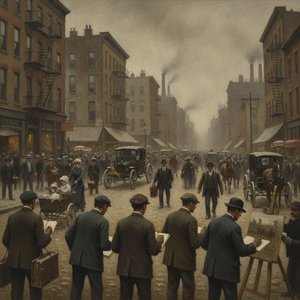
The Ashcan School: Capturing the Raw, Unfiltered Soul of Urban Life through American Realism
Discover the raw beauty of the Ashcan School. Explore how masters like Bellows and Henri captured the gritty, vibrant soul of early 20th-century New York through profound American Realism and evocative urban landscapes.
Udforsk kunstværker organiseret efter temaer, stilarter og karakteristika.
