


 Se i rummet
 Del som kort
 Del
Del
 Detaljer
 Guide
Guide

 Download
 Lignende værker
 Røntgenundersøgelse
 Diasshow
 Statistikker
Grass and Insects


Experience Shin Saimdang's 'Grass and Insects,' a stunning 16th-century Korean painting of nature’s beauty. Admire the intricate details & vibrant colors in this masterpiece from the National Museum of Korea.
 Vis mere
Oplev Shin Saimdang (1504-1551), en banebrydende koreansk kunstner fra Joseon-dynastiet. Udforsk hendes udsøgte naturbilleder, kalligrafi og poesi – en arv af skønhed og visdom.
Håndlavet oliereproduktion
Håndmalet olie på lærred i din valgte størrelse og ramme, udført efter bestilling af vores kunstnere. ( Skift til printsalg Skift til digitalt billede)




P118B Dkr10

P118H Dkr10

P118W Dkr10

P438Z Dkr10

P508JH Dkr12

P508YH Dkr12

P805H Dkr10

P805Z Dkr10

P919BZ Dkr10

P919G Dkr10

P919XJ Dkr10

P959ZH Dkr10

P968JZ Dkr12

W106C Dkr8

W218G Dkr10

W218JH Dkr8

W218Y Dkr10

W307PJ Dkr10

W316G Dkr10

W316PJ Dkr8

W316Y Dkr10

W398PJ Dkr8

W4111J Dkr10

W500HY Dkr15

W500JH Dkr15

W692G Dkr12

W849H Dkr8

W940BG Dkr15

W953PJ Dkr8




Standardstørrelse
speciallavet
CM
INCH
Vælg mellem vores forudindstillede størrelser, der matcher kunstværkets originale proportioner.
Loading sizes...

bredde
højde
Indtast den bredde og højde, du har brug for, så det passer til din ramme eller din væg. Da dette er håndmalet, kan kunstneren ved en anden form på størrelsen male lidt mere rundt om billedet eller skære lidt væk — det er op til dig. Vi sender dig et digitalt mockup til godkendelse, før maleriet påbegyndes. Billedet, der vises på denne side, viser ikke det endelige resultat — det er kun mockuppet, der gør.
Eksempler på hvad der kan ændres: Udskift ansigt med kundens eget foto; Tilføj kæledyr (f.eks. udskift kat med hund); Inkluder en skjult besked i baggrunden; Ændr baggrundslandskab eller elementer.
Efter bestilling vil TopImpressionists.com team sende en e-mail til kunden for at indhente instruktioner og fremsende et udkast til gennemgang
Efter bestilling vil TopImpressionists.com team sende en e-mail til kunden for at indhente instruktioner og fremsende et udkast til gennemgang
Verdensomspændende levering () på 3-4 uger i stedet for de standard 5 uger. (28 oktober). Ingen kompromiser med kvaliteten.

Gratis ekspresforsendelse til hele verden

Lærred af linned i høj kvalitet

Fuld transportforsikring

Garanti for refusion af told og importafgifter

Garanti for præcis farvegengivelse

100 dages returret ved fabrikationsfejl

100% fuld returret

Mængderabat ved flere køb
 Glasmulighed er kun tilgængelig i størrelser under 110 cm

Grass and Insects
Reproduktionsmetode
Størrelse på reproduktion
-


Samlet pris
Dkr 1772
A Symphony of Nature: Unveiling Shin Saimdang's "Grass and Insects"
Within the hallowed halls of the National Museum of Korea resides a treasure that transcends mere artistry – Shin Saimdang’s “Grass and Insects,” a captivating folding screen painting from 1504. More than just a depiction of flora and fauna, this work offers a poignant glimpse into the life, intellect, and artistic sensibilities of one of Korea's most remarkable women: Shin Saimdang, a pioneering figure who defied societal constraints to become a celebrated poet, calligrapher, painter, and mother.
The painting itself is a testament to Saimdang’s meticulous observation and refined technique. Executed in vibrant colors on paper, it embodies the essence of the mid-Joseon period. Delicate brushstrokes dance across the surface, capturing the subtle nuances of light and shadow, creating an illusion of depth and movement within the seemingly simple composition. The arrangement is carefully considered; a profusion of natural elements – watermelons plump with ripeness, vibrant poppies bursting with color, delicate hibiscus blossoms, and a myriad of insects – are interwoven amongst lush grasses, forming a miniature world teeming with life. Notice particularly the meticulous detail in rendering each individual leaf, petal, and insect wing, showcasing Saimdang’s mastery of her craft.
A Legacy Forged in Ink and Paper
Shin Saimdang's story is inextricably linked to her family history and the tumultuous political landscape of the Joseon Dynasty. Born into a noble lineage – her father, Shin Myeong-hwa, was a Confucian scholar who served under King Jungjong – she received an unusually comprehensive education for a woman of her time. Her upbringing fostered not only artistic talent but also a deep understanding of philosophy, literature, and history. This intellectual foundation profoundly shaped her work, imbuing it with layers of meaning and symbolism.
The painting’s creation coincided with a period of significant social change and political intrigue within the Joseon court. Saimdang's husband, Lee Won-su, was a man of modest means, leading to considerable hardship for their family. This backdrop of personal struggle likely informed her artistic choices – the abundance of natural imagery could be interpreted as a celebration of resilience and beauty amidst adversity, mirroring the enduring spirit of nature itself.
Symbolism Woven into the Landscape
Beyond its aesthetic appeal, “Grass and Insects” is rich in symbolic meaning. The inclusion of various insects – from delicate butterflies to industrious dung beetles – speaks to the interconnectedness of life and the cyclical rhythms of nature. The presence of watermelons and eggplants, staples of Korean cuisine, suggests a connection to daily life and the comforts of home. Even the meticulous rendering of individual leaves and grasses can be seen as an allegory for the complexities of human relationships and the passage of time.
Furthermore, the painting’s placement within a folding screen – a traditional format used for displaying important works – elevates its significance. The eight-panel design allowed for a panoramic view of the scene, inviting contemplation and offering multiple perspectives on the depicted world. The tenth panel, featuring a critique by O Sechang, a renowned calligrapher and art critic, underscores the importance of artistic judgment and the ongoing dialogue surrounding Saimdang’s work.
A Timeless Masterpiece: Capturing the Essence of Joseon
“Grass and Insects” is more than just a beautiful painting; it's a window into the soul of a remarkable woman and a vibrant era. It embodies the artistic spirit, intellectual curiosity, and profound empathy that defined Shin Saimdang’s life. Today, this exquisite work continues to captivate viewers with its delicate beauty, intricate detail, and enduring symbolism – a testament to the legacy of one of Korea's most celebrated artists.
Spørgsmål og svar
Hvilken kunstretning tilhører "Grass and Insects" af Shin Saimdang?
"Grass and Insects" af Shin Saimdang tilhører Joseon Dynasty Art-bevægelsen. Denne bevægelse giver den stilistiske kontekst for værket.
Hvilken type værk er "Grass and Insects"?
"Grass and Insects" er et værk i form af WallArt.
Hvilken stilart og hvilken epoke tilhører "Grass and Insects" af Shin Saimdang?
"Grass and Insects" af Shin Saimdang tilhører Joseon Dynasty Art-bevægelsen fra sin skabers Renæssancen-æra.
Kunstnerbiografi
en banebrydende kvindelig kunstner i Joseon-dynastiets Korea
shin saimdang, en alsidig kunstner fra Sydkorea, levede under Joseon-perioden og efterlod et uudsletteligt aftryk på den koreanske kunsthistorie. Hun blev født den 29. oktober 1504 i Gangneung, Gangwon-provinsen, og hun var ikke blot maler, men også forfatter, kalligraf og poet.tidligt liv og kunstneriske begyndelser
shin saimdangs kunstneriske talenter var tydelige fra en tidlig alder. Allerede som syvårig efterlignede hun malestilen hos an gyeon, en anden fremtrædende koreansk kunstner. Hendes fødehjem, Ojukheon, som også er hendes mødrene families hjem, er velbevaret den dag i dag.kunstneriske bidrag og stil
shin saimdangs malerier, der er kendetegnet ved fine penselstrøg og levende farver, er en del af en ti-panels skærmvæg. Hendes værker, såsom græs og insekter, præsenterer et væld af motiver, herunder vandmeloner, auberginer, valmuer, hibiscus og forskellige insekter. Disse malerier kan findes i Nationalmuseet i Korea (Seoul, Sydkorea), hvor de fortsat inspirerer kunstelskere.- se shin saimdangs kunstværker på TopImpressionists: https://TopImpressionists.com/@/shin-saimdang
- udforsk samlingen på Nationalmuseet i Korea: /en/art/show/national-museum-of-korea-seoul/
- opdag mere om kunstbevægelsen i Joseon-dynastiet: kunstbevægelsen i Joseon-dynastiet
eftermæle og betydning
shin saimdangs eftermæle rækker ud over hendes kunstneriske virke, da hun også er kendt for at være mor til yi i, en berømt lærd og politiker fra Joseon-dynastiet. Hendes liv og værk tjener som inspiration for mange og legemliggør essensen af koreansk kunst under Joseon-perioden. vigtige kunstværker af shin saimdang:- græs og insekter (Nationalmuseet i Korea, Seoul, Sydkorea)
- andre bemærkelsesværdige værker med fine penselstrøg og klare, levende farver, som er en del af en ti-panels skærmvæg.
- an gyeon, endnu en fremtrædende koreansk maler fra den tidlige Joseon-periode.

Shin Saimdang
1504 - 1551 , Sydkorea
Kort om kunstneren
- Artistic Movement Or Style: Joseon-dynastiets kunst
- Artists Or Movements Influenced By This Artist: Joseon-dynastiets kunst
- Artists Who Influenced This Artist: An Gyeon
- Date Of Birth: 29. oktober 1504
- Date Of Death: 1551
- Full Name: Shin Saimdang
- Nationality: Koreaner
- Notable Artworks: ['Græs og insekter']
- Place Of Birth: Gangneung, Sydkorea
Relaterede artikler
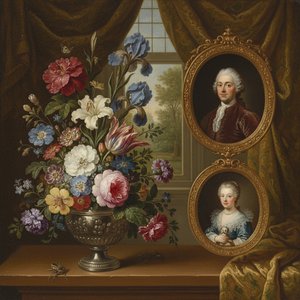
Jan van Kessel the Elder: A Baroque Master of Floral Still Life & Miniature Portraiture
Discover the exquisite detail of Jan van Kessel the Elder's Baroque floral still lifes & captivating miniatures. Explore his artistic legacy, scientific precision, and lasting influence on 17th-century Flemish painting.

Yi Eungro: Bridging East & West in the Landscape of Korean Modernism
Explore the captivating world of Yi Eungro (Lee Ungno), a pivotal figure in Korean modernism. Discover his unique fusion of Eastern and Western artistic traditions, abstract masterpieces, and lasting legacy. A must-read for discerning art collectors.