Se i rummet
 Send
Send Del
Del
 Detaljer
 Studieguide til kunstværker

 Download
 Lignende værker
 Røntgenundersøgelse
 Se diasshow
 Statistik
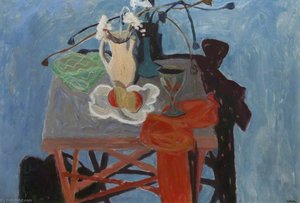
Florence
 Acrylic On Canvas
- WallArt
- Cubist Modernism
 1924
1924 66.0 x 91.0 cm
 Royal Scottish Academy of Art - Architecture
Sir William George Gillies’ "Florence" captures the vibrant Italian city with its iconic bridge and bustling scene. A stunning example of his artistic style, this painting showcases a beautiful representation of Florence's charm.
 Læs mere
"Dansk meta beskrivelse": "Udforsk W.G. Gillies’ smukke skotske landskaber og stilleben. Opdag hans kubistiske påvirkning, forbindelsen til 1922-gruppen og hans store indflydelse på det moderne kunstliv i Skotland."
Kunstværket vist på denne side er beskyttet af ophavsretsloven, hvilket betyder, at vi ikke lovligt kan skabe eller sælge en identisk reproduktion. Denne beskyttelse håndhæves i henhold til internationale aftaler som f.eks. den Bernerkonventionen og af nationale love, herunder de bestemmelser, der er fastlagt i Amerikansk ophavsretslov - Titel 17.
Som et respektfuldt og lovligt alternativ tilbyder vi skræddersyede, håndmalede kunstværker inspireret af originalen. Vores dygtige og professionelle kunstnere studerer omhyggeligt originalens stil, stemning og kunstneriske essens for at skabe et nyt, unikt værk, der fremkalder den samme følelse – samtidig med at det forbliver en original skabelse i egen ret.
Denne metode overholder fuldt ud ophavsretsreglerne, da den ikke indebærer kopiering eller duplikering af det beskyttede kunstværk. I stedet er der tale om en kreativ nytolkning – et nyt maleri, som er inspireret af det oprindelige, men ikke identisk med det.
Håndlavet oliereproduktion
Håndmalet olie på lærred i din valgte størrelse og ramme, udført efter bestilling af vores kunstnere. ( Skift til printversion Skift til digitalt billede)




P118B Dkr10

P118H Dkr10

P118W Dkr10

P438Z Dkr10

P508JH Dkr12

P508YH Dkr12

P805H Dkr10

P805Z Dkr10

P919BZ Dkr10

P919G Dkr10

P919XJ Dkr10

P959ZH Dkr10

P968JZ Dkr12

W106C Dkr8

W218G Dkr10

W218JH Dkr8

W218Y Dkr10

W307PJ Dkr10

W316G Dkr10

W316PJ Dkr8

W316Y Dkr10

W398PJ Dkr8

W4111J Dkr10

W500HY Dkr15

W500JH Dkr15

W692G Dkr12

W849H Dkr8

W940BG Dkr15

W953PJ Dkr8




Standardstørrelse
speciallavet
CM
INCH
Vælg mellem vores forudindstillede størrelser, der matcher kunstværkets originale proportioner.
Loading sizes...

bredde
højde
Indtast den bredde og højde, du har brug for, så det passer til din ramme eller din væg. Da dette er håndmalet, kan kunstneren ved en anden form på størrelsen male lidt mere rundt om billedet eller skære lidt væk — det er op til dig. Vi sender dig et digitalt mockup til godkendelse, før maleriet påbegyndes. Billedet, der vises på denne side, viser ikke det endelige resultat — det er kun mockuppet, der gør.
Eksempler på tilpasningsmuligheder: Udskift ansigt med kundens eget foto; Tilføj kæledyr (f.eks. udskift kat med hund); Inkluder en skjult besked i baggrunden; Ændr baggrundslandskab eller elementer.
Efter bestilling vil TopImpressionists.com team sende en e-mail til kunden for at indhente instruktioner og fremsende et udkast til gennemgang.
Efter bestilling vil TopImpressionists.com team sende en e-mail til kunden for at indhente instruktioner og fremsende et udkast til gennemgang.
Levering i hele verden () på 3-4 uger i stedet for de standard 5 uger. (26 oktober). Ingen kompromiser med kvaliteten.

Gratis ekspresforsendelse til hele verden

Lærred af linned i høj kvalitet

Komplet transportforsikring

Garanti for refusion af told og importafgifter

Garanti for autentisk farvegengivelse

100 dages returret ved fabrikationsfejl

100% fuld returret

Mængderabat ved flere køb
 Glasmulighed er kun tilgængelig i størrelser under 110 cm

Florence
Reproduktionsmateriale
Reproduktionsstørrelse
-


Samlet pris
Dkr 1764
The Heart of Tuscany Captured: An Exploration of Gillies’ “Florence”
William George Gillies' "Florence," painted in 1924, isn’t merely a depiction of an Italian city; it’s a vibrant distillation of its spirit – a testament to the enduring beauty and bustling life of one of Europe’s most historically significant urban centers. This captivating canvas transports us directly to the heart of Tuscany, offering a glimpse into a world brimming with energy, commerce, and artistic resonance. The painting immediately draws the eye towards the graceful bridge that dominates the composition, its arched form acting as a visual anchor amidst the dynamic scene below. This isn’t a photographic representation; rather, Gillies employs a masterful blend of observation and imagination to create an atmosphere thick with movement and light.
Gillies, a key figure in the 1922 Group – a collective dedicated to promoting modern art in Scotland – was deeply influenced by both the Impressionists and the burgeoning Cubist movement. His early travels to Paris and Italy exposed him to these revolutionary styles, which he skillfully integrated into his own distinctive approach. “Florence” showcases this evolution; while retaining elements of traditional landscape painting, it’s imbued with a sense of fractured perspective and flattened planes reminiscent of Cubism, particularly in the treatment of the buildings lining the riverbank. The careful layering of color and brushstrokes creates an illusion of depth, inviting the viewer to lose themselves within the bustling cityscape.
A Symphony of Color and Light
The painting’s palette is remarkably rich and evocative. Gillies masterfully utilizes a range of warm ochres, deep blues, and vibrant reds to capture the essence of Florentine light. The sun, though not explicitly depicted, casts a golden glow across the scene, illuminating the reflections shimmering on the river's surface. Notice how he employs broken color – small dabs and strokes of contrasting hues – to suggest texture and form, particularly in the details of the buildings and boats. This technique adds a dynamic quality to the composition, preventing it from feeling static or overly formal.
- Dominant Colors: Warm ochres, deep blues, vibrant reds, and touches of green.
- Light & Shadow: Gillies expertly utilizes light and shadow to create a sense of depth and atmosphere.
- Brushwork: Loose, expressive brushstrokes contribute to the painting’s dynamic feel.
Symbolism and Historical Context
Beyond its aesthetic qualities, “Florence” is steeped in historical significance. The city itself represents a pivotal moment in Western civilization – the birthplace of the Renaissance, a period marked by an unprecedented flourishing of art, science, and culture. The bridge, a recurring motif in Gillies’ work, symbolizes connection and transition, linking the past with the present. The numerous boats navigating the river evoke the importance of trade and commerce to Florence's prosperity during this era. Furthermore, the painting subtly references the city’s architectural grandeur – the imposing buildings lining the riverbank are reminiscent of the palaces and churches that define Florence’s iconic skyline.
Painted in 1924, “Florence” reflects a period of renewed interest in classical art and culture following World War I. Gillies' work embodies a spirit of optimism and renewal, capturing the vibrant energy of a city poised to embrace the future while honoring its rich heritage. The painting’s enduring appeal lies not only in its technical brilliance but also in its ability to transport us back in time and evoke the timeless beauty of Florence.
Bringing “Florence” Home: A Reproduction for Your Space
TopImpressionists offers meticulously crafted, hand-painted reproductions of William George Gillies’ "Florence," ensuring that you can experience the full impact of this remarkable artwork within your own home. Our skilled artisans use traditional techniques and high-quality materials to faithfully recreate Gillies' unique style and color palette. Whether you are an art collector, a design enthusiast, or simply someone seeking to add a touch of timeless elegance to your space, our reproduction of “Florence” is the perfect choice. It’s more than just a print; it’s a window into the heart of Tuscany, capturing the spirit and beauty of one of the world's most beloved cities.
Spørgsmål & svar
Hvor gammel var William George Gillies, da vedkommende skabte "Florence"?
Da "Florence" blev skabt i 1924, var William George Gillies – født i 1898 – 26 år gammel.
Hvilken farve træder mest frem i "Florence"?
Espresso (#513e27) er den dominerende farve i "Florence" af William George Gillies.
Hvor kan jeg finde statistik om "Florence" af William George Gillies?
Der findes en Statistikker-side for "Florence". Den viser de månedlige besøg for kunstværket og kunstnerens øvrige værker, opdelt efter land og sprog.


Om kunstneren
Sir William George Gillies: En Skotsk Kunstners Liv
Sir William George Gillies, født i Haddington nær Edinburgh i 1898 og afgået ved døden i 1973, var en af det 20. århundredes mest markante skotske kunstnere. Hans arbejde er præget af en dyb kærlighed til det skotske landskab og en evne til at fange dets sjæl med en usædvanlig følsomhed. Gillies’ rejse ind i kunsten var ikke lineær, men snarere en udforskning af forskellige stilarter og indflydelser, der samledes til et unikt og genkendeligt udtryk.Tidlige Liv og Uddannelse
Gillies begyndte sin kunstneriske uddannelse på Edinburgh College of Art, men hans studier blev afbrudt af tjeneste i Royal Engineers under Første Verdenskrig. Efter krigen fortsatte han sine studier ved college’et og blev senere en dedikeret lærer der i over 40 år, undervise andre fremstående skotske kunstnere som Adam Bruce Thomson. Denne tidlige uddannelse la grundlaget for hans efterfølgende udvikling, hvor han både lærte af traditioner og åbnede sig for nye tendenser.Kunstnerisk Udvikling og Indflydelser
Gillies’ kunstneriske rejse begyndte med en udforskning af Kubisme efter at have studeret under André Lhote i Paris i 1923 og rejst til Italien året efter. Hans tidlige værker, som “Two Pots, Saucer and Fruit” fra 1933, demonstrerer denne indflydelse, med en Cézanne-inspireret komposition og en understated farvepalet, der minder om Braque og Picassos arbejde. En afgørende præmis i hans udvikling kom i 1934, da han blev inspireret af Paul Klee’s arbejde, hvilket førte til et mere fantasifuldt brug af farver og barnlige elementer i sine billeder. Gradvis bevægede Gillies sig væk fra stram Kubisme og udviklede en distinkt stil, der var rodfæstet i det skotske landskab og traditionelle still liv.1922 Gruppen og Samarbejdets Ånd
I 1922 dannede Gillies sammen med andre kunstnere som William Crozier, William Geissler og William MacTaggart “1922 Gruppen”. Denne gruppe fungerede som en platform for fremkommede skotske kunstnere til at vise deres arbejde på New Gallery i Edinburgh i ti år. Gruppen fremmede et fællesskab og innovation inden for det skotske kunstmiljø, hvor Gillies spillede en central rolle.Temaer og Motiver
Gillies er mest kendt for sine billeder af Lothian-, Fife- og Borderregionerne i Skotland. Han fangede essensen af disse landskaber med en følsom blik, der ofte indfanger lyset og atmosfæren på enestående vis. Still liv var også et centralt fokus, ofte med keramik skabt af hans yngre søster, Emma Smith Gillies, hvis tidlige død i 1936 dybt berørte ham. Hans still liv er ofte præget af en melankolsk stemning og en refleksion over tab og dødelighed.Anvendelser og Anerkendelse
Gillies blev udnævnt til Principal of Edinburgh College of Art i 1959 og dimitterede sine studerende i 1966. Han modtog CBE i 1957 for sine tjenester til kunst i Skotland, og blev senere tildelt Royal Academician titlen i 1964. Hans arbejde findes i museer over hele Skotland, herunder Aberdeen Art Gallery, Dundee’s McManus Gallery, Edinburgh National Gallery og Scottish National Gallery of Modern Art. Hans værker er også repræsenteret i internationale samlinger som Tate i London, Ottawa og Peru.Et Eftermæle af Skotsk Kunst
Sir William George Gillies efterlod sig et betydeligt kunstnerisk arv, der fortsat inspirerer og fascinerer. Han var en dygtig maler, der formåede at fange den skotske sjæl i sine billeder og samtidig udforske forskellige stilarter og indflydelser. Hans arbejde er et vidnesbyrd om hans passion for kunst og hans evne til at skabe værker af stor skønhed og betydning.
William George Gillies
1898 - 1973 , Storbritannien
Hurtige fakta
- Artistic Movement Or Style: Skotsk landskabsmaleri
- Artists Or Movements Influenced By This Artist: ['Edinburgh School']
- Artists Who Influenced This Artist:
- André Lhote
- Cézanne
- Braque
- Picasso
- Paul Klee
- Date Of Birth: 1898
- Date Of Death: 1973
- Full Name: Sir William George Gillies
- Nationality: Skotsk
- Notable Artworks:
- To Pots, Saucer og Frugt
- Havnen i Anstruther
- Place Of Birth: Haddington, Storbritannien
Relaterede artikler

Hudson River Skolens 10 Mesterværker: Kunst, Natur & Indretning
Oplev Hudson River Skolens 10 mest ikoniske værker! Dyk ned i Thomas Cole, Frederic Church og Albert Bierstadts landskaber. Find museumskvalitets reproduktioner & inspiration til din boligindretning på TopImpressionists.com.

Romantikkens Landskaber: Top 10 Malerier der Definerede En Æra | TopImpressionists
Oplev romantikkens storhedstid! Dyk ned i top 10 landskabsmalerier af Caspar David Friedrich, Turner & Constable. Historiske fortællinger og museumskvalitets reproduktioner på TopImpressionists.com – find din inspiration til væggen her!

John Constables 25 Mesterværker: En Hyldest til Englands Landskabskunst | TopImpressionists.com
Oplev John Constables 25 mest ikoniske værker! Fordyb dig i engelsk romantik, betagende landskaber og tidløs skønhed. Køb museumskvalitets reproduktioner af 'The Hay Wain' & mere på TopImpressionists.com – inspiration til dit hjem.

Evocations of Place: A Historical Journey Through Landscape Art
Explore the rich history of landscape art with TopImpressionists. Discover renowned artists, movements like Impressionism & tonalism, and expert guidance for collecting timeless pieces. Find your perfect serene escape today!

Evocations of Place: A Historical Journey Through Landscape Art
Explore the rich history of landscape art with TopImpressionists. Discover renowned artists, movements like Impressionism & Romanticism, and expert guidance for collecting timeless pieces. Find your perfect serene escape today!
Udforsk kunstværker organiseret efter temaer, stilarter og karakteristika.