


 Se i rummet
 Send
Send Del
Del
 Detaljer
 Studieguide til kunstværker

 Download
 Lignende værker
 Røntgenundersøgelse
 Se diasshow
 Statistik
Hawking
 Acrylic On Canvas
- WallArt
 1902
1902- 19th Century
 120.0 x 104.0 cm
 National Trust
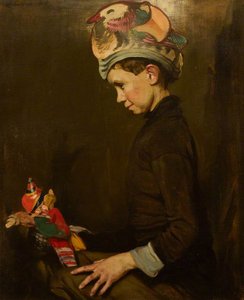
Sir William Nicholson's 'Hawking' (1902) depicts a young boy with a bird, alongside dogs and a horse – a poignant portrait reflecting early 20th-century life.
 Læs mere
"DanskMetaDescription": "Sir William Nicholson (1872-1949) var en dansk maler kendt for sine stærke portrætter, elegante stillbilleder og banebrydende træsnit. Hans samarbejde med James Pryde revolutionerede grafisk design og har stor indflydelse på kunsthistorien."
Køb et højopløst, optimeret digitalt billede i en kvalitet, der er langt overlegen i forhold til online-forhåndsvisningen.
Hver fil er omhyggeligt forberedt af vores interne specialister ved hjælp af avancerede værktøjer og ekspertmæssig manuel retuschering. Vi sikrer, at hvert billede har enestående klarhed, præcis farvegengivelse og fine detaljer.
Den endelige fil leveres via e-mail inden for 72 timer og er optimeret til øjeblikkelig brug i professionelle, redaktionelle og trykte miljøer. Det er den samme kvalitet, som førende designstudier, forlag og gallerier har tillid til.
Digitalt billede
Download en højopløselig fil til personlig fremvisning, print og kreative projekter. ( Skift til printversion Bestil håndmalet reproduktion)
Inkluderet i alle ordrer på digitale billeder
Professionel digital levering, garanteret
Når du vælger TopImpressionists.com, får du ikke blot et billede – du modtager et professionelt optimeret digitalt kunstværk, skabt med præcision og sikret med en tilfredshedsgaranti. Her er alt, hvad din ordre automatisk indeholder:

Hurtig levering via e-mail
Din højtopløselige digitale billedfil sendes til din e-mail inden for 72 timer efter bestilling – klar til øjeblikkelig brug.

AI-forbedret digital fil
Dit kunstværk optimeres professionelt ved hjælp af avancerede AI-værktøjer og manuel redigering, hvilket sikrer maksimal detaljegrad, klarhed og farvenøjagtighed.

Gratis livslang genlevering
Har du ved en fejl slettet eller mistet din fil? Ingen bekymring – vi sender den igen til enhver tid, helt gratis.

Ingen importgebyrer – nogensinde
Nyd dit kunstværk med det samme uden told, afgifter eller leveringsgebyrer – digitale downloads er altid skattefrie.

Garanteret farvenøjagtighed
Vi sikrer, at dit digitale billede gengiver de originale farver så præcist som muligt ved hjælp af professionelle værktøjer og farvestyring.

100 dages tilfredshedsgaranti
Hvis du ikke er tilfreds med dit digitale billede, vil vi revidere det eller refundere 100% inden for 100 dage – uden spørgsmål.

100% Pengene tilbage-garanti
Ik tilfreds? Få fuld refusion inden for 100 dage efter modtagelse af din digitale fil – uden spørgsmål.

Mængderabat ved storkøb
Køb 3 billeder, spar 10% - Køb 5, spar 15% - Køb 10+, spar 20%. Ideelt til kreative projekter, gallerier og bureauer.
The Enigmatic Figure of Hawking
William Nicholson’s “Hawking,” painted in 1902, isn't merely a portrait; it’s a carefully constructed tableau of Victorian sensibilities layered with subtle anxieties and burgeoning modernity. The subject, a young boy holding a bird on his arm while accompanied by two dogs, immediately evokes a sense of domesticity—a scene seemingly plucked from the heart of Edwardian England. Yet, closer inspection reveals a complex interplay of elements that hint at deeper currents beneath the surface of this carefully arranged image. The boy’s posture is slightly awkward, his gaze averted, suggesting a quiet introspection or perhaps a touch of unease. The bird he cradles, likely a finch, symbolizes freedom and innocence, but its presence within the confines of the scene introduces an element of fragility and vulnerability.
A Collaboration Born of Artistic Vision
“Hawking” was a product of a remarkable artistic partnership between Nicholson and James Pryde, known collectively as the Beggarstaffs. This duo revolutionized illustration in the late 19th and early 20th centuries by employing a distinctive style characterized by bold lines, flattened perspectives, and a deliberately unpolished aesthetic. Their work rejected the fussy detail of academic portraiture, opting instead for a more immediate and dynamic approach. Nicholson’s contribution to this project was crucial; he brought a sophisticated understanding of composition and characterization, while Pryde provided the technical expertise in woodcut and lithography. The Beggarstaffs' style reflected a shift away from traditional illustration towards a more journalistic and evocative form of visual storytelling.
The Victorian Context: Restraint and Subversion
To fully appreciate “Hawking,” it’s essential to understand the broader context of Victorian England. The era was marked by strict social conventions, rigid moral codes, and a profound sense of propriety. Yet, beneath this veneer of respectability lay currents of change—industrialization, urbanization, and growing anxieties about modernity. Nicholson subtly captures these tensions within his painting. The dogs, symbols of loyalty and domesticity, are juxtaposed with the boy’s withdrawn demeanor, hinting at a disconnect between traditional values and emerging individualistic sensibilities. The inclusion of the bird, representing freedom, further underscores this subtle subversion of Victorian norms.
Symbolism and Emotional Resonance
Beyond its stylistic merits, “Hawking” is rich in symbolic meaning. The boy’s posture suggests a sense of isolation or perhaps a questioning of authority—a common theme in the literature of the period. The bird, as mentioned earlier, represents innocence and vulnerability, while the dogs embody loyalty and companionship. The overall composition creates a feeling of quiet contemplation, inviting the viewer to ponder the complexities of human relationships and the challenges of navigating a rapidly changing world. Nicholson’s masterful use of light and shadow further enhances the painting's emotional impact, creating a sense of depth and atmosphere that draws the eye inward.
A Legacy of Artistic Innovation
Sir William Nicholson’s “Hawking” stands as a testament to his artistic versatility and his ability to capture the spirit of his time. It is a remarkable example of Beggarstaff illustration, blending technical skill with evocative storytelling. Reproductions of this painting offer a captivating glimpse into Victorian England—a world of restrained elegance, hidden anxieties, and burgeoning modernity. Its enduring appeal lies in its ability to resonate with viewers on multiple levels, inviting them to contemplate the complexities of human experience and the timeless themes that continue to shape our understanding of ourselves and the world around us.
Spørgsmål & svar
Fra hvilken epoke stammer "Hawking"?
Den historiske periode for "Hawking" af William Nicholson er 19th Century. Denne klassificering placerer værket i kunsthistorien.
Fremstår farverne i "Hawking" kraftige eller bløde?
"Hawking" af William Nicholson fremviser en Balanced farveintensitet.
Hvad er den dominerende farve i "Hawking" af William Nicholson?
Den farve, der træder tydeligst frem i "Hawking", er Walnut (#603d06). Den dominerende farve er nyttig, når man skal matche et kunstværk med en indretning.
Lignende kunstværker


Kunstnerbiografi
Early Life and Artistic Beginnings
Sir William Newzam Prior Nicholson, født i Newark-on-Trent den 5. februar 1872, trådte ind i en verden der blandede industriel praktisk sans med kunstnerisk følsomhed. Hans far, en succesfuld ingeniør og konservativ parlamentsmedlem, indgydte en følelse af disciplin, mens hans mors slægtskab forbundt ham med den æstetiske tradition i Oxfordshire. Fra en ung alder viste Nicholson en talent for kunst, der blev plejet af William Cubley, en lokal maler og kunstlærer, der selv sporede sine kunstneriske rødder tilbage til Sir Joshua Reynolds. Denne tidlige eksponering lagde grundlaget for en karriere, der skulle spænde over forskellige medier og stilarter. Et kortvarigt ophold på Hubert von Herkomers kunstskole viste sig at være afgørende, ikke kun for at finpudse hans færdigheder, men også for at introducere ham til Mabel Pryde, som han ville blive gift med og en essentiel samarbejdspartner i hans spirende kunstneriske rejse. Det var gennem Mabel, at han mødte hendes bror, James Pryde, et partnerskab der snart revolutionerede verden af grafisk design.The Beggarstaffs and a Revolution in Poster Art
Samarbejdet mellem William Nicholson og James Pryde, kendt som “J. & W. Beggarstaff,” markerede et vendepunkt i britisk visuel kultur. Afvisende den dominerende ornate æstetik af victorianske plakater, omfavnede de en dristig enkelhed karakteriseret af slående silhuetter, flade farveplaner og en bevidst afvisning af traditionel perspektiv. Deres designs var ikke blot reklamer; de var erklæringer – kraftfulde, grafiske kompositioner, der fangede offentlighedens fantasi. Plakater for produktioner som *Don Quixote* og publikationer såsom *Harper’s Magazine* blev øjeblikkeligt genkendelige, og påvirkede en hel generation af kunstnere og designere. Denne periode var ikke blot om kommerciel kunst; det var om at omskrive visuel kommunikation selv. Beggarstaffs' arbejde udfordrede konventioner og banede vejen for moderne grafisk design og etablerede Nicholson’s ry som en innovator. Deres indflydelse resonerede langt ud over plakaterne, påvirkede illustration og endda maleri med deres fokus på stærke former og bevidst komposition.Fra Woodcuts til Portraits: En Udviklende Stil
Efter opløsningen af Beggarstaff-partnerskabet, tog Nicholson en periode med stilistisk udforskning. Han vendte sin opmærksomhed mod woodcut og wood-engraving, teknikker der tillod ham at finpudse sin mesterskab i linje og form. Inspireret af den indflydelsesrige James Abbott McNeill Whistler, omfavnede han disse metoder, producerede intrikate og evocative tryk, der viste hans voksende kunstneriske modenhed. Disse værker demonstrerede en bemærkelsesværdig evne til at fange essensen med minimal detalje, en kvalitet, der ville blive et kendetegn ved hans stil. Samtidigt etablerede Nicholson sig som portrætmaler, og modtog kommissioner fra fremtrædende personer i tiden. Hans portrætter var ikke blot ligheder; de var indsigtfulde studier af karakter, der afslørede deres undersider gennem subtile nuancer af udtryk og positur. Værker som *Lady in Furs, Mme. P.* illustrerer denne færdighed, fanger ikke kun fysisk fremtoning, men også en følelse af personlighed og social status.Still Life, Landscape, and Lasting Legacy
I de senere faser af sin karriere fokuserede Nicholson i stigende grad på still life og landskabsmaleri. Hans still lifes, såsom *The Lowestoft Bowl*, er fejret for deres udsøgte opmærksomhed på detaljer, harmoniske farvepaletter og en stille følelse af intimitet. Han indgydede almindelige objekter med en poetisk kvalitet, hævede dem over blot repræsentation til at blive symboler på skønhed og refleksion. Hans landskaber, ofte malet fra scenerne i sine rejser i Spanien og Italien, fanger lysets og atmosfærens essens med bemærkelsesværdig dygtighed. I løbet af sit liv forblev Nicholson en alsidig kunstner, der konstant eksperimenterede med nye teknikker og tilgange. Han skrev børnebøger, designede for teatret og fortsatte med at producere tryk sammen med sine malerier. Sir William Nicholson’s indflydelse strækker sig ud over hans egen produktive output; han inspirerede generationer af kunstnere med sit engagement i håndværket, sin innovative ånd og sin evne til at finde skønhed i det almindelige. Hans værk er et vidnesbyrd om kunstens kraft til at belyse den menneskelige oplevelse og transformere vores opfattelse af verden omkring os. *Han døde i 1949*, efterlod en rig kunstnerisk arv, der fortsat fanger og inspirerer i dag.
William Nicholson
1872 - 1949 , Storbritannien
Hurtige fakta
- Artistic Movement Or Style: Still-liv, portrætter
- Artists Or Movements Influenced By This Artist: ['Beggarstaffs']
- Artists Who Influenced This Artist:
- Whistler
- James Pryde
- Date Of Birth: 5. februar 1872
- Date Of Death: 16. maj 1949
- Full Name: Sir William Newzam Prior Nicholson
- Nationality: Britisk
- Notable Artworks:
- Lady in Furs
- Plaza de toros
- Place Of Birth: Newark, England