


 Se i rummet
 Send
Send Del
Del
 Detaljer
 Studieguide til kunstværker

 Download
 Lignende værker
 Røntgenundersøgelse
 Se diasshow
 Statistik
Calver Bridge, Derbyshire
 Impressionism
 64.0 x 77.0 cm
Admire Stanley Royle’s ‘Calver Bridge’. This Impressionistic oil painting captures a serene winter landscape in Derbyshire. Explore its textured brushstrokes & atmospheric perspective.
Discover Stanley Royle’s evocative landscape paintings of England & Canada! Explore his post-impressionist style & iconic works like ‘Spring Morning.’
 Læs mere
Kunstværket vist på denne side er beskyttet af ophavsretsloven, hvilket betyder, at vi ikke lovligt kan skabe eller sælge en identisk reproduktion. Denne beskyttelse håndhæves i henhold til internationale aftaler som f.eks. den Bernerkonventionen og af nationale love, herunder de bestemmelser, der er fastlagt i Amerikansk ophavsretslov - Titel 17.
Som et respektfuldt og lovligt alternativ tilbyder vi skræddersyede, håndmalede kunstværker inspireret af originalen. Vores dygtige og professionelle kunstnere studerer omhyggeligt originalens stil, stemning og kunstneriske essens for at skabe et nyt, unikt værk, der fremkalder den samme følelse – samtidig med at det forbliver en original skabelse i egen ret.
Denne metode overholder fuldt ud ophavsretsreglerne, da den ikke indebærer kopiering eller duplikering af det beskyttede kunstværk. I stedet er der tale om en kreativ nytolkning – et nyt maleri, som er inspireret af det oprindelige, men ikke identisk med det.
Håndlavet oliereproduktion
Håndmalet olie på lærred i din valgte størrelse og ramme, udført efter bestilling af vores kunstnere. ( Skift til printversion Skift til digitalt billede)




































Standardstørrelse
speciallavet
CM
INCH
Vælg mellem vores forudindstillede størrelser, der matcher kunstværkets originale proportioner.
Loading sizes...

bredde
højde
Indtast den bredde og højde, du har brug for, så det passer til din ramme eller din væg. Da dette er håndmalet, kan kunstneren ved en anden form på størrelsen male lidt mere rundt om billedet eller skære lidt væk — det er op til dig. Vi sender dig et digitalt mockup til godkendelse, før maleriet påbegyndes. Billedet, der vises på denne side, viser ikke det endelige resultat — det er kun mockuppet, der gør.
Eksempler på tilpasningsmuligheder: Udskift ansigt med kundens eget foto; Tilføj kæledyr (f.eks. udskift kat med hund); Inkluder en skjult besked i baggrunden; Ændr baggrundslandskab eller elementer.
Efter bestilling vil TopImpressionists.com team sende en e-mail til kunden for at indhente instruktioner og fremsende et udkast til gennemgang.
Efter bestilling vil TopImpressionists.com team sende en e-mail til kunden for at indhente instruktioner og fremsende et udkast til gennemgang.
Levering i hele verden () på 3-4 uger i stedet for de standard 5 uger. (22 oktober). Ingen kompromiser med kvaliteten.

Gratis ekspresforsendelse til hele verden

Lærred af linned i høj kvalitet

Komplet transportforsikring

Garanti for refusion af told og importafgifter

Garanti for autentisk farvegengivelse

100 dages returret ved fabrikationsfejl

100% fuld returret

Mængderabat ved flere køb
 Glasmulighed er kun tilgængelig i størrelser under 110 cm

Calver Bridge, Derbyshire
Reproduktionsmateriale
Reproduktionsstørrelse
-


Samlet pris
Dkr 1763
Lignende kunstværker


Om kunstneren
The Impressionistic Vision of Stanley Royle
Stanley Royle (1888–1961) remains a luminous figure in the annals of English landscape painting, an artist whose brush captured the fleeting, atmospheric magic of the natural world. Born in Stalybridge, Cheshire, Royle was part of a lineage deeply connected to the arts, with his cousin Herbert Royle already established as a respected landscape painter. This early immersion in creativity set the stage for a career defined by a profound sensitivity to light and texture. His formative years in Ecclesfield, Sheffield, provided him with a rich tapestry of rural rhythms and verdant vistas that would serve as the primary inspiration for much of his life's work. Through his eyes, the rolling hills of Yorkshire and the quiet corners of Derbyshire were transformed into emotive, impressionistic dreamscapes.
His formal artistic journey began in 1904 at the Sheffield Technical School of Art, where he studied under the guidance of Oliver Senior. This mentorship was pivotal; Senior’s influence helped shape Royle’s burgeoning aesthetic, encouraging a style that balanced structural integrity with a loose, expressive touch. As his talent matured, Royle’s work began to garner significant recognition within the prestigious circles of the British art establishment. A defining moment occurred in 1913 when three of his paintings were accepted into the Royal Academy Summer Exhibition, a feat that signaled his arrival as a major voice in contemporary landscape painting. This period of success was accompanied by his election as an associate member of the Royal Society of British Artists (RSBA) in 1918, eventually achieving full membership by 1920.
Technique and the Poetry of Light
The brilliance of Royle’s technique lies in his ability to marry Post-Impressionist sensibilities with a uniquely British pastoral charm. His method often employed broad sweeps of color combined with an almost pointillist effect, creating surfaces that seem to vibrate with light. This approach allowed him to capture the heavy, damp atmosphere of a Yorkshire morning or the crystalline stillness of a winter snowfall with remarkable fidelity. Whether depicting the rugged terrain of Burbage, Derbyshire or the tranquil, snow-dusted lanes of a village street, Royle utilized textured brushstrokes to evoke the tactile reality of the landscape.
His work often explored themes of seasonal transition and the quiet intimacy of nature. One of his most cherished subjects involved the interplay of light through woodland canopies, exemplified by the poignant Spring Morning Amongst the Bluebells. In this piece, which famously featured his wife, Lily Goulding, Royle demonstrated an unparalleled ability to infuse a landscape with personal emotion, turning a simple woodland scene into a timeless moment of idyllic beauty. His versatility was further evidenced by his ability to shift from the lush, green vitality of spring to the stark, monochromatic serenity of winter scenes, often finding profound beauty in the skeletal forms of trees against a pale, wintry sky.
A Legacy of Landscape and Light
Beyond the borders of England, Royle’s artistic horizons expanded through his experiences in Canada, where he continued to find inspiration in vast, sweeping vistas. This international perspective enriched his repertoire, allowing him to apply his impressionistic lens to new environments, yet his heart remained deeply rooted in the landscapes of his youth. As a teacher at the Sheffield School of Art, he also passed his passion onto a new generation, including notable artists like Kenneth Steel, ensuring that his influence would ripple through the decades.
Today, the significance of Stanley Royle’s oeuvre lies in its enduring ability to evoke nostalgia and wonder. His paintings are more than mere depictions of geography; they are emotional records of a specific time and place, captured with a reverence for the ephemeral. Through his mastery of atmospheric perspective and color, Royle created a body of work that continues to resonate with anyone moved by the quiet majesty of the natural world. His legacy is found in every textured stroke of paint that invites the viewer to step into a serene, sun-drenched meadow or a frost-bitten moor, experiencing the world exactly as he did: with profound, unceasing wonder.

Stanley Royle
1888 - 1961
Hurtige fakta
- Artistic Movement Or Style: Post-Impressionism
- Artists Or Movements Influenced By This Artist: ['Royal Academy']
- Artists Who Influenced This Artist: ['Oliver Senior']
- Date Of Birth: 1888
- Date Of Death: 1961
- Full Name: Stanley Royle
- Nationality: English
- Notable Artworks:
- Spring Morning
- Calver Bridge
- Place Of Birth: Stalybridge, Cheshire
Relaterede artikler

Capturing the Soul: The Most Emotionally Moving Impressionist and Post-Impressionist Masterpieces
Discover the profound emotional depth of Impressionist and Post-Impressionist masterpieces. Explore how legends like Monet, Van Gogh, and Gauguin captured light and soul through evocative landscapes and vibrant brushwork for a timeless connection to art history.

The Beauty of Impermanence: Capturing Decay through Impressionist Eyes
Explore the profound beauty of impermanence through Impressionist and Post-Impressionist eyes. Discover how masters like Monet and Van Gogh captured fleeting light and the poetic essence of nature's transitions in our deep dive into art history and emotional landscapes.
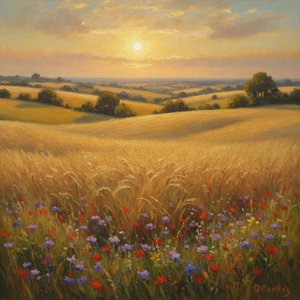
Golden Fields & Sun-Drenched Meadows: Capturing the Soul of Impressionist Landscapes
Immerse yourself in the luminous world of Impressionist landscapes. Discover how masters like Monet and Gauguin captured ephemeral light through plein air painting, and learn to bring the soul of sun-drenched meadows into your home with exquisite, hand-painted oil reproductions.

Beyond the Light: Capturing Raw Emotion and Subjective Vision in Post-Impressionist Landscapes
Explore the profound emotional depth of Post-Impressionist landscapes. Discover how masters like Van Gogh moved beyond light to capture raw human feeling through vibrant color and expressive texture in this expert art history retrospective.

Capturing Emotion: A Journey Through the Soul of Expressionist Landscapes
Explore the profound emotional depth of Expressionist landscapes. Discover how Post-Impressionist masters moved beyond light to capture the soul through vibrant color and form. A curated journey for true art lovers seeking the beauty of expressive mastery.