

Vist: · Inklusive ramme:
 Se i rummet
 Del som kort
 Del
Del
 Detaljer
 Guide
Guide

 Download
 Lignende værker
 Røntgenundersøgelse
 Diasshow
 Spørgsmål og svar
 Statistikker

Dkr 1787
Håndlavet oliereproduktion
Håndmalet olie på lærred i din valgte størrelse og ramme, udført efter bestilling af vores kunstnere. ( Skift til printsalg Skift til digitalt billede)
Størrelse
·Standardstørrelse
speciallavet
CM
INCH
Vælg mellem vores forudindstillede størrelser, der matcher kunstværkets originale proportioner.
Indlæser størrelser...

bredde
højde
Indtast den bredde og højde, du har brug for, så det passer til din ramme eller din væg. Da dette er håndmalet, kan kunstneren ved en anden form på størrelsen male lidt mere rundt om billedet eller skære lidt væk — det er op til dig. Vi sender dig et digitalt mockup til godkendelse, før maleriet påbegyndes. Billedet, der vises på denne side, viser ikke det endelige resultat — det er kun mockuppet, der gør.
 Læs mere
Afslut
·
Hvid kant Dkr1

Udvasket kant Dkr1

Fortsat motiv Dkr1

P118B Dkr10

P118H Dkr10

P118W Dkr10

P438Z Dkr10

P508JH Dkr12

P508YH Dkr12

P805H Dkr10

P805Z Dkr10

P919BZ Dkr10

P919G Dkr10

P919XJ Dkr10

P959ZH Dkr10

P968JZ Dkr12

W106C Dkr8

W218G Dkr10

W218JH Dkr8

W218Y Dkr10

W307PJ Dkr10

W316G Dkr10

W316PJ Dkr8

W316Y Dkr10

W398PJ Dkr8

W4111J Dkr10

W500HY Dkr15

W500JH Dkr15

W692G Dkr12

W849H Dkr8

W940BG Dkr15

W953PJ Dkr8

H24-GOLD Dkr30

H24-SILVER Dkr30

H36-GOLD Dkr45

H36-SILVER Dkr45
Sendes i et beskyttende rør, klar til at blive indrammet hos din egen indrammer.
Over 105 cm sendes rammen som et sæt til en professionel indrammer — læs detaljerne.
Tillægsydelser
valgfritHvad indeholder de ekstra tilvalg?
Eksempler på hvad kan ændres: Udskift ansigt med kundens eget foto; Tilføj kæledyr (f.eks. udskift kat med hund); Inkluder skjult besked i baggrunden; Skift baggrundslandskab eller elementer.
Efter bestilling vil TopImpressionists.com-teamet sende en e-mail til kunden for at få instruktioner og levere et udkast til forhåndsvisning
Efter bestilling vil TopImpressionists.com-teamet sende en e-mail til kunden for at få instruktioner og levere et udkast til forhåndsvisning
Verdensomspændende levering () på 3-4 uger i stedet for de standard 5 uger. (4 november). Ingen kompromiser med kvaliteten.
Beskyttende fernis
Navneskilt
Detaljer om indgraveret bronzeskilt
This elegant plaque features the artist's name and the title of the artwork, finely engraved for a timeless presentation.
It is made from bronze with a refined, elegant finish. The text is precisely laser-engraved for a sharp and permanent result. Measuring 9x2 cm, the plaque is compact yet easy to read. It's built to be durable and scratch-resistant, offering a professional, museum-quality look. Mounting is simple thanks to the included adhesive backing.
Detaljer om gennemsigtig akrylplade
The plaque includes essential engraved details such as the artist's name, the title of the artwork, the date it was created, the type of media used-like oil on canvas or watercolor-a brief description of the piece, and a QR code that links to the complete artwork information.
It is crafted from clear acrylic, offering a sleek, modern appearance. The text is UV-engraved in black to ensure strong visual contrast. With a size of 10x15 cm, it ensures optimal readability. It comes equipped with two metal hooks for secure wall mounting. The plaque is designed to be weather-resistant, making it suitable for various environments, and it includes interactive features that work seamlessly with smartphone scanning.
Detaljer om sort akrylplade
This elegant plaque includes engraved information such as the artist's name, the title of the artwork, the date it was created, the type of media used (like oil on canvas or watercolor), a short description of the artwork, and a QR code for quick access to more information.
The plaque itself is made from refined black acrylic with a premium finish. The text is laser-engraved in white for high contrast and readability. Its size is 10x15 cm, designed to be easy to read. It comes with two metal hooks for professional mounting. The design is sleek and fits any interior style. It is also weather-resistant and durable, with built-in digital integration for mobile compatibility.
Glasmulighed er kun tilgængelig i størrelser under 110 cm
 Glasmulighed er kun tilgængelig i størrelser under 110 cm
- Gratis ekspresforsendelse til hele verden
- Lærred af linned i høj kvalitet
- Fuld transportforsikring
- Garanti for refusion af told og importafgifter
- Garanti for præcis farvegengivelse
- 100 dages returret ved fabrikationsfejl
- 100% fuld returret
- Mængderabat ved flere køb


Beskrivelse af samlerobjektet
Experience Vincent van Gogh's 'Cottages,' a serene depiction of rural life brimming with vibrant colors and Post-Impressionist charm. A hand-painted reproduction captures the beauty of Dutch countryside.
Kunstnerbiografi
Vincent van Gogh (1853-1890): Udforsk livet og kunsten hos den hollandske postimpressionist bag 'Stjernekort' og 'Solsikker'. Oplev hans dristige stil og varige indflydelse på moderne kunst.
Om maleriet
Cottages: A Window into Post-Impressionist Tranquility
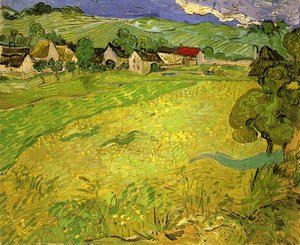
Vincent van Gogh’s “Cottages,” painted in 1883, isn't merely a depiction of a rural village; it’s an immersive experience—a carefully constructed tableau designed to evoke a profound sense of peace and nostalgia. This oil on canvas, residing within the broader series exploring peasant life, offers a glimpse into Van Gogh’s evolving artistic vision during a pivotal period in his career. The scene unfolds with a quiet dignity: humble cottages, their thatched roofs blending seamlessly with the surrounding greenery, nestled beneath a serene sky. It's a landscape imbued with a palpable sense of warmth and community, yet simultaneously tinged with a subtle melancholy—a characteristic hallmark of Van Gogh’s mature style.
The painting’s genesis lies within the burgeoning Post-Impressionist movement, an era defined by artists seeking to move beyond the fleeting impressions of light and color favored by their predecessors. Post-Impressionism wasn't a rigid school but rather a diverse collection of artists—including Van Gogh himself, Paul Cézanne, Paul Gauguin, and Georges Seurat—who experimented with subjective expression, symbolic content, and emotional depth. Van Gogh’s “Cottages” exemplifies this shift; he abandons the purely observational approach of earlier Impressionists, instead layering his own feelings and interpretations onto the scene. The vibrant yellows dominating the cottages aren't simply a representation of color but rather convey warmth, light, and perhaps even a hint of optimism—a deliberate choice to imbue the humble dwellings with an aura of comfort and security.
The Language of Color and Texture
Van Gogh’s distinctive technique is immediately apparent. He employs thick, impasto brushstrokes – literally building up layers of paint directly onto the canvas – creating a tactile surface that invites close inspection. The individual strokes are visible, contributing to the painting's dynamism and energy. Notice how he uses short, broken lines to depict the thatched roofs, suggesting their texture and movement in the breeze. The greens and blues of the landscape aren’t blended smoothly; instead, they’re applied with a sense of urgency, conveying a feeling of vitality and growth. This deliberate manipulation of color and texture is central to Van Gogh's expressive style—a means of communicating not just what he *saw*, but how he *felt* about what he saw.
The composition itself is carefully considered. The cottages are arranged in a loose, asymmetrical grouping, creating a sense of visual interest and preventing the scene from feeling static. A few figures—likely peasants engaged in daily tasks—are scattered throughout the landscape, adding to the painting’s narrative quality. These figures aren't idealized or romanticized; they appear as ordinary people going about their lives, contributing to the overall sense of authenticity and realism.
Symbolism and Emotional Resonance
Beyond its visual appeal, “Cottages” is rich in symbolism. The humble cottages represent a connection to rural life, a theme that was increasingly important to Van Gogh during this period. He saw in these simple dwellings a sense of stability and community—a stark contrast to the alienation and uncertainty he often experienced in urban environments. The sky, painted in shades of blue and grey, suggests both tranquility and melancholy – reflecting the artist’s own complex emotional state. The presence of animals, likely dogs, adds another layer of meaning, symbolizing loyalty, companionship, and a connection to nature.
Van Gogh's fascination with rural life stemmed from his desire to understand the lives of ordinary people—particularly the working class. He believed that art should serve as a means of social commentary, offering insights into the experiences of those often overlooked by society. “Cottages” is therefore not just a pretty picture; it’s a poignant meditation on themes of poverty, community, and the beauty of the natural world.
Bringing "Cottages" Home: A Hand-Painted Reproduction
At TopImpressionists.com, we are proud to offer meticulously hand-painted oil reproductions of Van Gogh's “Cottages,” capturing the essence of this iconic artwork with unparalleled detail and authenticity. Our skilled artists utilize only the finest materials—traditional oil paints on archival canvas—to faithfully recreate every brushstroke, color nuance, and textural element of the original. Each reproduction is a testament to our commitment to preserving Van Gogh’s legacy and making his art accessible to collectors and admirers worldwide.
Whether you're an avid art collector, an interior designer seeking to add a touch of Post-Impressionist charm to your home, or simply someone who appreciates the beauty of Van Gogh’s work, our hand-painted reproduction of “Cottages” offers a unique opportunity to own a piece of art history. Explore our collection and discover how you can bring this timeless masterpiece into your life today. Special offer on oil paintings.
Spørgsmål og svar
Er billedet af "Cottages" af Vincent Van Gogh frit tilgængeligt i det offentlige domæne?
Ophavsretsstatus for "Cottages" af Vincent Van Gogh: værket er i det offentlige domæne – ophavsretten er udløbet. Dette afgør, om der frit må foretages reproduktioner af billedet.
Hvilken placering passer bedst til formatet på "Cottages" af Vincent Van Gogh?
Formatet Landscape af "Cottages" af Vincent Van Gogh anbefales til en Living Room. Format og rumstørrelse er tilsammen vejledende for placeringen af en reproduktion.
Hvor meget lys ser farverne i "Cottages" ud til at reflektere?
Luminansen registreret for "Cottages" af Vincent Van Gogh er Soft Shadow.
Hurtige fakta og kunstquiz
Om Vincent Van Gogh

Vincent Van Gogh
1853 - 1890, Holland
Kunstnerbiografi
Et liv malet i passion: Vincent van Gogh
Vincent Willem van Gogh, et navn der er synonymt med levende farver og rå følelser, forbliver en af de mest genkendelige og elskede skikkelser i kunsthistorien. Han blev født den 30. marts 1853 i Zundert, Holland, og hans rejse fra en urolig ung mand på søgen efter mening til en kunstnerisk visionær er en rørende fortællende om dedikation, kamp og i sidste ende en uforgængelig arv. Selvom han opnåede begrænset kommerciel succes i sin levetid – med salget af kun ét maleri, Den røde vinmark, før sin død – er Van Goghs indflydelse på moderne kunst umålelig, da han banede vejen for ekspressionismen og inspirerede utallige efterfølgende kunstnere. Hans historie handler ikke blot om penselstrøg og lærreder; det er et vidnesbyrd om den menneskelige udtrykskraft i mødet med modgang.
De tidlige år og den kunstneriske opvågnen
Van Goghs tidlige liv var præget af en række uopfyldte ambitioner. Han prøvede kræfter med forskellige erhverv – som kunsthandler, lærer og endda missionær – før han endelig dedikerede sig til maleriet i en relativt sen alder af 27 år. Disse tidligere erfaringer formede hans verdensbillede dybt og fandt vej ind i hans kunst. Hans tidlige værker, der skildrede scener fra bondelivet i det landlige Belgien, afspejler en dyb empati for arbejderklassen og en dyster palet, der genspejlede deres hårde kår. Inspireret af kunstnere som Jean-François Millet søgte Van Gogh at indfange disse menneskers værdighed og modstandskraft gennem en rå realisme. Det var dog hans flytning til Paris i 1886, der viste sig at være transformativ. Her mødte han impressionismen og postimpressionismen og opsugede teknikkerne fra mestre som Monet, Renoir og Pissarro. Denne eksponering udvidede hans kunstneriske horisont og førte ham til at eksperimentere med lysere farver og løsere penselstrøg, selvom han bevarede en distinkt følelsesmæssig intensitet, som manglede hos mange af hans samtidige. Hans bror Theo, der var kunsthandler, spillede en afgørende rolle i denne periode ved at yde økonomisk støtte og fungere som et livsvigtigt bindeled til den parisiske kunstverden. Deres omfattende korrespondance giver uvurderlig indsigt i Van Goghs kunstneriske udvikling og personlige kampe.
Det sydlige lys og eksplosiv kreativitet
I søgen efter et mere levende landskab og en følelse af fornyelse flyttede Van Gogh til Arles i det sydlige Frankrig i 1888. Denne flytning markerede en periode med intens kreativ produktion, karakteriseret ved en eksplosion af farver og en distinkt impasto-teknik – hvor malingen påføres tykt på lærredet, hvilket skaber en tekstureret overflade, der synes at pulsere af energi. Det var her, han skabte nogle af sine mest ikoniske værker: Solsikker, Natcaféen og Stjernerne natten over. Det intense sollys i Provence syntes at antænde hans fantasi og ledte ham til at skildre landskaber og stilleben med en hidtil uset vitalitet. Hans ønske om kunstnerisk samarbejde fik ham til at invitere Paul Gauguin til Arles i håbet om at etablere en utopisk kunstnerkoloni. Deres forhold viste sig dog at være ustabilt og kulminerede i en dramatisk konfrontation, der resulteret i, at Van Gogh lemlæstede sit eget øre. Denne begivenhed understregede hans mentale tilstands skrøbelighed og markerede begyndelsen på en periode med indlæggelse og stigende psykisk lidelse.
De senere år og den evige arv
Efter sit sammenbrud blev Van Gogh frivilligt indlagt på et asyl i Saint-Rémy, hvor han fortsatte med at male flittigt og indfangede de omkringliggende landskaber med både skønhed og uro. Værker som Stjernerne natten over, malet i denne tid, er gennemsyret af en følelse af kosmisk undren og dyb følelsesmæssig tyngde. Han flyttede senere til Auvers-sur-Oise under pleje af Dr. Paul Gachet, men hans kampe fortsatte. Den 29. juli 1890, i en alder af 37 år, døde Van Gogh tragisk af et selvforskyldt skudsår. På trods af at han opnåede meget lidt anerkendelse i sin levetid, begyndte hans arbejde at vinde posthum berømmelse, i høj grad takket være den utrættelige indsats fra hans svigerinde, Johanna van Gogh-Bonger, som arvede hans bo og dedikerede sig til at fremme hans kunst. I dag fejres Van Goghs malerier verden over for deres følelsesmæssige intensitet, innovative teknikker og vedvarende skønhed. Hans arv rækker langt ud over lærredet; han er blevet et symbol på kunstnerisk passion, udholdenhed i modgang og kunstens evne til at udtrykke de dybeste menneskelige følelser.
Nøgleindflydelser og kunstnerisk udvikling
- Tidlig realisme: Jean-François Millets skildringer af bondelivet påvirkede Van Goghs tidlige værker.
- Impressionisme & postimpressionisme: Mødet med Monet, Renoir, Pissarro og andre i Paris udvidede hans palet og teknik.
- Japanske træsnit: Van Gogh var dybt påvirket af japanske træsnit, som han indsamlede ivrigt. Deres dristige kompositioner og flade farveflader prægede hans egen stil.
- Følelsesmæssigt udtryk: Frem for alt søgte Van Gogh at formidle følelser gennem sin kunst ved at prioritere den subjektive oplevelse over den objektive repræsentation. Dette fokus på følelsesmæssig intensitet blev et definerende træk ved hans arbejde og banede vejen for ekspressionismen.
Hurtige fakta om Vincent Van Gogh
- Artistic Movement Or Style: Post-impressionisme
- Artists Or Movements Influenced By This Artist:
- Expressionisme
- Fauvisme
- Artists Who Influenced This Artist:
- Rembrandt
- Millet
- Date Of Birth: 30. marts 1853
- Date Of Death: 29. juli 1890
- Full Name: Vincent Willem van Gogh
- Nationality: Hollandsk
- Notable Artworks:
- Solsikkerne
- Stjernekort
- Nat i Arles
- Place Of Birth: Zundert, Holland
Lignende kunstværker



Udforsk kunstværker organiseret efter temaer, stilarter og karakteristika.


![Irisser [1889]](/media/artworks/images-thumb/ca/85/ca85582a4fd1dc392efef83ec4dc3124.jpg)


Vincent Van Gogh
Cottages
() ·
Inklusive ramme: · Håndmalet med olie på lærred
Totalbeløb