

 Se i rummet
 Send
Send Del
Del
 Detaljer
 Studieguide til kunstværker

 Download
 Lignende værker
 Røntgenundersøgelse
 Se diasshow
 Statistik
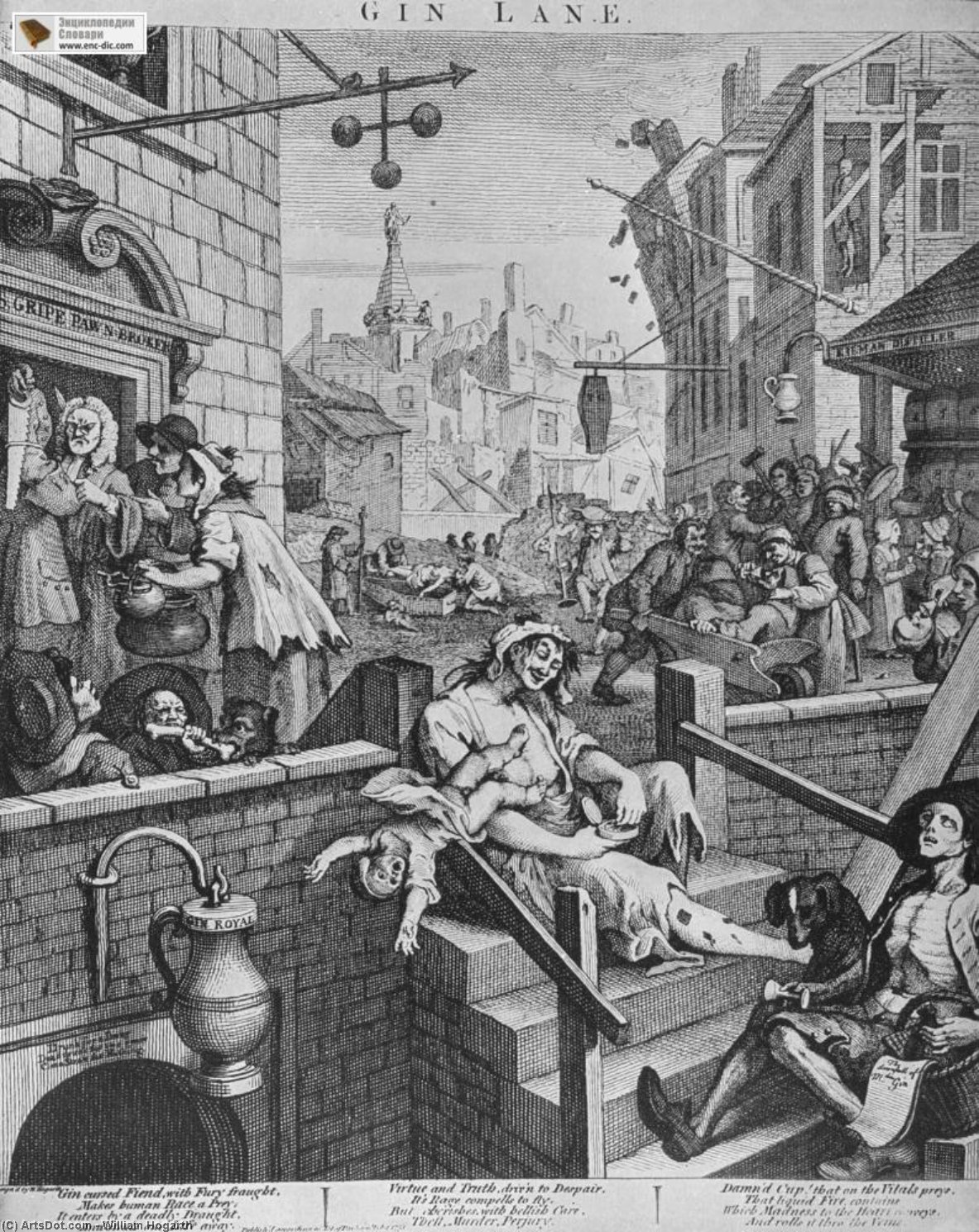
Gin Lane
 Engraving
- WallArt
- Moralistic Engraving
 1750
1750- Early Modern
 359.0 x 341.0 cm
Explore William Hogarth’s "Gin Lane," a stark 1750 engraving depicting London’s social decay & gin addiction. A powerful, detailed masterpiece of English moralistic art.
 Læs mere
Udforsk William Hogarths satiriske verden (1697-1764)! Pioner indenfor engelsk kunst med billedserier som 'En skørdoms fremmarch'. Se hans skarpe sociale kommentarer og unikke stil.
Køb et højopløst, optimeret digitalt billede i en kvalitet, der er langt overlegen i forhold til online-forhåndsvisningen.
Hver fil er omhyggeligt forberedt af vores interne specialister ved hjælp af avancerede værktøjer og ekspertmæssig manuel retuschering. Vi sikrer, at hvert billede har enestående klarhed, præcis farvegengivelse og fine detaljer.
Den endelige fil leveres via e-mail inden for 72 timer og er optimeret til øjeblikkelig brug i professionelle, redaktionelle og trykte miljøer. Det er den samme kvalitet, som førende designstudier, forlag og gallerier har tillid til.
Digitalt billede
Download en højopløselig fil til personlig fremvisning, print og kreative projekter. ( Skift til printversion Bestil håndmalet reproduktion)
Inkluderet i alle ordrer på digitale billeder
Professionel digital levering, garanteret
Når du vælger TopImpressionists.com, får du ikke blot et billede – du modtager et professionelt optimeret digitalt kunstværk, skabt med præcision og sikret med en tilfredshedsgaranti. Her er alt, hvad din ordre automatisk indeholder:

Hurtig levering via e-mail
Din højtopløselige digitale billedfil sendes til din e-mail inden for 72 timer efter bestilling – klar til øjeblikkelig brug.

AI-forbedret digital fil
Dit kunstværk optimeres professionelt ved hjælp af avancerede AI-værktøjer og manuel redigering, hvilket sikrer maksimal detaljegrad, klarhed og farvenøjagtighed.

Gratis livslang genlevering
Har du ved en fejl slettet eller mistet din fil? Ingen bekymring – vi sender den igen til enhver tid, helt gratis.

Ingen importgebyrer – nogensinde
Nyd dit kunstværk med det samme uden told, afgifter eller leveringsgebyrer – digitale downloads er altid skattefrie.

Garanteret farvenøjagtighed
Vi sikrer, at dit digitale billede gengiver de originale farver så præcist som muligt ved hjælp af professionelle værktøjer og farvestyring.

100 dages tilfredshedsgaranti
Hvis du ikke er tilfreds med dit digitale billede, vil vi revidere det eller refundere 100% inden for 100 dage – uden spørgsmål.

100% Pengene tilbage-garanti
Ik tilfreds? Få fuld refusion inden for 100 dage efter modtagelse af din digitale fil – uden spørgsmål.

Mængderabat ved storkøb
Køb 3 billeder, spar 10% - Køb 5, spar 15% - Køb 10+, spar 20%. Ideelt til kreative projekter, gallerier og bureauer.
A Descent into London’s Shadows
In the heart of 18th-century London, amidst the swirling fog and the growing shadows of social upheaval, William Hogarth captured a moment of profound human tragedy that continues to haunt the viewer centuries later. His masterpiece, Gin Lane, is far more than a mere engraving; it is a visceral, breathing chronicle of a city in the throes of moral and physical decay. Completed in 1751, this work serves as a searing indictment of the "Gin Craze," a period when the cheap, accessible spirit flooded the streets of London, leaving a trail of broken families and shattered lives in its wake. As one gazes upon this intricate tableau, the sense of claustrophobia is immediate. The composition is a deliberate chaos, a densely populated lane where figures overlap and collide, creating an overwhelming atmosphere of misery that pulls the observer into the very center of the struggle.
Hogarth, a master of social satire and a keen observer of the human condition, employs a technique that breathes life into the grim reality of his subject. Through the meticulous use of hatching and cross-hatching, he achieves a remarkable tonal variation that defines the textures of a crumbling urban landscape. The starkness of the black and white medium enhances the dramatic lighting, casting deep, heavy shadows that seem to swallow the figures whole. Every line is purposeful, serving to delineate the skeletal forms of the suffering and the jagged, angular architecture of the decaying buildings. This precision allows the viewer to witness the fine details of despair—the slumped posture of a man lost to intoxication, the frantic movements of those caught in the grip of poverty, and the chilling stillness of death that permeates the scene.
Symbolism and the Weight of History
Beyond its surface-level depiction of poverty, Gin Lane is rich with symbolic language designed to provoke deep contemplation and social reform. Hogarth meticulously placed emblems of excess throughout the lane; overflowing gin barrels stand as silent sentinels of corruption, while the very architecture seems to be collapsing under the weight of vice. The presence of decaying bodies and the neglect of the innocent—such as the heartbreaking depiction of a mother unable to care for her child—act as powerful metaphors for the erosion of the social contract. This was not art created for mere decoration, but art intended to galvanette public opinion. It was part of a larger reformist movement, designed to be viewed alongside its counterpart, Beer Street, to contrast the perceived stability of traditional brewing with the destructive anarchy of the gin epidemic.
For the modern collector or interior designer, bringing a high-quality reproduction of this work into a space offers more than just a historical artifact; it introduces a profound narrative depth. The piece possesses an undeniable emotional gravity that commands attention, making it a striking focal point for those who appreciate art that challenges the status quo and explores the complexities of the human spirit. Whether placed in a study filled with historical texts or as a bold, monochromatic statement in a contemporary gallery-style room, Gin Lane serves as a timeless reminder of the power of art to act as a mirror to society, capturing the eternal struggle between chaos and order, and vice and virtue.
Kunstnerbiografi
William Hogarth: En Londoner i Blæk og Olie
William Hogarth, født den 10. november 1697 i det pulserende hjørne af London, var langt mere end blot en kunstner; han var en visuel historiker, en skarp observatør af menneskelig natur og en satirisk kommentator på de samfundsmæssige strømme i sin tid. Hans livshistorie er uadskillelig forbundet med selve stoffet i England under en periode med markante forandringer – dets voksende ambitioner, underliggende bekymringer og gennemtrængende hykleri, alt sammen udtrykt med kraft i hans utroligt detaljerede og ofte skarpe værker. Han var søn af en slunken latin skolemester, og tidlige oplevelser indprentede ham både en kærlighed til læring og en skarp bevidsthed om sociale uligheder – et fundament, der skulle vise sig at være afgørende for at forme hans kunstneriske vision. I første omgang ansat som graver, demonstrerede han hurtigt en talentfuldhed, der strakte sig ud over blot teknisk dygtighed; han besad en iboende evne til at observere nuancerne i menneskelig adfærd og oversætte dem til fængslende visuelle fortællinger. Alligevel kede han sig over begrænsningerne ved traditionel gravering og søgte et mere udtryksfuldt medium for sin spirende kreativitet. Dette førte ham til studier på både St Martin’s Lane Academy og under Sir James Thornhill, hvor han finpudsede sine færdigheder i maleri og komposition, absorberede indflydelser, der senere skulle informere hans unikke stil.Den Fødsel af Moderne Moralske Emner
Hogarths sande innovation lå ikke blot *i hvad* han malede, men *hvordan*. Han bane vejen for, hvad han selv kaldte "moderne moralske emner" – en række billeder designet til at fortælle en historie, ofte præget af en stærk satirisk kant. Disse var ikke isolerede portrætter eller landskaber; de var visuelle romaner, der unfoldede sig for betragterens øjne, og tilbød skarpe kommentarer om samtidssamfundet. A Harlot's Progress, skabt i 1742, står som måske hans mest berømte eksempel. Denne serie på seks malerier følger minutiøst Marys tragiske fald, en ung kvinde, der ankommer til London med håb om et nyt liv, men hurtigt bliver offer for byens fristelser og farer. Hver scene er gengivet med omhyggelig detalje, fyldt med symbolske elementer, der afslører den moralske fordærv, der omgiver hende. Lignende A Rake's Progress, begyndt i 1733, skildrer Tom Rakewells hensygoelsesløse nedstigning, en mand, der spilder sin arv på hasardspil, dekadence og til sidst vanvid. Disse var ikke blot advarselsfortællinger; de var uforfængelige portrætter af et samfund, der kæmpede med spørgsmål om klasse, moral og social mobilitet. Hogarths geni lå i hans evne til at hæve hverdagsscener – Londons travle gader, de overdådige interiører hos de velhavende, de slumrende liv af de fattige – op til kunstværker, der resonerede dybt med hans publikum. Han skammede sig ikke over at male den hårde virkelighed, præsenterede den med en blanding af humor og medlidenhed, der tvang betragterne til at konfrontere ubehagelige sandheder om sig selv og deres samfund.Teknik og Indflydelser: En Syntese af Stilarter
Hogarths kunstneriske stil var en unik blanding af forskellige indflydelser. Han beundrede dybt realismen og fortællingsdetaljerne i værkerne fra hollandske genremalere som Pieter de Hooch, hvilket er tydeligt i hans omhyggelige gengivelser af interiører og hverdagsbilleder. De franske satiriske tryk spillede også en rolle i at forme hans tilgang til social kommentar. Men Hogarth var ikke blot en kopi af disse kilder; han syntetiserede dem til noget helt nyt og distinkt for sig selv. Hans teknik var karakteriseret ved en mesterlig brug af linje og skygge, tydelig i hans graveringer. Han anvendte en distinkt kryds-stichningsteknik, der skabte dybde og tekstur, og bragte hans scener til live med bemærkelsesværdig klarhed. Han besad også et exceptionelt blik for komposition, arrangerede figurer og objekter i rammen for at skabe dynamiske og fængslende fortællinger. Ud over kunsten blev Hogarth påvirket af litterære værker, især de af Jonathan Swift og Henry Fielding, hvis satiriske skarpehed informerede hans egne sociale observationer. Han mente, at kunst ikke blot skulle være smuk, men også tjene et moralsk formål, udfordre betragterne til kritisk at tænke over verden omkring dem og deres plads i den. *Han søgte at holde et spejl op mod naturen, der afspejlede både dens skønhed og dets ubehag med ærlighed.*Arv og Vedvarende Indflydelse
Hogarths indvirkning strækker sig langt ud over kunstens område i det 18. århundrede. Hans værker blev enormt populære takket være den masseproduktion af tryk, der var baseret på hans malerier, hvilket gjorde hans satiriske kommentar tilgængelig for et bredere publikum end nogonsinde før. Han anses generelt for at være en pioner inden for politisk karikatur og tegneserieblade, og lagde grunden til visuel fortælling i populærkulturen. Kunstnere som James Gillray og George Cruikshank blev direkte påvirket af hans stil og videreførte hans tradition af social satire. Selv Charles Lamb, den berømte essayist, bemærkede Hogarths billeders narrative kraft og beskrev dem som "bøger at læse i stedet for blot at kigge på."- Hogarth etablerede en distinkt britisk kunstidentitet.
- Hans værker giver værdifulde indsigter i det engelske samfund i det 18. århundrede.
- Han påvirkede generationer af kunstnere og satirikere.

William Hogarth
1697 - 1764 , Storbritannien
Hurtige fakta
- Artistic Movement Or Style: Satire, Realisme
- Artists Or Movements Influenced By This Artist:
- James Gillray
- Fransk satire
- Artists Who Influenced This Artist:
- Pieter de Hooch
- Jonathan Swift
- Date Of Birth: 10. november 1697
- Date Of Death: 26. oktober 1764
- Full Name: William Hogarth
- Nationality: Britisk
- Notable Artworks:
- A Harlot's Progress
- A Rake's Progress
- Place Of Birth: London, Storbritannien