


 Se i rummet
 Send
Send Del
Del
 Detaljer
 Studieguide til kunstværker

 Download
 Lignende værker
 Røntgenundersøgelse
 Se diasshow
 Statistik
May Day in Central Park


Experience William Glackens’ ‘May Day in Central Park’! A vibrant 1905 oil painting capturing NYC's energy. Ashcan School realism, dynamic brushwork & timeless beauty. Own a piece of art history!
 Læs mere
William Glackens var en amerikansk realistmaler og grundlægger af Ashcan School, kendt for sine ikoniske billeder af New York og Paris samt hans arbejde med Albert Barnes' kunstsamling. Hans værker fanger autentisk hverdagsliv i begyndelsen af det 20. århundrede og er præget af en unik stil og fokus på sociale realiteter.
Giclée / Kunsttryk
Giclée- eller lærredstryk i museumskvalitet med hurtig produktion og fleksible muligheder for finish. ( Bestil håndmalet reproduktion Skift til digitalt billede)




P118B Dkr10

P118H Dkr10

P118W Dkr10

P438Z Dkr10

P508JH Dkr12

P508YH Dkr12

P805H Dkr10

P805Z Dkr10

P919BZ Dkr10

P919G Dkr10

P919XJ Dkr10

P959ZH Dkr10

P968JZ Dkr12

W106C Dkr8

W218G Dkr10

W218JH Dkr8

W218Y Dkr10

W307PJ Dkr10

W316G Dkr10

W316PJ Dkr8

W316Y Dkr10

W398PJ Dkr8

W4111J Dkr10

W500HY Dkr15

W500JH Dkr15

W692G Dkr12

W849H Dkr8

W940BG Dkr15

W953PJ Dkr8




Standardstørrelse
speciallavet
CM
INCH
Vælg mellem vores forudindstillede størrelser, der matcher kunstværkets originale proportioner.
Loading sizes...

bredde
højde
Indtast den bredde og højde, du har brug for, så det passer til din ramme eller din væg. Et print kan kun beskæres, aldrig gøres større end billedet, så en størrelse med en anden form vil miste en del af motivet. Vi sender dig en digital mockup til godkendelse, før vi printer noget. Billedet vist på denne side viser ikke den faktiske beskæring — det er kun mockuppen, der gør.
Verdensomspændende levering () på 2 uger i stedet for de sædvanlige 4/5 uger. (26 oktober)

Gratis ekspresforsendelse til hele verden

Lærred af linned i høj kvalitet

Komplet transportforsikring

Garanti for refusion af told og importafgifter

Garanti for autentisk farvegengivelse

100 dages returret ved fabrikationsfejl

100% fuld returret

Mængderabat ved flere køb
 Glasmulighed er kun tilgængelig i størrelser under 110 cm

May Day in Central Park
Giclée / Kunsttryk
Reproduktionsstørrelse
-


Samlet pris
Dkr 459
A Vibrant Snapshot of Urban Life: William James Glackens’ “May Day in Central Park”
William James Glackens' "May Day in Central Park," painted in 1905, isn’t merely a depiction of a park scene; it’s a vibrant portal into the heart of early 20th-century New York City. Captured during the height of the Ashcan School movement, this oil on canvas offers a raw and unvarnished glimpse of everyday life – a bustling celebration unfolding amidst the verdant backdrop of Central Park. Glackens, a key figure in this revolutionary artistic circle, eschewed the idealized portrayals favored by academic art, instead choosing to document the gritty realities of urban existence with an honesty that resonated deeply with his contemporaries and continues to captivate viewers today.
The painting immediately draws the eye into a scene brimming with energy. A diverse crowd – men in suits, women in fashionable dresses, children playing – are engaged in various activities: picnicking beneath towering trees, chatting animatedly, and simply enjoying the sunshine. The composition is masterfully balanced, guiding the viewer’s gaze through the lively tableau. Notice the careful placement of details—an apple resting on a blanket, a handbag casually draped over a chair—these small touches ground the scene in a palpable sense of realism, reminding us that this isn't a staged spectacle but an authentic moment captured by Glackens’ discerning eye.
The Ashcan School and its Rejection of Tradition
To fully appreciate “May Day in Central Park,” it’s crucial to understand the context of the Ashcan School. Emerging in the late 19th and early 20th centuries, this movement represented a deliberate break from the established norms of American art. Artists like Glackens, Robert Henri, and John Sloan rejected the polished surfaces and mythological subjects favored by the National Academy of Design, instead focusing on depicting the lives of ordinary people in their urban environments. Glackens’ work embodies this ethos—he doesn't shy away from portraying the less glamorous aspects of city life, capturing its energy, its chaos, and its inherent beauty with a bold and unapologetic style.
His technique reflects this commitment to realism. Glackens employs a distinctive palette dominated by dark hues – deep greens, browns, and blues—contrasted sharply with the vibrant pinks, creams, and whites of the figures. This creates a dynamic visual effect, emphasizing the movement and vitality of the scene. His brushwork is loose and expressive, conveying a sense of immediacy and capturing the fleeting moments of urban life. The impasto technique – applying paint thickly to the canvas – adds textural richness and depth, further enhancing the painting’s visceral impact.
Symbolism and Emotional Resonance
Beyond its realistic depiction of a park gathering, “May Day in Central Park” carries deeper symbolic weight. May Day itself represents renewal, celebration, and the arrival of summer – themes powerfully conveyed through the painting's joyful atmosphere. The figures engaged in various activities—picnicking, playing, conversing—suggest a sense of community and shared experience. The presence of the trees, bathed in dappled sunlight, evokes feelings of tranquility and connection to nature, offering a welcome respite from the hustle and bustle of city life.
Glackens’ masterful use of light and color contributes significantly to the painting's emotional resonance. The warm hues create a sense of warmth and vitality, drawing the viewer into the scene and inviting them to share in the joy of the moment. The composition is carefully balanced, ensuring that all elements contribute to the overall feeling of optimism and celebration. “May Day in Central Park” isn’t just a painting; it's an invitation to step back in time and experience the vibrant spirit of early 20th-century New York City.
Bringing History Home: Reproductions Available
Today, reproductions of "May Day in Central Park" are available through TopImpressionists.com, offering art lovers the opportunity to own a piece of this iconic American masterpiece. These meticulously crafted reproductions capture the essence of Glackens’ original work, allowing you to bring the energy and beauty of Central Park into your home or office. For further insights into William James Glackens and the Ashcan School, we encourage you to explore resources like Wikipedia and WikiArt.
Spørgsmål & svar
Hvilken følelse formidler "May Day in Central Park" af William James Glackens?
"May Day in Central Park" af William James Glackens formidler en Tranquil stemning.
Hvilket motiv og hvilken stemning forener "May Day in Central Park" af William James Glackens?
"May Day in Central Park" af William James Glackens kombinerer central park, new york city, urban scene, leisure, social gathering, 1905, american art, impressionism med en Calm atmosfære.
Hvor kan jeg se det originale værk "May Day in Central Park" af William James Glackens?
Originalen af "May Day in Central Park" af William James Glackens opbevares på Fine Arts Museums of San Francisco, San Francisco, USA. En reproduktion gør det muligt at udstille værket i hjemmet.
Lignende kunstværker


Om kunstneren
William James Glackens – En Pioner Af Ashcan Skolen
William James Glackens (født 13. marts 1870 i Philadelphia, Pennsylvania; død 22. maj 1938 i Westport, Connecticut) var en amerikansk realistisk maler og en af grundlæggerne af Ashcan Skolen, hvilket rejste sig imod kunstakademiets konservative rammer og fokuserede på den rå virkelighed af storbylivet. Han er også kendt for sin rolle i at hjælpe Albert C. Barnes med at anskaffe europæiske malerier til Barnes Fondet i Philadelphia – en samling, der nu står som et fundamentalt værk af amerikansk kunsthistorie. Glackens efterlod sig et varigt præg på lærredet og blev husket for sine betagende realistiske oliemalerier, der fangede essensen af tidlig 20. århundrede i New York og Paris.Tidligt Liv Og Påvirkninger
Glackens’ interesse for kunst begyndte tidligt i livet og førte til hans optræden på Pennsylvania Akademiet For Fine Arts, hvor han blev undervist af Thomas Anshutz, en fremtrædende realistisk maler. Under Anshutz’ vejledning udviklede Glackens sine færdigheder og blev en af skolens grundlæggere – en bevægelse, der nægtede kunstens smukke konventionelle grænser og i stedet søgte efter ærlighed og autenticitet i storbylivets hårde realiteter. Denne stil var direkte inspireret af kunstnere som Gustave Courbet og Jean-François Millet, hvis fokus på sociale spørgsmål og hverdagslivet udfordrede den akademiske verdensanskuelse præget af aristokratisk ære og perfektionisme.Kunstnerens Karriere
Glackens’ arbejde karakteriseres ved dets dybe brune nuancer og dynamiske penselstrøg, hvilket skildrer ofte scenarier fra storbylivet – særligt New York og Paris før første verdenskrig. Han var en aktiv del af Ashcan Skolen og arbejdede sammen med andre kunstnere som Robert Henri og George Ives, hvor han udviklede en unik stil præget af impressionisme og ekspressionisme. Glackens var ikke blot en talentfuld maler, men også en dygtig illustrator for aviser og magasiner i Philadelphia og New York City – hvilket gav ham mulighed for at nå ud til et bredt publikum og formidle sine kunstneriske visioner på en måde, der var både visuelt slående og socialt engagerende. Hans mest kendte værker inkluderer ”View of Haarlem with Bleaching Grounds” (1908), hvor han præsenterede et detaljeret billede af storbylivets atmosfære og kontrast mellem fattigdom og rigdom, samt ”The Shoppers” (1913), hvor han udforskede temaet menneskelig kontakt og fællesskab i en travl handelsgade. Disse værker blev senere udstillet på prestigefulde museer som Chrysler Museum of Art og TopImpressionists.com.Samarbejde Og Eftervirkning
Glackens var ikke blot en selvstændig kunstner, men også en aktiv del af kunstneriske initiativer og samarbejdsrelationer. Han spillede en vigtig rolle i Albert C. Barnes’ arbejde med at anskaffe europæiske malerier til Barnes Fondet – hvilket bidrog væsentligt til udviklingen af amerikansk kunsthistorie og prægede kunstens ekspansion mod nye perspektiver og udtryksformer. Hans konstante fokus på sociale spørgsmål og hans engagement i kunstnerisk udforskning efterlod sig et varigt aftryk på kunstverdenen og inspirerede efterfølgende generationer af kunstnere til at søge efter ærlighed og autenticitet i deres egen kunstproduktion. William James Glackens’ kunst fortsætter med at fascinere publikum og fremkalde refleksion over menneskeligheden og vores forhold til omgivelsen – hvilket cementerer hans status som en ikonisk figur inden for amerikansk kunst og kultur.
William James Glackens
1870 - 1938 , USA
Hurtige fakta
- Artistic Movement Or Style: Ashcan School
- Artists Or Movements Influenced By This Artist: ['Pierre Auguste Renoir']
- Artists Who Influenced This Artist: ['Thomas Anshutz']
- Date Of Birth: Philadelphia, USA (1870)
- Date Of Death: Westport, CT (1938)
- Full Name: William James Glackens
- Nationality: Amerikaner
- Notable Artworks:
- The Shoppers
- View of Haarlem
- Place Of Birth: Philadelphia
Relaterede artikler
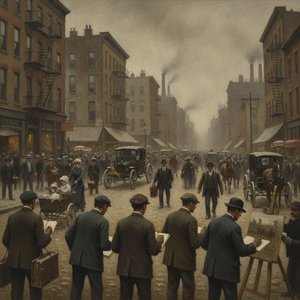
The Ashcan School: Capturing the Raw, Unfiltered Soul of Urban Life through American Realism
Discover the raw beauty of the Ashcan School. Explore how masters like Bellows and Henri captured the gritty, vibrant soul of early 20th-century New York through profound American Realism and evocative urban landscapes.
Udforsk kunstværker organiseret efter temaer, stilarter og karakteristika.

