The Quiet Observer of Berlin
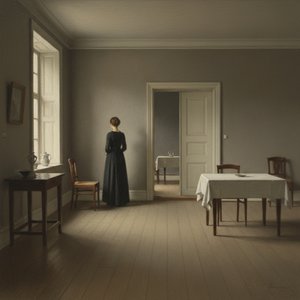
Born in 1861 in Neuhof, Paul Gehrmann lived a life shaped by the steady, observational rhythms of the late nineteenth and early twentieth centuries. As a painter based in Berlin, his work captured the stillness of domestic life and the expansive quietude of the natural world. He was a man of his era, finding his purpose in the meticulous rendering of light and the textures of the objects that define a room. His presence in the German art scene was marked by a commitment to the tangible, focusing on the way light interacts with wood, fabric, and stone.
His technical approach was characterized by a certain physical presence on the canvas. He often employed an impasto technique, using a thick, pastose application of oil to give his subjects a sense of weight and reality. This tactile quality allowed him to move beyond mere representation, turning a simple interior into a study of light and shadow. His hands were skilled in the art of the detail, whether he was documenting the grain of a chair or the distant silhouette of a fjord.
Themes and Subject Matter
Gehrmann’s oeuvre reveals a fascination with two distinct modes of existence: the intimate enclosure of the home and the vastness of the landscape. His compositions often centered on the interplay between architecture and light, creating scenes that felt lived-in and permanent. His subjects included:
- Interior scenes featuring Biedermeier-style furniture.
- Landscapes such as the Norwegian fjords.
- Studies of light-filled rooms and domestic arrangements.
In his depictions of interiors, he displayed a particular sensitivity to the Biedermeier aesthetic, focusing on the elegant simplicity and functional beauty of the furniture. These works were not merely records of rooms but were explorations of how a space holds the light. He captured the way a sunbeam might strike a polished surface or settle into the folds of a curtain, turning the mundane into something worthy of careful study.
A Life in Berlin
The later years of his life were spent in Berlin, where he continued to refine his craft until his death in 1923. His work from the period between 1902 and 1919 represents a significant portion of his output, a time when his ability to capture light-drenched interiors was most pronounced. He remained a painter of the tangible, never straying from the physical world he so carefully observed. His legacy is found in these quiet, well-constructed glimpses of a bygone European sensibility, preserved through the careful application of oil on canvas and linen.
Spørgsmål og svar
Hvordan finder jeg værker af Paul Gehrmann inden for et specifikt tema?
For at finde værker af Paul Gehrmann inden for et specifikt tema kan du bruge kunstnerens Efter nøgleord-side, som grupperer værkerne efter nøgleord.
Findes der en komplet liste over Paul Gehrmanns værker?
Se alle værker af Paul Gehrmann på denne hjemmeside på kunstnerens Alle kunstværker-side.
Hvilke stemninger udtrykker Paul Gehrmanns kunstværker?
Paul Gehrmanns værker kan udforskes efter stemning på kunstnerens Stemningsfulde rum-side, hvor kunstværkerne er sorteret efter deres registrerede stemninger.
Kan jeg udforske Paul Gehrmanns værker efter emne?
Emneoversigt for Paul Gehrmann er en side, der kortlægger kunstnerens værker efter deres motiver.