
 Vorschau anzeigen
 Versenden
 Teilen
 Details anzeigen
 Leitfaden

 Herunterladen
 Ähnliche Objekte
 Röntgenaufnahme
 Diashow
 Fragen & Antworten
 Statistiken
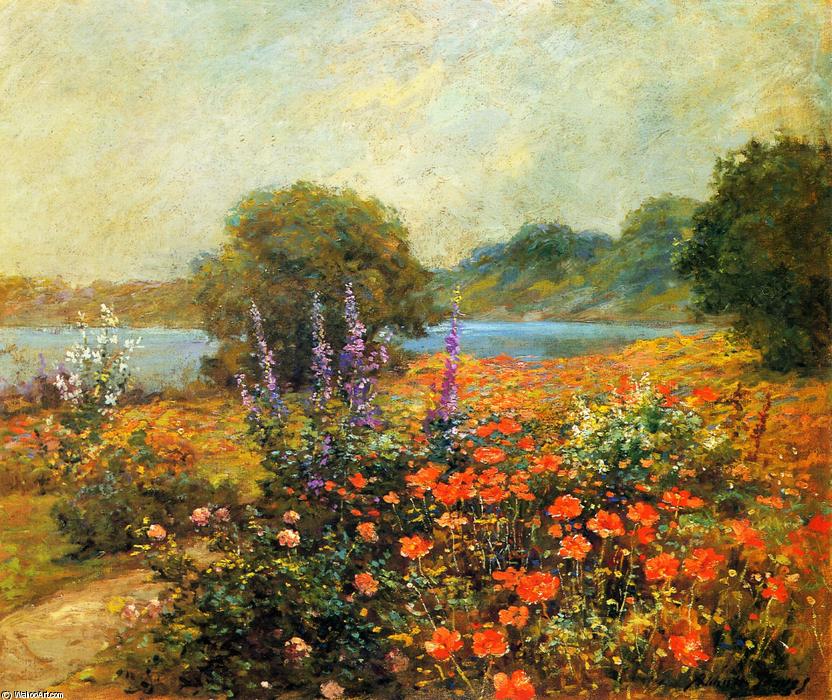
Poppies


The painting depicts a serene landscape featuring a field brimming with vibrant poppies and purple flowers under the watchful gaze of trees. Two birds soar above, completing this idyllic tableau created by Abbott Fuller Graves in 1905.
 Weiterlesen
Als Meister des amerikanischen Impressionismus, bekannt für lebendige Stillleben und Gartenszenen wie „Near Kennebunkport“, fängt Abbott Fuller Graves die flüchtige Schönheit von Licht und Natur in jedem Pinselstrich ein.
Giclée / Kunstdruck
Giclée- oder Leinwanddruck in Museumsqualität mit schneller Produktion und flexiblen Veredelungsoptionen. ( Handgemalte Reproduktion bestellen Zum digitalen Bild wechseln)




P118B €10

P118H €10

P118W €10

P438Z €10

P508JH €12

P508YH €12

P805H €10

P805Z €10

P919BZ €10

P919G €10

P919XJ €10

P959ZH €10

P968JZ €12

W106C €8

W218G €10

W218JH €8

W218Y €10

W307PJ €10

W316G €10

W316PJ €8

W316Y €10

W398PJ €8

W4111J €10

W500HY €15

W500JH €15

W692G €12

W849H €8

W940BG €15

W953PJ €8




Standardformat
individuell anpassbar
CM
INCH
Wählen Sie aus unseren vordefinierten Formaten, die den ursprünglichen Proportionen des Kunstwerks entsprechen.
Loading sizes...

Breite
Höhe
Geben Sie die benötigte Breite und Höhe an, damit der Druck perfekt in Ihren Rahmen oder an Ihre Wand passt. Ein Druck kann nur beschnitten, aber niemals größer als das Originalbild angefertigt werden; daher verliert ein Format mit anderen Proportionen einen Teil des Bildes. Wir senden Ihnen ein digitales Mockup zur Freigabe, bevor wir den Druck ausführen. Das auf dieser Seite gezeigte Bild zeigt nicht den tatsächlichen Beschnitt – dies ist nur im Mockup ersichtlich.
Weltweiter Versand () innerhalb von 2 Wochen statt der üblichen 4/5 Wochen. (14 November)

Kostenloser weltweiter Expressversand

Hochwertige Leinenleinwand

Umfassender Versicherungsschutz beim Versand

Zollgebühren-Rückerstattungsgarantie

Garantie für exakte Farbtreue

100 Tage Rückgaberecht (nur bei Mängeln)

100% Geld-zurück-Garantie

Mengenrabatt verfügbar
 Die Glasoption ist nur für Größen unter 110 cm verfügbar.

Poppies
Giclée / Kunstdruck
Format der Reproduktion
-


Endpreis
€ 62
Georges Seurat: Bridging Science and Beauty
Georges Seurat’s “La Grenouillère” – literally “The Pond” – stands as an emblem of Impressionism's audacious embrace of scientific inquiry. Painted in 1876, this monumental canvas depicts a Parisian café scene brimming with life, yet it’s far from merely capturing a snapshot of everyday existence. Instead, Seurat meticulously constructed his artwork using a revolutionary technique known as Pointillisme, pioneered alongside Paul Signac.
- The Technique: Pointillisme wasn't about blending colors; it was about applying tiny dots of pure pigment onto the canvas surface. These dots, individually colored and strategically positioned, refract light and blend optically in the viewer’s eye—a process meticulously documented by Seurat himself.
- Scientific Foundations: Seurat’s approach drew heavily from Chevreul's Color Theory, which posits that complementary colors stimulate each other, creating vibrancy and enhancing visual perception. He painstakingly calculated the chromatic coordinates of each dot to achieve optimal color harmony.
- Historical Context: Impressionism emerged as a reaction against the academic tradition dominating French art academies. Artists like Seurat sought to liberate painting from rigid conventions, prioritizing subjective experience and capturing fleeting moments of light and atmosphere.
The scene itself is deceptively simple—a café terrace populated by men and women enjoying drinks and conversation. However, beneath the surface lies a profound exploration of color and perception. Seurat’s palette utilizes bold hues – reds, blues, yellows – arranged in discrete patches that shimmer with reflected light. This deliberate fragmentation contributes to an unsettling yet captivating effect; it invites viewers to actively participate in constructing the image.
Symbolism:The pond itself—a recurring motif in Seurat’s oeuvre—represents both physical space and psychological depth. It symbolizes tranquility amidst urban bustle, mirroring the artist's own quest for intellectual clarity and artistic innovation. The figures within the café are rendered with meticulous detail, yet their faces remain largely obscured, emphasizing the importance of emotion and intuition over precise representation.
- Emotional Impact: “La Grenouillère” evokes a sense of immediacy and dynamism—a feeling that captures the vibrant energy of Parisian life. Yet, there’s also an underlying tension created by Seurat's technique; it compels viewers to confront the complexities of visual perception.
“La Grenouillère” remains a cornerstone of Impressionist art history and continues to inspire artists and collectors alike. Its enduring appeal lies not only in its aesthetic beauty but also in its audacious intellectual ambition—a testament to Seurat’s unwavering belief that art could illuminate the mysteries of human consciousness.
Fragen & Antworten
Welche Stellung nimmt „Poppies“ unter den wiederkehrenden Motiven von Abbott Fuller Graves ein?
Unter den dokumentierten Themen von Abbott Fuller Graves – color science, symbolism, nature beauty, impressionist style, graves legacy – setzt „Poppies“ einen ganz eigenen Fokus auf landscape, flowers, birds, field, poppy, color theory, impressionist painting.
Wie verbinden sich Medium und Bewegung in "Poppies"?
"Poppies" ist in Acrylic On Canvas im Stil der Impressionism-Epoche gefertigt.
Welche Grundfarbe prägt "Poppies" von Abbott Fuller Graves?
Ein Ochre to Sepia Farbton durchzieht "Poppies" von Abbott Fuller Graves.
Ähnliche Kunstwerke


Künstlerbiografie
Ein Leben, eingefangen in Licht und Blüte
Abbott Fuller Graves war ein amerikanischer Maler und Illustrator, dessen Pinsel die zarte Schnittstelle zwischen Natur und Licht einfing. Geboren in Weymouth, Massachusetts, neigten seine frühen Bestrebungen der strukturierten Welt der Architektur zu, was ihn dazu führte, das Massachusetts Institute of Technology zu besuchen. Doch eine tiefe Berufung zur vergänglichen Schönheit der natürlichen Welt lenkte seinen Weg schließlich um. Diese Reise führte ihn weit über die Grenzen Neuenglands hinaus, als er nach Paris und Italien reiste, um seine Fähigkeiten zu verfeinern. In den pulsierenden Kunstzentren Europas vertiefte sich Graves in das Studium der Blumenmalerei und der Figurenarbeit und sog die revolutionären Techniken auf, die später seinen unverwechselbaren Stil definieren sollten.
Während seiner prägenden Jahre in Paris studierte Graves an der Académie Julian und lernte unter Meistern wie Fernand Cormon, Jean-Paul Laurens und Paul Gervais. Diese strenge akademische Ausbildung verlieh ihm ein Fundament im Realismus, doch es war der aufstrebende Einfluss des europäischen Impressionismus, der seinen schöpferischen Geist wahrhaft entfachte. Seine Zeit in Europa ermöglichte es ihm zudem, mit Edmund C. Tarbell zusammenzuwohnen, was Verbindungen innerhalb eines Kreises von Künstlern förderte, die die amerikanische Kunst neu gestalteten. Nach seiner Rückkehr nach Boston wurde Graves Lehrer an der Cowles Art School und arbeitete Seite an Seite mit bedeutenden Persönlichkeiten wie Childe Hassam – eine Beziehung, die zweifellos ihre gegenseitige künstlerische Entwicklung bereicherte.
Der impressionistische Geist Neuenglands
Als seine Karriere reifte, fand Graves ein dauerhaftes Refugium in der Küstenstadt Kennebunkport, Maine. Hier entfaltete sich sein Werk wahrlichtlich, als er begann, sich auf dekorative Freilichtgartenmalereien und florale Stillleben zu spezialisieren. Seine Meisterschaft lag in der Fähigkeit, impressionistisches Licht mit realistischer Beobachtung zu verschmelzen. Er suchte nicht bloß danach, das Aussehen eines Gartens zu replizieren; er strebte danach, einzufangen, wie das Sonnenlicht durch das Laub filterte, gesprenkelte Schatten warf und Blüten mit einem ätherischen Glanz erleuchtete. Sein Einsatz von kräftigen Pinselstrichen und lebendigen Farben erlaubte es ihm, die Texturen von Rosen, Lilien und üppigen Landschaften auf die Leinwand zu übertragen und Szenen zu erschaffen, die sich zugleich lebendig und tief friedvoll anfühlten.
Seine Sujets feierten oft die Rhythmen des lokalen Lebens und die Pracht der natürlichen Welt. Während sich viele seiner Werke auf die komplexe Schönheit exotischer Gärten konzentrierten – die manchmal bis nach Spanien und Südamerika reichten –, blieb er tief in der amerikanischen Landschaft verwurzelt. Seine Gemälde zeigten häufig Genreszenen aus Kennebunkport, die Fischer, Bauern und Kapitäne darstellten, oft mit einer charmanten, nostalgischen Qualität gemalt, die dazu führte, dass seine Werke weit verbreitet auf Postkarten und Kalendern reproduziert wurden. Diese Fähigkeit, das alltägliche Küstenleben in eine Symphonie aus Farbe und Licht zu erheben, bleibt sein beständigstes Vermächtnis.
Künstlerisches Erbe und architektonische Vision
Jenseits der Leinwand besaß Graves eine einzigartige Vision für die Integration von Kunst und Lebensraum. Im Jahr 1905 wandte er sein architektonisches Gespür an, um das Abbott Graves House in Kennebunkport zu entwerfen. Dieses Bauwerk, das als eines der seltenen Beispiele der Prairie-School-Architektur in Maine hervorsticht, steht als Zeugnis seines facettenreichen Talents. Das Haus spiegelt dieselbe Harmonie zwischen Form und Natur wider, die seine Gemälde charakterisierte, und zeigt ein anspruchsvolles Verständnis von Design und Raum.
In seinen späteren Jahren pendelte Graves zwischen der kreativen Energie von New York City und der Ruhe der Küste. Seine Mitgliedschaft in angesehenen Organisationen wie der National Academy of Design, dem Salmagundi Club und den Allied Artists of America festigte seine Stellung innerhalb der amerikanischen Kunstgemeinschaft. Durch seine Hingabe, die flüchtige Schönheit eines Blütenblattes oder das wechselnde Licht an einer Küstenlinie einzufangen, hinterließ Abbott Fuller Graves ein Werk, das bei all jenen, die Poesie in der natürlichen Welt finden, weiterhin Resonanz findet.

Abbott Fuller Graves
1859 - 1936 , Vereinigte Staaten von Amerika
Kurzinfos
- Bemerkenswerte Kunstwerke:
- Nearing Home
- Eastern Point, Gloucester
- Near Kennebunkport
- Geburtsdatum: 1859
- Geburtsort: Weymouth, Vereinigte Staaten von Amerika
- Künstler, Die Diesen Künstler Beeinflusst Haben:
- Claude Monet
- Pierre-Auguste Renoir
- Childe Hassam
- Künstlerische Bewegung Oder Stil: Realismus und Impressionismus
- Nationalität: Amerikanisch
- Sterbedatum: 1936
- Vollständiger Name: Abbott Fuller Graves
Ähnliche Artikel

Die Symphonie der Punkte: Die leuchtende Magie und optische Brillanz des Pointillismus
Erfahren Sie alles über Seurats Pointillismus und die Magie der optischen Farbmischung. Tauchen Sie jetzt in die Welt des Lichts ein.

Capturing the Light: A Journey Through the Magic of Impressionist Masterpieces
Embark on a sensory journey through Impressionist history. Discover the magic of en plein air painting, from Monet's light to Seurat's color, and learn how to bring these luminous masterpieces into your home with museum-quality, hand-painted reproductions.

Die Vergangenheit im Rahmen: Wie Meisterwerke der Impressionismus als zeitlose Zeugen der Geschichte bewahren
Entdecken Sie die Magie des Impressionismus. Erfahren Sie, wie Meisterwerke von Monet & Pissarro Geschichte bewahren und lassen Sie sich von unserer Expertise für handgemalte Ölreproduktionen inspirieren. Zeitlose Kunst für Kenner und Geschichtsliebhaber.

Capturing Ephemeral Light: The Timeless Magic of Modern Impressionist Compositions
Explore the luminous world of Impressionism. Discover how masters captured light and movement through en plein air techniques, from Monet's fleeting moments to Seurat's Pointillism. A deep dive into the art history that continues to inspire collectors today.

Meisterwerke des Lichts: Die 25 besten Kunstwerke von Georges Seurat
Entdecken Sie die 25 besten Werke von Georges Seurat und den Pointillismus. Erleben Sie Meisterwerke auf TopImpressionists.com.