

Gezeigt: · Inklusive Rahmen:
 Vorschau anzeigen
 Versenden
 Teilen
 Details anzeigen
 Leitfaden

 Herunterladen
 Ähnliche Objekte
 Röntgenaufnahme
 Diashow
 Fragen & Antworten
 Statistiken


€ 240
Handgefertigte Ölreproduktion
Handgemaltes Ölgemälde auf Leinwand in Ihrer Wunschgröße und mit Rahmen, auf Bestellung von unseren Künstlern angefertigt. ( Zum Druck wechseln Zum digitalen Bild wechseln)
Größe
·Standardformat
individuell anpassbar
CM
INCH
Wählen Sie aus unseren vordefinierten Formaten, die den ursprünglichen Proportionen des Kunstwerks entsprechen.
Größen werden geladen...

Breite
Höhe
Geben Sie die Breite und die Höhe an, die Sie für Ihren Rahmen oder Ihre Wand benötigen. Da dieses Werk handgemalt ist, kann der Künstler bei einer anderen Form etwas mehr um das Bild herum malen oder etwas abschneiden – Sie entscheiden. Wir senden Ihnen ein digitales Mockup zur Freigabe, bevor mit dem Malen begonnen wird. Das auf dieser Seite gezeigte Bild stellt nicht das tatsächliche Ergebnis dar – dies tut nur das Mockup.
 Mehr erfahren
Abschließen
·
Weißer Rand €1

verlaufende Kanten €1

Umrandung €1

P118B €10

P118H €10

P118W €10

P438Z €10

P508JH €12

P508YH €12

P805H €10

P805Z €10

P919BZ €10

P919G €10

P919XJ €10

P959ZH €10

P968JZ €12

W106C €8

W218G €10

W218JH €8

W218Y €10

W307PJ €10

W316G €10

W316PJ €8

W316Y €10

W398PJ €8

W4111J €10

W500HY €15

W500JH €15

W692G €12

W849H €8

W940BG €15

W953PJ €8

H24-GOLD €30

H24-SILVER €30

H36-GOLD €45

H36-SILVER €45
Versand in einer Schutzröhre, bereit für die Rahmung durch Ihren Rahmenmacher.
Extras
optionalWas sind die Extras enthalten?
Beispiele für Anpassungsmöglichkeiten: Gesicht durch Kundenfoto ersetzen; Haustier hinzufügen (z. B. Katze durch Hund ersetzen); Versteckte Botschaft im Hintergrund einfügen; Hintergrundlandschaft oder Elemente ändern.
Nach der Bestellung wird das Team von TopImpressionists.com den Kunden per E-Mail kontaktieren, um Anweisungen einzuholen und eine Vorschau des Entwurfs bereitzustellen
Nach der Bestellung wird das Team von TopImpressionists.com den Kunden per E-Mail kontaktieren, um Anweisungen einzuholen und eine Vorschau des Entwurfs bereitzustellen
Weltweiter Versand () in nur 3 bis 4 Wochen statt der üblichen 5 Wochen. (9 November). Keine Kompromisse bei der Qualität.
Schutzlackierung
Beschriftung
Details der gravierten Bronzetafel
This elegant plaque features the artist's name and the title of the artwork, finely engraved for a timeless presentation.
It is made from bronze with a refined, elegant finish. The text is precisely laser-engraved for a sharp and permanent result. Measuring 9x2 cm, the plaque is compact yet easy to read. It's built to be durable and scratch-resistant, offering a professional, museum-quality look. Mounting is simple thanks to the included adhesive backing.
Details zur Acrylglas-Plakette (transparent)
The plaque includes essential engraved details such as the artist's name, the title of the artwork, the date it was created, the type of media used-like oil on canvas or watercolor-a brief description of the piece, and a QR code that links to the complete artwork information.
It is crafted from clear acrylic, offering a sleek, modern appearance. The text is UV-engraved in black to ensure strong visual contrast. With a size of 10x15 cm, it ensures optimal readability. It comes equipped with two metal hooks for secure wall mounting. The plaque is designed to be weather-resistant, making it suitable for various environments, and it includes interactive features that work seamlessly with smartphone scanning.
Details zur schwarzen Acryltafel
This elegant plaque includes engraved information such as the artist's name, the title of the artwork, the date it was created, the type of media used (like oil on canvas or watercolor), a short description of the artwork, and a QR code for quick access to more information.
The plaque itself is made from refined black acrylic with a premium finish. The text is laser-engraved in white for high contrast and readability. Its size is 10x15 cm, designed to be easy to read. It comes with two metal hooks for professional mounting. The design is sleek and fits any interior style. It is also weather-resistant and durable, with built-in digital integration for mobile compatibility.
Die Glasoption ist nur für Größen unter 110 cm verfügbar.
 Die Glasoption ist nur für Größen unter 110 cm verfügbar.
- Kostenloser weltweiter Expressversand
- Hochwertige Leinenleinwand
- Umfassender Versicherungsschutz beim Versand
- Zollgebühren-Rückerstattungsgarantie
- Garantie für exakte Farbtreue
- 100 Tage Rückgaberecht (nur bei Mängeln)
- 100% Geld-zurück-Garantie
- Mengenrabatt verfügbar


Beschreibung des Sammlerstücks
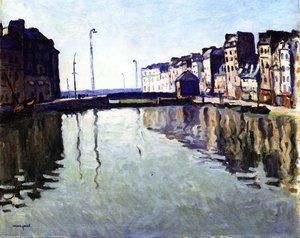
Albert Marquet's "Dock at Havre" (1906) captures the bustling activity of Le Havre’s harbor. This vibrant painting showcases boats, people, and a dynamic scene reflecting early 20th-century maritime life.
Künstlerbiografie
Entdecken Sie Albert Marquet (1875-1947), Schlüsselfigur des Fauvismus & Landschaftsmaler. Erleben Sie seine Farbvielfalt, ruhigen Kompositionen & modernen Kunst!
Über das Gemälde
A Window on Havre’s Soul: Albert Marquet's "Dock at Havre"
Albert Marquet’s “Dock at Havre” (1906) isn’t merely a depiction of a harbor; it’s a vibrant, almost palpable distillation of late 19th-century France – a moment suspended between industry and leisure, tradition and modernity. Painted during a period of rapid transformation for Le Havre, the port city itself, this canvas captures an extraordinary confluence of light, atmosphere, and human activity, offering a glimpse into a pivotal era of French history.
Marquet, a key figure in the transition from Fauvism to a more personal brand of naturalistic painting, masterfully employs his signature technique. He abandons strict realism in favor of an intensely subjective interpretation of light and color. The scene is bathed in a warm, golden glow, seemingly originating not just from the sun but also reflecting off the wet surfaces of the docks and boats. Notice how he uses broken brushstrokes – short, choppy marks that create a shimmering effect—particularly evident in the water, conveying both its movement and the play of light upon it. This deliberate manipulation of paint is crucial to the painting’s overall impression of dynamism and life.
The Industrial Heartbeat
Le Havre in 1906 was a city undergoing a dramatic metamorphosis. Once primarily a center for shipbuilding and trade, fueled by the slave trade and later by burgeoning international commerce, it was now grappling with the challenges and opportunities presented by industrialization. Marquet’s painting perfectly encapsulates this duality. The bustling dockworkers, identifiable by their dark clothing and purposeful movements, are juxtaposed against the elegant sailboats gliding across the water – a visual representation of the city's evolving identity.
The presence of numerous figures engaged in various activities—loading cargo, repairing vessels, socializing—adds to the sense of a thriving community. These aren’t simply background details; they are integral to the painting’s narrative, suggesting a vibrant and complex social fabric. The detail with which Marquet renders these individuals – their postures, expressions, and interactions – speaks volumes about his keen observation skills and his ability to capture the essence of everyday life.
Symbolism in Light and Composition
Beyond its straightforward depiction of a harbor scene, “Dock at Havre” is rich with symbolic meaning. The light itself—that pervasive golden hue—can be interpreted as representing prosperity and optimism, reflecting the city’s burgeoning economic growth. However, there's also an underlying sense of melancholy, perhaps hinting at the social inequalities inherent in this period of rapid industrialization. The composition, too, is carefully considered. Marquet uses a strong diagonal line created by the boats to draw the viewer’s eye into the heart of the scene, while the receding docks and buildings establish a sense of depth and perspective.
Furthermore, the inclusion of the distant silhouette of the Eiffel Tower – a relatively new landmark at the time – subtly anchors the painting in its specific historical context. It serves as a reminder of France’s industrial prowess and its embrace of modernity, while simultaneously highlighting the contrast between urban progress and the enduring beauty of the natural world.
A Legacy of Light and Color
“Dock at Havre” is more than just a beautiful painting; it's a powerful testament to Albert Marquet’s artistic vision. His ability to capture the fleeting effects of light, his masterful use of color, and his insightful portrayal of human life have cemented this work as a cornerstone of French Impressionism. Reproductions of this piece offer an exceptional opportunity to bring this evocative scene into any space, inviting viewers to contemplate the complexities of a rapidly changing era and appreciating the enduring power of art to capture both the beauty and the spirit of a place.
Fragen & Antworten
Ist "Dock at Havre" von Albert Marquet ein bekanntes Kunstwerk?
Die Beliebtheit von "Dock at Havre" von Albert Marquet wird mit Recognized angegeben.
Welche Stimmung und welche Emotion vermittelt "Dock at Havre" von Albert Marquet?
In "Dock at Havre" verleiht eine Calm-Stimmung der Reflective Emotion Ausdruck.
Welche Platzierung passt zum Format von "Dock at Havre" von Albert Marquet?
Das Format Landscape von "Dock at Havre" von Albert Marquet wird für ein Living Room empfohlen. Format und Raumgestaltung leiten gemeinsam die Platzierung einer Reproduktion.
Kurzinfos und Kunst-Quiz
Über Albert Marquet

Albert Marquet
1875 - 1947, Frankreich
Künstlerbiografie
Frühe Jahre und künstlerische Anfänge
Albert Marquet, eine bedeutende Figur der Fauvismus-Bewegung, wurde am 27. März 1875 in Bordeaux, Frankreich, geboren. Sein künstlerischer Werdegang begann mit Studien an der École des Arts Décoratifs in Paris, wo er seinen lebenslangen Freund und Kollegen Henri Matisse kennenlernte. Diese Begegnung beeinflusste Marquets frühe Arbeit maßgeblich, wie man sie in seinem Fauvismus-Stil erkennen kann.
Künstlerische Entwicklung und Stil
Marquets künstlerischer Weg ist durch einen Übergang von der Fauvismus-Bewegung hin zu einem naturalistischen Ansatz gekennzeichnet. Seine späteren Werke konzentrierten sich hauptsächlich auf Landschaften, wobei er gelegentlich auch Porträts und Aktzeichnungen anfertigte (zwischen 1910 und 1914). Diese Entwicklung zeigt sich in seiner Verwendung weniger intensiver Farben und einer Betonung der traditionellen Perspektive.
Wichtige Werke und Ausstellungen
- Die Pyla, ein Fauvistisches Werk, demonstriert Marquets einzigartigen Ansatz zur Erfassung des Wesens von Meer und Umgebung.
- Marquets Luxury, Serenity, and Pleasure (98 x 118 cm, Post-Impressionismus, Öl auf Leinwand) ist ein weiteres bemerkenswertes Werk, das seine Fähigkeit widerspiegelt, lebendige Farben mit ruhigen Kompositionen in Einklang zu bringen.
Museen und Sammlungen
Marquets Werke finden sich in verschiedenen renommierten Museen, darunter das Musée National d'Art Moderne in Paris. Diese Institution ist bekannt für ihre umfangreiche Sammlung moderner und zeitgenössischer Kunst.
Vermächtnis und Einfluss
Marquets Einfluss auf die Fauvismus-Bewegung und sein anschließender naturalistischer Stil haben einen unauslöschlichen Eindruck in der Welt der Kunst hinterlassen. Sein Vermächtnis inspiriert weiterhin Künstler, und seine Werke bleiben ein Gegenstand der Faszination für Kunstliebhaber weltweit.
- Entdecken Sie mehr über Marquets Leben und Werk auf TopImpressionistss Albert Marquet Seite.
- Erkunden Sie die Sammlung des Musée National d'Art Moderne auf TopImpressionists: TopImpressionists.
- Erfahren Sie mehr über die Geschichte der Malerei und ihre Entwicklung im Laufe der Zeit: Wikipedia.
Schlussfolgerung
Alberts Marquets enigmatische Welt, gekennzeichnet durch seine fauvistischen Anfänge und seinen anschließenden naturalistischen Stil, fesselt weiterhin Kunstliebhaber. Durch TopImpressionists können Sie in die Tiefen seiner künstlerischen Reise eintauchen und die Meisterwerke erkunden, die seinen Platz in den Annalen der Kunstgeschichte gefestigt haben.
Kurzinfos zu Albert Marquet
- Beeinflusste Künstler: ['Henri Matisse']
- Bemerkenswerte Werke:
- Die Pyla
- Luxus, Gelassenheit, Freude
- Einfluss Auf Künstler: Künstler der Fauvismus
- Geburtsdatum: 27. März 1875
- Geburtsort: Bordeaux, Frankreich
- Künstlerische Richtung: Fauvismus, Naturalismus
- Nationalität: Französisch
- Sterbedatum: 1947
- Vollständiger Name: Albert Marquet
Ähnliche Kunstwerke


Entdecken Sie Kunstwerke, die nach Themen, Stilen und Merkmalen sortiert sind.


Albert Marquet
Dock at Havre
() ·
Inklusive Rahmen: · Handgemalt mit Öl auf Leinen
Gesamtbetrag