Amedeo Modigliani’s ‘Constant Leopold’: A Portrait of Melancholy and Mystery
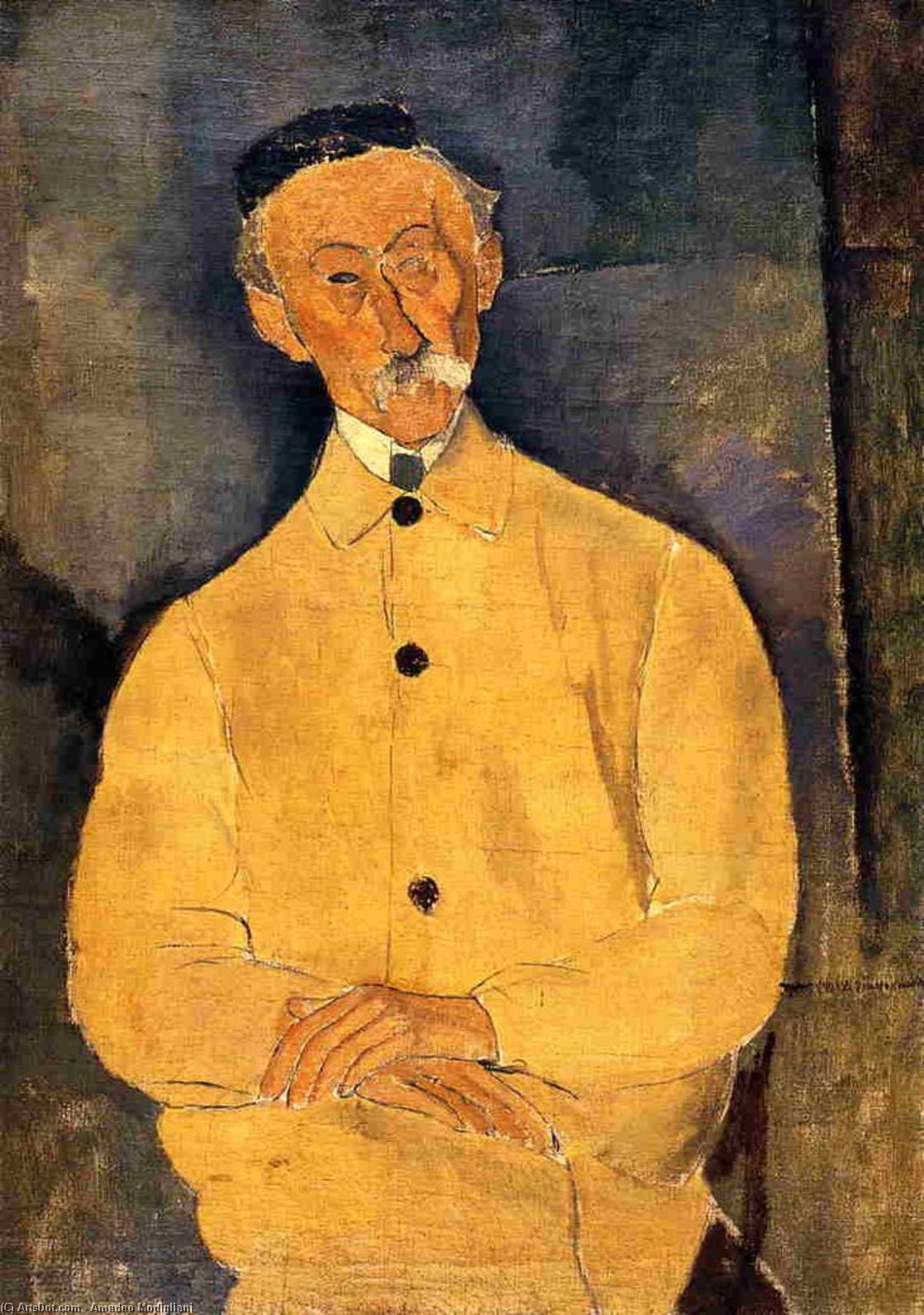
Amedeo Clemente Modigliani's “Constant Leopold,” painted in 1919, is not merely a portrait; it’s an exquisitely rendered distillation of melancholy, a visual embodiment of the artist’s own turbulent life and profound sense of longing. This captivating work, now housed within the Museu de Arte in São Paulo, offers a glimpse into the world of Leopold Zborowski, a wealthy Polish art collector who profoundly shaped Modigliani's career and personal existence – a relationship characterized by both intense admiration and heartbreaking dependence.
The painting immediately draws the viewer in with its subject’s direct gaze. Constant Leopold, a man distinguished by his prominent mustache and beard, sits poised before us, his expression a carefully calibrated blend of seriousness and quiet contemplation. His attire – a dark suit and tie – speaks to an era of formality, yet there's an underlying sense of detachment, as if he exists slightly outside the conventional boundaries of social interaction. Modigliani masterfully employs a muted palette of browns, grays, and ochres, creating a somber atmosphere that perfectly complements the subject’s mood. The background, subtly populated with indistinct figures, serves to further isolate Leopold, emphasizing his central importance within the frame.
The Language of Longing: Modigliani's Distinctive Style
Modigliani’s artistic signature is instantly recognizable – a style deeply rooted in the expressive distortions and elongated forms that defined his oeuvre. Here, those characteristics are particularly pronounced. The subject’s face is subtly stretched, his features refined to an almost skeletal elegance, echoing the influence of classical sculpture while simultaneously conveying a sense of vulnerability. His eyes, large and almond-shaped, hold a haunting quality, reflecting both intelligence and a deep well of sadness. The artist's technique is characterized by loose, expressive brushstrokes, particularly evident in the rendering of the clothing and background – a deliberate contrast to the meticulously detailed face that anchors the composition.
Notably, Modigliani’s use of color is restrained, prioritizing tonal variations over vibrant hues. This subdued approach contributes significantly to the painting's overall mood of quiet introspection. The subtle gradations of light and shadow create a sense of depth and volume, while simultaneously reinforcing the subject’s isolation. The artist skillfully employs chiaroscuro – the dramatic contrast between light and dark – to draw attention to Leopold’s face and heighten the emotional impact of the portrait.
Historical Context & The Complex Relationship with Zborowski
“Constant Leopold” was created during a pivotal period in Modigliani's life. He had relocated to Paris in 1906, immersing himself within the vibrant artistic circles of Montmartre and seeking patronage from influential figures like Paul Rosenberg and, crucially, Leopold Zborowski. Zborowski, a shrewd art dealer with considerable wealth, became a vital lifeline for Modigliani, providing him with financial support and access to the Parisian art market – though their relationship was fraught with tension and dependency.
The painting itself is believed to be a reflection of this complex dynamic. Zborowski’s presence looms large in Modigliani's life, offering both opportunity and a constant reminder of his own precarious position. The portrait can be interpreted as an attempt by Modigliani to capture the essence of Zborowski – a man of considerable influence yet burdened by a palpable sense of loneliness and regret. The subtle suggestion of sadness in Leopold’s eyes mirrors the artist's own feelings towards his patron, hinting at a mixture of gratitude and resentment.
Symbolism & Emotional Resonance
Beyond its technical brilliance, “Constant Leopold” resonates with profound symbolic weight. The elongated features, characteristic of Modigliani’s style, can be seen as metaphors for the artist's own yearning for beauty and his struggle to reconcile his artistic vision with the realities of a challenging life. The subject’s direct gaze invites contemplation, prompting viewers to consider not only Leopold’s individual story but also the broader themes of isolation, longing, and the elusive nature of human connection.
Ultimately, “Constant Leopold” is a hauntingly beautiful portrait that transcends mere representation. It's a testament to Modigliani’s artistic genius – a poignant exploration of melancholy, mystery, and the enduring power of art to capture the complexities of the human spirit. A hand-painted reproduction offers an unparalleled opportunity to experience this masterpiece firsthand, bringing its evocative atmosphere into your own space.


 Vorschau anzeigen
 Druck bestellen
 Versenden
 Teilen
 Details anzeigen

 Herunterladen
 Ähnliche Objekte
 Röntgenaufnahme
 Diashow
 Weiterlesen






































 Die Glasoption ist nur für Größen unter 110 cm verfügbar.



