In echtem Maßstab anzeigen
 Versenden als Grußkarte
 Teilen
 Details anzeigen
 Leitfaden öffnen

 Herunterladen
 Ähnliche Objekte
 Röntgenaufnahme
 Diashow
 Besucherstatistiken
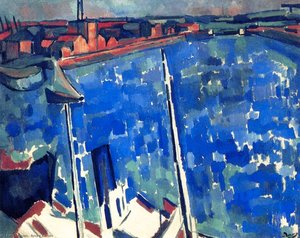
Flowers in a Vase
 Acrylic On Canvas
- WallArt
- Fauvism
 1930
1930 35.0 x 25.0 cm
 Royal Academy of Music
André Derain's 'Flowers in a Vase' (1930) is a vibrant Fauvist still life, showcasing bold colors and dynamic composition. Explore this iconic painting’s rich history & artistic significance.
 Mehr anzeigen
André Derain (1880-1954): Pionier des Fauvismus! Entdecken Sie seine kräftigen Farben, expressiven Kompositionen & ikonischen London-Bilder. Ein Meisterwerk der Moderne.
Handgefertigte Ölreproduktion
Handgemaltes Ölgemälde auf Leinwand in Ihrer Wunschgröße und mit Rahmen, auf Bestellung von unseren Künstlern angefertigt. ( Zum Druck wechseln Zum digitalen Bild wechseln)




P118B €10

P118H €10

P118W €10

P438Z €10

P508JH €12

P508YH €12

P805H €10

P805Z €10

P919BZ €10

P919G €10

P919XJ €10

P959ZH €10

P968JZ €12

W106C €8

W218G €10

W218JH €8

W218Y €10

W307PJ €10

W316G €10

W316PJ €8

W316Y €10

W398PJ €8

W4111J €10

W500HY €15

W500JH €15

W692G €12

W849H €8

W940BG €15

W953PJ €8




Standardformat
individuell anpassbar
CM
INCH
Wählen Sie aus unseren vordefinierten Formaten, die den ursprünglichen Proportionen des Kunstwerks entsprechen.
Loading sizes...

Breite
Höhe
Geben Sie die Breite und die Höhe an, die Sie für Ihren Rahmen oder Ihre Wand benötigen. Da dieses Werk handgemalt ist, kann der Künstler bei einer anderen Form etwas mehr um das Bild herum malen oder etwas abschneiden – Sie entscheiden. Wir senden Ihnen ein digitales Mockup zur Freigabe, bevor mit dem Malen begonnen wird. Das auf dieser Seite gezeigte Bild stellt nicht das tatsächliche Ergebnis dar – dies tut nur das Mockup.
Beispiele für Anpassungsmöglichkeiten: Gesicht durch Kundenfoto ersetzen; Haustier hinzufügen (z. B. Katze durch Hund ersetzen); eine versteckte Nachricht im Hintergrund einfügen; Hintergrundlandschaft oder -elemente ändern.
Nach der Bestellung wird das TopImpressionists.com-Team dem Kunden Anweisungen per E-Mail zusenden und eine Mockup-Vorschau bereitstellen.
Nach der Bestellung wird das TopImpressionists.com-Team dem Kunden Anweisungen per E-Mail zusenden und eine Mockup-Vorschau bereitstellen.
Weltweiter Versand () in nur 3 bis 4 Wochen statt der üblichen 5 Wochen. (25 Oktober). Keine Kompromisse bei der Qualität.

Kostenloser weltweiter Expressversand

Hochwertige Leinenleinwand

Vollständiger Versicherungsschutz beim Versand

Zollgebühren-Rückerstattungsgarantie

Garantie für exakte Farbtreue

100-tägiges Rückgaberecht (nur bei Mängeln)

100% Geld-zurück-Garantie

Angebot für Mengenrabatt
 Die Glasoption ist nur für Größen unter 110 cm verfügbar.

Flowers in a Vase
Reproduktionsmedium
Format der Reproduktion
-


Gesamtpreis
€ 236
Flowers in a Vase by André Derain: A Symphony of Color and Light
André Derain’s “Flowers in a Vase,” painted around 1901, isn't merely a still life; it’s an explosion of Fauvist emotion captured on canvas. This intimate scene, brimming with vibrant reds, whites, and greens, transports the viewer to a world where color reigns supreme, defying traditional representation and embracing pure visual sensation. The painting, housed in the National Gallery of Art, Washington D.C., offers a captivating glimpse into the heart of this revolutionary artistic movement.
The work’s genesis lies within the burgeoning Fauvist period, a short but intensely influential era in early 20th-century art. Derain, alongside Henri Matisse, sought to liberate color from its descriptive role and use it instead as an independent expressive force. “Flowers in a Vase” exemplifies this philosophy perfectly. The colors aren’t intended to mimic reality; they are chosen for their emotional impact – the fiery red of the roses, the luminous white of the blooms, and the verdant green of the foliage all vibrate with intensity. This deliberate departure from naturalism was considered radical at the time, provoking both excitement and criticism.
A Technique of Bold Strokes and Fragmented Forms
Derain’s technique is characterized by bold, broken brushstrokes that create a sense of movement and immediacy. He applied paint directly to the canvas with little blending, resulting in a textured surface where individual strokes are visible. This impasto effect adds depth and physicality to the painting, drawing attention to the materiality of the pigments themselves. The forms within the composition – the vase, the flowers, the leaves – are not rendered with meticulous detail but rather suggested through fragmented shapes and planes of color. This simplification contributes to the overall sense of dynamism and unrestrained expression.
Notably, Derain employed a technique reminiscent of Pointillism—small dots of pure color applied side-by-side—though his approach was looser and more expressive than that of Seurat. This layering of colors creates an optical illusion of depth and luminosity, further enhancing the painting’s vibrant quality. The subtle variations in tone and hue within each color area contribute to a remarkable sense of visual richness.
Symbolism and Emotional Resonance
Beyond its purely formal qualities, “Flowers in a Vase” is rich in symbolic meaning. Flowers have long been associated with beauty, love, and mortality – themes that resonate deeply within the painting. The arrangement itself—a vibrant bouquet contained within a simple vase—suggests both abundance and fragility. The dark background serves to heighten the impact of the colors, creating a dramatic contrast that draws the viewer’s eye directly to the blossoms.
Furthermore, the inclusion of a single white flower floating on water evokes a sense of transience and ephemerality. It's a poignant reminder of the fleeting nature of beauty and life itself. The painting’s emotional impact is profound—a celebration of color, light, and the inherent joy of existence, tempered by an underlying awareness of mortality.
A Legacy of Color and Innovation
“Flowers in a Vase” stands as a pivotal work in André Derain's oeuvre and a cornerstone of Fauvist art. It demonstrates his willingness to challenge conventional artistic norms and embrace the expressive potential of color. The painting’s influence can be seen in the works of subsequent generations of artists, who continued to explore the possibilities of non-naturalistic representation. Today, it remains a powerful testament to the transformative power of color and a captivating example of early 20th-century artistic innovation.
Fragen & Antworten
Wofür wird ein Druck von "Flowers in a Vase" empfohlen?
Die empfohlene Verwendung eines Drucks von „Flowers in a Vase“ ist Neutral.
In welchem Raum des Zuhauses lässt sich eine Reproduktion von "Flowers in a Vase" gut platzieren?
Der empfohlene Raum für "Flowers in a Vase" von André Derain ist ein Living Room. Dieser Vorschlag kann natürlich an Ihr Interieur angepasst werden.
Ist ein Download für "Flowers in a Vase" verfügbar?
"Flowers in a Vase" von André Derain kann auf der Download-Seite des Kunstwerks als ein hochauflösender digitaler Bild-Download heruntergeladen werden.
Ähnliche Kunstwerke


Biografie des Künstlers
Frühe Jahre und Ausbildung
- Geburt und Familie: André Derain wurde am 10. Juni 1880 in Chatou, Yvelines, Île-de-France, unweit von Paris geboren.
- Unabhängiges Studium: Im Gegensatz zu einigen Darstellungen begann Derain bereits 1895 mit dem Malen, bevor er Vlaminck oder Matisse kennenlernte. Er besuchte gelegentlich die Landschaft mit Vater Jacomin und seinen Söhnen.
- Formale Ausbildung: 1898 studierte er Ingenieurwesen an der Académie Camillo, wo er Henri Matisse kennenlernte und später bei Eugène Carrière Malereiunterricht erhielt.
- Aufgabe des Ingenieurwesens: Nach dem Militärdienst (1901-1904) wurde Derain von Matisse davon überzeugt, seine Ingenieurslaufbahn aufzugeben und sich ganz der Malerei zu widmen. Anschließend besuchte er die Académie Julian.
Fauvismus und frühe künstlerische Entwicklung
- Zusammenarbeit mit Matisse: Derain arbeitete eng mit Henri Matisse zusammen, insbesondere im Sommer 1905 in Collioure, was zu Werken wie "Berge von Collioure" führte.
- Salon d'Automne (1905): Ihre Ausstellung im Salon d'Automne war ein entscheidender Moment, der dazu führte, dass der Kritiker Louis Vauxcelles die Künstler als "Les Fauves" ("die Wilden") bezeichnete aufgrund ihrer kühnen und unkonventionellen Farbgebung.
- Londoner Gemälde: Im Jahr 1906 schickte ihn Ambroise Vollard nach London, wo er eine Reihe von Gemälden anfertigte, die die Stadt auf neuartige Weise darstellten, wobei der Schwerpunkt auf der Themse und der Tower Bridge lag. Diese Werke gelten als einige seiner bedeutendsten.
- Einflüsse & Stil: Frühe fauvistische Arbeiten zeichnen sich durch intensive, unnatürliche Farben und ausdrucksstarke Pinselstriche aus. Derain wurde von Künstlern wie Van Gogh und Cézanne beeinflusst.
Entwicklung des Stils und spätere Werke
- Verschiebung hin zum Klassizismus: Nach 1907 begann sich Derains Stil zu wandeln, weg von der rein fauvistischen Farbpalette hin zu gedämpfteren Tönen und einem größeren Fokus auf die Form. Diese Periode (1911-1914) wird manchmal als seine "gotische" Phase bezeichnet.
- Einfluss des Kubismus & alter Meister: Derains Arbeit in dieser Zeit spiegelte sein Studium der alten Meister wider und integrierte Elemente des Kubismus sowie ein erneutes Interesse an klassischen Formen.
- Ballettdesign: Im Jahr 1919 entwarf er die Ballettaufführung "La Boutique Fantasque" für Diaghilev, was seine Vielseitigkeit als Künstler unter Beweis stellte.
- Bemerkenswerte Werke: Zu den wichtigsten Werken dieser Zeit gehören "Harlekin und Pierrot", "Die Rückkehr des Odysseus" (ein großes Wandgemälde) sowie verschiedene Landschaften und Stillleben, die seine sich entwickelnde Stilrichtung zeigen.
Vermächtnis und historische Bedeutung
- Mitbegründer des Fauvismus: Derain gilt als eine Schlüsselfigur bei der Entwicklung des Fauvismus, neben Matisse, und leistete einen bedeutenden Beitrag zur Kunstbewegung des frühen 20. Jahrhunderts.
- Einzigartige Vision von London: Seine Reihe von Gemälden, die London darstellen, bot eine frische und unverwechselbare Perspektive auf die Stadt und unterschied sich von früheren künstlerischen Darstellungen.
- Nachkriegs-Anerkennung: Nach dem Ersten Weltkrieg erlangte Derain neue Anerkennung für seine Beiträge zu einem wiederauflebenden Klassizismus in der Kunst.
- Spätere Jahre & Kontroversen: Trotz des Gewinnens des Carnegie-Preises im Jahr 1928 sah sich Derain während des Zweiten Weltkriegs aufgrund seiner Anwesenheit in Deutschland mit Kontroversen konfrontiert und wurde später von einigen ehemaligen Unterstützern gemieden.
- Tod und Erinnerung: André Derain starb am 8. September 1954. Seine Werke werden weiterhin für ihre kühnen Farben, ausdrucksstarken Kompositionen und seinen bedeutenden Beitrag zur Geschichte der modernen Kunst gefeiert.

André Derain
1880 - 1954 , Frankreich
Eckdaten zum Künstler
- Beeinflusste Künstler:
- Henri Matisse
- Pablo Picasso
- Bemerkenswerte Werke:
- Harlekin und Pierrot
- Londoner Bilder
- Bacchus-Tanz
- Die Heimkehr des Odysseus
- Geburtsdatum: 10. Juni 1880
- Geburtsort: Chatou, Frankreich
- Künstlerische Bewegung: Fauvismus
- Nationalität: Französisch
- Todestag: 8. September 1954
- Vollständiger Name: André Derain
Verwandte Artikel

Silent Narratives: Exploring the Enduring Appeal of Still Life Painting Across Centuries
Explore the rich history of still life painting with TopImpressionists. Discover Dutch Masters, decode vanitas symbolism & learn about collecting timeless art. Expert insights and museum-quality reproductions.

Blossoming Symbolism: A Historical Journey Through Flowers in Western Painting
Explore the rich history of flower symbolism in Western painting! Discover how artists from the Renaissance to Modernism used blossoms to convey meaning, emotion & beauty. Learn about iconic artworks and movements.

Fauvismus: Die 10 Meisterwerke, die eine Revolution der Farbe auslösten | TopImpressionists
Entdecken Sie die 10 Meisterwerke des Fauvismus! Von Matisse bis Derain – erleben Sie die Revolution der Farbe und Emotion. Hochwertige Kunstdrucke & Reproduktionen auf TopImpressionists.com. Jetzt Kunst für Ihr Zuhause finden!
Fauvismus: Die 10 Meisterwerke, die eine Revolution der Farben entfesselten –
Entdecken Sie die 10 Meisterwerke des Fauvismus! Von Matisse bis Derain – erleben Sie die Revolution der Farben und Emotionen in der modernen Kunst. Hochwertige Reproduktionen & Inspiration für Ihr Zuhause auf

André Derain: Die Kühne Vision des Fauvismus und die Evolution der Modernen Farbe
Entdecken Sie die revolutionäre Kunst des Fauvismus und das Wirken von André Derain! Erfahren Sie mehr über Farbgebung, Einflüsse & das Erbe dieser bedeutenden Bewegung. Expertenwissen auf TopImpressionists.
Entdecken Sie Kunstwerke, die nach Themen, Stilen und Merkmalen sortiert sind.