


 In echtem Maßstab anzeigen
 Versenden als Grußkarte
 Teilen
 Details anzeigen
 Leitfaden öffnen

 Herunterladen
 Ähnliche Objekte
 Röntgenaufnahme
 Diashow
 Besucherstatistiken
Self-Portrait
 Acrylic On Canvas
- WallArt
- Atonal Expressionism
 1922
1922- 19th Century
 9.0 x 10.0 cm
 Arnold Schönberg Zentrum
A striking black and yellow self-portrait drawing by Arnold Schoenberg, a pivotal figure of the early 20th century's musical avant-garde, captures the artist’s intense gaze with a distinctive mustache. Discover this unique piece and add it to your collection.
 Mehr anzeigen
Entdecken Sie Arnold Schönbergs revolutionäre Musik – Atonalität, Zwölftontechnik & Einfluss auf Komponisten des 20. Jahrhunderts. Entdecken Sie sein Vermächtnis im Schönberg Zentrum.
Handgefertigte Ölreproduktion
Handgemaltes Ölgemälde auf Leinwand in Ihrer Wunschgröße und mit Rahmen, auf Bestellung von unseren Künstlern angefertigt. ( Zum Druck wechseln Zum digitalen Bild wechseln)




P118B €10

P118H €10

P118W €10

P438Z €10

P508JH €12

P508YH €12

P805H €10

P805Z €10

P919BZ €10

P919G €10

P919XJ €10

P959ZH €10

P968JZ €12

W106C €8

W218G €10

W218JH €8

W218Y €10

W307PJ €10

W316G €10

W316PJ €8

W316Y €10

W398PJ €8

W4111J €10

W500HY €15

W500JH €15

W692G €12

W849H €8

W940BG €15

W953PJ €8




Standardformat
individuell anpassbar
CM
INCH
Wählen Sie aus unseren vordefinierten Formaten, die den ursprünglichen Proportionen des Kunstwerks entsprechen.
Loading sizes...

Breite
Höhe
Sie können Ihre eigenen Maße eingeben, um einen bestimmten Rahmen oder Platz auszufüllen. Wenn die gewählte Größe nicht den Proportionen des Originalbildes entspricht, werden wir das Kunstwerk entweder beschneiden oder das Gemälde durch zusätzliche, handgemalte Elemente erweitern. Ein digitales Mockup wird Ihnen zur Genehmigung zugesandt, bevor die Produktion beginnt.
Bitte beachten Sie, dass die Bildschirmvorschau nicht die tatsächliche Beschneidung oder Erweiterung widerspiegelt. Nur das Mockup zeigt die endgültige Komposition exakt an.
Obwohl Sondermaße verfügbar sind, empfehlen wir, eine Größe aus der vordefinierten Liste zu wählen, um die ursprünglichen Proportionen beizubehalten.
Beispiele für Anpassungsmöglichkeiten: Gesicht durch Kundenfoto ersetzen; Haustier hinzufügen (z. B. Katze durch Hund ersetzen); eine versteckte Nachricht im Hintergrund einfügen; Hintergrundlandschaft oder -elemente ändern.
Nach der Bestellung wird das TopImpressionists.com-Team dem Kunden Anweisungen per E-Mail zusenden und eine Mockup-Vorschau bereitstellen.
Nach der Bestellung wird das TopImpressionists.com-Team dem Kunden Anweisungen per E-Mail zusenden und eine Mockup-Vorschau bereitstellen.
Weltweiter Versand () in nur 3 bis 4 Wochen statt der üblichen 5 Wochen. (13 Oktober). Keine Kompromisse bei der Qualität.

Kostenloser weltweiter Expressversand

Hochwertige Leinenleinwand

Vollständiger Versicherungsschutz beim Versand

Zollgebühren-Rückerstattungsgarantie

Garantie für exakte Farbtreue

100-tägiges Rückgaberecht (nur bei Mängeln)

100% Geld-zurück-Garantie

Angebot für Mengenrabatt
 Die Glasoption ist nur für Größen unter 110 cm verfügbar.

Self-Portrait
Reproduktionsmedium
Format der Reproduktion
-


Gesamtpreis
€ 232
A Study in Yellow and Green: Arnold Schoenberg's Self-Portrait (1922)
This intimate drawing, measuring just 9 x 10 cm, offers an arresting glimpse into the mind of one of the 20th century’s most revolutionary composers – Arnold Schoenberg. Executed in 1922, a pivotal year in his artistic development, the work transcends a simple portrait; it's a concentrated distillation of intellectual intensity and perhaps, a subtle self-examination rendered with remarkable precision. The stark palette of yellow and green immediately draws the viewer in, colors that would become increasingly significant within Schoenberg’s musical explorations of atonality and dissonance.
- Subject & Composition: The central focus is undeniably the artist himself – a man with a neatly trimmed mustache, his gaze direct and unwavering. The simplified rendering emphasizes key features: the piercing green eyes, a hallmark of Schoenberg’s artistic vision, and the strong jawline hinting at an unyielding intellect.
- Technique & Materials: Crafted in black and yellow tones, the drawing utilizes a technique that suggests both meticulous observation and a deliberate departure from representational realism. The use of shading creates depth and volume, while the limited color palette contributes to a sense of austerity and focused contemplation.
The Second Viennese School & Atonality
To fully appreciate this self-portrait, it’s crucial to understand Schoenberg's place within the artistic landscape of early 20th-century Vienna. He was at the heart of the “Second Viennese School,” a group of composers – including Alban Berg and Anton Webern – who radically challenged traditional harmonic structures. Schoenberg pioneered atonality, rejecting the established rules of key signatures and chord progressions, believing that music should be free from conventional constraints. This drawing can be seen as a visual manifestation of this intellectual shift; the deliberate use of color and simplified form reflects a desire to break away from established artistic conventions.
The year 1922 was particularly significant for Schoenberg, marking a period of intense experimentation with serialism – a compositional technique based on mathematical series that further explored the possibilities of atonality. This self-portrait isn’t merely a likeness; it's a visual echo of his groundbreaking musical ideas.
Symbolic Resonance & Emotional Impact
While seemingly straightforward, the drawing possesses a subtle emotional depth. The intense gaze suggests introspection and perhaps a sense of isolation – feelings that likely accompanied Schoenberg as he navigated the turbulent waters of artistic innovation. The yellow and green hues, often associated with envy and growth respectively, could symbolize his ambition and relentless pursuit of new musical frontiers. The starkness of the image evokes a feeling of quiet contemplation, inviting the viewer to engage in their own thoughts about creativity, genius, and the challenges of pushing boundaries.
A Collector’s Piece – Reproduction & Legacy
This hand-painted reproduction captures not only the visual details of Schoenberg's self-portrait but also the spirit of a revolutionary artist. Each reproduction is meticulously crafted by skilled artisans, ensuring an authentic representation of this significant work. Perfect for interior design projects seeking a touch of intellectual sophistication or as a unique addition to any art collection, this piece offers a tangible connection to one of music’s most influential figures. Its small size makes it ideal for display in intimate settings, while its powerful imagery ensures that it will remain a captivating subject of contemplation for years to come.
Fragen & Antworten
Was erklärt die urheberrechtliche Situation von "Self-Portrait" von Arnold Schönberg?
"Self-Portrait" von Arnold Schönberg ist gemeinfrei – das Urheberrecht ist abgelaufen. Die Dauer des Urheberrechts beginnt mit dem Tod des Künstlers, der im Jahr 1951 verstarb.
Welche Maße hat das Originalwerk "Self-Portrait"?
Das Originalwerk "Self-Portrait" hat die Maße 9 x 10 cm. Die Originalmaße dienen als hilfreiche Orientierungshilfe bei der Wahl der Reproduktionsgröße.
Welche Stimmung vermittelt "Self-Portrait" von Arnold Schönberg innerhalb der Atonal Expressionism?
Innerhalb der Atonal Expressionism-Strömung ist „Self-Portrait“ mit einem Reflective Ton festgehalten.
Welche Farbintensität weist "Self-Portrait" von Arnold Schönberg auf?
Die Farbsättigung von „Self-Portrait“ ist Vivid. Die Intensität beschreibt, wie kräftig die Farben wirken.
Ist "Self-Portrait" von Arnold Schönberg ein helles oder ein dunkles Kunstwerk?
"Self-Portrait" von Arnold Schönberg weist eine Helligkeit von brilliant mit einer Luminanz von Luminous auf.
Welcher Künstler und welcher Stil stehen hinter "Self-Portrait"?
"Self-Portrait" wurde von Arnold Schönberg im Stil der Atonal Expressionism geschaffen. Künstler und Epoche bestimmen die Tradition des Werkes.
Wo sollte eine Reproduktion von "Self-Portrait" von Arnold Schönberg aufgehängt werden?
Format (Square) und der empfohlene Raum (Living Room) sind die zwei festgehaltenen Platzierungsdetails für "Self-Portrait" von Arnold Schönberg.
Welche Motive sind in "Self-Portrait" von Arnold Schönberg zu sehen?
Die Motive von "Self-Portrait" sind self-portrait, arnold schoenberg, musical artist, early 20th century, atonality, vienna school, yellow drawing.
Biografie des Künstlers
Frühe Jahre und musikalische Anfänge
Arnold Schönberg, ein deutsch-österreichisch-amerikanischer Komponist, wurde am 13. September 1874 in Wien geboren. Seine frühen Jahre waren von bescheidenen Verhältnissen geprägt, da sein Vater ein Schuhhändler war. Ungeachtet dessen führte Schönbergs angeborene Leidenschaft für die Musik dazu, dass er sich weitgehend autodidaktisch auf diesem Gebiet weiterbildete.Musikalische Entwicklung und bedeutende Werke
Schönbergs frühe Werke, wie etwa Verklärte Nacht (1899), zeigten eine Synthese aus Brahms’schem und Wagner’schem Stil. Im Laufe seiner Entwicklung wurde er zur zentralen Figur der Zweiten Wiener Schule, an der Seite von Anton Webern und Alban Berg. Seine Kompositionen, darunter das Streichquartett Nr. 2 (1907–1908), Erwartung (1909) und Pierrot Lunaire (1912), verkörperten seinen innovativen Ansatz der Atonalität.Lehrtätigkeit, Emigration und spätes Leben
Aufgrund des Aufstiegs der Nationalsozialisten trat Schönberg 1933 von der Preußischen Akademie der Künste zurück, nachdem seine Musik als „entartet“ gebrandmarkt worden war. Er lehrte daraufhin in den USA, unter anderem an der University of California, Los Angeles (1936–1944), wo Einrichtungen zu seinen Ehren benannt wurden. [https://TopImpressionists.com/@/arnold-schoenberg](Entdecken Sie mehr über Schönbergs Leben und Werk auf TopImpressionists).- Schönberg erkundete die Filmmusik und schrieb wieder tonale Musik, wobei er seine Kammersinfonie Nr. 2 im Jahr 1939 vollendete.
- Er parodierte faschistische Tyrannen in der Ode an Napoleon (1942), nach dem Vorbild von Byron.
- Das Nachkriegswien bot ihm die Ehrenbürgerschaft an, doch er war bereits krank, wie in seinem Streichtrio (1946) dargestellt wird.
Vermächtnis und Einfluss
Als die Welt vom Holocaust erfuhr, gedachte Schönberg seiner Opfer in A Survivor from Warsaw (1947). Das Israel Conservatory and Academy of Music wählte ihn 1951 zum Ehrenpräsidenten. [https://TopImpressionists.com/@@/a@d3bqc7-the-museum-destroyed-by-fire-(united-states)](Erfahren Sie mehr über die Auswirkungen seines Werkes auf TopImpressionists). Wichtige Punkte:- Schönbergs innovative Musik gehörte zu den einflussreichsten und umstrittensten der klassischen Musik des 20. Jahrhunderts.
- Mindestens drei Generationen von Komponisten entwickelten seine eher formalen Prinzipien weiter.
- Seine ästhetischen und musikgeschichtlichen Ansichten beeinflussten die Musikwissenschaftler Theodor W. Adorno und Carl Dahlhaus.

Arnold Schönberg
1874 - 1951 , Österreich
Eckdaten zum Künstler
- Artistic Movement Or Style: Zwölftontechnik; Expressionismus
- Artists Or Movements Influenced By This Artist:
- Anton Webern
- Alban Berg
- Artists Who Influenced This Artist:
- Johannes Brahms
- Richard Wagner
- Date Of Birth: 13. September 1874
- Date Of Death: 13. Juli 1951
- Full Name: Arnold Schoenberg
- Nationality: Österreichisch-Amerikanisch
- Notable Artworks:
- Suite Nr. 2
- Musikschreiber
- Streichquartett Nr. 2
- Place Of Birth: Wien, Österreich
Verwandte Artikel

Die Top 10 berühmter Gemälde im Reich der dunklen Töne |
Entdecken Sie die Top 10 berühmter Gemälde, beherrscht von dunklen Tönen! Von Caravaggio bis Manet – erfahren Sie die Geschichten hinter Meisterwerken der Kunstgeschichte. Finden Sie Ihre perfekte Reproduktion auf .
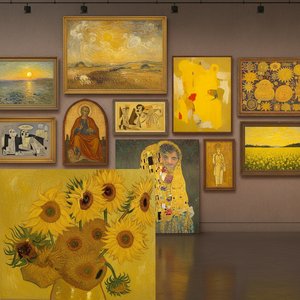
Chromgelb in der Kunstgeschichte: Die 10 berühmtesten Gemälde & ihre Meister
Entdecken Sie die 10 berühmtesten Gemälde, dominiert von der leuchtenden Farbe Chromgelb! Von Van Gogh bis Monet – erfahren Sie Geschichten hinter Meisterwerken & finden Sie Ihre perfekte Kunst-Reproduktion auf TopImpressionists.com.

Echoes of Time: Exploring the Enduring Appeal & Historical Context of Vintage Art Prints
Explore the captivating world of vintage art prints! Discover their history, collecting tips & enduring appeal. Expert insights on chromolithography and building a legacy collection with TopImpressionists.

Giclée Prints: Archival Quality & Aesthetic Nuances for the Discerning Collector
Explore the world of giclée prints with TopImpressionists. Learn about archival quality, aesthetic nuances & investment potential. Expert guidance for discerning art collectors seeking museum-quality reproductions and lasting value.

The Enduring Legacy of Fine Art Prints: Technique, History & Aesthetic Impact
Explore the rich history & techniques of fine art prints. Discover investment potential, assess authenticity, and learn how to preserve your collection with expert guidance. Trusted insights for discerning collectors.
Entdecken Sie Kunstwerke, die nach Themen, Stilen und Merkmalen sortiert sind.


