

Gezeigt: · Inklusive Rahmen:
 Vorschau anzeigen
 Versenden
 Teilen
 Details anzeigen
 Leitfaden

 Herunterladen
 Ähnliche Objekte
 Röntgenaufnahme
 Diashow
 Fragen & Antworten
 Statistiken


€ 240
Handgefertigte Ölreproduktion
Handgemaltes Ölgemälde auf Leinwand in Ihrer Wunschgröße und mit Rahmen, auf Bestellung von unseren Künstlern angefertigt. ( Zum Druck wechseln Zum digitalen Bild wechseln)
Größe
·Standardformat
individuell anpassbar
CM
INCH
Wählen Sie aus unseren vordefinierten Formaten, die den ursprünglichen Proportionen des Kunstwerks entsprechen.
Größen werden geladen...

Breite
Höhe
Geben Sie die Breite und die Höhe an, die Sie für Ihren Rahmen oder Ihre Wand benötigen. Da dieses Werk handgemalt ist, kann der Künstler bei einer anderen Form etwas mehr um das Bild herum malen oder etwas abschneiden – Sie entscheiden. Wir senden Ihnen ein digitales Mockup zur Freigabe, bevor mit dem Malen begonnen wird. Das auf dieser Seite gezeigte Bild stellt nicht das tatsächliche Ergebnis dar – dies tut nur das Mockup.
 Mehr erfahren
Abschließen
·
Weißer Rand €1

verlaufende Kanten €1

Umrandung €1

P118B €10

P118H €10

P118W €10

P438Z €10

P508JH €12

P508YH €12

P805H €10

P805Z €10

P919BZ €10

P919G €10

P919XJ €10

P959ZH €10

P968JZ €12

W106C €8

W218G €10

W218JH €8

W218Y €10

W307PJ €10

W316G €10

W316PJ €8

W316Y €10

W398PJ €8

W4111J €10

W500HY €15

W500JH €15

W692G €12

W849H €8

W940BG €15

W953PJ €8

H24-GOLD €30

H24-SILVER €30

H36-GOLD €45

H36-SILVER €45
Versand in einer Schutzröhre, bereit für die Rahmung durch Ihren Rahmenmacher.
Extras
optionalWas sind die Extras enthalten?
Beispiele für Anpassungsmöglichkeiten: Gesicht durch Kundenfoto ersetzen; Haustier hinzufügen (z. B. Katze durch Hund ersetzen); Versteckte Botschaft im Hintergrund einfügen; Hintergrundlandschaft oder Elemente ändern.
Nach der Bestellung wird das Team von TopImpressionists.com den Kunden per E-Mail kontaktieren, um Anweisungen einzuholen und eine Vorschau des Entwurfs bereitzustellen
Nach der Bestellung wird das Team von TopImpressionists.com den Kunden per E-Mail kontaktieren, um Anweisungen einzuholen und eine Vorschau des Entwurfs bereitzustellen
Weltweiter Versand () in nur 3 bis 4 Wochen statt der üblichen 5 Wochen. (3 November). Keine Kompromisse bei der Qualität.
Schutzlackierung
Beschriftung
Details der gravierten Bronzetafel
This elegant plaque features the artist's name and the title of the artwork, finely engraved for a timeless presentation.
It is made from bronze with a refined, elegant finish. The text is precisely laser-engraved for a sharp and permanent result. Measuring 9x2 cm, the plaque is compact yet easy to read. It's built to be durable and scratch-resistant, offering a professional, museum-quality look. Mounting is simple thanks to the included adhesive backing.
Details zur Acrylglas-Plakette (transparent)
The plaque includes essential engraved details such as the artist's name, the title of the artwork, the date it was created, the type of media used-like oil on canvas or watercolor-a brief description of the piece, and a QR code that links to the complete artwork information.
It is crafted from clear acrylic, offering a sleek, modern appearance. The text is UV-engraved in black to ensure strong visual contrast. With a size of 10x15 cm, it ensures optimal readability. It comes equipped with two metal hooks for secure wall mounting. The plaque is designed to be weather-resistant, making it suitable for various environments, and it includes interactive features that work seamlessly with smartphone scanning.
Details zur schwarzen Acryltafel
This elegant plaque includes engraved information such as the artist's name, the title of the artwork, the date it was created, the type of media used (like oil on canvas or watercolor), a short description of the artwork, and a QR code for quick access to more information.
The plaque itself is made from refined black acrylic with a premium finish. The text is laser-engraved in white for high contrast and readability. Its size is 10x15 cm, designed to be easy to read. It comes with two metal hooks for professional mounting. The design is sleek and fits any interior style. It is also weather-resistant and durable, with built-in digital integration for mobile compatibility.
Die Glasoption ist nur für Größen unter 110 cm verfügbar.
 Die Glasoption ist nur für Größen unter 110 cm verfügbar.
- Kostenloser weltweiter Expressversand
- Hochwertige Leinenleinwand
- Umfassender Versicherungsschutz beim Versand
- Zollgebühren-Rückerstattungsgarantie
- Garantie für exakte Farbtreue
- 100 Tage Rückgaberecht (nur bei Mängeln)
- 100% Geld-zurück-Garantie
- Mengenrabatt verfügbar


Beschreibung des Sammlerstücks
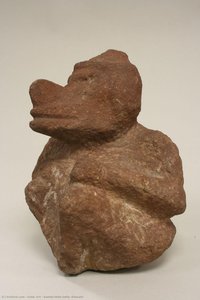
Witness the grandeur of the Aztec Empire with 'Seated Male Deity (Ehecatl)'. This iconic sculpture embodies ancient power, spirituality, and intricate artistry from pre-Columbian Mexico.
Künstlerbiografie
Erkunden Sie die faszinierende Kunst des aztekischen Reiches! Entdecken Sie beeindruckende Skulpturen, lebendige Codizes und symbolische Mosaike – ein Spiegelbild ihrer reichen Kultur und religiösen Überzeugungen. #AztecArt #Mexiko
Über das Gemälde
The Echoes of Stone: Unveiling the Majesty of Ehecatl
Standing before this remarkable sculpture, carved from volcanic stone or terracotta nearly six centuries ago, is akin to stepping back in time – directly into the heart of the Aztec Empire. The “Seated Male Deity (Ehecatl),” a masterpiece of Mexica artistry, transcends mere representation; it’s a potent symbol of power, spirituality, and the intricate cosmology that governed this sophisticated civilization. More than just a portrait of a god, it embodies the very essence of Aztec belief, offering a glimpse into their understanding of the world and their place within it.
The sculpture depicts Ehecatl, a figure deeply intertwined with the rhythms of existence. Often translated as “Wind God,” Ehecatl was far more than just a deity associated with breezes; he represented breath itself – the life force that animated all things. His distinctive features—a duck-like bill, prominent ears, and a serene yet commanding expression—are instantly recognizable hallmarks of Aztec artistic style. The careful detailing, particularly in the hands resting on his knees, speaks to an appreciation for human form and a desire to capture not just likeness but also character.
A Symphony of Form and Texture
The sculpture’s power lies not only in its subject matter but also in the masterful execution of its technique. The artist skillfully employed subtractive carving, patiently removing material from the stone to reveal the figure within. This process is evident in the pronounced texture of the surface – a network of ridges and valleys that speaks to the hands of a skilled artisan and the raw materiality of the medium. The use of earthy tones—ranging from reddish-browns to beiges—creates a sense of age and authenticity, as if the sculpture has weathered centuries of exposure to the elements.
Close examination reveals subtle nuances in the carving: the gentle curve of the torso, the delicate lines defining the facial features, and the carefully rendered folds of the loincloth. These details demonstrate an acute understanding of anatomy and a commitment to capturing both the physical form and the spiritual essence of Ehecatl. The composition is remarkably balanced, with the figure occupying a central position within the frame, drawing the viewer’s eye directly to its serene countenance.
Symbolism Woven into Stone
Beyond its aesthetic qualities, the sculpture is rich in symbolic meaning. The pose itself—seated and contemplative—suggests authority and wisdom. Ehecatl's hands resting on his knees convey a sense of calm control, reflecting the god’s dominion over the winds and breath. The presence of the duck-like bill has been interpreted as a symbol of communication – perhaps representing the ability to speak with the gods or to carry messages between worlds. The sculpture is also believed to be connected to the Aztec calendar system, with certain elements potentially referencing specific dates or cycles.
Furthermore, the sculpture’s creation reflects the Aztecs' deep connection to their environment and their reverence for nature. Volcanic stone was a readily available resource in central Mexico, and its use underscores the importance of natural materials in Aztec art and architecture. The sculpture serves as a tangible reminder of the empire’s reliance on the earth’s bounty and its respect for the forces that shaped their world.
A Legacy Enduring Through Time
Created during the final years of the Aztec Empire, around 1521, this sculpture offers a poignant glimpse into a civilization on the brink of collapse. The Spanish conquest would soon shatter the empire’s political and cultural foundations, but the artistic legacy of the Aztecs—embodied in works like this—continues to resonate today. The “Seated Male Deity (Ehecatl)” stands as a testament to the ingenuity, artistry, and spiritual depth of the Mexica people – a powerful reminder of their enduring influence on Mesoamerican culture.
Fragen & Antworten
Wo kann ich eine digitale Datei von "Seated Male Deity (Ehecatl)" von Azteken erwerben?
"Seated Male Deity (Ehecatl)" ist als hochauflösender digitaler Bild-Download direkt über die Seite Digitales Kunstwerk erhältlich.
Welche emotionale Stimmung prägt den Stil der Aztec Empire-Epoche in „Seated Male Deity (Ehecatl)“?
"Seated Male Deity (Ehecatl)" vermittelt eine Spiritual emotionale Stimmung innerhalb der Aztec Empire-Strömung.
In welche Phase von Aztekens Schaffen lässt sich "Seated Male Deity (Ehecatl)" einordnen?
"Seated Male Deity (Ehecatl)" repräsentiert die Post-Classic Period von Azteken.
Kurzinfos und Kunst-Quiz
Über Azteken

Azteken
1300 - 1521, Mexiko
Künstlerbiografie
Die Echoes der Steine: Eine Erkundung der Kunst und des Erbes des Aztekenreichs
Der Name “Azteken” – abgeleitet vom Nahuatl-Wort *ātl-ce-tlācati–tlān*, was so viel wie „die Menschen vieler Formen“ bedeutet – ruft Bilder einer riesigen, komplexen Zivilisation hervor, die Mesoamerika über Jahrhunderte beherrschte. Mehr als nur Krieger und Eroberer waren die Azteken tiefgründige künstlerische Individuen, die Schönheit in jeden Aspekt ihres Lebens webten – von monumentaler Architektur bis hin zu filigranem Federwerk, von heiligen Ritualen bis hin zu alltäglichen Objekten. Ihre Kunst war nicht bloß dekorativ; sie war eine lebendige Sprache, die religiöse Überzeugungen, politische Macht, historische Erzählungen und soziale Hierarchien innerhalb einer Gesellschaft kommunizierte, die sowohl streng strukturiert als auch bemerkenswert innovativ war.
Geboren im frühen 14. Jahrhundert in Tenochtitlan, dem Herzen des Aztekenreichs, waren die künstlerischen Traditionen der Azteken tief in den Erbes der früheren mesoamerikanischen Zivilisationen verwurzelt. Die Olmeken, mit ihren kolossalen Köpfen und ausgefeilten Kalendersystemen, die Teotihuacanen, bekannt für ihre monumentalen Pyramiden und Stadtplanung, und die Tolteken, Meister des Metallhandwerks und der Skulptur – all diese trugen zum reichen künstlerischen Gewebe bei, das die Azteken erbauten. Doch die Azteken waren nicht einfach nur Nachahmer; sie synthetisierten diese Einflüsse mit ihren eigenen einzigartigen ästhetischen Sensibilitäten und entwickelten einen unverwechselbaren Stil, der durch kräftige Farben, komplizierte geometrische Muster und symbolische Darstellungen gekennzeichnet war.
Eine Palette der Macht: Materialien und Techniken
Aztekische Kunst war bemerkenswert vielfältig und setzte eine erstaunliche Bandbreite an Materialien und Techniken ein. Steinschnitzkunst spielte eine prominente Rolle, wie die monumentalen Skulpturen demonstrierten, die Götter, Herrscher und mythologische Kreaturen darstellten. Der riesige Sonnensstein (Kalenderschatz), der 1946 entdeckt wurde, ist ein Beweis für ihre Meisterschaft in diesem Medium – eine komplexe, mehrschichtige Steinsäule, die calendrische Informationen mit kosmologischen Symbolen verband. Geschickte Handwerker arbeiteten auch mit Holz, Ton, Federn – insbesondere Quetzal-Federn – Jade, Türkis, Obsidian und Gold, was sowohl Reichtum als auch Status widerspiegelte.
Federwerk war vielleicht der auffälligste Aspekt der aztekischen Kunst. Intricat gearbeitete Kopfbedeckungen, Gewänder, Schilde und andere dekorative Gegenstände wurden mit Tausenden sorgfältig angeordneter Federn – einem Prozess, der immense Geschicklichkeit und Geduld erforderte. Diese Objekte waren nicht nur schön; sie dienten auch als mächtige Symbole von Autorität, religiöser Hingabe und sozialem Rang. Die Farben selbst hatten spezifische Bedeutungen: Blau stand für den Himmel, Grün symbolisierte Fruchtbarkeit, Rot bedeutete Kriegführung und Gelb die Sonne.
Darüber hinaus waren aztekische Künstler Meister der Mosaikkunst und schufen beeindruckende dekorative Paneele mit kleinen, präzise geschnittenen Steinstücken. Diese Mosaike schmückten Tempel, Paläste und private Häuser und verliehen der bebauten Umgebung eine zusätzliche visuelle Fülle.
Die Sprache der Symbole: Themen und Motive
Aztekische Kunst ist reich an Symbolik; jedes Bild trägt Schichten von Bedeutung, die von Priestern, Schreiberlingen und Herrschern sorgfältig interpretiert werden mussten. Der zentrale Gott, Huitzilopochtli, der Gott des Krieges und der Sonne, wurde häufig in aufwendigen Kopfbedeckungen dargestellt, verziert mit Federn und Edelsteinen. Quetzalcoatl, der gefiederte Schlangen-Gott, der mit Wissen, Weisheit und Schöpfung verbunden war, spielte einen prominenten Platz in ihrem Pantheon und erschien in zahlreichen künstlerischen Darstellungen.
Das Kalendersystem – ein bemerkenswert ausgefeilter Zusammenschluss aus Sonnen- und Ritualzyklen – war ein weiteres wiederkehrendes Motiv. Bilder von Kalendern, Glyphen und astronomischen Symbolen wurden in Skulpturen, Mosaiken und Kodizes (illustrierte Bücher) eingearbeitet und spiegelten das Verständnis der Azteken für Zeit und Kosmos wider. Darstellungen von Mais, dem Grundnahrungsmittel ihrer Ernährung, symbolisierten Nahrung und Fruchtbarkeit. Tierische Bilder – insbesondere Jaguar, Adler, Schlangen und Kolibris – trugen symbolische Bedeutung im Zusammenhang mit Macht, Mut und Göttlichkeit.
Ein Erbe in Fragmenten: Kunst und historische Bedeutung
Der plötzliche Zusammenbruch des Aztekenreichs durch die spanischen Eroberer im Jahr 1521 führte zu einem verheerenden Verlust für die mesoamerikanische Kultur. Tragischerweise wurden viele ihrer künstlerischen Schätze während der Eroberung zerstört – Tempel wurden niedergerissen, Skulpturen zerlegt und Kodizes verbrannt. Dennoch überleben Fragmente aztekischer Kunst bis heute und bieten wertvolle Einblicke in diese bemerkenswerte Zivilisation.
Bemerkenswerte Beispiele sind der Sonnensstein, eine monumentale Skulptur, die das Wissen der Azteken für Astronomie und Mathematik demonstriert; filigran gearbeitete Federwerk-Köpfe und -Gewänder, die in Museen auf der ganzen Welt erhalten geblieben sind; und überlebende Kodizes – handschriftliche Bücher, die historische Berichte, religiöse Überzeugungen und calendrische Informationen enthalten. Die *Colección Andrés Blaisten* in Mexiko beherbergt eine bedeutende Sammlung lateinamerikanischer Kunst, darunter Beispiele, die die aztekischen künstlerischen Traditionen beleuchten.
Die künstlerische Erbschaft des Aztekenreichs beeinflusst das heutige Kunstschaffen weiterhin und inspiriert zeitgenössische Künstler und Designer gleichermaßen. Ihre innovativen Techniken, symbolische Bilder und ihre tiefe Verbindung zur Natur hallen weiterhin bei Publikum auf der ganzen Welt wider.
Kurzinfos zu Azteken
- Artistic Movement Or Style: Mesoamerikanische Kunst
- Artists Or Movements Influenced By This Artist: ['Moderne Kunst']
- Artists Who Influenced This Artist:
- Olmeca
- Teotihuacan
- Tolteca
- Date Of Birth: 1300 (Tenochtitlan)
- Full Name: Aztec Empire
- Nationality: Mexikanisch
- Notable Artworks:
- Sonen Stein
- Pyramide der Sonne
- Place Of Birth: Tenochtitlan, Mexiko
Entdecken Sie Kunstwerke, die nach Themen, Stilen und Merkmalen sortiert sind.


Azteken
Seated Male Deity (Ehecatl)
() ·
Inklusive Rahmen: · Handgemalt mit Öl auf Leinen
Gesamtbetrag