

Gezeigt: · Inklusive Rahmen:
 Vorschau anzeigen
 Versenden
 Teilen
 Details anzeigen
 Leitfaden

 Herunterladen
 Ähnliche Objekte
 Röntgenaufnahme
 Diashow
 Fragen & Antworten
 Statistiken

€ 240
Handgefertigte Ölreproduktion
Handgemaltes Ölgemälde auf Leinwand in Ihrer Wunschgröße und mit Rahmen, auf Bestellung von unseren Künstlern angefertigt. ( Zum Druck wechseln Zum digitalen Bild wechseln)
Größe
·Standardformat
individuell anpassbar
CM
INCH
Wählen Sie aus unseren vordefinierten Formaten, die den ursprünglichen Proportionen des Kunstwerks entsprechen.
Größen werden geladen...

Breite
Höhe
Geben Sie die Breite und die Höhe an, die Sie für Ihren Rahmen oder Ihre Wand benötigen. Da dieses Werk handgemalt ist, kann der Künstler bei einer anderen Form etwas mehr um das Bild herum malen oder etwas abschneiden – Sie entscheiden. Wir senden Ihnen ein digitales Mockup zur Freigabe, bevor mit dem Malen begonnen wird. Das auf dieser Seite gezeigte Bild stellt nicht das tatsächliche Ergebnis dar – dies tut nur das Mockup.
 Mehr erfahren
Abschließen
·
Weißer Rand €1

verlaufende Kanten €1

Umrandung €1

P118B €10

P118H €10

P118W €10

P438Z €10

P508JH €12

P508YH €12

P805H €10

P805Z €10

P919BZ €10

P919G €10

P919XJ €10

P959ZH €10

P968JZ €12

W106C €8

W218G €10

W218JH €8

W218Y €10

W307PJ €10

W316G €10

W316PJ €8

W316Y €10

W398PJ €8

W4111J €10

W500HY €15

W500JH €15

W692G €12

W849H €8

W940BG €15

W953PJ €8

H24-GOLD €30

H24-SILVER €30

H36-GOLD €45

H36-SILVER €45
Versand in einer Schutzröhre, bereit für die Rahmung durch Ihren Rahmenmacher.
Extras
optionalWas sind die Extras enthalten?
Beispiele für Anpassungsmöglichkeiten: Gesicht durch Kundenfoto ersetzen; Haustier hinzufügen (z. B. Katze durch Hund ersetzen); Versteckte Botschaft im Hintergrund einfügen; Hintergrundlandschaft oder Elemente ändern.
Nach der Bestellung wird das Team von TopImpressionists.com den Kunden per E-Mail kontaktieren, um Anweisungen einzuholen und eine Vorschau des Entwurfs bereitzustellen
Nach der Bestellung wird das Team von TopImpressionists.com den Kunden per E-Mail kontaktieren, um Anweisungen einzuholen und eine Vorschau des Entwurfs bereitzustellen
Weltweiter Versand () in nur 3 bis 4 Wochen statt der üblichen 5 Wochen. (7 November). Keine Kompromisse bei der Qualität.
Schutzlackierung
Beschriftung
Details der gravierten Bronzetafel
This elegant plaque features the artist's name and the title of the artwork, finely engraved for a timeless presentation.
It is made from bronze with a refined, elegant finish. The text is precisely laser-engraved for a sharp and permanent result. Measuring 9x2 cm, the plaque is compact yet easy to read. It's built to be durable and scratch-resistant, offering a professional, museum-quality look. Mounting is simple thanks to the included adhesive backing.
Details zur Acrylglas-Plakette (transparent)
The plaque includes essential engraved details such as the artist's name, the title of the artwork, the date it was created, the type of media used-like oil on canvas or watercolor-a brief description of the piece, and a QR code that links to the complete artwork information.
It is crafted from clear acrylic, offering a sleek, modern appearance. The text is UV-engraved in black to ensure strong visual contrast. With a size of 10x15 cm, it ensures optimal readability. It comes equipped with two metal hooks for secure wall mounting. The plaque is designed to be weather-resistant, making it suitable for various environments, and it includes interactive features that work seamlessly with smartphone scanning.
Details zur schwarzen Acryltafel
This elegant plaque includes engraved information such as the artist's name, the title of the artwork, the date it was created, the type of media used (like oil on canvas or watercolor), a short description of the artwork, and a QR code for quick access to more information.
The plaque itself is made from refined black acrylic with a premium finish. The text is laser-engraved in white for high contrast and readability. Its size is 10x15 cm, designed to be easy to read. It comes with two metal hooks for professional mounting. The design is sleek and fits any interior style. It is also weather-resistant and durable, with built-in digital integration for mobile compatibility.
Die Glasoption ist nur für Größen unter 110 cm verfügbar.
 Die Glasoption ist nur für Größen unter 110 cm verfügbar.
- Kostenloser weltweiter Expressversand
- Hochwertige Leinenleinwand
- Umfassender Versicherungsschutz beim Versand
- Zollgebühren-Rückerstattungsgarantie
- Garantie für exakte Farbtreue
- 100 Tage Rückgaberecht (nur bei Mängeln)
- 100% Geld-zurück-Garantie
- Mengenrabatt verfügbar


Beschreibung des Sammlerstücks
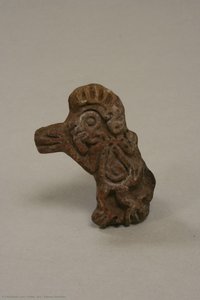
Discover an ancient Aztec monkey stamp – a captivating piece of art reflecting the culture and symbolism of the Mexica Empire. Explore its intricate details & historical significance.
Künstlerbiografie
Erkunden Sie die faszinierende Kunst des aztekischen Reiches! Entdecken Sie beeindruckende Skulpturen, lebendige Codizes und symbolische Mosaike – ein Spiegelbild ihrer reichen Kultur und religiösen Überzeugungen. #AztecArt #Mexiko
Über das Gemälde
A Fragment of the Aztec World: The Ceramic Stamp of a Monkey
Imagine holding a tangible piece of history – a small, unassuming ceramic stamp from the heart of the Aztec Empire. This particular artifact, depicting a stylized monkey in seated repose, isn’t merely decorative; it's a window into the beliefs, rituals, and daily life of one of Mesoamerica’s most fascinating civilizations. Crafted between the 14th and 16th centuries, this piece speaks volumes about the Aztecs’ profound connection to the natural world, their intricate symbolic system, and their remarkable artistic skill.

Form and Function: The Art of the Aztec Stamp
The stamp itself is a testament to the Aztecs’ mastery of ceramic techniques. Made from clay, likely sourced locally, it was meticulously shaped by hand – a process that imbued each piece with a unique character and texture. Notice the deliberate roughness of the surface; this isn't an attempt at polished perfection but rather a celebration of the material itself, reflecting its origins and the hands that formed it. The parallel lines radiating from the monkey’s crown are particularly striking, mimicking the unruly hair of the Mexican spider monkey – a species closely associated with the Aztec pantheon. The compact size of the stamp suggests its intended use: as an adornment for clothing, pottery, or even directly applied to the body during ceremonies and rituals.
Symbolism in Miniature: Monkeys and the Aztec Cosmos
Beyond its functional role, the monkey depicted on this stamp carries significant symbolic weight. In Aztec cosmology, monkeys – particularly the Mexican spider monkey – were deeply intertwined with concepts of music, dance, and trickery. They were often linked to Ehecatl, the wind deity, embodying playful energy and a connection to the spirit world. The monkey’s seated posture, with its hands clasped in a gesture of contemplation or perhaps offering, further reinforces this symbolic resonance. The circular belly is also noteworthy – a stylized representation that adds an element of whimsy and suggests abundance and fertility.
A Legacy Etched in Clay: Context and Connection
This stamp isn’t just a beautiful object; it's a vital link to the past. The Aztecs, who flourished from roughly 1300 to 1521 CE, were renowned for their sophisticated art and complex social structure. Their civilization, born in Tenochtitlan, left behind a rich legacy of monumental architecture, intricate codices (illustrated books), and deeply symbolic religious practices. Studying artifacts like this stamp allows us to appreciate the depth and nuance of Aztec culture – a society that seamlessly blended artistic expression with spiritual belief and political power. Consider it not just an image, but a whisper from a vanished world.
Further Research: For more information on the Aztecs, explore resources like Wikipedia (https://en.wikipedia.org/wiki/Aztec_Empire) and museum collections such as The Metropolitan Museum of Art (https://www.metmuseum.org/art/collection/search/307744).
Fragen & Antworten
Welches Gefühl wird mit "Stamp, Monkey" assoziiert?
„Stamp, Monkey“ vermittelt ein Mysterious Gefühl. Der emotionale Ton beschreibt den Eindruck, den das Werk hinterlässt.
Gibt es Werke, die "Stamp, Monkey" ähneln?
Ähnliche Kunstwerke zu "Stamp, Monkey" von Azteken finden Sie auf der Seite Ähnliche Werke des Kunstwerks.
Welche Leuchtkraft weist "Stamp, Monkey" von Azteken auf?
Die Farben von "Stamp, Monkey" weisen eine Gentle Luminance Luminanz auf.
Kurzinfos und Kunst-Quiz
Über Azteken

Azteken
1300 - 1521, Mexiko
Künstlerbiografie
Die Echoes der Steine: Eine Erkundung der Kunst und des Erbes des Aztekenreichs
Der Name “Azteken” – abgeleitet vom Nahuatl-Wort *ātl-ce-tlācati–tlān*, was so viel wie „die Menschen vieler Formen“ bedeutet – ruft Bilder einer riesigen, komplexen Zivilisation hervor, die Mesoamerika über Jahrhunderte beherrschte. Mehr als nur Krieger und Eroberer waren die Azteken tiefgründige künstlerische Individuen, die Schönheit in jeden Aspekt ihres Lebens webten – von monumentaler Architektur bis hin zu filigranem Federwerk, von heiligen Ritualen bis hin zu alltäglichen Objekten. Ihre Kunst war nicht bloß dekorativ; sie war eine lebendige Sprache, die religiöse Überzeugungen, politische Macht, historische Erzählungen und soziale Hierarchien innerhalb einer Gesellschaft kommunizierte, die sowohl streng strukturiert als auch bemerkenswert innovativ war.
Geboren im frühen 14. Jahrhundert in Tenochtitlan, dem Herzen des Aztekenreichs, waren die künstlerischen Traditionen der Azteken tief in den Erbes der früheren mesoamerikanischen Zivilisationen verwurzelt. Die Olmeken, mit ihren kolossalen Köpfen und ausgefeilten Kalendersystemen, die Teotihuacanen, bekannt für ihre monumentalen Pyramiden und Stadtplanung, und die Tolteken, Meister des Metallhandwerks und der Skulptur – all diese trugen zum reichen künstlerischen Gewebe bei, das die Azteken erbauten. Doch die Azteken waren nicht einfach nur Nachahmer; sie synthetisierten diese Einflüsse mit ihren eigenen einzigartigen ästhetischen Sensibilitäten und entwickelten einen unverwechselbaren Stil, der durch kräftige Farben, komplizierte geometrische Muster und symbolische Darstellungen gekennzeichnet war.
Eine Palette der Macht: Materialien und Techniken
Aztekische Kunst war bemerkenswert vielfältig und setzte eine erstaunliche Bandbreite an Materialien und Techniken ein. Steinschnitzkunst spielte eine prominente Rolle, wie die monumentalen Skulpturen demonstrierten, die Götter, Herrscher und mythologische Kreaturen darstellten. Der riesige Sonnensstein (Kalenderschatz), der 1946 entdeckt wurde, ist ein Beweis für ihre Meisterschaft in diesem Medium – eine komplexe, mehrschichtige Steinsäule, die calendrische Informationen mit kosmologischen Symbolen verband. Geschickte Handwerker arbeiteten auch mit Holz, Ton, Federn – insbesondere Quetzal-Federn – Jade, Türkis, Obsidian und Gold, was sowohl Reichtum als auch Status widerspiegelte.
Federwerk war vielleicht der auffälligste Aspekt der aztekischen Kunst. Intricat gearbeitete Kopfbedeckungen, Gewänder, Schilde und andere dekorative Gegenstände wurden mit Tausenden sorgfältig angeordneter Federn – einem Prozess, der immense Geschicklichkeit und Geduld erforderte. Diese Objekte waren nicht nur schön; sie dienten auch als mächtige Symbole von Autorität, religiöser Hingabe und sozialem Rang. Die Farben selbst hatten spezifische Bedeutungen: Blau stand für den Himmel, Grün symbolisierte Fruchtbarkeit, Rot bedeutete Kriegführung und Gelb die Sonne.
Darüber hinaus waren aztekische Künstler Meister der Mosaikkunst und schufen beeindruckende dekorative Paneele mit kleinen, präzise geschnittenen Steinstücken. Diese Mosaike schmückten Tempel, Paläste und private Häuser und verliehen der bebauten Umgebung eine zusätzliche visuelle Fülle.
Die Sprache der Symbole: Themen und Motive
Aztekische Kunst ist reich an Symbolik; jedes Bild trägt Schichten von Bedeutung, die von Priestern, Schreiberlingen und Herrschern sorgfältig interpretiert werden mussten. Der zentrale Gott, Huitzilopochtli, der Gott des Krieges und der Sonne, wurde häufig in aufwendigen Kopfbedeckungen dargestellt, verziert mit Federn und Edelsteinen. Quetzalcoatl, der gefiederte Schlangen-Gott, der mit Wissen, Weisheit und Schöpfung verbunden war, spielte einen prominenten Platz in ihrem Pantheon und erschien in zahlreichen künstlerischen Darstellungen.
Das Kalendersystem – ein bemerkenswert ausgefeilter Zusammenschluss aus Sonnen- und Ritualzyklen – war ein weiteres wiederkehrendes Motiv. Bilder von Kalendern, Glyphen und astronomischen Symbolen wurden in Skulpturen, Mosaiken und Kodizes (illustrierte Bücher) eingearbeitet und spiegelten das Verständnis der Azteken für Zeit und Kosmos wider. Darstellungen von Mais, dem Grundnahrungsmittel ihrer Ernährung, symbolisierten Nahrung und Fruchtbarkeit. Tierische Bilder – insbesondere Jaguar, Adler, Schlangen und Kolibris – trugen symbolische Bedeutung im Zusammenhang mit Macht, Mut und Göttlichkeit.
Ein Erbe in Fragmenten: Kunst und historische Bedeutung
Der plötzliche Zusammenbruch des Aztekenreichs durch die spanischen Eroberer im Jahr 1521 führte zu einem verheerenden Verlust für die mesoamerikanische Kultur. Tragischerweise wurden viele ihrer künstlerischen Schätze während der Eroberung zerstört – Tempel wurden niedergerissen, Skulpturen zerlegt und Kodizes verbrannt. Dennoch überleben Fragmente aztekischer Kunst bis heute und bieten wertvolle Einblicke in diese bemerkenswerte Zivilisation.
Bemerkenswerte Beispiele sind der Sonnensstein, eine monumentale Skulptur, die das Wissen der Azteken für Astronomie und Mathematik demonstriert; filigran gearbeitete Federwerk-Köpfe und -Gewänder, die in Museen auf der ganzen Welt erhalten geblieben sind; und überlebende Kodizes – handschriftliche Bücher, die historische Berichte, religiöse Überzeugungen und calendrische Informationen enthalten. Die *Colección Andrés Blaisten* in Mexiko beherbergt eine bedeutende Sammlung lateinamerikanischer Kunst, darunter Beispiele, die die aztekischen künstlerischen Traditionen beleuchten.
Die künstlerische Erbschaft des Aztekenreichs beeinflusst das heutige Kunstschaffen weiterhin und inspiriert zeitgenössische Künstler und Designer gleichermaßen. Ihre innovativen Techniken, symbolische Bilder und ihre tiefe Verbindung zur Natur hallen weiterhin bei Publikum auf der ganzen Welt wider.
Kurzinfos zu Azteken
- Artistic Movement Or Style: Mesoamerikanische Kunst
- Artists Or Movements Influenced By This Artist: ['Moderne Kunst']
- Artists Who Influenced This Artist:
- Olmeca
- Teotihuacan
- Tolteca
- Date Of Birth: 1300 (Tenochtitlan)
- Full Name: Aztec Empire
- Nationality: Mexikanisch
- Notable Artworks:
- Sonen Stein
- Pyramide der Sonne
- Place Of Birth: Tenochtitlan, Mexiko
Entdecken Sie Kunstwerke, die nach Themen, Stilen und Merkmalen sortiert sind.


Azteken
Stamp, Monkey
() ·
Inklusive Rahmen: · Handgemalt mit Öl auf Leinen
Gesamtbetrag