

 Versenden
 Teilen
 Details anzeigen
 Leitfaden

 Herunterladen
 Ähnliche Objekte
 Diashow
 Fragen & Antworten
 Statistiken
Symphony - diptych

- 64.0 x 62.0 cm


A mesmerizing blue ceramic diptych by Portuguese master Cecília de Sousa featuring rhythmic geometric patterns and fluid lines that invite you to experience the profound harmony of this 1989 modernist masterpiece.
 Weiterlesen
Entdecken Sie die Keramikkunst von Cecilia de Souza – einer portugiesischen Meisterin des 20. Jahrhunderts. Erkunden Sie ihre einzigartigen, evokativen Werke und Beiträge zur Keramiktechnologie.
Die auf dieser Seite dargestellten Kunstwerke sind urheberrechtlich geschützt, was bedeutet, dass wir keine identische Reproduktion rechtmäßig erstellen oder verkaufen dürfen. Dieser Schutz wird durch internationale Abkommen wie die Berner Übereinkunft und durch nationale Gesetze, einschließlich derer, die von den US-Urheberrecht – Titel 17.
Diese Methode entspricht vollumfänglich den Urheberrechtsbestimmungen, da sie keine Kopie oder Vervielfältigung des geschützten Kunstwerks darstellt. Stattdessen handelt es sich um eine kreative Neuinterpretation – ein neues Gemälde, das vom Original inspiriert, aber nicht identisch mit ihm ist.
Giclée / Kunstdruck
Giclée- oder Leinwanddruck in Museumsqualität mit schneller Produktion und flexiblen Veredelungsoptionen. ( Handgemalte Reproduktion bestellen Zum digitalen Bild wechseln)




































Standardformat
individuell anpassbar
CM
INCH
Wählen Sie aus unseren vordefinierten Formaten, die den ursprünglichen Proportionen des Kunstwerks entsprechen.
Loading sizes...

Breite
Höhe
Geben Sie die benötigte Breite und Höhe an, damit der Druck perfekt in Ihren Rahmen oder an Ihre Wand passt. Ein Druck kann nur beschnitten, aber niemals größer als das Originalbild angefertigt werden; daher verliert ein Format mit anderen Proportionen einen Teil des Bildes. Wir senden Ihnen ein digitales Mockup zur Freigabe, bevor wir den Druck ausführen. Das auf dieser Seite gezeigte Bild zeigt nicht den tatsächlichen Beschnitt – dies ist nur im Mockup ersichtlich.
Weltweiter Versand () innerhalb von 2 Wochen statt der üblichen 4/5 Wochen. (3 November)

Kostenloser weltweiter Expressversand

Hochwertige Leinenleinwand

Umfassender Versicherungsschutz beim Versand

Zollgebühren-Rückerstattungsgarantie

Garantie für exakte Farbtreue

100 Tage Rückgaberecht (nur bei Mängeln)

100% Geld-zurück-Garantie

Mengenrabatt verfügbar
 Die Glasoption ist nur für Größen unter 110 cm verfügbar.

Symphony - diptych
Giclée / Kunstdruck
Format der Reproduktion
-


Endpreis
€ 62
A Dance of Form and Fragment: The Soul of Symphony
In the quiet dialogue between structure and dissolution, Symphony - diptych emerges as a profound meditation on balance. Created in 1989 by the esteemed Portuguese master Cecília de Sousa, this work transcends its medium to offer a visual rhythm that resonates with the very essence of musical composition. The piece is not merely a painting but a dualistic exploration of space, where the left panel presents a disciplined arrangement of four squares anchored above a bar, suggesting an architectural or industrial order. As the eye travels across the divide to the right half, this rigid geometry begins to dematerialize, surrendering its solid form to a series of quick, parallel lines that evoke a sense of motion and ephemeral grace.
The emotional impact of the work lies in this delicate tension between the known and the unknown. There is a palpable sense of movement, as if the viewer is witnessing a moment of transformation where matter turns into spirit. For the collector or interior designer, this diptych offers a sophisticated focal point that brings a contemplative depth to any space. It invites the observer to linger on the interplay of blue tones and the rhythmic patterns of circles, creating an atmosphere of serene complexity that can anchor a modern gallery wall or provide a soulful counterpoint to minimalist decor.
The Alchemy of Clay and Pigment
To understand the visual language of Symphony, one must look toward the artist's deep-rooted connection to the earth. Cecília de Sousa’s mastery was forged in the heat of the kiln and the tactile reality of ceramic technology. Having worked intimately with industrial equipment at the legendary Fábrica Viúca Lamego, she brought a unique, structural sensibility to her two-dimensional works. This piece serves as a brilliant translation of ceramic principles onto canvas, utilizing the judicious application of oxides and pigments to achieve a depth that feels almost sculptural.
The technique employed here is a masterclass in controlled abstraction. The deep, evocative blues create an oceanic sense of depth, while the black borders provide a sharp, definitive frame that contains the swirling energy within. The use of circular motifs adds a layer of intricate texture, breaking the linear momentum with soft, rhythmic interruptions. This interplay of heavy, grounded elements and light, sweeping strokes mirrors the artist's lifelong pursuit: finding the poetic potential within the industrial and the permanent within the transient.
A Legacy of Modernist Harmony
Born in Lisbon in 1937, de Sousa was a central figure in the post-war modernist movement in Portugal. Her education under masters like Manuel Cargaleiro instilled in her a respect for the transformative power of materials. In Symphony - diptych, we see the culmination of decades of experimentation with form and surface. The work stands as a testament to a period when Portuguese art was finding its unique voice—one that blended traditional craftsmanship with the avant-garde spirit of abstraction.
For those seeking to acquire a high-quality reproduction of this masterpiece, it represents an opportunity to possess a fragment of ceramic history reimagined through fine art. Whether placed in a contemporary residence or a professional studio, the diptych acts as a bridge between the tactile world of clay and the ethereal world of pure thought, making it an enduring choice for those who value art that speaks to both the intellect and the heart.
Fragen & Antworten
Wie spiegeln sich Stilrichtung und Epoche in "Symphony - diptych" von Cecília De Sousa wider?
In "Symphony - diptych" von Cecília De Sousa trifft die Contemporary Art-Strömung auf die Ära der Moderne.
Welche Farbpalette wird in "Symphony - diptych" von Cecília De Sousa verwendet?
Die Farben von "Symphony - diptych" bilden eine Dark-Palette. Diese Klassifizierung beschreibt die dominierenden Farbfamilien.
Wie sehen die Reproduktionsrechte für „Symphony - diptych“ im Nationales Azulejo-Museum aus?
Das Original "Symphony - diptych" befindet sich im Nationales Azulejo-Museum; das Werk ist noch urheberrechtlich geschützt.
Künstlerbiografie
Ein Vermächtnis aus Ton: Die Welt der Keramik von Cecília de Sousa
Cecília de Sousa, geboren 1937 in Lissabon, Portugal, gilt als eine Schlüsselfigur in der Landschaft der portugiesischen Keramik des 20. Jahrhunderts. Sie ist weit mehr als nur eine Ausübende eines alten Handwerks; sie ist eine Künstlerin, die deren Entwicklung maßgeblich geprägt hat, indem sie Grenzen überschritt und dem Ton eine einzigartige Ausdruckskraft verlieh. Ihre Reise begann an der António Arroio Schule in Lissabon, wo sie unter der Anleitung von Manuel Cargaleiro – einem bedeutenden Einfluss in ihrer frühen Entwicklung – zum ersten Mal das transformative Potenzial keramischer Materialien entdeckte. Diese grundlegende Ausbildung wurde durch Studien neben Lino António weiter bereichert und legte den Grundstein für eine Karriere, die der Erforschung der Tiefen dieses Mediums gewidmet war.Frühe Einflüsse und künstlerische Entfaltung
Die Nachkriegszeit in Portugal war von einem aufkeimenden Interesse am Modernismus geprägt, und de Sousa fand sich im Herzen dieser kreativen Bewegung wieder. Ihre frühen Arbeiten waren tief mit der Architekturlandschaft Lissabons verbunden, wobei sie mit verschiedenen Architekten an Projekten zusammenarbeitete, die keramische Elemente in Gebäudedesigns integriert. Diese frühe Erfahrung vermittelte ihr das Verständnis, dass Keramik nicht bloß dekorative Objekte sind, sondern integrale Bestandteile größerer räumlicher Konzepte. Doch de Sousas künstlerische Vision transzendierte schnell rein funktionale Anwendungen. Sie begann eine beständige Erforschung des Materials selbst – seiner Texturen, seiner Farben und seiner innewohnenden Plastizität. Besonders prägend war ihre Zeit in der Keramikfabrik Viúva Lamego, die ihr ein tiefes Wissen über die Keramiktechnologie vermittelte und eine Serie von Werken inspirierte, die sich direkt mit den beobachteten industriellen Prozessen auseinandersetzen. Diese Periode markierte den Übergang zu einer persönlicheren künstlerischen Sprache, die durch subtile Nuancen und evokative Formen gekennzeichnet war.Die Sprache von Form und Textur
De Sousas Werk zeichnet sich durch eine bemerkenswerte Sensibilität für das Material aus. Sie erzwingt ihren Willen nicht gegenüber dem Ton, sondern arbeitet vielmehr mit ihm, indem sie dessen natürliche Eigenschaften das Endergebnis bestimmen lässt. Ihre Stücke nutzen oft eine zurückhaltende Palette und bevorzugen Erdtöne sowie gedämpfte Farben, die Textur und Form über ein lebhaftes Spektakel stellen. Diese bewusste Entscheidung spiegelt einen tiefen Respekt vor den inhärenten Qualitäten der Keramik wider – ihrer Fähigkeit, Licht einzufangen, ihrer taktilen Reichhaltigkeit und ihrer beständigen Verbindung zur Erde. Während ihre frühen Arbeiten eine klare Auseinandersetzung mit abstrakten Formen zeigen, deuten de Sousas spätere Schöpfungen oft auf Figuration hin, wobei sie menschliche Präsenz suggerieren oder organische, in der Natur gefundene Formen heraufbeschwören. Ihre Zeichnungen, wie etwa das Werk „Unbenannt“, das einen intimen Austausch zwischen den Generationen darstellt, offenbaren ein scharfes Beobachtungsgabe und ein Talent, emotionale Tiefe durch minimalistische Linien einzufangen. Eine weitere Zeichnung, ebenfalls mit „Unbenannt“ betitelt, zeigt maskierte Figuren in einer klaustrophobischen Umgebung und deutet die psychologischen Komplexitäten an, die ihrem Werk zugrunde liegen.Anerkennung und bleibende Wirkung
Im Laufe ihrer Karriere war Cecília de Sousa eine beständige Präsenz in nationalen und internationalen Ausstellungen und Biennalen. Diese Plattformen dienten nicht nur der Präsentation ihrer künstlerischen Errungenschaften, sondern ermöglichten auch wertvolle Begegnungen mit anderen Künstlern und Praktikern, was ihre Perspektive erweiterte und ihren kreativen Prozess bereicherte. Ihr Beitrag reicht über das Reich einzelner Kunstwerke hinaus; sie wird für ihr Engagement bei der Weiterentwicklung der Keramiktechnologie und die Förderung eines tieferen Verständnisses dieser Kunstform anerkannt. Heute sind de Sousas Arbeiten in zahlreichen Sammlungen und Institutionen sowohl in Portugal als auch im Ausland vertreten, was ihre Position als eine der bedeutendsten Keramikkünstlerinnen des 20. Jahrhunderts festigt. Ihr Vermächtnis liegt nicht nur in der Schönheit und Originalität ihrer Kreationen, sondern auch in ihrem unerschütterlichen Einsatz für die Erforschung der grenzenlosen Möglichkeiten des Tons – ein Zeugnis für die dauerhafte Kraft künstlerischer Vision und technischer Meisterschaft. Ihr Werk inspiriert weiterhin eine neue Generation von Keramikern und stellt sicher, dass ihr Einfluss noch über Jahre hinweg spürbar sein wird.Ein fortwährender Dialog mit dem Ton
Die Kunst von Cecília de Sousa besteht nicht einfach darin, Objekte zu erschaffen; es geht darum, einen Dialog zu etablieren – ein Gespräch zwischen der Künstlerin, dem Material und dem Betrachter. Ihre Stücke laden zur Kontemplation ein und regen uns dazu an, über die innewohnende Schönheit des Unvollkommenen, die beständige Kraft der Tradition und das transformative Potenzial menschlicher Kreativität nachzudenken. Während sie ihre künstlerische Reise fortsetzt, bleibt de Sousa eine vitale Kraft in der Welt der Keramik, die Grenzen verschiebt und konventionelle Vorstellungen von Form und Ausdruck herausfordert.
Cecília De Sousa
1937 - , Portugal
Kurzinfos
- Artistic Movement Or Style: Keramikkunst
- Date Of Birth: 1937
- Full Name: Cecília de Souza
- Nationality: Portugiesisch
- Notable Artworks: ['Unbetitelt']
- Place Of Birth: Lissabon, Portugal
Ähnliche Artikel

Geometrische Abstraktion: Die 10 Meisterwerke, die Kunstgeschichte prägten | TopImpressionists.com
Entdecken Sie die 10 Meisterwerke der geometrischen Abstraktion! Von Kandinsky bis Mondrian – erleben Sie die Geschichte, Farben & Formen dieser revolutionären Kunstrichtung. Hochwertige Kunstreproduktionen auf TopImpressionists.com

Die 25 besten Kunstwerke von Fernand Léger: Meister des Maschinenzeitalters
Entdecken Sie die 25 besten Werke von Fernand Léger und den Tubismus. Erleben Sie Meisterwerke auf TopImpressionists.com.

Die Alchemie des Tons: Ein Leitfaden für den Sammler hochwertiger Keramikkunst
Erfahren Sie alles über die Chemie und Geschichte wertvoller Keramik. Vertiefen Sie jetzt Ihr Expertenwissen als Sammler.
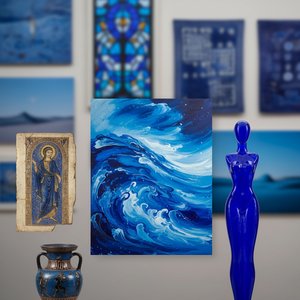
The Allure of Azure: Exploring the Symbolic & Aesthetic Depths of Blue in Art History
Explore the rich history of blue in art! Discover its symbolism, from ancient pigments to modern masterpieces by Kandinsky & Seurat. Uncover the psychological impact and cultural meanings behind this captivating hue.

Die Top 10 Gemälde in Schattierungen von 'Slate Blue': Kunst für Ihr Zuhause
Entdecken Sie die Top 10 Gemälde in faszinierenden 'Slate Blue' Tönen! Von Monet bis Manet – erleben Sie Kunstgeschichte und lassen Sie sich von Meisterwerken inspirieren. Hochwertige Kunstdrucke auf