Vorschau anzeigen
 Versenden
 Teilen
 Details anzeigen
 Leitfaden

 Herunterladen
 Ähnliche Objekte
 Röntgenaufnahme
 Diashow
 Fragen & Antworten
 Statistiken
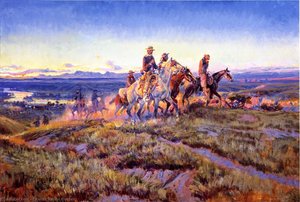
The Picture Robe

- 37.0 x 27.0 cm


Explore 'The Picture Robe' by Charles Marion Russell (1899). A stunning pen & ink Native American artwork showcasing intricate beadwork & cultural detail. Admire realism & historical significance.
 Weiterlesen
Erleben Sie den Wilden Westen mit Charles Marion Russell (1864-1926)! Entdecken Sie seine ikonischen Gemälde von Cowboys, Native Americans & atemberaubenden Landschaften – ein Meister des Western-Stils.
Giclée / Kunstdruck
Giclée- oder Leinwanddruck in Museumsqualität mit schneller Produktion und flexiblen Veredelungsoptionen. ( Handgemalte Reproduktion bestellen Zum digitalen Bild wechseln)




P118B €10

P118H €10

P118W €10

P438Z €10

P508JH €12

P508YH €12

P805H €10

P805Z €10

P919BZ €10

P919G €10

P919XJ €10

P959ZH €10

P968JZ €12

W106C €8

W218G €10

W218JH €8

W218Y €10

W307PJ €10

W316G €10

W316PJ €8

W316Y €10

W398PJ €8

W4111J €10

W500HY €15

W500JH €15

W692G €12

W849H €8

W940BG €15

W953PJ €8




Standardformat
individuell anpassbar
CM
INCH
Wählen Sie aus unseren vordefinierten Formaten, die den ursprünglichen Proportionen des Kunstwerks entsprechen.
Loading sizes...

Breite
Höhe
Geben Sie die benötigte Breite und Höhe an, damit der Druck perfekt in Ihren Rahmen oder an Ihre Wand passt. Ein Druck kann nur beschnitten, aber niemals größer als das Originalbild angefertigt werden; daher verliert ein Format mit anderen Proportionen einen Teil des Bildes. Wir senden Ihnen ein digitales Mockup zur Freigabe, bevor wir den Druck ausführen. Das auf dieser Seite gezeigte Bild zeigt nicht den tatsächlichen Beschnitt – dies ist nur im Mockup ersichtlich.
Weltweiter Versand () innerhalb von 2 Wochen statt der üblichen 4/5 Wochen. (4 November)

Kostenloser weltweiter Expressversand

Hochwertige Leinenleinwand

Umfassender Versicherungsschutz beim Versand

Zollgebühren-Rückerstattungsgarantie

Garantie für exakte Farbtreue

100 Tage Rückgaberecht (nur bei Mängeln)

100% Geld-zurück-Garantie

Mengenrabatt verfügbar
 Die Glasoption ist nur für Größen unter 110 cm verfügbar.

The Picture Robe
Giclée / Kunstdruck
Format der Reproduktion
-


Endpreis
€ 62
A Portrait of Craft and Culture: Charles Marion Russell’s “The Picture Robe”
Charles Marion Russell's "The Picture Robe," painted in 1899, isn’t merely a depiction of two Native American figures engaged in beadwork; it’s a meticulously rendered snapshot of a vanishing world – a poignant testament to the artistry and traditions of the Plains tribes during a rapidly changing era. The artwork immediately draws the eye with its stark monochrome palette, dominated by shades of gray and black, achieved through the masterful application of pen and ink. This deliberate choice lends an air of solemnity and gravitas, mirroring the quiet dignity of the subjects themselves. Russell’s technique is characterized by an almost obsessive attention to detail; every bead, every stitch, every fold in the clothing is rendered with painstaking precision, a testament to his deep respect for the craftspeople he portrays.
The composition itself is deceptively simple yet profoundly effective. The two figures, positioned within what appears to be a dimly lit interior space – perhaps a tent or dwelling – are framed by intricate patterns and textures that dominate the canvas. Russell’s use of hatching and cross-hatching creates an incredible sense of depth and volume, giving the impression that one could almost reach out and touch the rough wool of their garments or feel the cool smoothness of the beads. The flattened perspective, prioritizing clarity and detail over strict three-dimensional representation, serves to heighten the viewer’s engagement with the subject matter – forcing us to truly *see* the intricate work being performed.
The Cowboy Artist and His Native American Subjects
Understanding “The Picture Robe” requires acknowledging the unique position of Charles Marion Russell within the history of American art. Born in St. Louis in 1864, Russell’s early life was far removed from the rugged landscapes he would later immortalize. He spent his youth as a working cowboy in Montana's Judith Basin, an experience that profoundly shaped his artistic vision and instilled in him a deep appreciation for the West’s history and culture. This immersion wasn’t simply observational; Russell actively sought to understand the lives of the people who inhabited this land – particularly the Native American tribes. His fascination with these cultures led him to spend considerable time among the Blood Indians, absorbing their customs, beliefs, and artistic practices.
Russell's relationship with Native Americans was complex and evolving. While he initially depicted them through a romanticized lens, influenced by prevailing stereotypes of the era, he later became a vocal advocate for their rights and a staunch defender of their traditions. “The Picture Robe” reflects this shift in perspective – it’s not simply a portrait; it's an attempt to document and celebrate a vanishing way of life. The meticulous detail with which Russell renders the beadwork and quillwork speaks volumes about his respect for these ancient crafts, suggesting a desire to preserve them before they were lost to time.
Symbolism and Historical Context
The title itself, “The Picture Robe,” hints at the artwork’s deeper significance. Historically, robes – often adorned with intricate beadwork and quillwork – held immense cultural importance for Native American tribes, serving as symbols of status, identity, and spiritual connection. They were not merely garments; they were works of art in their own right, imbued with layers of meaning and tradition. Russell’s choice to focus on this particular robe underscores the profound value he placed on these artistic practices.
Painted in 1899, “The Picture Robe” captures a specific moment in American history – a period of rapid westward expansion and increasing conflict between settlers and Native Americans. The artwork serves as a poignant reminder of the cultural exchange that occurred during this time, but also highlights the tragic loss of indigenous traditions and ways of life. Russell’s work, therefore, transcends its aesthetic qualities; it offers a valuable glimpse into a complex and often overlooked chapter in American history.
A Legacy Preserved: Reproduction and Appreciation
Today, “The Picture Robe” stands as a testament to Charles Marion Russell's artistic skill and his enduring fascination with the American West. High-quality reproductions of this iconic artwork offer a remarkable opportunity to experience its beauty and significance firsthand. Whether displayed in a private residence or a public space, this piece invites contemplation on themes of cultural heritage, craftsmanship, and the ever-changing landscape of America.
Fragen & Antworten
Sind die Farben in "The Picture Robe" von Charles Marion Russell eher gesättigt oder gedämpft?
"The Picture Robe" von Charles Marion Russell zeichnet sich durch eine Gedämpft Sättigung aus.
Unter welchen Pseudonymen oder Alternativnamen ist Charles Marion Russell bekannt?
Charles Marion Russell ist auch unter dem Namen C.M. Russell, Charlie Russell, Kid Russell, Charles M. Russell bekannt.
Gibt es ein Factsheet zu "The Picture Robe" von Charles Marion Russell für Studierende?
Die Leitfaden-Seite von "The Picture Robe" von Charles Marion Russell bietet ein druckbares, zweiseitiges Infoblatt: das Kunstwerk mit seiner Identifikationstabelle, eine zeitliche Einordnung in die Lebensspanne des Künstlers, weitere Werke des Künstlers, die gemessene Farbpalette sowie kopierfertige Zitate in vier verschiedenen Stilen.
Künstlerbiografie
Frühes Leben und Inspiration
Charles Marion Russell, ein renommierter amerikanischer Künstler, hat mit seinen fesselnden Darstellungen des amerikanischen Westens die Kunstwelt nachhaltig geprägt. Geboren am 19. März 1864 in St. Louis, Missouri, war Russells Leben ein Beweis für seine Leidenschaft für Kunst und den Wilden Westen.Künstlerische Karriere und bemerkenswerte Werke
Russells künstlerische Karriere umfasste verschiedene Medien, darunter Malerei und Bronzeskulptur. Seine Arbeiten zeichnen sich durch lebendige Darstellungen von Cowboys, Ureinwohnern (Native Americans) und Landschaften aus, die im Westen der Vereinigten Staaten und in Alberta, Kanada, angesiedelt sind. Zu seinen bemerkenswertesten Werken gehören:- A Bad Hoss (1904) – Ein Paradebeispiel für Russells Fähigkeit, den Geist des amerikanischen Westens einzufangen. (siehe ähnliche Werke bei TopImpressionists)
- Battle of Belly River (1905) – Dieses Gemälde zeigt Russells Geschicklichkeit bei der Darstellung dramatischer Szenen mit Präzision und Detailtreue. (entdecken Sie mehr westliche Kunst bei TopImpressionists)
- Lewis and Clark Meeting Indians at Ross' Hole (1916) – Ein bemerkenswertes Wandgemälde, das in den Hauskammern des Montana State Capitol in Helena hängt und Russells historischen Erzählstil demonstriert. (entdecken Sie mehr amerikanische Kunst bei TopImpressionists)
Entwicklung und Einflüsse
Russell begann seine künstlerische Laufbahn mit dem Studium der Kunst in St. Louis, brach aber die formale Ausbildung ab, um nach Montana zu ziehen, wo er sich vollständig dem Wilden Westen widmete. Er verbrachte Jahre damit, das Leben der Cowboys, Trapper und Ureinwohner zu beobachten und zu studieren, was seine Kunst maßgeblich beeinflusste. Seine frühen Werke waren oft romantische Darstellungen des Westens, die im Laufe seiner Karriere realistischer und detailgetreuer wurden. Er wurde von Künstlern wie Frederic Remington beeinflusst, entwickelte aber seinen eigenen unverwechselbaren Stil, der sich durch eine akribische Beobachtungsgabe und einen starken Sinn für Humor auszeichnete.Vermächtnis und Sammlungen
Russells Vermächtnis wird in verschiedenen Sammlungen bewahrt:- Das C. M. Russell Museum Complex in Great Falls, Montana, beherbergt über 2.000 Russell-Kunstwerke, persönliche Gegenstände und Artefakte.
- Die Montana Historical Society in Helena, Montana, beherbergt eine bedeutende Sammlung von Russells Werken.
- Das Buffalo Bill Center of the West in Cody, Wyoming, zeigt Russells Kunst und den amerikanischen Westen.
Schlussfolgerung
Charles Marion Russells künstlerisches Vermächtnis fesselt weiterhin das Publikum mit seiner authentischen Darstellung des amerikanischen Westens. Durch seine Werke erleben wir die Essenz einer vergangenen Ära, die für immer in der Welt der Kunst bewahrt ist. Entdecken Sie mehr von Russells Kunst und anderen westlichen Meisterwerken bei TopImpressionists.
Charles Marion Russell
1864 - 1926 , Vereinigte Staaten von Amerika
Kurzinfos
- Bemerkenswerte Werke:
- A Bad Hoss
- Battle of Belly River
- Lewis and Clark Meeting Indians
- Geburtsdatum: 19. März 1864
- Geburtsort: St. Louis, USA
- Künstlerischer Stil: Westernkunst, Realismus
- Nationalität: Amerikanisch
- Sterbedatum: 1926
- Vollständiger Name: Charles Marion Russell
Ähnliche Artikel

Charles Marion Russell: Der Romantische Chronist des Wilden Westens – Leben, Werk und Vermächtnis eines Cowboy-Künstlers
Entdecken Sie das Leben und Werk von Charles Marion Russell, dem berühmtesten Cowboy-Künstler des amerikanischen Westens. Erfahren Sie mehr über seine ikonischen Gemälde, sein Vermächtnis und wo Sie seine Kunst bewundern können.

Grant Wood und der amerikanische Regionalismus: Identität, Mythos und die ländliche Landschaft
Entdecken Sie Grant Wood und den amerikanischen Regionalismus! Erfahren Sie mehr über 'American Gothic', Woods Leben, Einflüsse und sein Vermächtnis in der Kunstgeschichte. Expertenwissen & hochwertige Reproduktionen.

Charles Bird King: Capturing Native American Dignity Through Portraiture & Cultural Exchange
Explore the captivating portraits of Charles Bird King, renowned for his depictions of Native American leaders. Discover the historical context, artistic techniques, and collecting value of these significant 19th-century artworks.

The Alchemy of Ink: Mastering the Timeless Beauty and Art History of Paper and Brush
Embark on a sophisticated exploration of ink wash painting and Sumi-e. Uncover the profound historical lineages, Zen philosophies, and technical mastery behind this timeless medium in our authoritative guide for fine art enthusiasts.

Amerikanischer Realismus: Die 10 Meisterwerke, die eine Ära prägten | TopImpressionists
Entdecken Sie die 10 Meisterwerke des Amerikanischen Realismus! Von Edward Hopper bis Winslow Homer – erleben Sie die Geschichten, Techniken & zeitlose Schönheit. Hochwertige Kunstdrucke auf TopImpressionists.com.
Entdecken Sie Kunstwerke, die nach Themen, Stilen und Merkmalen sortiert sind.


![Medizinmann [Nr. 4]](/media/artworks/images-thumb/6e/fe/6efedbb165498f96fba48e9e2adb404b.jpg)
![Die Büffeljagd [Nr. 39]](/media/artworks/images-thumb/f1/81/f1813563c9200329e01ac61f10ee148f.jpg)

![Wildpferdejäger [Nr. 2]](/media/artworks/images-thumb/c2/49/c2497737fcda094617b952f27aa21547.jpg)