Vorschau anzeigen
 Versenden
 Teilen
 Details anzeigen
 Leitfaden

 Herunterladen
 Ähnliche Objekte
 Röntgenaufnahme
 Diashow
 Fragen & Antworten
 Statistiken
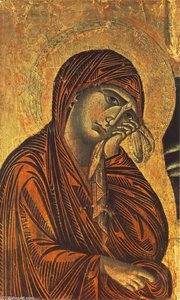
Die Madonna im Majestät

- 101.0 x 118.0 cm


Entdecken Sie Cimabues Meisterwerk 'Die Madonna im Majestät' (1285)! Dieses beeindruckende Temperafarbenbild verkörpert den Übergang vom Byzantinischen zum Gotischen Stil und wird im Uffizi in Florenz aufbewahrt.
 Weiterlesen
Entdecken Sie Cimabue (ca. 1240-1302), einen prägenden italienischen Maler, der die Italo-Byzantinische und Renaissance-Stile miteinander verbindet. Erforschen Sie seinen bahnbrechenden Realismus, seine ausdrucksstarken Mosaiken und seinen Einfluss auf Künstler wie Giotto. Sehen Sie sich Kunstwerke an und erfahren Sie mehr über die Trecento-Bewegung!
Giclée / Kunstdruck
Giclée- oder Leinwanddruck in Museumsqualität mit schneller Produktion und flexiblen Veredelungsoptionen. ( Handgemalte Reproduktion bestellen Zum digitalen Bild wechseln)




P118B €10

P118H €10

P118W €10

P438Z €10

P508JH €12

P508YH €12

P805H €10

P805Z €10

P919BZ €10

P919G €10

P919XJ €10

P959ZH €10

P968JZ €12

W106C €8

W218G €10

W218JH €8

W218Y €10

W307PJ €10

W316G €10

W316PJ €8

W316Y €10

W398PJ €8

W4111J €10

W500HY €15

W500JH €15

W692G €12

W849H €8

W940BG €15

W953PJ €8




Standardformat
individuell anpassbar
CM
INCH
Wählen Sie aus unseren vordefinierten Formaten, die den ursprünglichen Proportionen des Kunstwerks entsprechen.
Loading sizes...

Breite
Höhe
Geben Sie die benötigte Breite und Höhe an, damit der Druck perfekt in Ihren Rahmen oder an Ihre Wand passt. Ein Druck kann nur beschnitten, aber niemals größer als das Originalbild angefertigt werden; daher verliert ein Format mit anderen Proportionen einen Teil des Bildes. Wir senden Ihnen ein digitales Mockup zur Freigabe, bevor wir den Druck ausführen. Das auf dieser Seite gezeigte Bild zeigt nicht den tatsächlichen Beschnitt – dies ist nur im Mockup ersichtlich.
Weltweiter Versand () innerhalb von 2 Wochen statt der üblichen 4/5 Wochen. (4 November)

Kostenloser weltweiter Expressversand

Hochwertige Leinenleinwand

Umfassender Versicherungsschutz beim Versand

Zollgebühren-Rückerstattungsgarantie

Garantie für exakte Farbtreue

100 Tage Rückgaberecht (nur bei Mängeln)

100% Geld-zurück-Garantie

Mengenrabatt verfügbar
 Die Glasoption ist nur für Größen unter 110 cm verfügbar.

Die Madonna im Majestät
Giclée / Kunstdruck
Format der Reproduktion
-


Endpreis
€ 62
The Madonna in Majesty (detail): A Dawn of Renaissance Art
Cenni Di Pepo Or Cenni Di Pepi, known universally as Cimabue, stands at the cusp of artistic transformation—a pivotal figure bridging the solemn grandeur of Byzantine iconography with the nascent humanist spirit that would soon blossom into the Italian Renaissance. His magnum opus, “The Madonna in Majesty,” painted around 1285 and currently residing within the hallowed halls of Florence’s Galleria degli Uffizi, isn't merely a depiction of religious piety; it’s a declaration of intent—a bold step away from tradition toward a more emotionally resonant and intellectually stimulating visual language.
This tempera panel, measuring 101 x 118 cm, embodies the Proto-Renaissance style. Cimabue's genius lay in subtly undermining established conventions without shattering them entirely. Influenced profoundly by Byzantine models—particularly those emanating from Constantinople—he nevertheless dared to introduce innovations that would reverberate throughout subsequent artistic endeavors. The most striking of these was a deliberate shift toward more lifelike figural proportions and a palpable sense of volume, techniques previously unheard of in Florentine art.
- Style: Byzantine Influence – Cimabue skillfully blended Byzantine stylistic elements with emerging Gothic sensibilities, creating a harmonious blend that anticipates the Renaissance’s embrace of naturalism.
- Technique: Tempera Paint – Cimabue utilized tempera paint—a medium known for its luminosity and durability—to achieve breathtaking detail and color vibrancy. The meticulous layering of pigments ensured that every nuance of expression was faithfully reproduced.
The composition itself is a testament to Cimabue’s artistic prowess. Dominating the canvas is Mary, seated upon an elaborately sculpted throne adorned with gold leaf—a deliberate reference to Byzantine imperial iconography. Surrounding her are angels and saints, arranged in a symmetrical configuration that conveys serenity and balance. The careful positioning of these figures reinforces the painting's overarching message of divine grace.
Beyond its aesthetic beauty, “The Madonna in Majesty” is laden with symbolism. The throne represents royal authority and holiness, mirroring Mary’s role as Queen of Heaven. The radiant gold leaf—a hallmark of Byzantine art—symbolizes divine illumination and spiritual transcendence. Furthermore, the serene expressions of Mary and her attendants convey compassion and humility – qualities considered paramount in Christian theology.
Painted during a period marked by burgeoning intellectual curiosity and artistic experimentation, Cimabue’s masterpiece reflects the broader cultural currents shaping Italy at the time. It foreshadows the humanist movement's emphasis on human experience and emotion—a departure from the medieval preoccupation with theological dogma. Studying “The Madonna in Majesty” offers invaluable insight into the genesis of Western art history and serves as an enduring inspiration for artists striving to capture the essence of faith and beauty.
For those seeking a stunning reproduction of this iconic artwork, explore Cimabue: The Madonna in Majesty (Maestà) here and Cimabue: The Madonna in Majesty (detail)here on TopImpressionists.
Fragen & Antworten
Woher kommen die Besucher von "Die Madonna im Majestät" von Cimabue?
Für „Die Madonna im Majestät“ gibt es eine Besucherzahlen-Seite. Sie zeigt die monatlichen Aufrufe des Kunstwerks sowie weiterer Werke des Künstlers mit einer Aufschlüsselung nach Land und Sprache an.
Ist eine rechtmäßige Reproduktion von "Die Madonna im Majestät" von Cimabue aus dem Bestand des Galleria degli Uffizi zulässig?
Das Original "Die Madonna im Majestät" befindet sich im Galleria degli Uffizi; das Werk ist gemeinfrei – das Urheberrecht ist abgelaufen.
Welche emotionale Stimmung vermittelt "Die Madonna im Majestät" von Cimabue?
Die für "Die Madonna im Majestät" von Cimabue festgelegte emotionale Stimmung ist Beschaulich. Sie fasst das Gefühl zusammen, das das Werk ausdrückt.
Künstlerbiografie
das Brechen des italo-byzantinischen Stils
Cimabue, geboren um 1240 und gestorben im Jahr 1302, war ein einflussreicher italienischer Maler und Mosaikdesigner aus Florenz, auch bekannt als Cenni di Pepo. Als Pionier des Brechens mit dem italo-byzantinischen Stil wird Cimabue für die Einführung von realistischeren Proportionen und Schattierung in seiner Arbeit gefeiert, was einen bedeutenden Übergang zum Realismus in der mittelalterlichen Kunst markierte.Frühes Leben und Ausbildung
Über Cimabues frühes Leben ist wenig bekannt. Eine Quelle, die über seine Karriere berichtet, ist Giorgio Vasaris Lives of the Most Excellent Painters, Sculptors and Architects, deren Genauigkeit jedoch ungewiss ist. Er wurde in Florenz geboren und starb in Pisa. Laut Kunsthistoriker Pietro Tosca ist Cimabues früheste zugeschriebene Arbeit, die Kreuzigung in der Kirche San Domenico in Arezzo, aus dem Jahr 1270 und zeigt eine Abweichung vom byzantinischen Stil.Bekannte Werke
* Maestà (ursprünglich in der Kirche San Francesco in Pisa ausgestellt, jetzt im Louvre): Dieses Werk etablierte einen Stil, der von zahlreichen Künstlern fortgesetzt wurde, darunter Duccio di Buoninsegna in seiner Ruccellai Madonna (früher fälschlicherweise Cimabue zugeschrieben). * Flagellation (Frick Collection): Ein Werkstattgemälde, das möglicherweise einer späteren Periode zuzuordnen ist. * Mosaike für die Florenzer Baptisterium (jetzt weitgehend restauriert): Im schlechten Zustand aufgrund der Oxidation der helleren Farben.Einfluss und Vermächtnis
Cimabues Kunst spielte eine entscheidende Rolle bei der Übergang von byzantinischen zu realistischeren Darstellungen in der italienischen Malerei, und sein Einfluss auf nachfolgende Künstler war tiefgreifend. Seine Werke, die durch einen Zusammenschnitt traditioneller und innovativer Techniken gekennzeichnet sind, markieren ein wichtiges Kapitel in der Kunstgeschichte, das den Übergang zwischen mittelalterlichen und Renaissance-Stilen überspannte.- Betrachten Sie Cimabues Werke unter https://TopImpressionists.com/@/cimabue
- Erfahren Sie mehr über die Trecento-Kunstbewegung unter https://TopImpressionists.com/@@/a@d3cpph
- Lesen Sie Cimabues Biografie auf Wikipedia unter https://en.wikipedia.org/wiki/cimabue

Cimabue
1240 - 1302 , Italien
Kurzinfos
- Beeinflusste Künstler: ['Giotto di Bondone']
- Bemerkenswerte Werke:
- Maestà
- Kreuzigung (Arezzo)
- Flagellation Christi
- Geburtsdatum: ca. 1240
- Geburtsort: Florenz, Italien
- Künstlerische Bewegung: Italo-byzantinisch, Frührenaissance
- Nationalität: Italienisch
- Todestag: 1302
- Vollständiger Name: Cimabue
- Von Künstlern Beeinflusst: ['Byzantinische Kunst']
Ähnliche Artikel

Whispers of the Soul: Discovering the Sacred Beauty and Intricate Devotion of Early Medieval Art
Embark on a soulful journey through Early Medieval art. Explore the sacred beauty of illuminated manuscripts, Byzantine gold leaf, and the profound spiritual symbolism that shaped history. Discover the timeless devotion captured in every intricate detail.

Divine Light & Golden Splendor: A Journey Through the Sacred Grandeur of High Medieval Art
Embark on a soulful journey through High Medieval art. Explore the divine light of Gothic cathedrals, Byzantine splendor, and sacred masterpieces that shaped Western history with our expert-led cultural reflections.
Entdecken Sie Kunstwerke, die nach Themen, Stilen und Merkmalen sortiert sind.