

 Vorschau anzeigen
 Versenden
 Teilen
 Details anzeigen
 Leitfaden

 Herunterladen
 Ähnliche Objekte
 Röntgenaufnahme
 Diashow
 Statistiken
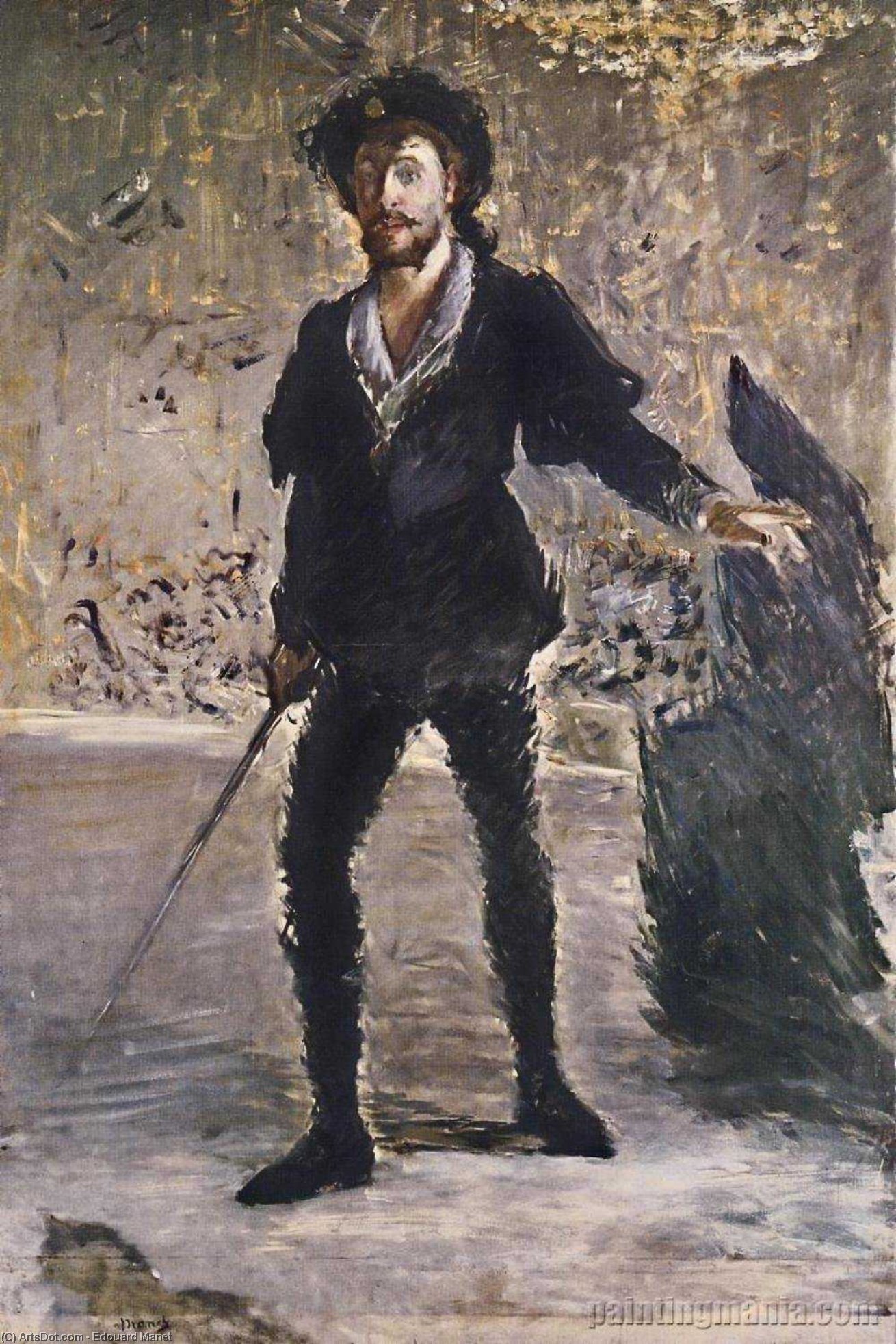
Porträt von Faure als Hamlet


Ein beeindruckendes Gemälde von Édouard Manet zeigt Jean-Baptiste Faure als Hamlet – eine einzigartige Darstellung eines berühmten Baritons und ein Schlüsselwerk des Impressionismus.
 Weiterlesen
Erkunden Sie die revolutionäre Kunst von Édouard Manet (1832-1883), einer Schlüsselgestalt im Übergang von Realismus zu Impressionismus. Entdecken Sie seine umstrittenen Meisterwerke wie 'Le Déjeuner sur l'herbe' & 'Olympia' und seinen bleibenden Einfluss auf die moderne Kunst.
Giclée / Kunstdruck
Giclée- oder Leinwanddruck in Museumsqualität mit schneller Produktion und flexiblen Veredelungsoptionen. ( Handgemalte Reproduktion bestellen Zum digitalen Bild wechseln)




P118B €10

P118H €10

P118W €10

P438Z €10

P508JH €12

P508YH €12

P805H €10

P805Z €10

P919BZ €10

P919G €10

P919XJ €10

P959ZH €10

P968JZ €12

W106C €8

W218G €10

W218JH €8

W218Y €10

W307PJ €10

W316G €10

W316PJ €8

W316Y €10

W398PJ €8

W4111J €10

W500HY €15

W500JH €15

W692G €12

W849H €8

W940BG €15

W953PJ €8




Standardformat
individuell anpassbar
CM
INCH
Wählen Sie aus unseren vordefinierten Formaten, die den ursprünglichen Proportionen des Kunstwerks entsprechen.
Loading sizes...

Breite
Höhe
Geben Sie die benötigte Breite und Höhe an, damit der Druck perfekt in Ihren Rahmen oder an Ihre Wand passt. Ein Druck kann nur beschnitten, aber niemals größer als das Originalbild angefertigt werden; daher verliert ein Format mit anderen Proportionen einen Teil des Bildes. Wir senden Ihnen ein digitales Mockup zur Freigabe, bevor wir den Druck ausführen. Das auf dieser Seite gezeigte Bild zeigt nicht den tatsächlichen Beschnitt – dies ist nur im Mockup ersichtlich.
Weltweiter Versand () innerhalb von 2 Wochen statt der üblichen 4/5 Wochen. (28 Oktober)

Kostenloser weltweiter Expressversand

Hochwertige Leinenleinwand

Umfassender Versicherungsschutz beim Versand

Zollgebühren-Rückerstattungsgarantie

Garantie für exakte Farbtreue

100 Tage Rückgaberecht (nur bei Mängeln)

100% Geld-zurück-Garantie

Mengenrabatt verfügbar
 Die Glasoption ist nur für Größen unter 110 cm verfügbar.

Porträt von Faure als Hamlet
Giclée / Kunstdruck
Format der Reproduktion
-


Endpreis
€ 61
Portrait of Faure as Hamlet
Édouard Manet’s *Portrait of Faure as Hamlet* stands as an arresting testament to the artist's revolutionary spirit and his ability to capture the essence of both artistic innovation and cultural fascination. Painted in 1877 using pastel on paper, this artwork resides at the Hamburger Kunsthalle in Hamburg, Germany, offering viewers a glimpse into a pivotal moment in Impressionist history. More than just a likeness of Jean-Baptiste Faure, a celebrated French baritone known for his interpretations of Shakespearean roles—particularly Hamlet—the painting embodies Manet’s daring exploration of theatrical representation and psychological depth.The Painting's Details
Manet meticulously crafted this portrait with painstaking attention to detail. The pastel medium lends the image a velvety texture and luminous quality, contrasting sharply with the muted tones of the snowy backdrop. Faure is depicted in a formal black suit, holding a sword—a deliberate allusion to Hamlet’s iconic weapon—and gazing intently at the viewer. This gaze conveys an aura of seriousness and contemplation, mirroring the character's internal turmoil. The artist skillfully utilizes chiaroscuro – dramatic contrasts between light and shadow – to sculpt Faure’s form and heighten the emotional impact of the scene. Subtle brushstrokes contribute to a sense of movement and dynamism, capturing not only Faure’s physical presence but also his inner state.Artistic Style and Composition
Manet's stylistic approach aligns perfectly with the burgeoning Impressionist movement, rejecting academic conventions in favor of spontaneity and subjective perception. Unlike traditional portraiture that prioritized idealized beauty, Manet presents Faure as a complex human being grappling with profound emotions. The composition is carefully balanced, drawing the eye towards Faure’s face while subtly incorporating supporting figures—primarily a woman seated beside him—who serve to amplify the drama of the scene. The artist's masterful use of color – predominantly cool blues and whites – reinforces the icy atmosphere and underscores Faure’s isolation. This deliberate stylistic choice reflects Manet’s desire to portray reality as he experienced it, rather than imposing preconceived notions of beauty or grandeur.Historical Context
The painting emerged during a period of significant artistic upheaval in France. The Impressionists challenged the established Salon system and championed a new aesthetic that prioritized capturing fleeting moments of sensory experience. Influenced by artists like Eugène Delacroix and Gustave Courbet, Manet pushed boundaries and questioned accepted standards of representation. *Portrait of Faure as Hamlet* exemplifies this spirit of experimentation and serves as a powerful symbol of the artistic revolution unfolding in Paris during the 1870s. It reflects the broader cultural preoccupation with theater and literature—particularly Shakespeare—which profoundly impacted artistic sensibilities at the time.Relevance and Legacy
Manet’s *Portrait of Faure as Hamlet* continues to resonate with audiences today, prompting contemplation on themes of identity, performance, and psychological complexity. The painting's enduring appeal lies in its ability to convey a profound sense of human emotion—a characteristic that distinguishes it from many earlier portraits. It stands as an exemplar of Impressionist art’s commitment to capturing the immediacy of experience and challenging conventional artistic norms. For those seeking inspiration or desiring to adorn their homes with a piece of art history, reproductions of *Portrait of Faure as Hamlet* offer a captivating glimpse into Manet's visionary genius. Explore more masterpieces by Édouard Manet at TopImpressionists.com – including *The Painter of Animals*, *A Young Girl*, and *Eva Gonzales* – to appreciate the breadth of his artistic vision.Fragen & Antworten
Was stellt "Porträt von Faure als Hamlet" von Édouard Manet dar und welche Stimmung vermittelt es?
"Porträt von Faure als Hamlet" von Édouard Manet verbindet porträt, hamlet, faure, pastellmalerei, barock, theater, symbolismus, kunstgeschichte mit einer Dramatisch Atmosphäre.
Kann ich eine Ölreproduktion von "Porträt von Faure als Hamlet" bestellen?
Handgemalte Kopien von "Porträt von Faure als Hamlet" von Édouard Manet sind auf diese Webseite erhältlich: eine handgemalte Ölreproduktion auf Leinenleinwand, bestellbar über die Seite Handgemalte Ölreproduktion.
Wie alt war Édouard Manet, als „Porträt von Faure als Hamlet“ im Jahr 1877 geschaffen wurde?
Édouard Manet schuf „Porträt von Faure als Hamlet“ im Alter von 45. Der Künstler wurde 1832 geboren, und das Werk datiert auf 1877.
Ähnliche Kunstwerke


Künstlerbiografie
frühes Leben und Karriere
Édouard Manet, ein französischer modernistischer Maler, wurde am 23. Januar 1832 in Paris geboren. Er widersetzte sich seinen bürgerlichen Wurzeln und einem vorgezeichneten Seekriegspfad und etablierte sich als mutiger französischer Modernist, dessen Leinwände die Lebendigkeit des 19. Jahrhunderts einfingen. Er wird weithin für seine Rolle bei der Pionierarbeit des Impressionismus gelobt, der die Kunst von der Malerei in unbekannte Gebiete lenkte.Bekannte Werke
Manets frühe Meisterwerke, Das Picknick auf der Wiese (Le déjeuner sur l'herbe) (1863) und Olympia (1865), waren radikal, stellten künstlerische Normen in Frage und lösten Empörung bei Traditionalisten aus. Diese provokanten Werke wurden von fortschrittlichen Kollegen anerkannt und säten die Saat des Impressionismus. * Das Picknick auf der Wiese (Le déjeuner sur l'herbe) (1863) - ein Gemälde, das sowohl bei Kritikern als auch bei der Kunstakademie für Kontroversen sorgte. * Olympia (1865) – ein Werk, das aufgrund seiner Darstellung einer nackten weißen Frau in Begleitung einer schwarzen Dienstmädchen große Aufregung auslöste.Museen und Sammlungen
Manets Werke befinden sich in verschiedenen Museen auf der ganzen Welt, darunter: * Musée d'Orsay (Paris, Frankreich) – beherbergt eine umfangreiche Sammlung von Manets Gemälden, darunter Olympia. * Museum of Fine Arts (Boston, USA) – zeigt Manets Porträt von Victorine Meurent, ein bemerkenswertes Werk seines Oeuvres.Vermächtnis und Einfluss
Manets innovativer Stil, der durch breite, schnelle Pinselstriche, Studiobeleuchtung und geringe Tiefenwirkung gekennzeichnet ist, hat zukünftige Maler maßgeblich beeinflusst. Sein Vermächtnis kann in den Werken zahlreicher Künstler gesehen werden, die auf seinen Füßen folgen.- Impressionismus: Seine Pionierarbeit in diesem Stil hat ihn zu einer bekannten Figur unter Kunstliebhabern gemacht.
- Realismus: Seine Ablehnung traditioneller realistischer Ansätze ebnete den Weg für eine neue Generation von Künstlern.
- Moderne Kunst: Manets Beiträge zur Entwicklung der modernen Kunst sind unbestreitbar und festigen seinen Platz in den Annalen der Kunstgeschichte.
Weitere Literatur und Erkundung
* Entdecken Sie mehr über das Leben und Werk von Édouard Manet auf TopImpressionists. * Erkunden Sie die Musée d'Orsay Sammlung, die eine umfangreiche Auswahl von Manets Gemälden, darunter Olympia, auf TopImpressionists’s Museum Seite bietet.
Édouard Manet
1832 - 1883 , Frankreich
Kurzinfos
- Beeinflusste Künstler:
- Claude Monet
- Pierre-Auguste Renoir
- Edgar Degas
- Bemerkenswerte Werke:
- Le Déjeuner sur l'herbe
- Olympia
- A Bar at the Folies-Bergère
- Einflussreiche Künstler:
- Caravaggio
- Diego Velázquez
- Gustave Courbet
- Geburtsdatum: 23. Januar 1832
- Geburtsort: Paris, Frankreich
- Künstlerische Richtung: Impressionismus, Realismus
- Nationalität: Französisch
- Todatum: 1883
- Vollständiger Name: Édouard Manet
Ähnliche Artikel

Soft Light & Velvet Touch: The Ethereal Magic of Pastel Artistry in Impressionist Masterpieces
Discover the ethereal beauty of pastel art through an Impressionist lens. Explore how masters like Monet and Renoir captured light and velvet textures, and learn to curate a collection of luminous, museum-quality masterpieces for your home.
Entdecken Sie Kunstwerke, die nach Themen, Stilen und Merkmalen sortiert sind.


