


 In echtem Maßstab anzeigen
 Versenden als Grußkarte
 Teilen
 Details anzeigen
 Leitfaden öffnen

 Herunterladen
 Ähnliche Objekte
 Röntgenaufnahme
 Diashow
 Besucherstatistiken
Sad Bubble Bath


A vibrant 1971 scene of women enjoying a lively poolside gathering by Chicano art pioneer Eduardo Carrillo Nava captures a colorful moment of social connection that you can bring to your collection.
 Mehr anzeigen
Entdecken Sie die lebendige Kunst von Eduardo Carrillo Nava! Mexikanisch-amerikanischer Maler & Wandmaler, der Surrealismus & Chicano-Erbe vereint. Entdecken Sie ‚El Grito‘ & mehr.
Die auf dieser Seite dargestellten Kunstwerke sind urheberrechtlich geschützt, was bedeutet, dass wir keine identische Reproduktion rechtmäßig erstellen oder verkaufen dürfen. Dieser Schutz wird durch internationale Abkommen wie die Berner Übereinkunft und durch nationale Gesetze, einschließlich derer, die von den ... festgelegt wurden US-Urheberrecht – Titel 17.
Diese Methode entspricht vollumfänglich den Urheberrechtsbestimmungen, da sie keine Kopie oder Vervielfältigung des geschützten Kunstwerks darstellt. Stattdessen handelt es sich um eine kreative Neuinterpretation – ein neues Gemälde, das vom Original inspiriert, aber nicht identisch mit ihm ist.
Giclée / Kunstdruck
Giclée- oder Leinwanddruck in Museumsqualität mit schneller Produktion und flexiblen Veredelungsoptionen. ( Handgemalte Reproduktion kaufen Zum digitalen Bild wechseln)




P118B €10

P118H €10

P118W €10

P438Z €10

P508JH €12

P508YH €12

P805H €10

P805Z €10

P919BZ €10

P919G €10

P919XJ €10

P959ZH €10

P968JZ €12

W106C €8

W218G €10

W218JH €8

W218Y €10

W307PJ €10

W316G €10

W316PJ €8

W316Y €10

W398PJ €8

W4111J €10

W500HY €15

W500JH €15

W692G €12

W849H €8

W940BG €15

W953PJ €8




Standardformat
individuell anpassbar
CM
INCH
Wählen Sie aus unseren vordefinierten Formaten, die den ursprünglichen Proportionen des Kunstwerks entsprechen.
Loading sizes...

Breite
Höhe
Geben Sie die Breite und die Höhe an, die Sie benötigen, damit der Druck perfekt in Ihren Rahmen oder an Ihre Wand passt. Ein Druck kann nur beschnitten werden und niemals größer als das Originalbild gemacht werden; daher verliert ein Format mit einer anderen Proportion einen Teil des Bildes. Wir senden Ihnen ein digitales Mockup zur Freigabe, bevor wir den Druck ausführen. Das auf dieser Seite gezeigte Bild zeigt nicht den tatsächlichen Beschnitt – dies ist nur im Mockup ersichtlich.
Weltweiter Versand () innerhalb von 2 Wochen statt der üblichen 4/5 Wochen. (22 Oktober)

Kostenloser weltweiter Expressversand

Hochwertige Leinenleinwand

Vollständiger Versicherungsschutz beim Versand

Zollgebühren-Rückerstattungsgarantie

Garantie für exakte Farbtreue

100-tägiges Rückgaberecht (nur bei Mängeln)

100% Geld-zurück-Garantie

Angebot für Mengenrabatt
 Die Glasoption ist nur für Größen unter 110 cm verfügbar.

Sad Bubble Bath
Giclée / Kunstdruck
Format der Reproduktion
-


Gesamtpreis
€ 61
A Vibrant Tapestry of Life and Leisure
In the evocative painting "Sad Bubble Bath," created in 1971 by the Mexican-American master Eduardo Carrillo Nava, we are transported into a sun-drenched moment of communal joy and summer leisure. At first glance, the canvas captures the essence of a lively poolside or beachside gathering, where the warmth of the sun seems to radiate through the very pigment. The composition centers on two women, their forms rendered with a sense of intimacy and ease; one kneels with hands tucked behind her back, while her companion stands beside her, both clad in the minimal attire of a summer day. Yet, beneath this surface of relaxation, there is a complex layering of figures—a bustling crowd of bathers that suggests a larger, rhythmic pulse of human connection and shared experience.
Cultural Resonance and Artistic Legacy
To understand "Sad Bubble Bath," one must look toward the profound cultural context of its creator. As a pivotal figure in the Chicano art movement, Eduardo Carrillo Nava was far more than a painter of scenes; he was a chronicler of identity and heritage. While this specific piece captures a moment of seemingly lighthearted festivities, it carries the weight of his broader mission to celebrate Latinx culture and the intersection of myth and reality. The painting acts as a window into a world where the personal and the communal coexist, reflecting the artist's lifelong dedication to promoting Chicano/a/x artists and civil rights through the power of visual storytelling.
For the discerning collector or interior designer, this artwork offers a unique opportunity to possess a piece that is as intellectually stimulating as it is visually captivating. The emotional impact of the work lies in its duality—the tension between the title's melancholic suggestion and the vibrant, celebratory energy of the painted scene. It invites contemplation on the fleeting nature of summer moments and the enduring strength of community. Whether placed in a contemporary gallery setting or as a focal point in a sophisticated residential space, this reproduction serves as a profound testament to the technical prowess and cultural importance of one of California's most significant artistic voices.
Fragen & Antworten
Wie kann ich das Bild von "Sad Bubble Bath" von Eduardo Carrillo Nava herunterladen?
Für „Sad Bubble Bath“ steht ein Download zur Verfügung: Die Download-Seite des Kunstwerks bietet ein hochauflösender digitaler Bild-Download.
Welcher Strömung und welcher Epoche ist "Sad Bubble Bath" von Eduardo Carrillo Nava zuzuordnen?
In "Sad Bubble Bath" von Eduardo Carrillo Nava trifft die Chicano Art-Strömung auf die Ära der Moderne.
In welche Phase von Eduardo Carrillo Navas Schaffen lässt sich "Sad Bubble Bath" einordnen?
Innerhalb der Schaffensperiode von Eduardo Carrillo Nava lässt sich „Sad Bubble Bath“ der Mature Period zuordnen. Diese Phase ermöglicht einen Vergleich mit anderen Werken des Künstlers.


Biografie des Künstlers
Frühes Leben und Einflüsse
Eduardo Carrillo Nava, ein mexikanisch-amerikanischer Künstler, wurde am 8. April 1937 in Santa Monica, Kalifornien, USA, geboren. Er verstarb am 14. Juli 1997 in Tijuana, Baja California, Mexiko. Die künstlerische Reise von Carrillo war tief verwurzelt in seinem umfassenden Studium der europäischen und mexikanischen Kunst sowie deren Geschichte.Künstlerische Beiträge
Carrillo ist bekannt für seine Gemälde und Wandmalereien, die nicht nur sein technisches Können eindrucksvoll zur Schau stellten, sondern auch sein kulturelles Erbe widerspiegelten. Als Schlüsselfigur der Chicano-Kunstbewegung spielte er eine entscheidende Rolle bei der Förderung von Chicano/a/x-Künstlern, ihrer Kultur und der Bürgerrechte.- El Grito, Las Tropicanas, Geburt sowie Tod und Regeneration sind einige seiner bemerkenswerten Werke, die seine künstlerische Bandbreite exemplarisch verdeutlichen.
- Sein Kunststil umfasste vom Surrealismus inspirierte Landschaften, die Schnittstelle zwischen mexikanischer Geschichte und Mythologie, figurative Malerei und Porträts, traditionelle Landschaften sowie Stillleben.
- Im Jahr 1982 organisierte er die wegweisende Konferenz Califas: Chicano Art and Culture in California, was seinen Einfluss auf die Kunstwelt weiter festigte.
Vermächtnis und Sammlungen
Carrillos Werk findet sich in verschiedenen Sammlungen wieder, darunter die Colección Andrés Blaisten (Mexiko), die eine vielfältige Auswahl lateinamerikanischer Kunstwerke präsentiert. /de/art/show/art-d3bsg9-de/ bietet weitere Informationen zu dieser Sammlung. Bemerkenswerte Kunstwerke- • Ein Gemälde von Angel Zarraga, ein bedeutendes Stück in der Colección Andrés Blaisten (Mexiko), zeigt Zarragas Meisterschaft der Ölmalerei. /de/art/show/painting-by-angel-zarragahttpsTopImpressionistscomartnsfart-enopen/
- • English Greek Girls Picking Up Pebbles by the Sea, ein Gemälde von Lord Frederic Leighton, ist ein weiteres Highlight der Sammlung. /de/art/list/
Fazit
Der Einfluss von Eduardo Carrillo Nava auf die Kunstwelt ist unbestreitbar. Seine Beiträge zur Chicano-Kunstbewegung und sein umfangreiches Werk inspirieren bis heute Künstler und Kunstliebhaber gleichermaßen. Durch seine Kunst hat er der amerikanischen und mexikanischen Kunstgeschichte ein unvergängliches Vermächtnis hinterlassen.- Entdecken Sie weitere Kunstwerke von Eduardo Carrillo Nava unter [https://TopImpressionists.com/@/eduardo-carrillo-nava](https://TopImpressionists.com/@/eduardo-carrillo-nava)
- Erkunden Sie die Colección Andrés Blaisten (Mexiko) und ihre vielfältige Sammlung lateinamerikanischer Kunstwerke unter /de/art/show/art-d3bsg9-de/

Eduardo Carrillo Nava
1937 - 1997 , Vereinigte Staaten von Amerika
Eckdaten zum Künstler
- Beeinflusste Künstler:
- Angel Zarraga
- Lord Frederic Leighton
- Bemerkenswerte Werke:
- El Grito
- Las Tropicanas
- Geburt, Tod und Regeneration
- Einfluss Auf Künstler: Chicano/a/x Künstler
- Geburtsdatum: 8. April 1937
- Geburtsort: Santa Monica, USA
- Künstlerische Bewegung: Chicano Kunst, Surrealismus
- Nationalität: Amerikanisch-Mexikaner
- Todatum: 14. Juli 1997
- Vollständiger Name: Eduardo Carrillo Nava
Verwandte Artikel
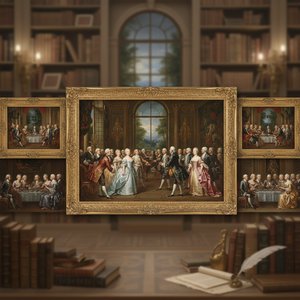
Capturing Elegance: The Art of the Formal Gathering in Masterpiece Paintings
Explore the timeless elegance of formal gatherings through the lens of art history. Discover how master painters captured social grace, status, and atmosphere in iconic group portraits and ballroom scenes.

Portrayals of Power & Perception: A Historical Survey of Women in Art
Explore the rich history of women in art – from iconic muses to groundbreaking artists. Discover feminist movements & reclaim female narratives with TopImpressionists. Expert insights for discerning collectors.

The Enduring Muse: Women as Subject & Symbol in Art History
Explore the rich history of women in art – from iconic muses to groundbreaking artists. Discover feminist movements, global perspectives & reclaim female narratives with TopImpressionists.

The Enduring Muse: Women as Subject & Symbol in Art History
Explore the rich history of women in art – from archetypal representations to contemporary voices challenging norms. Discover iconic artists & movements, and learn about reclaiming female narratives through painting and beyond.

Thomas Barker of Bath: Landscape Painting & Societal Reflection in Early 19th-Century England
Explore the life & work of Thomas Barker of Bath, a key figure in 19th-century English Romanticism. Discover his Parisian success, iconic paintings like 'The Bride of Death', and lasting artistic legacy. Learn more at TopImpressionists.