
Gezeigt: · Inklusive Rahmen:
 Vorschau anzeigen
 Versenden
 Teilen
 Details anzeigen
 Leitfaden

 Herunterladen
 Ähnliche Objekte
 Röntgenaufnahme
 Diashow
 Fragen & Antworten
 Statistiken

€ 240
Handgefertigte Ölreproduktion
Handgemaltes Ölgemälde auf Leinwand in Ihrer Wunschgröße und mit Rahmen, auf Bestellung von unseren Künstlern angefertigt. ( Zum Druck wechseln Zum digitalen Bild wechseln)
Größe
·Standardformat
individuell anpassbar
CM
INCH
Wählen Sie aus unseren vordefinierten Formaten, die den ursprünglichen Proportionen des Kunstwerks entsprechen.
Größen werden geladen...

Breite
Höhe
Geben Sie die Breite und die Höhe an, die Sie für Ihren Rahmen oder Ihre Wand benötigen. Da dieses Werk handgemalt ist, kann der Künstler bei einer anderen Form etwas mehr um das Bild herum malen oder etwas abschneiden – Sie entscheiden. Wir senden Ihnen ein digitales Mockup zur Freigabe, bevor mit dem Malen begonnen wird. Das auf dieser Seite gezeigte Bild stellt nicht das tatsächliche Ergebnis dar – dies tut nur das Mockup.
 Mehr erfahren
Abschließen
·
Weißer Rand €1

verlaufende Kanten €1

Umrandung €1

P118B €10

P118H €10

P118W €10

P438Z €10

P508JH €12

P508YH €12

P805H €10

P805Z €10

P919BZ €10

P919G €10

P919XJ €10

P959ZH €10

P968JZ €12

W106C €8

W218G €10

W218JH €8

W218Y €10

W307PJ €10

W316G €10

W316PJ €8

W316Y €10

W398PJ €8

W4111J €10

W500HY €15

W500JH €15

W692G €12

W849H €8

W940BG €15

W953PJ €8

H24-GOLD €30

H24-SILVER €30

H36-GOLD €45

H36-SILVER €45
Versand in einer Schutzröhre, bereit für die Rahmung durch Ihren Rahmenmacher.
Extras
optionalWas sind die Extras enthalten?
Beispiele für Anpassungsmöglichkeiten: Gesicht durch Kundenfoto ersetzen; Haustier hinzufügen (z. B. Katze durch Hund ersetzen); Versteckte Botschaft im Hintergrund einfügen; Hintergrundlandschaft oder Elemente ändern.
Nach der Bestellung wird das Team von TopImpressionists.com den Kunden per E-Mail kontaktieren, um Anweisungen einzuholen und eine Vorschau des Entwurfs bereitzustellen
Nach der Bestellung wird das Team von TopImpressionists.com den Kunden per E-Mail kontaktieren, um Anweisungen einzuholen und eine Vorschau des Entwurfs bereitzustellen
Weltweiter Versand () in nur 3 bis 4 Wochen statt der üblichen 5 Wochen. (8 November). Keine Kompromisse bei der Qualität.
Schutzlackierung
Beschriftung
Details der gravierten Bronzetafel
This elegant plaque features the artist's name and the title of the artwork, finely engraved for a timeless presentation.
It is made from bronze with a refined, elegant finish. The text is precisely laser-engraved for a sharp and permanent result. Measuring 9x2 cm, the plaque is compact yet easy to read. It's built to be durable and scratch-resistant, offering a professional, museum-quality look. Mounting is simple thanks to the included adhesive backing.
Details zur Acrylglas-Plakette (transparent)
The plaque includes essential engraved details such as the artist's name, the title of the artwork, the date it was created, the type of media used-like oil on canvas or watercolor-a brief description of the piece, and a QR code that links to the complete artwork information.
It is crafted from clear acrylic, offering a sleek, modern appearance. The text is UV-engraved in black to ensure strong visual contrast. With a size of 10x15 cm, it ensures optimal readability. It comes equipped with two metal hooks for secure wall mounting. The plaque is designed to be weather-resistant, making it suitable for various environments, and it includes interactive features that work seamlessly with smartphone scanning.
Details zur schwarzen Acryltafel
This elegant plaque includes engraved information such as the artist's name, the title of the artwork, the date it was created, the type of media used (like oil on canvas or watercolor), a short description of the artwork, and a QR code for quick access to more information.
The plaque itself is made from refined black acrylic with a premium finish. The text is laser-engraved in white for high contrast and readability. Its size is 10x15 cm, designed to be easy to read. It comes with two metal hooks for professional mounting. The design is sleek and fits any interior style. It is also weather-resistant and durable, with built-in digital integration for mobile compatibility.
Die Glasoption ist nur für Größen unter 110 cm verfügbar.
 Die Glasoption ist nur für Größen unter 110 cm verfügbar.
- Kostenloser weltweiter Expressversand
- Hochwertige Leinenleinwand
- Umfassender Versicherungsschutz beim Versand
- Zollgebühren-Rückerstattungsgarantie
- Garantie für exakte Farbtreue
- 100 Tage Rückgaberecht (nur bei Mängeln)
- 100% Geld-zurück-Garantie
- Mengenrabatt verfügbar


Beschreibung des Sammlerstücks
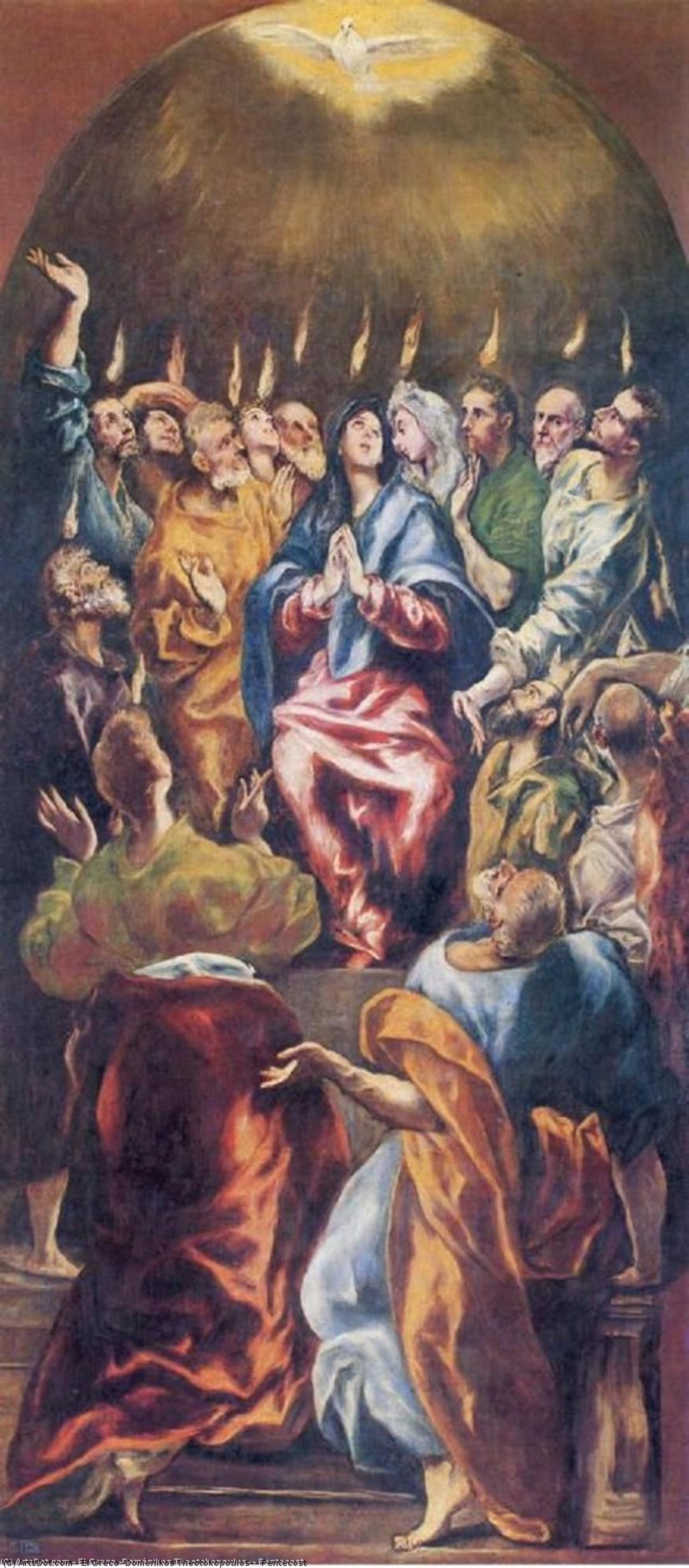
El Greco's 'Die Pentecoste': Ein dramatisches Meisterwerk voller Licht und Emotionen. Entdecken Sie die religiöse Szene aus dem Museo del Prado, geschaffen zwischen 1596 & 1600.
Künstlerbiografie
Erkunden Sie die dramatische und ausdrucksstarke Kunst von El Greco (Doménikos Theotokopoulos). Entdecken Sie seine ikonischen Manierismus-Gemälde, religiöse Themen, verlängerte Figuren und seinen bleibenden Einfluss auf Expressionismus und Kubismus. Bewundern Sie Meisterwerke wie 'Toledos Blick'!
Über das Gemälde
Die Pestilenz – Ein Spiegel der Seele
El Greco’s “Pentecost” (1596-1600), housed in the Museo del Prado in Madrid, is not merely a depiction of a biblical event; it's a visceral embodiment of spiritual fervor and human emotion. This monumental oil painting transcends its religious subject matter to become a profound meditation on faith, community, and the transformative power of divine grace. The scene unfolds within a dimly lit interior, dominated by the central figures of Mary and Jesus – their forms elongated and imbued with an almost ecstatic intensity. The artist masterfully employs chiaroscuro, creating dramatic contrasts between light and shadow that heighten the emotional impact of each gesture and expression. Notice how the light seems to emanate from the dove hovering above, a potent symbol of the Holy Spirit descending upon the apostles.
El Greco’s signature style is immediately apparent: figures are rendered with an unprecedented dynamism, their bodies contorted in dramatic poses that convey both vulnerability and strength. The apostles themselves are not depicted as serene or contemplative; instead, they writhe and gesture wildly, caught in the throes of receiving the divine gift of tongues. This departure from traditional Byzantine iconography—characterized by its static grace and idealized forms—reflects El Greco’s embrace of Mannerism, a style that prioritized emotional expression over realistic representation. The use of vibrant, almost unnatural colors – deep reds, blues, and yellows – further contributes to the painting's dramatic intensity, creating a visual experience that is both captivating and unsettling.
Der Künstler und seine Zeit
Doménikos Theotokopoulos, better known as El Greco, was born in Crete in 1541 into a family of Greek Orthodox icon painters. His early training instilled in him the meticulous techniques of Byzantine art, but he soon began to experiment with new forms and approaches. Moving to Venice around 1567, he immersed himself in the artistic currents of the Renaissance and Mannerism, absorbing influences from masters like Titian and Tintoretto. This period marked a crucial turning point in his development, as he gradually moved away from the rigid conventions of Byzantine iconography towards a more expressive and personal style.
El Greco’s journey continued to Rome, where he became part of the intellectual circle surrounding Cardinal Alejandro Farnesio. This association exposed him to humanist ideas and artistic innovations, further fueling his creative experimentation. He eventually settled in Spain, seeking patronage from King Philip II, who commissioned works for the monastery of El Escorial. It was during this time that he produced many of his most celebrated paintings, including “Pentecost,” which served as part of a larger altarpiece intended to adorn the church of the monastery Lady Mary of Aragon in Madrid.
Symbolik und Bedeutung
The painting’s narrative is rooted in the Book of Acts (Chapters 2-4), depicting the descent of the Holy Spirit upon the apostles on the day of Pentecost. The dove, a universal symbol of the Holy Spirit, dominates the composition, radiating light and grace. Each apostle is depicted with wings, symbolizing their ascension to heaven and their role as messengers of God’s word. The flames that adorn their heads represent the tongues of fire mentioned in the biblical text – a visual manifestation of the gift of speaking in different languages.
Beyond its literal depiction of the Pentecost event, “Pentecost” is rich in symbolic meaning. Mary's central position underscores her role as the Mother of God and the embodiment of divine grace. The apostles’ gestures and expressions convey a sense of awe, wonder, and ecstatic joy – reflecting their profound experience of receiving the Holy Spirit. The painting can be interpreted as an allegory for the birth of the Christian Church, a moment of radical transformation and renewal that fundamentally altered the course of Western civilization.
Ein Meisterwerk der Emotion und des Lichts
“Pentecost” is more than just a religious painting; it’s a testament to El Greco's artistic genius. His innovative use of light, shadow, and color, combined with his dramatic composition and emotionally charged figures, creates a truly unforgettable visual experience. The painting’s enduring appeal lies in its ability to evoke a sense of spiritual intensity and human connection – reminding us of the transformative power of faith and the profound mysteries of the divine.
TopImpressionists offers meticulously crafted hand-painted reproductions of this iconic masterpiece, allowing you to bring the drama and emotion of El Greco’s “Pentecost” into your home or office. Each reproduction is created by skilled artists using archival quality materials, ensuring that it will retain its beauty and vibrancy for generations to come. Explore our collection today and discover a timeless work of art that speaks directly to the soul.
Fragen & Antworten
Sind die Farben in "Die Pentecoste" von El Greco eher gesättigt oder gedämpft?
Die Farben von "Die Pentecoste" von El Greco weisen eine Dezente Farbsättigung Sättigung auf. Die Sättigung beschreibt, wie lebhaft oder gedämpft die Farben sind.
Wie spiegeln sich Stilrichtung und Epoche in "Die Pentecoste" von El Greco wider?
"Die Pentecoste" gehört der Strömung des Mannerist Painting an, und sein Schöpfer war in der Ära der Renaissance tätig.
Mit welcher Technik wurde "Die Pentecoste" erstellt?
"Die Pentecoste" wurde in Öl auf Leinwand ausgeführt.
Kurzinfos und Kunst-Quiz
Über El Greco

El Greco
1541 - 1614, Griechenland
Künstlerbiografie
**frühes Leben und Ausbildung**
El Greco (Doménikos Theotokopoulos), ein renommierter griechischer Maler, Bildhauer und Architekt, wurde 1541 in Kreta geboren, das damals unter venezianischer Herrschaft stand. Sein Geburtsname war Doménikos Theotokopoulos. El Grecos frühe Ausbildung als Ikonenmaler der kreter Schule, einem führenden Zentrum für byzantinische Kunst nach dem Fall des Reiches, legte den Grundstein für seine zukünftigen künstlerischen Bemühungen.**Künstlerische Entwicklung und Einflüsse**
El Gredos künstlerischer Stil wurde durch seine Reisen nach Venedig und Rom geprägt, wo er Manierismus- und Renaissance-Stile aufnahm, insbesondere von Tintoretto und Tizian beeinflusst. Seine Umsiedlung nach Toledo, Spanien, im Jahr 1577 markierte eine Periode fruchtbarer Schaffenskraft, die zu Meisterwerken wie Ansicht von Toledo und das Öffnen des fünften Siegels führte.**Bekannte Werke und Stil**
* Allegorie der Camaldulitenorden (Manierismus, Öl) – ein Zeugnis für El Gredos einzigartige Mischung aus byzantinischen Traditionen und westlichen stilistischen Elementen. * Fabel (Manierismus, Öl) – demonstriert seine Verwendung ungewöhnlicher, lebhafter Farben. * Giacomo Bosio (Manierismus, Öl) – zeigt El Gredos Meisterschaft im Manierismus-Stil.**Vermächtnis und Einfluss**
El Gredos dramatischer und expressiver Stil, der durch verlängerte Figuren und fantastische Pigmentierung gekennzeichnet ist, war eine Quelle der Inspiration für Dichter und Schriftsteller. Er gilt als Vorläufer des Expressionismus und Kubismus. Für mehr Informationen über das Leben und Werk von El Greco besuchen Sie [https://TopImpressionists.com/@/el-greco-(domenikos-theotokopoulos)](https://TopImpressionists.com/@/el-greco-(domenikos-theotokopoulos)).- **Betrachten Sie El Gredos Gemälde** unter [https://TopImpressionists.com/@@/85fr95-el-greco-(domenikos-theotokopoulos)-allegory-of-the-camaldolite-order](https://TopImpressionists.com/@@/85fr95-el-greco-(domenikos-theotokopoulos)-allegory-of-the-camaldolite-order)
- **Erfahren Sie mehr über das Leben und Werk von El Greco** unter [https://en.wikipedia.org/wiki/el_greco](https://en.wikipedia.org/wiki/el_greco)
- **Entdecken Sie das Hellenische Institut für byzantinische und post-byzantinische Studien**, das eine breite Palette von Artefakten umfasst, die das reiche künstlerische Erbe Byzants zu reflektieren, unter /de/art/show/art-d3b8bv-de/
Kurzinfos zu El Greco
- Beeinflusste Künstler:
- Tintoretto
- Tizian
- Bemerkenswerte Werke:
- Grablegung des Grafen Orgaz
- Blick auf Toledo
- Öffnung des fünften Siegels
- Geburtsdatum: 1541
- Geburtsort: Kreta, Griechenland
- Künstlerische Richtung: Manierismus, Spanische Renaissance
- Nationalität: Griechisch-Spanisch
- Todatum: 1614
- Vollständiger Name: El Greco (Doménikos Theotokópoulos)
- Von Künstlern Beeinflusst: ['Byzantinische Traditionen']
Entdecken Sie Kunstwerke, die nach Themen, Stilen und Merkmalen sortiert sind.




El Greco
Die Pentecoste
() ·
Inklusive Rahmen: · Handgemalt mit Öl auf Leinen
Gesamtbetrag