Vorschau anzeigen
 Versenden
 Teilen
 Details anzeigen
 Leitfaden

 Herunterladen
 Ähnliche Objekte
 Röntgenaufnahme
 Diashow
 Q&A
Q&A Statistiken
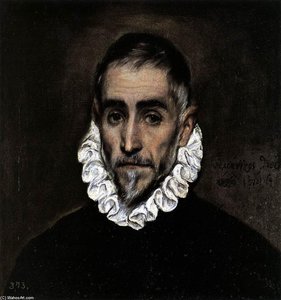
Die Qual im Garten
 Öl auf Leinwand
- Wandkunst
- Barock
 1590
1590- – Frühe Neuzeit
 104.0 x 117.0 cm
 Toledoer Kunstmuseum
Erleben Sie El Grecos "Die Qual im Garten". Ein dramatisches Barock-Meisterwerk, das intensive Emotionen und spirituelle Tiefe zeigt. Entdecken Sie verlängerte Figuren und leuchtende Farben – ein zeitloser Kunstschatz.
 Weiterlesen
Erkunden Sie die dramatische und ausdrucksstarke Kunst von El Greco (Doménikos Theotokopoulos). Entdecken Sie seine ikonischen Manierismus-Gemälde, religiöse Themen, verlängerte Figuren und seinen bleibenden Einfluss auf Expressionismus und Kubismus. Bewundern Sie Meisterwerke wie 'Toledos Blick'!
Giclée / Kunstdruck
Giclée- oder Leinwanddruck in Museumsqualität mit schneller Produktion und flexiblen Veredelungsoptionen. ( Handgemalte Reproduktion bestellen Zum digitalen Bild wechseln)




P118B €10

P118H €10

P118W €10

P438Z €10

P508JH €12

P508YH €12

P805H €10

P805Z €10

P919BZ €10

P919G €10

P919XJ €10

P959ZH €10

P968JZ €12

W106C €8

W218G €10

W218JH €8

W218Y €10

W307PJ €10

W316G €10

W316PJ €8

W316Y €10

W398PJ €8

W4111J €10

W500HY €15

W500JH €15

W692G €12

W849H €8

W940BG €15

W953PJ €8




Standardformat
individuell anpassbar
CM
INCH
Wählen Sie aus unseren vordefinierten Formaten, die den ursprünglichen Proportionen des Kunstwerks entsprechen.
Loading sizes...

Breite
Höhe
Geben Sie die benötigte Breite und Höhe an, damit der Druck perfekt in Ihren Rahmen oder an Ihre Wand passt. Ein Druck kann nur beschnitten, aber niemals größer als das Originalbild angefertigt werden; daher verliert ein Format mit anderen Proportionen einen Teil des Bildes. Wir senden Ihnen ein digitales Mockup zur Freigabe, bevor wir den Druck ausführen. Das auf dieser Seite gezeigte Bild zeigt nicht den tatsächlichen Beschnitt – dies ist nur im Mockup ersichtlich.
Weltweiter Versand () innerhalb von 2 Wochen statt der üblichen 4/5 Wochen. (29 Oktober)

Kostenloser weltweiter Expressversand

Hochwertige Leinenleinwand

Umfassender Versicherungsschutz beim Versand

Zollgebühren-Rückerstattungsgarantie

Garantie für exakte Farbtreue

100 Tage Rückgaberecht (nur bei Mängeln)

100% Geld-zurück-Garantie

Mengenrabatt verfügbar
 Die Glasoption ist nur für Größen unter 110 cm verfügbar.

Die Qual im Garten
Giclée / Kunstdruck
Format der Reproduktion
-


Endpreis
€ 61
A Vision of Divine Anguish: Exploring El Greco’s *The Agony in the Garden*
Doménikos Theotokópoulos, known as El Greco, delivers a profoundly moving depiction of Christ's internal struggle in *The Agony in the Garden*. Painted in 1590, this masterpiece transcends mere representation; it’s an exploration of faith, fear, and acceptance in the face of unimaginable suffering. This work stands as a pivotal example of his unique artistic voice, blending Byzantine spirituality with Renaissance innovation. It remains one of El Greco's most celebrated compositions, captivating audiences for centuries with its dramatic intensity and spiritual depth.Subject & Composition: A Moment of Profound Isolation
The painting centers on Jesus Christ, kneeling in desolate prayer within the Garden of Gethsemane. He is utterly consumed by anguish, head buried in hands – a gesture of both despair and submission. Surrounding him are angels, most notably one bearing a chalice, symbolizing the bitter cup of suffering he is about to drink. In the background, the approaching figures of Judas and Roman soldiers introduce an ominous tension, foreshadowing Christ’s impending arrest and crucifixion. El Greco masterfully employs diagonal lines throughout the composition, creating a dynamic sense of movement and unrest that mirrors Christ's emotional turmoil. The artist deliberately isolates Christ in this space, emphasizing his vulnerability and highlighting the psychological drama at play.Style & Technique: A Mannerist Masterpiece
*The Agony in the Garden* is quintessential El Greco. His distinctive style – characterized by elongated figures, dramatic lighting, and vibrant, often unnaturalistic colors – is fully on display. He utilizes a technique of loose brushwork and visible impasto, adding texture and emotional intensity to the scene. This isn’t about realistic depiction; it's about conveying an *inner* reality, a spiritual truth. The flattened perspective, reminiscent of Byzantine iconography, further emphasizes the otherworldly quality of the moment. El Greco abandons traditional Renaissance conventions, prioritizing expressive gesture and psychological nuance over accurate anatomical representation. He achieves this through layering oil paints to build up texture and luminosity – a hallmark of Baroque painting—creating an immersive experience for the viewer.Historical Context & Influences
El Greco arrived in Toledo, Spain, in 1577 after formative periods in Venice and Rome. He absorbed influences from Italian masters like Titian and Tintoretto – evident in his use of color and dramatic composition – but ultimately forged a style entirely his own. The Counter-Reformation was underway during this period, and religious art served as a powerful tool for reaffirming Catholic doctrine. El Greco’s intensely emotional works resonated with the spiritual fervor of the time, though they were not universally appreciated by his contemporaries. Despite criticism from some critics who deemed him mad, El Greco secured patronage from influential figures like Philip II., solidifying his position as one of Spain's foremost artists.Symbolism & Interpretation: The Weight of Sacrifice
The symbolism within *The Agony in the Garden* is rich and layered.- The Chalice: Represents Christ’s acceptance of his fate, the “cup” of suffering he must drink – a poignant reminder of his impending sacrifice.
- The Angels: Offer solace but cannot prevent the inevitable; they embody divine compassion witnessing this pivotal moment.
- The Garden Setting: Gethsemane isn’t merely a location, but a symbolic space of isolation and spiritual struggle – reflecting Christ's profound contemplation before his crucifixion.
- Elongated Figures: Contribute to the sense of otherworldliness and emphasize the spiritual nature of the event; they transcend earthly limitations.
Fragen & Antworten
Welche Atmosphäre vermittelt "Die Qual im Garten"?
"Die Qual im Garten" von El Greco wird in seiner Stimmung als Dramatisch beschrieben. Diese Klassifizierung kann dabei helfen, das Werk passend zu einem Ambiente auszuwählen.
Für welche Verwendung wird "Die Qual im Garten" von El Greco empfohlen?
Die empfohlene Verwendung eines Drucks von „Die Qual im Garten“ ist Statement-Piece.
Welche Form und Maße hat "Die Qual im Garten" von El Greco?
"Die Qual im Garten" von El Greco hat die Proportionen eines Querformat-Werks mit einer Größe von 104 x 117 cm.
Künstlerbiografie
**frühes Leben und Ausbildung**
El Greco (Doménikos Theotokopoulos), ein renommierter griechischer Maler, Bildhauer und Architekt, wurde 1541 in Kreta geboren, das damals unter venezianischer Herrschaft stand. Sein Geburtsname war Doménikos Theotokopoulos. El Grecos frühe Ausbildung als Ikonenmaler der kreter Schule, einem führenden Zentrum für byzantinische Kunst nach dem Fall des Reiches, legte den Grundstein für seine zukünftigen künstlerischen Bemühungen.**Künstlerische Entwicklung und Einflüsse**
El Gredos künstlerischer Stil wurde durch seine Reisen nach Venedig und Rom geprägt, wo er Manierismus- und Renaissance-Stile aufnahm, insbesondere von Tintoretto und Tizian beeinflusst. Seine Umsiedlung nach Toledo, Spanien, im Jahr 1577 markierte eine Periode fruchtbarer Schaffenskraft, die zu Meisterwerken wie Ansicht von Toledo und das Öffnen des fünften Siegels führte.**Bekannte Werke und Stil**
* Allegorie der Camaldulitenorden (Manierismus, Öl) – ein Zeugnis für El Gredos einzigartige Mischung aus byzantinischen Traditionen und westlichen stilistischen Elementen. * Fabel (Manierismus, Öl) – demonstriert seine Verwendung ungewöhnlicher, lebhafter Farben. * Giacomo Bosio (Manierismus, Öl) – zeigt El Gredos Meisterschaft im Manierismus-Stil.**Vermächtnis und Einfluss**
El Gredos dramatischer und expressiver Stil, der durch verlängerte Figuren und fantastische Pigmentierung gekennzeichnet ist, war eine Quelle der Inspiration für Dichter und Schriftsteller. Er gilt als Vorläufer des Expressionismus und Kubismus. Für mehr Informationen über das Leben und Werk von El Greco besuchen Sie [https://TopImpressionists.com/@/el-greco-(domenikos-theotokopoulos)](https://TopImpressionists.com/@/el-greco-(domenikos-theotokopoulos)).- **Betrachten Sie El Gredos Gemälde** unter [https://TopImpressionists.com/@@/85fr95-el-greco-(domenikos-theotokopoulos)-allegory-of-the-camaldolite-order](https://TopImpressionists.com/@@/85fr95-el-greco-(domenikos-theotokopoulos)-allegory-of-the-camaldolite-order)
- **Erfahren Sie mehr über das Leben und Werk von El Greco** unter [https://en.wikipedia.org/wiki/el_greco](https://en.wikipedia.org/wiki/el_greco)
- **Entdecken Sie das Hellenische Institut für byzantinische und post-byzantinische Studien**, das eine breite Palette von Artefakten umfasst, die das reiche künstlerische Erbe Byzants zu reflektieren, unter /de/art/show/art-d3b8bv-de/

El Greco
1541 - 1614 , Griechenland
Kurzinfos
- Beeinflusste Künstler:
- Tintoretto
- Tizian
- Bemerkenswerte Werke:
- Grablegung des Grafen Orgaz
- Blick auf Toledo
- Öffnung des fünften Siegels
- Geburtsdatum: 1541
- Geburtsort: Kreta, Griechenland
- Künstlerische Richtung: Manierismus, Spanische Renaissance
- Nationalität: Griechisch-Spanisch
- Todatum: 1614
- Vollständiger Name: El Greco (Doménikos Theotokópoulos)
- Von Künstlern Beeinflusst: ['Byzantinische Traditionen']
Ähnliche Artikel

El Greco: Die 25 Meisterwerke – Kunst für Ihr Zuhause | TopImpressionists
Entdecken Sie die 25 bedeutendsten Meisterwerke von El Greco! Erleben Sie die spirituelle Tiefe und den dramatischen Stil des griechischen Malers. Hochwertige Kunstdrucke & Inspiration für Ihr Zuhause auf TopImpressionists.com.

El Greco: Spiritualität, Stil und Innovation – Das Vermächtnis eines Renaissance-Meisters
Entdecken Sie das faszinierende Werk von El Greco! Erfahren Sie mehr über seine einzigartigen Stilmerkmale, den Manierismus und sein spirituelles Vermächtnis. Expertenwissen zur Renaissance-Malerei.
Barock Meisterwerke: Die 10 prägendsten Kunstwerke für Ihr Zuhause |
Entdecken Sie die 10 prägendsten Meisterwerke des Barock! Caravaggio, Rembrandt & Co. – Erfahren Sie die Geschichten hinter ikonischen Gemälde und finden Sie hochwertige Kunst Reproduktionen für Ihr Zuhause auf .

Barocke Pracht: Wie Sie Opulenz und Emotionen in zeitgenössische Innenräume bringen
Entdecken Sie die Pracht des Barock! Expertenratgeber für luxuriöse Innenräume mit barocken Elementen. Inspiration, Tipps & hochwertige Kunst bei .

Cultivating Paradise: A Historical & Artistic Exploration of Gardens in Painting
Explore the rich history of gardens in painting! Discover masterpieces from Renaissance to Impressionism & beyond. Learn about symbolism, artists like Monet & Klimt, and find your perfect artwork at TopImpressionists.
Entdecken Sie Kunstwerke, die nach Themen, Stilen und Merkmalen sortiert sind.