


 Vorschau anzeigen
 Versenden
 Teilen
 Details anzeigen
 Leitfaden

 Herunterladen
 Ähnliche Objekte
 Röntgenaufnahme
 Diashow
 Statistiken
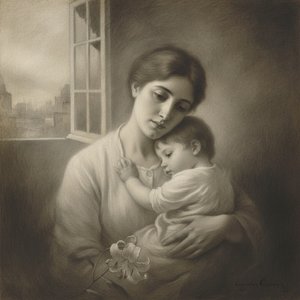
Maternity


Experience Eugène Carrière’s ‘Maternity,’ a poignant monochrome portrait of a nursing mother and child, capturing tender gestures and spiritual resonance. This iconic Symbolist work by the ‘painter of Breast-Feeding’ invites contemplation on domestic tranquility and inner light.
 Weiterlesen
Entdecken Sie Eugène Anatole Carrières (1849-1906) eindringliche monochrome Gemälde, einen Schlüsselkünstler des französischen Symbolismus. Intime Szenen & Einfluss auf Picasso – sein Vermächtnis bei TopImpressionists.
Giclée / Kunstdruck
Giclée- oder Leinwanddruck in Museumsqualität mit schneller Produktion und flexiblen Veredelungsoptionen. ( Handgemalte Reproduktion bestellen Zum digitalen Bild wechseln)




P118B €10

P118H €10

P118W €10

P438Z €10

P508JH €12

P508YH €12

P805H €10

P805Z €10

P919BZ €10

P919G €10

P919XJ €10

P959ZH €10

P968JZ €12

W106C €8

W218G €10

W218JH €8

W218Y €10

W307PJ €10

W316G €10

W316PJ €8

W316Y €10

W398PJ €8

W4111J €10

W500HY €15

W500JH €15

W692G €12

W849H €8

W940BG €15

W953PJ €8




Standardformat
individuell anpassbar
CM
INCH
Wählen Sie aus unseren vordefinierten Formaten, die den ursprünglichen Proportionen des Kunstwerks entsprechen.
Loading sizes...

Breite
Höhe
Geben Sie die benötigte Breite und Höhe an, damit der Druck perfekt in Ihren Rahmen oder an Ihre Wand passt. Ein Druck kann nur beschnitten, aber niemals größer als das Originalbild angefertigt werden; daher verliert ein Format mit anderen Proportionen einen Teil des Bildes. Wir senden Ihnen ein digitales Mockup zur Freigabe, bevor wir den Druck ausführen. Das auf dieser Seite gezeigte Bild zeigt nicht den tatsächlichen Beschnitt – dies ist nur im Mockup ersichtlich.
Weltweiter Versand () innerhalb von 2 Wochen statt der üblichen 4/5 Wochen. (27 Oktober)

Kostenloser weltweiter Expressversand

Hochwertige Leinenleinwand

Umfassender Versicherungsschutz beim Versand

Zollgebühren-Rückerstattungsgarantie

Garantie für exakte Farbtreue

100 Tage Rückgaberecht (nur bei Mängeln)

100% Geld-zurück-Garantie

Mengenrabatt verfügbar
 Die Glasoption ist nur für Größen unter 110 cm verfügbar.

Maternity
Giclée / Kunstdruck
Format der Reproduktion
-


Endpreis
€ 61
A Portrait of Maternal Reverence: Eugène Carrière’s Maternity
Eugène Anatole Carrière stands apart from his contemporaries—Monet, Degas, Cézanne—not merely in stylistic preference but in a profound philosophical commitment to capturing the essence of human experience. Born in 1849 in Gournay-sur-Marne, France, he embarked on an artistic journey marked by unwavering dedication to exploring themes of spirituality and domestic tranquility. His formative years were shaped by exposure to Rubens’s luminous palette and the crucible of imprisonment in Dresden, experiences that instilled within him a sensitivity to light and color—though he would ultimately abandon them for a distinctive monochrome aesthetic. This singular approach cemented his reputation as “the painter of Breast-Feeding,” a genre he pursued with fervent conviction throughout his prolific career. ### The Monochrome Palette: A Symbol of Inner Light Carrière’s artistic signature is undeniably his masterful manipulation of color—or rather, the deliberate absence thereof. Rejecting the Impressionist obsession with capturing fleeting moments of visual sensation, he sought to distill emotion into its purest form: a subdued brown hue that permeated nearly all his canvases. This stylistic choice wasn't simply an aesthetic preference; it represented a deeply held belief in the primacy of inner contemplation and spiritual illumination. As Edmond de Goncourt eloquently observed during Carrière’s lifetime, “This Carrière really is the painter of Breast-Feeding.” He meticulously studied gestures and expressions, striving to convey not just what he saw but what he felt—a palpable resonance with the viewer's own emotional landscape. The monochromatic palette served as a conduit for conveying profound psychological depth, mirroring the stillness and serenity of domestic life. ### Maternity: A Study in Tender Gestures and Spiritual Resonance “Maternity,” completed in 1890, exemplifies Carrière’s artistic vision at its zenith. This evocative portrait depicts a woman cradling her infant child, bathed in soft light emanating from an unseen source—a deliberate allusion to divine grace and nurturing compassion. The composition is strikingly simple yet powerfully expressive: the woman's gaze directs upwards, suggesting contemplation of something beyond the immediate physical realm; her hands are outstretched, conveying warmth and protection. Two figures flank the central scene, adding depth and subtly hinting at the broader context of familial devotion. Véronique Milin Dumesnil, Carrière’s granddaughter, recounted that the models for Maternity were his wife and one of their seven children—Jean René or Leon—underscoring the artist's personal connection to the subject matter. ### Technique and Historical Context: Embracing Rubensian Influence Carrière’s technique is characterized by meticulous detail and painstaking layering of paint—a testament to his unwavering commitment to capturing nuanced textures and tonal variations. He achieved this remarkable effect through a process of gradual buildup, applying thin glazes over thicker underlayers to create an illusion of depth and luminosity despite the absence of color. This approach harkens back to Rubens’s masterful use of chiaroscuro—the dramatic interplay between light and shadow—a technique that Carrière adopted with unwavering fidelity. The painting emerged during a period marked by growing interest in Symbolism, a movement that sought to transcend mere representation and delve into realms of psychological and spiritual significance. Like many Symbolist artists, Carrière aimed to evoke emotion rather than depict reality objectively, inviting viewers to contemplate the profound mysteries of human existence. ### Legacy and Emotional Impact: A Timeless Expression of Maternal Love “Maternity” remains a captivating masterpiece—a testament to Carrière’s artistic genius and his unwavering belief in the transformative power of art. Its enduring appeal lies not only in its exquisite craftsmanship but also in its ability to resonate deeply with audiences across generations. The painting captures the essence of maternal tenderness, conveying a sense of serenity and spiritual contemplation that transcends time and culture. It serves as an inspiring reminder of the beauty and significance of familial bonds—a timeless expression of love, compassion, and faith.Fragen & Antworten
Wo kann ich eine digitale Datei von "Maternity" von Eugène Anatole Carrière erwerben?
Ein digitales Bild von "Maternity" von Eugène Anatole Carrière kann auf der entsprechenden Digitales Kunstwerk-Seite erworben werden: hochauflösender digitaler Bild-Download.
Welche Druckgröße und welches Format werden für „Maternity“ empfohlen?
Für „Maternity“ wird ein Druckformat von Large in der Ausrichtung Portrait empfohlen.
Wer hat "Maternity" geschaffen und in welchem Jahr?
"Maternity" wurde von Eugène Anatole Carrière im Jahr 1880 geschaffen.
Künstlerbiografie
**Frühes Leben und Ausbildung**
Eugène Anatole Carrière, ein renommierter französischer Symbolist, wurde am 16. Januar 1849 in Gournay-sur-Marne, Seine-Saint-Denis, geboren. Er studierte an der École des Beaux-Arts in Paris und später unter Cabanel, was den Grundstein für seine zukünftigen künstlerischen Bemühungen legte.**Künstlerischer Stil und Einflüsse**
Carrrières Gemälde sind am besten bekannt für ihre charakteristische braune Monochrompalette, die viele Kunstbegeisterte fasziniert hat. Seine Arbeit wurde von der Kunst Peter Paul Rubens beeinflusst, dem er während seiner Zeit als Gefangener in Dresden ausgesetzt war. Dieser Einfluss ist in den leuchtenden Farben seiner frühen Gemälde erkennbar. **Die junge Mutter (1879)**, eines seiner frühesten bemerkenswerten Werke, befindet sich heute im Musée des Beaux-Arts de Rouen. Dieses Werk markierte den Beginn seiner Themen aus dem häuslichen Leben, die zu einem Kennzeichen seines künstlerischen Stils werden sollten.**Bemerkenswerte Werke und Ausstellungen**
- **Das kranke Kind (Montargis)**
- **Die erste Kommunion (Toulon)**
- **Porträt von Louis-Henri Devillez (1887)**, ein hochgelobtes Werk, das Carrrières Geschick im Einfangen der Essenz seiner Motive zeigt.
**Vermächtnis und Einfluss auf die moderne Kunst**
Carrrières monochromer Stil findet sich in den Werken von Pablo Picasso, insbesondere während seiner Blauen Periode, wieder. Dieser Einfluss ist ein Beweis für Carrrières bleibenden Einfluss auf die moderne Kunst.- Erkunden Sie weitere Werke von Carrière unter TopImpressionists.com/eugène anatole carrière
- Besuchen Sie das Musée des Beaux-Arts de Rouen, in dem einige seiner frühen Arbeiten zu sehen sind, unter discovering the musée des beaux-arts de carcassonne (france)
- Erfahren Sie mehr über Symbolismus und seinen Einfluss auf die Kunst unter the symbolism art movement

Eugène Anatole Carrière
1849 - 1906 , Frankreich
Kurzinfos
- Bemerkenswerte Werke:
- Das kranke Kind (Montargis)
- Die erste Kommunion (Toulon)
- Porträt von Louis-Henri Devillez
- Geburtsdatum: 16. Januar 1849
- Geburtsort (Stadt, Land): Gournay-sur-Marne, Frankreich
- Künstler Oder Bewegungen, Die Von Diesem Künstler Beeinflusst Wurden: ['Pablo Picasso (Blaue Periode)']
- Künstler, Die Diesen Künstler Beeinflussten: ['Peter Paul Rubens']
- Künstlerische Bewegung/Stil: Symbolismus
- Nationalität: Französisch
- Sterbedatum: 1906
- Vollständiger Name: Eugène Anatole Carrière
Ähnliche Artikel

The Evocative Realm of Symbolism: Exploring Meaning & Mysticism in Late 19th-Century Art
Explore the captivating world of Symbolism art! Discover key artists, defining themes & its lasting influence on modern movements. A deep dive into late 19th-century masterpieces.

Monochrome Visions: Exploring the Aesthetic & Historical Significance of Black & White Photography
Explore the rich history & artistic power of black and white photography. From early techniques to iconic masters like Ansel Adams, discover why monochrome continues to captivate art lovers today. Expert insights for collectors.

The Subtleties of Shade: Exploring Monochrome's Enduring Power in Art History & Contemporary Practice
Explore the captivating world of monochrome painting! Discover its rich history, from Renaissance chiaroscuro to contemporary minimalism. Uncover the emotional power and artistic techniques behind this enduring art form.
Eugène Carrière: Der 'Seelenmaler' und die Intime Vision des Symbolistischen Porträts
Entdecken Sie das faszinierende Werk von Eugène Carrière, dem 'Seelenmaler' des Symbolismus. Erfahren Sie mehr über seinen einzigartigen Stil, seine berühmten Porträts und sein Vermächtnis in der Kunstgeschichte.

Spätmittelalterliche Meisterwerke: 10 Kunstwerke für Ihr Zuhause | TopImpressionists
Entdecken Sie die 10 bedeutendsten Meisterwerke des Spätmittelalters! Erfahren Sie die Geschichten hinter Jan van Eyck, Rogier van der Weyden & mehr. Hochwertige Kunst Reproduktionen für Ihr Zuhause – jetzt auf TopImpressionists.com!
Entdecken Sie Kunstwerke, die nach Themen, Stilen und Merkmalen sortiert sind.
