


 In echtem Maßstab anzeigen
 Versenden als Grußkarte
 Teilen
 Details anzeigen
 Leitfaden öffnen

 Herunterladen
 Ähnliche Objekte
 Röntgenaufnahme
 Diashow
 Besucherstatistiken
Olympic Theater


A vibrant 1907 watercolour capturing the electric energy of a live stage performance by Ashcan School master Everett Shinn, inviting you to bring this captivating glimpse of early 20th-century theatre into your collection.
 Mehr anzeigen
Entdecken Sie Everett Shinn (1876-1953), Schlüsselfigur der Ashcan School! Seine realistischen Darstellungen pulsierenden New Yorks & Theaterwelten fesseln.
Giclée / Kunstdruck
Giclée- oder Leinwanddruck in Museumsqualität mit schneller Produktion und flexiblen Veredelungsoptionen. ( Handgemalte Reproduktion kaufen Zum digitalen Bild wechseln)




P118B €10

P118H €10

P118W €10

P438Z €10

P508JH €12

P508YH €12

P805H €10

P805Z €10

P919BZ €10

P919G €10

P919XJ €10

P959ZH €10

P968JZ €12

W106C €8

W218G €10

W218JH €8

W218Y €10

W307PJ €10

W316G €10

W316PJ €8

W316Y €10

W398PJ €8

W4111J €10

W500HY €15

W500JH €15

W692G €12

W849H €8

W940BG €15

W953PJ €8




Standardformat
individuell anpassbar
CM
INCH
Wählen Sie aus unseren vordefinierten Formaten, die den ursprünglichen Proportionen des Kunstwerks entsprechen.
Loading sizes...

Breite
Höhe
Geben Sie die Breite und die Höhe an, die Sie benötigen, damit der Druck perfekt in Ihren Rahmen oder an Ihre Wand passt. Ein Druck kann nur beschnitten werden und niemals größer als das Originalbild gemacht werden; daher verliert ein Format mit einer anderen Proportion einen Teil des Bildes. Wir senden Ihnen ein digitales Mockup zur Freigabe, bevor wir den Druck ausführen. Das auf dieser Seite gezeigte Bild zeigt nicht den tatsächlichen Beschnitt – dies ist nur im Mockup ersichtlich.
Weltweiter Versand () innerhalb von 2 Wochen statt der üblichen 4/5 Wochen. (18 Oktober)

Kostenloser weltweiter Expressversand

Hochwertige Leinenleinwand

Vollständiger Versicherungsschutz beim Versand

Zollgebühren-Rückerstattungsgarantie

Garantie für exakte Farbtreue

100-tägiges Rückgaberecht (nur bei Mängeln)

100% Geld-zurück-Garantie

Angebot für Mengenrabatt
 Die Glasoption ist nur für Größen unter 110 cm verfügbar.

Olympic Theater
Giclée / Kunstdruck
Format der Reproduktion
-


Gesamtpreis
€ 60
A Glimpse Into the Glittering Past
In the heart of the early twentieth century, the pulse of urban life beat strongest within the velvet-draped confines of the theater, and no artist captured this electric atmosphere quite like Everett Shinn. His 1907 masterpiece, Olympic Theater, serves as a luminous window into a bygone era of spectacle and stagecraft. Through the delicate medium of watercolour, Shinn invites us to step away from the grit of the city streets and into the warmth of a live performance. The scene is centered upon a man on stage, poised with a hat in hand, embodying the formal elegance and theatrical flair of the period. As he presents himself to the crowd, the viewer is not merely an observer but a participant, caught in the flickering light and the shared breath of an audience held in suspense.
The technique employed in this work reveals Shinn’s profound mastery over the fluidity of watercolour. Rather than relying on heavy, opaque layers, he utilizes the transparency of the medium to create a sense of movement and ephemeral light. This allows the colors to bleed and blend with a rhythmic energy that mirrors the very essence of a theatrical production. The composition is expertly balanced, guiding the eye from the central performer toward the surrounding figures—fellow actors and captivated spectators—creating a layered depth that suggests a much larger, bustling world just beyond the frame. Every brushstroke contributes to a sense of spontaneity, as if the artist were sketching the scene in real-time, capturing the fleeting magic of a moment that would otherwise vanish into history.
The Soul of the Ashcan School
To understand Olympic Theater, one must understand Shinn’s place within the legendary Ashcan School. While many of his contemporaries focused on the darker, more somber realities of urban poverty, Shinn—often referred to as "the dandy of the realists"—found beauty in the dazzling lights of nightlife and the vibrant energy of entertainment. This painting represents a sophisticated intersection of realism and romanticism. There is an undeniable truth to the depiction of the clothing, the stage setting, and the social etiquette of 1907, yet there is also a poetic idealization of the theater as a sanctuary of joy and human connection.
For the discerning collector or interior designer, this piece offers more than just historical interest; it provides a profound emotional resonance. The artwork possesses a unique ability to breathe life into a room, injecting a sense of sophisticated nostalgia and cultural richness. Whether placed in a contemporary gallery setting or a classic study, the painting acts as a conversation piece that celebrates the enduring human desire for storytelling and spectacle. It is an invitation to appreciate the artistry of the past and to bring a fragment of the world's most enchanting stages into the modern home.
Fragen & Antworten
Kann ich eine Ölreproduktion von "Olympic Theater" bestellen?
"Olympic Theater" ist als eine handgemalte Ölreproduktion auf Leinenleinwand erhältlich. Die Bestellung kann auf der Seite Handgemalte Reproduktion mit einer Auswahl an verschiedenen Größen vorgenommen werden.
Was sind die Technik und das Entstehungsdatum von "Olympic Theater" von Everett Shinn?
"Olympic Theater" entstand im Jahr 1907 in Watercolor.
Ist "Olympic Theater" von Everett Shinn ein Gemälde, eine Zeichnung oder ein Druck?
Im Katalog ist "Olympic Theater" von Everett Shinn als WallArt geführt. Die Kategorie hilft dabei, ähnliche Werke zu finden.
Biografie des Künstlers
Everett Shinn – Ein Pionier der Ashcan School und Meister des Pastells
Everett Shinn (1876–1953) war mehr als nur ein Maler; er war eine lebendige Stimme der amerikanischen Kunst des frühen 20. Jahrhunderts und eine zentrale Figur der Ashcan School, einer Künstlergruppe, die sich durch ihren Fokus auf realistische Darstellungen des urbanen Lebens auszeichnete. Seine Werke erzählen Geschichten von New York City und dessen sozialem Kontext und bieten einen einzigartigen Einblick in eine Zeit großer Veränderung und künstlerischer Innovation. Bereits als Jugendlicher zeigte Shinn außergewöhnliches zeichnerisches Talent und fand seine erste künstlerische Ausbildung am Spring Garden Institute in Philadelphia, wo er sich intensiv mit technischen Zeichnungstechniken beschäftigte. Dieser frühe Einfluss prägte sein später Werk nachhaltig und führte ihn zum renommierten Pennsylvania Academy of the Fine Arts, wo er weiterhin seine Fähigkeiten entwickelte und eine solide Grundlage für seine künstlerische Karriere legte.Die Geburt eines Beobachtergenies
Shinn begann seine künstlerische Laufbahn als Illustrator für Zeitungen wie die *Philadelphia Press*, wobei sein außergewöhnliches Können darin lag, Bewegung einzufangen – eine Fähigkeit, die jedoch bald durch Fotografie überholt wurde. Diese Erfahrung lehrte ihn nicht nur technische Fertigkeiten, sondern auch eine besondere Aufmerksamkeit für das Leben um ihn herum und eine Leidenschaft für die Darstellung von Alltagssituationen und gesellschaftlichen Ereignissen. Seine Arbeit für verschiedene Publikationen ermöglichte ihm einen umfassenden Überblick über die amerikanische Gesellschaft seiner Zeit und inspirierte ihn zu einer einzigartigen künstlerischen Perspektive. Besonders beeindruckend war seine Fähigkeit, die Energie und Dynamik des modernen Lebens einzufangen und gleichzeitig eine tiefere Bedeutungsebene einzubringen – ein Merkmal, das seinen späteren Werken stets zugrunde lag.Die Ashcan School und ihre Herausforderungen
Shinn fand sein künstlerisches Zuhause innerhalb der Ashcan School, einer Gruppe von Künstlern, die sich gegen die akademischen Konventionen ihrer Zeit auflehnten und stattdessen eine neue Ästhetik verfolgten – eine Ästhetik, die Ehrlichkeit und Authentizität über idealisierte Schönheit stellte. Diese Künstlergruppe konzentrierte sich insbesondere auf die Darstellung sozialer Probleme und gesellschaftlicher Konflikte und zeigte damit ein tiefes Verständnis für die Herausforderungen und Spannungen der modernen Gesellschaft. Die Ashcan School wurde von Robert Henri angeführt und setzte neue Maßstäbe für künstlerische Ausdruckskraft und soziale Verantwortung. Shinn arbeitete eng mit anderen Künstlern zusammen, darunter George Luks und John Sloan, um diese Vision zu verwirklichen und einen wichtigen Beitrag zur Entwicklung amerikanischer Kunst zu leisten. Seine Zusammenarbeit mit Henri und seinen Kollegen prägte sein künstlerisches Werk und stärkte seine Überzeugung von der Bedeutung einer kritischen Perspektive auf die Welt.Ein Meister des Pastells und eine Leidenschaft für das Theater
Shinn zeichnete sich besonders durch seine außergewöhnliche Technik aus – insbesondere durch seine Verwendung von Pastell als Kunstmedium. Während viele seiner Kollegen Ölfarben bevorzugten, entdeckte Shinn die einzigartige Möglichkeit, Farbe und Licht mit einer besonderen Sensibilität zu kombinieren und gleichzeitig eine hohe Detailtreue zu gewährleisten. Diese Wahl des Mediums ermöglichte ihm eine besondere künstlerische Freiheit und erlaubte ihm, Emotionen und Stimmungen auf eine Weise auszudrücken, die andere Künstler nicht erreichen konnten. Seine Gemälde und Pastelle sind bekannt für ihre lebendige Farbgebung und ihre Fähigkeit, die Atmosphäre einer bestimmten Umgebung einzufangen – ein Merkmal, das seinen Werken stets besondere Aufmerksamkeit schenkte. Darüber hinaus fand Shinn Inspiration im Theater und dessen Dramatik und Darstellung von Bühnenbildern und Figuren. Er betrachtete das Theater nicht nur als Quelle für künstlerische Ideen, sondern auch als Ort der Begegnung zwischen Künstlern und Publikum und sah darin eine Möglichkeit zur Untersuchung menschlicher Beziehungen und Emotionen. Seine Arbeiten zum Thema Theater zeigen oft eine besondere Sensibilität für Licht und Schatten sowie eine Fähigkeit, die Spannung und Dramatik einer Szene auf beeindruckende Weise zu vermitteln.Ein Vermächtnis der Ehrlichkeit und Beobachtung
Everett Shinn hinterließ ein bedeutendes künstlerisches Erbe und wird bis heute als einer der wichtigsten Vertreter der Ashcan School und amerikanischer Realismus betrachtet. Seine Werke erinnern uns daran, dass Kunst nicht nur Schönheit darstellen soll, sondern auch die Welt um uns herum kritisch hinterfragen kann – eine Aufgabe, die er mit außergewöhnlicher Leidenschaft und Beobachtungsgabe erfüllte. Durch seine einzigartige künstlerische Vision und sein Engagement für soziale Verantwortung wird Shinn weiterhin als Inspirationsquelle für Künstler und Kunstliebhaber dienen und sein Werk als ein wichtiger Bestandteil der amerikanischen Kunstgeschichte erhalten bleiben. Seine Fähigkeit, das Leben um ihn herum auf eine Weise zu sehen und darzustellen, die sowohl ehrlich als auch tiefgründig ist, macht ihn zu einem unverzichtbaren Teil unserer künstlerischen Erinnerung.
Everett Shinn
1876 - 1953 , Vereinigte Staaten von Amerika
Eckdaten zum Künstler
- Beeinflusste Künstler:
- Robert Henri
- John Sloan
- Bemerkenswerte Werke: ["Study to 'Song of Songs IV'"]
- Einfluss Auf Künstler: ['Amerikanischer Realismus']
- Geburtsdatum: 6. November 1876
- Geburtsort: Woodstown, Vereinigte Staaten
- Künstlerische Richtung: Ashcan School, Realismus
- Nationalität: Amerikanisch
- Todatum: 1. Mai 1953
- Vollständiger Name: Everett Shinn
Verwandte Artikel

The Unvarnished Truth: A Cultural Journey Through the Soul of American Realism
Explore the profound beauty of American Realism. From the Ashcan School's urban grit to intimate portraits, discover how artists captured the authentic soul of a nation through unvarnished truth and masterful observation.
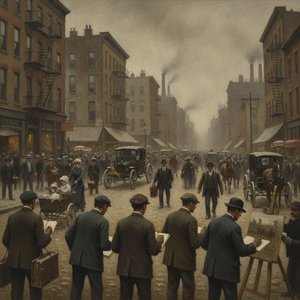
The Ashcan School: Capturing the Raw, Unfiltered Soul of Urban Life through American Realism
Discover the raw beauty of the Ashcan School. Explore how masters like Bellows and Henri captured the gritty, vibrant soul of early 20th-century New York through profound American Realism and evocative urban landscapes.

Exklusive Hochzeitsmomente: Mit Live-Malerei schaffen Sie bleibende Kunstwerke und einzigartige Erinnerungen für Ihre Gäste
Erfahren Sie, wie Live-Malerei Ihre Hochzeit unvergesslich macht. Entdecken Sie exklusive Ideen für bleibende Kunstwerke!

Capturing the Light: A Journey Through the Soul of American Impressionism and the Hudson River School
Explore the luminous beauty of American Impressionism and the Hudson River School. Discover a curated journey through light, landscape, and history, celebrating the enduring legacy of masters through exquisite, hand-painted oil reproductions for the discerning art lover.