


 In echtem Maßstab anzeigen
 Versenden als Grußkarte
 Teilen
 Details anzeigen
 Leitfaden öffnen

 Herunterladen
 Ähnliche Objekte
 Röntgenaufnahme
 Diashow
 Besucherstatistiken
Stables
 Acrylfarbe
- Wandkunst
- German Expressionism
 1913
1913 73.0 x 157.0 cm
Franz Marc’s “Stables,” a vibrant Expressionist masterpiece housed in NYC's Guggenheim Museum, explodes with bold color and geometric abstraction—reflecting his belief in art’s transformative power to capture primal beauty and spiritual contemplation. Explore this iconic artwork today!
 Mehr anzeigen
Entdecken Sie Franz Marc (1880-1916), Pionier des Expressionismus & Mitbegründer der 'Blauen Reiter'. Ikonische Tierbilder, leuchtende Farben & spirituelle Themen erwarten Sie! Erfahren Sie mehr über sein Vermächtnis!
Handgefertigte Ölreproduktion
Handgemaltes Ölgemälde auf Leinwand in Ihrer Wunschgröße und mit Rahmen, auf Bestellung von unseren Künstlern angefertigt. ( Zum Druck wechseln Zum digitalen Bild wechseln)




P118B €10

P118H €10

P118W €10

P438Z €10

P508JH €12

P508YH €12

P805H €10

P805Z €10

P919BZ €10

P919G €10

P919XJ €10

P959ZH €10

P968JZ €12

W106C €8

W218G €10

W218JH €8

W218Y €10

W307PJ €10

W316G €10

W316PJ €8

W316Y €10

W398PJ €8

W4111J €10

W500HY €15

W500JH €15

W692G €12

W849H €8

W940BG €15

W953PJ €8




Standardformat
individuell anpassbar
CM
INCH
Wählen Sie aus unseren vordefinierten Formaten, die den ursprünglichen Proportionen des Kunstwerks entsprechen.
Loading sizes...

Breite
Höhe
Sie können Ihre eigenen Maße eingeben, um einen bestimmten Rahmen oder Platz auszufüllen. Wenn die gewählte Größe nicht den Proportionen des Originalbildes entspricht, werden wir das Kunstwerk entweder beschneiden oder das Gemälde durch zusätzliche, handgemalte Elemente erweitern. Ein digitales Mockup wird Ihnen zur Genehmigung zugesandt, bevor die Produktion beginnt.
Bitte beachten Sie, dass die Bildschirmvorschau nicht die tatsächliche Beschneidung oder Erweiterung widerspiegelt. Nur das Mockup zeigt die endgültige Komposition exakt an.
Obwohl Sondermaße verfügbar sind, empfehlen wir, eine Größe aus der vordefinierten Liste zu wählen, um die ursprünglichen Proportionen beizubehalten.
Beispiele für Anpassungsmöglichkeiten: Gesicht durch Kundenfoto ersetzen; Haustier hinzufügen (z. B. Katze durch Hund ersetzen); eine versteckte Nachricht im Hintergrund einfügen; Hintergrundlandschaft oder -elemente ändern.
Nach der Bestellung wird das TopImpressionists.com-Team dem Kunden Anweisungen per E-Mail zusenden und eine Mockup-Vorschau bereitstellen.
Nach der Bestellung wird das TopImpressionists.com-Team dem Kunden Anweisungen per E-Mail zusenden und eine Mockup-Vorschau bereitstellen.
Weltweiter Versand () in nur 3 bis 4 Wochen statt der üblichen 5 Wochen. (13 Oktober). Keine Kompromisse bei der Qualität.

Kostenloser weltweiter Expressversand

Hochwertige Leinenleinwand

Vollständiger Versicherungsschutz beim Versand

Zollgebühren-Rückerstattungsgarantie

Garantie für exakte Farbtreue

100-tägiges Rückgaberecht (nur bei Mängeln)

100% Geld-zurück-Garantie

Angebot für Mengenrabatt
 Die Glasoption ist nur für Größen unter 110 cm verfügbar.

Stables
Reproduktionsmedium
Format der Reproduktion
-


Gesamtpreis
€ 232
A Visionary Embrace of Nature’s Essence
Franz Marc’s “Stables,” completed in 1913, stands as a cornerstone of German Expressionism—a movement that sought to convey raw emotion and subjective experience rather than objective representation. More than just a depiction of livestock within a barn, it's an exploration of primal beauty and spiritual contemplation, reflecting Marc’s unwavering belief in the transformative power of art.
- Artist: Franz Moritz Wilhelm Marc (1880-1916)
- Nationality: German
- Movement: Expressionism
- Location: Solomon R. Guggenheim Museum, New York City
Cubist Influences and Bold Color Palette
Marc’s artistic journey was profoundly shaped by his time in Paris, where he encountered the groundbreaking innovations of Picasso, van Gogh, Gauguin, and Matisse—artists who championed expressive color and fractured perspectives. “Stables” embodies this influence, utilizing Cubism's characteristic geometric simplification to dissect forms and present multiple viewpoints simultaneously. However, unlike many Cubist predecessors, Marc abandons strict analytical rigor for a vibrant emotional resonance.
The painting explodes with hues of crimson, sapphire blue, lemon yellow, and verdant green—colors deliberately chosen not merely for visual appeal but as conduits for conveying profound feelings. These shades pulsate with energy, mirroring the dynamism inherent in the animal subjects themselves.
Symbolism Rooted in Observation
Marc’s fascination with animals stemmed from meticulous observation at the Berlin Zoo, where he spent countless hours sketching and studying their forms. Animals weren't simply subjects; they functioned as symbols—representing truth, purity, and beauty—concepts central to Marc’s philosophical worldview. In “Stables,” the horses are rendered in abstracted shapes that merge seamlessly with their surroundings, symbolizing a harmonious connection between humanity and nature.
The geometric abstraction serves not to diminish the animals' presence but rather to elevate them to a realm of spiritual significance. Each color contributes to this overarching message—red representing vitality and passion, blue embodying serenity and contemplation, yellow conveying optimism and illumination.
Historical Context: Facing Uncertainty
"Stables" was conceived during the tumultuous prelude to World War I, a period marked by anxieties about societal upheaval and impending conflict. Yet, despite this backdrop of apprehension, Marc retained an unwavering faith in art’s capacity to inspire regeneration—a conviction that would tragically prove premature when he succumbed to illness at the young age of 36.
Nevertheless, “Stables” continues to resonate powerfully today, securing its place as a seminal work within Expressionism and influencing subsequent movements like Abstract Expressionism. Artists such as Jackson Pollock and Willem de Kooning recognized Marc’s pioneering approach to color and emotion—a legacy that transcends time and reaffirms the enduring power of art to communicate profound spiritual truths.
A Lasting Impression
Franz Marc's "Stables" remains a testament to his artistic vision—a bold declaration of faith in nature’s beauty and an exploration of the human spirit. Its vibrant colors, fractured forms, and symbolic depth continue to captivate viewers, inviting contemplation on themes of truth, purity, and harmony.
Fragen & Antworten
Für welchen Raum wird "Stables" von Franz Marc empfohlen?
Eine Reproduktion von „Stables“ passt hervorragend in ein Wohnbereich.
Wer hat "Stables" erschaffen?
"Stables" wurde von Franz Marc geschaffen. Die Informationen auf dieser Seite beschreiben das Originalwerk von Franz Marc.
Wirken die Farben von "Stables" eher kräftig oder sanft?
"Stables" von Franz Marc weist eine Ausgewogen Farbintensität auf.
Welche nationale Herkunft steht hinter der German Expressionism von „Stables“?
"Stables" verbindet die German Expressionism-Bewegung durch den Geburtsort ihres Schöpfers mit Deutschland.
Aus welchen Materialien besteht "Stables" und in welchem Stil ist es gehalten?
"Stables" von Franz Marc verbindet die Technik der Acrylfarbe mit dem Stil der German Expressionism. Technik und Stil beschreiben die Herstellung sowie die künstlerische Ausrichtung des Werkes.
Welcher Phase der Karriere von Franz Marc entspricht das Datum 1913 von „Stables“?
Die Datierung auf 1913 ordnet „Stables“ der Mature Period von Franz Marcs künstlerischer Entwicklung zu.
Wie treffen Bewegung und Epoche in "Stables" von Franz Marc aufeinander?
In "Stables" von Franz Marc trifft die German Expressionism-Strömung auf die Ära der Moderne.
Wo kann ich eine digitale Abbildung von "Stables" von Franz Marc kaufen?
Um eine digitale Datei von "Stables" von Franz Marc zu erhalten, bestellen Sie ein hochauflösender digitaler Bild-Download auf diese Seite.
Biografie des Künstlers
Franz Marc: Ein Pionier des Deutschen Expressionismus
Frühes Leben und Ausbildung
- Franz Moritz Wilhelm Marc wurde am 8. Februar 1880 in München, Deutschland, geboren.
- Sein Vater, Wilhelm Marc, war Landschaftsmaler und beeinflusste seinen Sohn zunächst durch seine künstlerischen Neigungen.
- Marc erwog kurz Theologie, bevor er sich der Kunst widmete und nach dem Besuch der Universität München an der Akademie der Bildenden Künste in München studierte.
- Zu den frühen Studien gehörten das Kopieren von Meistern und die Erforschung verschiedener künstlerischer Techniken.
Künstlerische Entwicklung und Einflüsse
- Anfangs wurden Marcs Werke von Impressionismus und akademischen Malstilen beeinflusst.
- Ein entscheidender Moment war seine Besuche in Paris, wo er die Werke von Vincent van Gogh entdeckte und seine Verwendung von Farbe und emotionaler Ausdruck maßgeblich prägte.
- Er experimentierte mit verschiedenen künstlerischen Gruppen wie der Neuen Künstlervereinigung München, bevor er Der Blaue Reiter gemeinsam gründete.
- Auch Robert Delaunays Werk beeinflusste Marcs Erkundung abstrakter Formen und lebendiger Farben.
Der Blaue Reiter und Schlüsselwerke
- Im Jahr 1911 gründete Marc gemeinsam mit Wassily Kandinsky Der Blaue Reiter (Der Blaue Reiter), eine Zeitschrift und Künstlergruppe, die für den deutschen Expressionismus von zentraler Bedeutung wurde.
- Diese Gruppe suchte nach spiritueller Bedeutung in der Kunst und lehnte traditionelle künstlerische Konventionen ab.
- Bekannte Werke aus dieser Zeit sind:
- Der Tiger (1912) – zeigend seinen sich entwickelnden Stil und seine symbolische Verwendung von Tieren.
- Rehdamee (1912) - demonstrierend eine wachsende Konzentration auf Tierdarstellungen.
- Der Turm der blauen Pferde, Die Füchse und das Schicksal der Tiere (1913) – repräsentierend die Culmination seiner künstlerischen Vision.
Themen und Künstlerischer Stil
- Marcs Kunst ist durch ihre lebendigen Farben, vereinfachte Formen und symbolische Darstellung von Tieren gekennzeichnet.
- Er glaubte, dass Tiere eine Reinheit und eine spirituelle Verbindung zur Natur besaßen, die der Mensch verloren hatte.
- Seine Verwendung von Farbe diente nicht nur der Beschreibung, sondern auch dem Ausdruck, Emotionen und innere Zustände zu vermitteln.
- Er versuchte, die Essenz seiner Motive darzustellen, anstatt realistische Darstellungen.
Erster Weltkrieg und tragisches Ende
- Mit dem Ausbruch des Ersten Weltkriegs im Jahr 1914 wurde Marc in die deutsche Armee eingezogen.
- Trotz seines Versuchs, aufgrund seiner künstlerischen Tätigkeit von der Dienstpflicht freigestellt zu werden, diente er als Kavallerieoffizier.
- Er starb am 4. März 1916 im Verlauf der Schlacht an der Verdun tragisch.
- Sein Tod beendete eine vielversprechende Karriere, festigte aber gleichzeitig seinen Platz in der Kunstgeschichte.
Vermächtnis und historische Bedeutung
- Marcs Werk bleibt hoch einflussreich für seine expressive Verwendung von Farbe, symbolische Bilder und spirituelle Tiefe.
- Er gilt als eine Schlüsselgestalt bei der Entwicklung des Deutschen Expressionismus und als Vorläufer der abstrakten Kunst.
- Seine Gemälde werden in großen Museen auf der ganzen Welt ausgestellt, darunter das Lenbachhaus in München, das eine umfangreiche Sammlung seiner Werke beherbergt.
- Marcs künstlerische Vision inspiriert weiterhin Künstler und fesselt das Publikum bis heute.

Franz Marc
1880 - 1916 , Deutschland
Eckdaten zum Künstler
- Beeinflusste Kunstrichtungen: ['Abstrakte Kunst']
- Beeinflusste Künstler: ['Vincent van Gogh']
- Bekannte Werke:
- Der Tiger (1912)
- Rehdamee (1912)
- Turm der blauen Pferde (1913)
- Die Füchse und das Schicksal
- Geburtsdatum: 08. Februar 1880
- Geburtsort: München, Deutschland
- Künstlerische Richtung: Deutscher Expressionismus
- Nationalität: Deutsch
- Todatum: 4. März 1916
- Vollständiger Name: Franz Marc
Verwandte Artikel
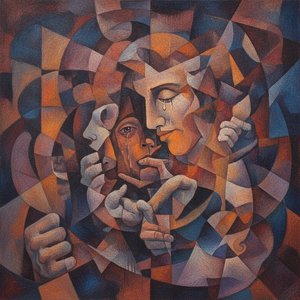
Beyond the Surface: Exploring the Emotional Depth of Cubist Expressionism
Discover the profound emotional resonance within Cubist Expressionism. Explore how fragmented forms and geometric abstraction convey deep human feeling through an expert art-historical lens for the discerning collector.
Entdecken Sie Kunstwerke, die nach Themen, Stilen und Merkmalen sortiert sind.


