

 Vorschau anzeigen
 Versenden
 Teilen
 Details anzeigen
 Leitfaden

 Herunterladen
 Ähnliche Objekte
 Röntgenaufnahme
 Diashow
 Fragen & Antworten
 Statistiken
Há-tchoo-túc-knee, Snapping Turtle, a Half-breed

- 73.0 x 60.0 cm


George Catlin's "Há-tchoo-túc-knee" captures a Native American man with striking detail and cultural significance. Explore this powerful portrait from 1834, showcasing Catlin’s pioneering work documenting Indigenous life.
 Weiterlesen
Entdecken Sie George Catlin (1796-1872), den Pionier der amerikanischen Malerei, der das Leben & die Kultur der Ureinwohner durch beeindruckende Porträts festhielt.
Giclée / Kunstdruck
Giclée- oder Leinwanddruck in Museumsqualität mit schneller Produktion und flexiblen Veredelungsoptionen. ( Handgemalte Reproduktion bestellen Zum digitalen Bild wechseln)




P118B €10

P118H €10

P118W €10

P438Z €10

P508JH €12

P508YH €12

P805H €10

P805Z €10

P919BZ €10

P919G €10

P919XJ €10

P959ZH €10

P968JZ €12

W106C €8

W218G €10

W218JH €8

W218Y €10

W307PJ €10

W316G €10

W316PJ €8

W316Y €10

W398PJ €8

W4111J €10

W500HY €15

W500JH €15

W692G €12

W849H €8

W940BG €15

W953PJ €8




Standardformat
individuell anpassbar
CM
INCH
Wählen Sie aus unseren vordefinierten Formaten, die den ursprünglichen Proportionen des Kunstwerks entsprechen.
Loading sizes...

Breite
Höhe
Geben Sie die benötigte Breite und Höhe an, damit der Druck perfekt in Ihren Rahmen oder an Ihre Wand passt. Ein Druck kann nur beschnitten, aber niemals größer als das Originalbild angefertigt werden; daher verliert ein Format mit anderen Proportionen einen Teil des Bildes. Wir senden Ihnen ein digitales Mockup zur Freigabe, bevor wir den Druck ausführen. Das auf dieser Seite gezeigte Bild zeigt nicht den tatsächlichen Beschnitt – dies ist nur im Mockup ersichtlich.
Weltweiter Versand () innerhalb von 2 Wochen statt der üblichen 4/5 Wochen. (5 November)

Kostenloser weltweiter Expressversand

Hochwertige Leinenleinwand

Umfassender Versicherungsschutz beim Versand

Zollgebühren-Rückerstattungsgarantie

Garantie für exakte Farbtreue

100 Tage Rückgaberecht (nur bei Mängeln)

100% Geld-zurück-Garantie

Mengenrabatt verfügbar
 Die Glasoption ist nur für Größen unter 110 cm verfügbar.

Há-tchoo-túc-knee, Snapping Turtle, a Half-breed
Giclée / Kunstdruck
Format der Reproduktion
-


Endpreis
€ 62
The Visionary’s Gaze: George Catlin and the Soul of the Plains
George Catlin's “Há-tchoo-túc-knee, Snapping Turtle, a Half-breed,” painted in 1834, isn’t merely a portrait; it’s a carefully constructed window into a vanishing world. This arresting image transcends the simple depiction of an individual, becoming instead a poignant meditation on identity, cultural exchange, and the encroaching tide of Western expansion. Catlin, driven by a deep empathy for Native American tribes facing relentless displacement, embarked on a radical artistic project: to capture their essence not through romanticized stereotypes, but with unflinching honesty and profound respect. The painting’s power lies in its ability to convey both the subject's inherent dignity and the complex circumstances of his existence as a ‘half-breed,’ caught between two worlds.

A Man of Two Worlds: Symbolism and Portraiture
The subject himself is immediately compelling – a man radiating quiet strength and contemplative awareness. His posture, seated with folded arms, suggests both dignity and a certain weariness, hinting at the burdens carried by someone navigating a world that doesn’t fully accept him. The vibrant blue jacket, adorned with intricate red designs, speaks to his status and perhaps a connection to tribal traditions – a visual assertion of belonging within a complex social landscape. The feathered headdress, a potent symbol of leadership and spiritual authority, elevates the figure beyond a simple portrait; it's a declaration of heritage. The snapping turtle itself, rendered with remarkable detail, is not just an animal subject but a powerful emblem of the American West – a resilient creature embodying the spirit of survival in a harsh environment.
Catlin’s technique is characterized by his signature “border painting” style. He deliberately left unpainted areas around the figure, creating a sense of depth and drawing attention to the subject's form. This technique, coupled with his use of bold colors and expressive brushstrokes, imbues the portrait with a dynamic energy that belies its stillness. The muted background serves as a deliberate framing device, emphasizing the individual’s presence and directing the viewer’s gaze directly upon him.
Historical Context: A Bridge Between Cultures
“Há-tchoo-túc-knee, Snapping Turtle, a Half-breed” was created during a pivotal moment in American history – the era of westward expansion and the systematic displacement of Native American tribes. Catlin’s work represents a crucial attempt to document these cultures before they were irrevocably lost. He wasn't simply an observer; he actively sought to understand and portray the lives, customs, and beliefs of the people he encountered. His travels through the Plains territories provided him with unparalleled access to indigenous communities, allowing him to capture their essence in a way that few artists had previously attempted. The painting reflects the complex realities of this period – the blending of cultures, the tensions between tradition and modernity, and the tragic consequences of colonization.
A Legacy of Representation: Reproduction and Artistic Impact
Today, “Há-tchoo-túc-knee, Snapping Turtle, a Half-breed” stands as a testament to Catlin’s artistic vision and his commitment to preserving the stories of Native American tribes. TopImpressionists offers meticulously crafted hand-painted reproductions that faithfully capture the painting's original detail and emotional resonance. These reproductions provide an opportunity to bring this powerful work into your home or office, serving not only as a beautiful piece of art but also as a reminder of a complex and often overlooked chapter in American history. The reproduction allows you to appreciate Catlin’s masterful use of color, composition, and symbolism, while simultaneously honoring the legacy of the subject he so powerfully depicted.
Fragen & Antworten
Welche Stimmung und welche Emotionen vereinen sich in "Há-tchoo-túc-knee, Snapping Turtle, a Half-breed"?
In "Há-tchoo-túc-knee, Snapping Turtle, a Half-breed" verleiht eine Gelassenheit-Stimmung der Reflektierend Emotion Ausdruck.
Ist "Há-tchoo-túc-knee, Snapping Turtle, a Half-breed" von George Catlin ein helles oder ein dunkles Kunstwerk?
"Há-tchoo-túc-knee, Snapping Turtle, a Half-breed" von George Catlin weist eine Helligkeit von Schattenhaft mit einer Luminanz von Sanfter Schatten auf.
Kann ich "Há-tchoo-túc-knee, Snapping Turtle, a Half-breed" als Vollbild-Diashow ansehen?
Eine Diashow ist verfügbar: die Seite Diashow von "Há-tchoo-túc-knee, Snapping Turtle, a Half-breed" von George Catlin.
Künstlerbiografie
Frühes Leben und Karriere
- Geboren: 26. Juli 1796, Wilkes-Barre, Luzerne County, Pennsylvania
- Gestorben: 23. Dezember 1872
- Catlins Faszination für die amerikanischen Ureinwohner wurde durch Geschichten seiner Mutter über die Westgrenze und ihre Gefangennahme durch einen Stamm geweckt.
- Frühe Arbeiten umfassten Radierungen von Sehenswürdigkeiten entlang der Route des Erie-Kanals in New York State, die in Cadwallader D. Coldens Memoiren veröffentlicht wurden.
Künstlerische Beiträge und Stil
- Catlins Hauptaugenmerk wurde die Dokumentation des Lebens und der Kultur der amerikanischen Ureinwohner durch Malerei.
- Er unternahm fünf Expeditionen in den amerikanischen Westen während der 1830er Jahre, beobachtete und dokumentierte seine Erfahrungen sorgfältig.
- Bemerkenswerte Werke:
- Ball-Play of the Choctaw – Zeigt Aufmerksamkeit für Details und die Erfassung der Kultur der amerikanischen Ureinwohner.
- Mó-sho-la-túb-bee, He Who Puts Out and Kills, Chief of the Tribe – Demonstriert Geschicklichkeit im Porträt und Engagement für die Bewahrung des kulturellen Erbes.
- A Seminole Woman – Hervorhebung der Fähigkeit, Schönheit und Würde einzufangen.
- Stil: Catlins Stil ist gekennzeichnet durch Realismus, lebendige Farben und den Wunsch, die Bräuche und Traditionen der amerikanischen Ureinwohner genau darzustellen. Er fügte oft detaillierte Hintergründe und Landschaften hinzu, um seinen Motiven Kontext zu geben.
Wichtige Errungenschaften & Die Indian Gallery
- Catlin schuf eine umfangreiche Sammlung von über 500 Gemälden, die verschiedene Stämme und Aspekte ihres Lebens darstellen.
- Er stellte diese Werke in das sogenannte "Indian Gallery" zusammen, ein umfassendes visuelles Dokument der Kultur der amerikanischen Ureinwohner.
- Die Indian Gallery wurde in London, Paris und Berlin ausgestellt und erlangte internationale Anerkennung für Catlins Arbeit.
- Seine Veröffentlichungen, darunter Manners, Customs, and Condition of the North American Indians (1841) und Last Rambles Amongst the Indians of the Rocky Mountains and the Andes (1868), festigten seinen Ruf als Autorität über die Kultur der amerikanischen Ureinwohner.
Späteres Leben & Vermächtnis
- Catlin verbrachte seine späteren Jahre damit, zu versuchen, seine Indian Gallery an die US-Regierung zu verkaufen und stieß dabei auf anfängliche Ablehnung.
- Er reproduzierte über 400 Gemälde in einer "Cartoon Collection".
- Trotz Herausforderungen hat Catlins Arbeit einen bleibenden Einfluss darauf gehabt, wie amerikanische Ureinwohner in der Kunst und Populärkultur dargestellt werden.
- Historische Bedeutung: Catlins sorgfältige Dokumentation liefert wertvolle Einblicke in das Leben der Stämme der amerikanischen Ureinwohner vor bedeutenden kulturellen Veränderungen aufgrund der Westexpansion. Seine Arbeit gilt als wichtige historische Aufzeichnung sowie künstlerische Leistung.
Einflüsse & Weitere Informationen

George Catlin
1796 - 1872 , Vereinigte Staaten von Amerika
Kurzinfos
- Bemerkenswerte Werke:
- Ball-Play of the Choctaw
- Mó-sho-la-túb-bee, Chief
- A Seminole Woman
- Geburtsdatum: 26. Juli 1796
- Geburtsort: Wilkes-Barre, Vereinigte Staaten
- Künstlerischer Stil: Frontier Malerei
- Nationalität: Amerikanisch
- Sterbedatum: 23. Dezember 1872
- Vollständiger Name: George Catlin
Ähnliche Artikel

Henry Farny: Romantic Visions of the American West & Indigenous Life
Explore the evocative paintings of Henry Farny, renowned for his romantic realism & depictions of Native American life in the 19th-century West. Discover his legacy and key artworks at TopImpressionists.
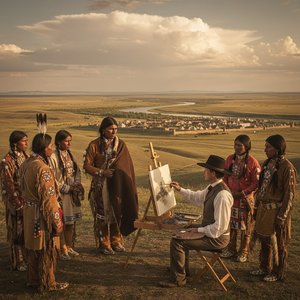
George Catlin und die Bewahrung des amerikanischen Westens: Eine visuelle Dokumentation indigener Lebensweisen im Zeitalter des Wandels
Entdecken Sie das faszinierende Werk von George Catlin und seine einzigartige Dokumentation der indigenen Kulturen des amerikanischen Westens. Erfahren Sie mehr über die Lebensweisen, Rituale und Traditionen der Native Americans im Zeitalter des Wandels.

Georges Seurat: Die 25 Meisterwerke des Pointillismus für Ihr Zuhause | TopImpressionists
Entdecken Sie die 25 ikonischsten Meisterwerke von Georges Seurat! Tauchen Sie ein in die Welt des Pointillismus, der Farbtheorie und des Impressionismus. Hochwertige Kunst reproduzieren für Ihr Zuhause – jetzt auf TopImpressionists.com!

Meister des Kubismus: Die 25 bedeutendsten Kunstwerke von Georges Braque
Entdecken Sie die 25 Meisterwerke von Georges Braque und den Kubismus. Erleben Sie Weltklasse-Reproduktionen auf TopImpressionists.com.

Charles Bird King: Capturing Native American Dignity Through Portraiture & Cultural Exchange
Explore the captivating portraits of Charles Bird King, renowned for his depictions of Native American leaders. Discover the historical context, artistic techniques, and collecting value of these significant 19th-century artworks.
Entdecken Sie Kunstwerke, die nach Themen, Stilen und Merkmalen sortiert sind.


