


 In echtem Maßstab anzeigen
 Versenden als Grußkarte
 Teilen
 Details anzeigen
 Leitfaden

 Herunterladen
 Ähnliche Objekte
 Röntgenaufnahme
 Diashow
 Besucherstatistiken
View on the Missouri, Alluvial Banks Falling in, 600 Miles above St. Louis
 Oil On Canvas
- WallArt
- Romantic Landscape
 1832
1832- 19th Century
 28.0 x 36.0 cm
 Smithsonian American Art Museum
View on the Missouri, Alluvial Banks Falling in, 600 Miles above St Louis
 Mehr anzeigen
Entdecken Sie George Catlin (1796-1872), den Pionier der amerikanischen Malerei, der das Leben & die Kultur der Ureinwohner durch beeindruckende Porträts festhielt.
Handgefertigte Ölreproduktion
Handgemaltes Ölgemälde auf Leinwand in Ihrer Wunschgröße und mit Rahmen, auf Bestellung von unseren Künstlern angefertigt. ( Zum Druck wechseln Zum digitalen Bild wechseln)




P118B $10

P118H $10

P118W $10

P438Z $10

P508JH $12

P508YH $12

P805H $10

P805Z $10

P919BZ $10

P919G $10

P919XJ $10

P959ZH $10

P968JZ $12

W106C $8

W218G $10

W218JH $8

W218Y $10

W307PJ $10

W316G $10

W316PJ $8

W316Y $10

W398PJ $8

W4111J $10

W500HY $15

W500JH $15

W692G $12

W849H $8

W940BG $15

W953PJ $8




Standardformat
individuell anpassbar
CM
INCH
Wählen Sie aus unseren vordefinierten Formaten, die den ursprünglichen Proportionen des Kunstwerks entsprechen.
Loading sizes...

Breite
Höhe
Sie können Ihre eigenen Maße eingeben, um einen bestimmten Rahmen oder Platz auszufüllen. Wenn die gewählte Größe nicht den Proportionen des Originalbildes entspricht, werden wir das Kunstwerk entweder beschneiden oder das Gemälde durch zusätzliche, handgemalte Elemente erweitern. Ein digitales Mockup wird Ihnen zur Genehmigung zugesandt, bevor die Produktion beginnt.
Bitte beachten Sie, dass die Bildschirmvorschau nicht die tatsächliche Beschneidung oder Erweiterung widerspiegelt. Nur das Mockup zeigt die endgültige Komposition exakt an.
Obwohl Sondermaße verfügbar sind, empfehlen wir, eine Größe aus der vordefinierten Liste zu wählen, um die ursprünglichen Proportionen beizubehalten.
Beispiele für Anpassungsmöglichkeiten: Gesicht durch Kundenfoto ersetzen; Haustier hinzufügen (z. B. Katze durch Hund ersetzen); eine versteckte Nachricht im Hintergrund einfügen; Hintergrundlandschaft oder -elemente ändern.
Nach der Bestellung wird das TopImpressionists.com-Team dem Kunden Anweisungen per E-Mail zusenden und eine Mockup-Vorschau bereitstellen.
Nach der Bestellung wird das TopImpressionists.com-Team dem Kunden Anweisungen per E-Mail zusenden und eine Mockup-Vorschau bereitstellen.
Weltweiter Versand () in nur 3 bis 4 Wochen statt der üblichen 5 Wochen. (23 September). Keine Kompromisse bei der Qualität.

Kostenloser weltweiter Expressversand

Hochwertige Leinenleinwand

Vollständiger Versicherungsschutz beim Versand

Zollgebühren-Rückerstattungsgarantie

Garantie für exakte Farbtreue

100-tägiges Rückgaberecht (nur bei Mängeln)

100% Geld-zurück-Garantie

Angebot für Mengenrabatt
 Die Glasoption ist nur für Größen unter 110 cm verfügbar.

View on the Missouri, Alluvial Banks Falling in, 600 Miles above St. Louis
Reproduktionsmedium
Format der Reproduktion
-


Gesamtpreis
$ 269
A Window on a Lost World: Catlin’s “View on the Missouri”
George Catlin's "View on the Missouri, Alluvial Banks Falling in, 600 Miles above St. Louis," painted in 1832, is more than just a depiction of the Mississippi River; it’s a poignant elegy to a vanishing way of life. Executed during a period of intense westward expansion and fraught with the displacement of Native American tribes, this artwork represents Catlin's ambitious project – a lifelong endeavor to document the diverse cultures of the American West before they were irrevocably altered. The painting captures a moment of serene beauty along the Missouri River, showcasing the dramatic interplay between water and land, a landscape rendered with a meticulous eye for detail that speaks volumes about Catlin’s deep respect—and perhaps a touch of melancholy—for the subject matter.
The Romantic Vision of the Frontier
Catlin's style falls squarely within the Romantic movement, prioritizing emotional response and subjective experience over strict adherence to classical ideals. He wasn’t simply painting what he saw; he was attempting to *feel* the spirit of the West, translating his observations into a powerfully evocative scene. The composition is carefully constructed to draw the viewer into the heart of the river landscape. The trees lining the banks, rendered with broad, confident brushstrokes, create a sense of depth and scale, while the subtle gradations of color in the water suggest movement and flow. The inclusion of two figures – likely travelers or perhaps Native American observers – adds a human element to the scene, inviting us to contemplate our own relationship to nature and the cultures that inhabit it.
Symbolism and Historical Context
Painted in 1832, just as westward expansion was accelerating dramatically, "View on the Missouri" carries significant historical weight. Catlin’s work coincided with a period of intense interest in Native American cultures, fueled by both romanticized notions of the frontier and practical concerns about land acquisition and resource exploitation. The painting can be interpreted as a visual record of this era, capturing a fleeting moment before the profound changes that were to come. The presence of birds – often symbols of freedom and spirituality – further elevates the scene, suggesting a connection between the natural world and the indigenous peoples depicted.
Technique and Artistic Merit
Catlin employed a distinctive technique characterized by bold color palettes and loose brushwork. His use of oil paints allowed for rich textures and luminous effects, particularly evident in the rendering of the water and foliage. The scale of this particular reproduction (28 x 36 cm) is ideal for capturing the nuances of Catlin’s style – a detail that would be lost in larger formats. The meticulous attention to detail, combined with his expressive brushwork, creates a remarkably lifelike representation of the Missouri River landscape, solidifying Catlin's place as one of the most important artists of the American West.
- Artist: George Catlin
- Date: 1832
- Size: 28 x 36 cm
- Medium: Oil on Canvas
- Style: Romanticism, Frontier Painting
Biografie des Künstlers
Frühes Leben und Karriere
- Geboren: 26. Juli 1796, Wilkes-Barre, Luzerne County, Pennsylvania
- Gestorben: 23. Dezember 1872
- Catlins Faszination für die amerikanischen Ureinwohner wurde durch Geschichten seiner Mutter über die Westgrenze und ihre Gefangennahme durch einen Stamm geweckt.
- Frühe Arbeiten umfassten Radierungen von Sehenswürdigkeiten entlang der Route des Erie-Kanals in New York State, die in Cadwallader D. Coldens Memoiren veröffentlicht wurden.
Künstlerische Beiträge und Stil
- Catlins Hauptaugenmerk wurde die Dokumentation des Lebens und der Kultur der amerikanischen Ureinwohner durch Malerei.
- Er unternahm fünf Expeditionen in den amerikanischen Westen während der 1830er Jahre, beobachtete und dokumentierte seine Erfahrungen sorgfältig.
- Bemerkenswerte Werke:
- Ball-Play of the Choctaw – Zeigt Aufmerksamkeit für Details und die Erfassung der Kultur der amerikanischen Ureinwohner.
- Mó-sho-la-túb-bee, He Who Puts Out and Kills, Chief of the Tribe – Demonstriert Geschicklichkeit im Porträt und Engagement für die Bewahrung des kulturellen Erbes.
- A Seminole Woman – Hervorhebung der Fähigkeit, Schönheit und Würde einzufangen.
- Stil: Catlins Stil ist gekennzeichnet durch Realismus, lebendige Farben und den Wunsch, die Bräuche und Traditionen der amerikanischen Ureinwohner genau darzustellen. Er fügte oft detaillierte Hintergründe und Landschaften hinzu, um seinen Motiven Kontext zu geben.
Wichtige Errungenschaften & Die Indian Gallery
- Catlin schuf eine umfangreiche Sammlung von über 500 Gemälden, die verschiedene Stämme und Aspekte ihres Lebens darstellen.
- Er stellte diese Werke in das sogenannte "Indian Gallery" zusammen, ein umfassendes visuelles Dokument der Kultur der amerikanischen Ureinwohner.
- Die Indian Gallery wurde in London, Paris und Berlin ausgestellt und erlangte internationale Anerkennung für Catlins Arbeit.
- Seine Veröffentlichungen, darunter Manners, Customs, and Condition of the North American Indians (1841) und Last Rambles Amongst the Indians of the Rocky Mountains and the Andes (1868), festigten seinen Ruf als Autorität über die Kultur der amerikanischen Ureinwohner.
Späteres Leben & Vermächtnis
- Catlin verbrachte seine späteren Jahre damit, zu versuchen, seine Indian Gallery an die US-Regierung zu verkaufen und stieß dabei auf anfängliche Ablehnung.
- Er reproduzierte über 400 Gemälde in einer "Cartoon Collection".
- Trotz Herausforderungen hat Catlins Arbeit einen bleibenden Einfluss darauf gehabt, wie amerikanische Ureinwohner in der Kunst und Populärkultur dargestellt werden.
- Historische Bedeutung: Catlins sorgfältige Dokumentation liefert wertvolle Einblicke in das Leben der Stämme der amerikanischen Ureinwohner vor bedeutenden kulturellen Veränderungen aufgrund der Westexpansion. Seine Arbeit gilt als wichtige historische Aufzeichnung sowie künstlerische Leistung.
Einflüsse & Weitere Informationen

George Catlin
1796 - 1872 , Vereinigte Staaten von Amerika
Eckdaten zum Künstler
- Bemerkenswerte Werke:
- Ball-Play of the Choctaw
- Mó-sho-la-túb-bee, Chief
- A Seminole Woman
- Geburtsdatum: 26. Juli 1796
- Geburtsort: Wilkes-Barre, Vereinigte Staaten
- Künstlerischer Stil: Frontier Malerei
- Nationalität: Amerikanisch
- Sterbedatum: 23. Dezember 1872
- Vollständiger Name: George Catlin
Verwandte Artikel
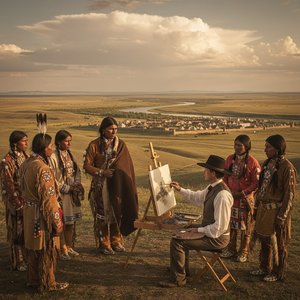
George Catlin und die Bewahrung des amerikanischen Westens: Eine visuelle Dokumentation indigener Lebensweisen im Zeitalter des Wandels
Entdecken Sie das faszinierende Werk von George Catlin und seine einzigartige Dokumentation der indigenen Kulturen des amerikanischen Westens. Erfahren Sie mehr über die Lebensweisen, Rituale und Traditionen der Native Americans im Zeitalter des Wandels.

Georges Braque: Die 25 Meisterwerke des Kubismus für Ihr Zuhause | TopImpressionists
Entdecken Sie die 25 bedeutendsten Kunstwerke von Georges Braque – vom Kubismus bis zum Fauvismus. Erfahren Sie die Geschichten hinter den Meisterwerken und finden Sie hochwertige Reproduktionen für Ihr Zuhause auf TopImpressionists.com.

Capturing the American Spirit: A Journey Through Iconic Landscapes and the Legacy of the Hudson River School
Explore the profound beauty of American art history. From the Hudson River School to iconic landscapes, discover a curated journey through the masterpieces that defined a nation's spirit and the enduring legacy of American Romanticism.

Georges Seurat: Die 25 Meisterwerke des Pointillismus für Ihr Zuhause | TopImpressionists
Entdecken Sie die 25 ikonischsten Meisterwerke von Georges Seurat! Tauchen Sie ein in die Welt des Pointillismus, der Farbtheorie und des Impressionismus. Hochwertige Kunst reproduzieren für Ihr Zuhause – jetzt auf TopImpressionists.com!

George Harvey: A Study in American Impressionism & the Poetics of Light
Explore the captivating world of George Harvey, a pivotal figure in American Impressionism & Luminism. Discover his stunning landscapes, artistic journey, and lasting influence on 19th-century art. Learn about provenance & appraisal.
Entdecken Sie Kunstwerke, die nach Themen, Stilen und Merkmalen sortiert sind.


