


 In echtem Maßstab anzeigen
 Versenden als Grußkarte
 Teilen
 Details anzeigen
 Leitfaden öffnen

 Herunterladen
 Ähnliche Objekte
 Röntgenaufnahme
 Diashow
 Besucherstatistiken
The Teamster


Experience the raw energy of American labor with George Wesley Bellows' 1916 masterpiece, The Teamster; discover bold realism capturing teamwork and life's grit.
 Mehr anzeigen
Entdecken Sie George Wesley Bellows (1882-1925), einen führenden amerikanischen Realisten! Erleben Sie seine Ashcan School Werke, kraftvolle Pinselstriche & dynamische NYC-Darstellungen.
Giclée / Kunstdruck
Giclée- oder Leinwanddruck in Museumsqualität mit schneller Produktion und flexiblen Veredelungsoptionen. ( Handgemalte Reproduktion kaufen Zum digitalen Bild wechseln)




P118B €10

P118H €10

P118W €10

P438Z €10

P508JH €12

P508YH €12

P805H €10

P805Z €10

P919BZ €10

P919G €10

P919XJ €10

P959ZH €10

P968JZ €12

W106C €8

W218G €10

W218JH €8

W218Y €10

W307PJ €10

W316G €10

W316PJ €8

W316Y €10

W398PJ €8

W4111J €10

W500HY €15

W500JH €15

W692G €12

W849H €8

W940BG €15

W953PJ €8




Standardformat
individuell anpassbar
CM
INCH
Wählen Sie aus unseren vordefinierten Formaten, die den ursprünglichen Proportionen des Kunstwerks entsprechen.
Loading sizes...

Breite
Höhe
Geben Sie die Breite und die Höhe an, die Sie benötigen, damit der Druck perfekt in Ihren Rahmen oder an Ihre Wand passt. Ein Druck kann nur beschnitten werden und niemals größer als das Originalbild gemacht werden; daher verliert ein Format mit einer anderen Proportion einen Teil des Bildes. Wir senden Ihnen ein digitales Mockup zur Freigabe, bevor wir den Druck ausführen. Das auf dieser Seite gezeigte Bild zeigt nicht den tatsächlichen Beschnitt – dies ist nur im Mockup ersichtlich.
Weltweiter Versand () innerhalb von 2 Wochen statt der üblichen 4/5 Wochen. (21 Oktober)

Kostenloser weltweiter Expressversand

Hochwertige Leinenleinwand

Vollständiger Versicherungsschutz beim Versand

Zollgebühren-Rückerstattungsgarantie

Garantie für exakte Farbtreue

100-tägiges Rückgaberecht (nur bei Mängeln)

100% Geld-zurück-Garantie

Angebot für Mengenrabatt
 Die Glasoption ist nur für Größen unter 110 cm verfügbar.

The Teamster
Giclée / Kunstdruck
Format der Reproduktion
-


Gesamtpreis
€ 60
A Symphony of Industry and American Spirit
To stand before George Wesley Bellows' magnificent canvas, The Teamster, is to be transported directly into the vibrant, sweat-and-steam heart of early twentieth-century America. This painting is far more than a mere depiction of labor; it is a profound meditation on human cooperation, the relentless rhythm of industry, and the enduring spirit of community. Created in 1916, Bellows captures a moment brimming with kinetic energy—a scene where man, beast, and purpose converge upon the water's surface. The composition immediately draws the eye to the central action: a teamster guiding two powerful horses as they pull a barge or boat across the expanse of water. Yet, the narrative depth extends beyond this primary focus; surrounding figures work in concert, suggesting a complex, interwoven tapestry of daily life and shared endeavor.
Mastery in Oil on Canvas: Technique and Texture
Bellows’ command over oil paint is breathtakingly evident here. The richness and vibrancy achieved through his palette allow the viewer to feel the damp chill of the water and the exertion radiating from the figures. His brushwork, famously bold and expressive, does not merely render reality; it imbues it with palpable energy. One can almost hear the creak of the ropes and the rhythmic pounding of hooves. This technique allows Bellows to balance moments of intense physical action—the straining muscles of the horses, the focused effort on the faces of the workers—with broader atmospheric passages that give the scene a deep sense of depth. The scale of this work ensures that these technical achievements are displayed with dramatic impact, making it a commanding focal point for any grand interior space.
Symbolism of Teamwork and Progress
The thematic core of The Teamster resonates deeply with universal human experiences. The presence of the dog, observing the activity, adds a touch of quiet companionship to the industrial fervor. More significantly, the entire tableau speaks volumes about teamwork. It is a visual ode to synergy—the understanding that individual strength, while vital, finds its greatest expression when channeled through collective effort. In an era defined by rapid American expansion and burgeoning urban grit, Bellows immortalizes this foundational principle: progress is not achieved in isolation. The painting invites contemplation on the enduring value of mutual support.
A Connection to American Realism
As a quintessential artist of the Ashcan School tradition, George Wesley Bellows possessed an unparalleled gift for capturing the unvarnished truth of modern life. His work grounds itself in realism while elevating it to mythic status. For collectors and designers seeking art that tells a compelling story rooted in American history, this piece offers both historical resonance and timeless emotional appeal. It is a powerful reminder that beneath the veneer of modernity lies the enduring dignity of honest labor. Owning The Teamster reproduction is not simply acquiring decoration; it is curating a narrative of resilience, industry, and shared human endeavor for generations to come.
Fragen & Antworten
Wer ist der Künstler hinter "The Teamster"?
Der Künstler hinter „The Teamster“ ist George Wesley Bellows. Das Werk ist unter dem Namen von George Wesley Bellows katalogisiert.
Kann ich "The Teamster" genauer untersuchen?
„The Teamster“ kann Schicht für Schicht auf der Röntgenaufnahme-Seite des Kunstwerks untersucht werden – ein Viewer, inspiriert von der Leuchttisch eines Restaurators, mit elf optischen Ebenen des Bildes.
Wo kann ich eine digitale Abbildung von "The Teamster" von George Wesley Bellows kaufen?
Um eine digitale Datei von "The Teamster" von George Wesley Bellows zu erhalten, bestellen Sie ein hochauflösender digitaler Bild-Download auf der Seite Digitales Bild.


Biografie des Künstlers
Frühe Jahre und Ausbildung
George Wesley Bellows, eine bedeutende Figur der amerikanischen Kunst, wurde am 12. oder 19. August 1882 in Columbus, Ohio, geboren. Er war das einzige Kind von George Bellows und Anna Wilhelmina Smith Bellows. Bellows' frühes Leben war geprägt von seiner Neigung zur Kunst, was sich bereits in seinen Zeichnungen vor dem Besuch des Kindergartens zeigte.Künstlerische Laufbahn
Bellows' künstlerischer Weg begann mit kommerziellen Illustrationen und führte ihn schließlich zu einer Karriere als Maler. Er schrieb sich 1901-1904 an der Ohio State University ein, wo er für die Baseball- und Basketballteams spielte und seine sportlichen Fähigkeiten weiter festigte. Seine wahre Leidenschaft galt jedoch der Kunst, was ihn 1904 dazu veranlasste, nach New York City zu ziehen, um bei Robert Henri zu studieren. George Wesley Bellows assoziierte sich mit "The Eight" und der Ashcan School und plädierte für die Darstellung der zeitgenössischen amerikanischen Gesellschaft. Seit 1906 richtete er ein Atelier in der Broadway Street 1947 ein, was den Beginn seiner produktiven Karriere markierte. Seine erste bemerkenswerte Ausstellung im Jahr 1908 zeigte städtische Studien, die von einigen Kritikern zwar als grob bemalt kritisiert wurden, aber auch für ihre kühn und innovativ befunden wurden.Wichtige Werke und Beiträge
Schlüsselwerke:- Central Park (Ohio State University Faculty Club, Vereinigte Staaten, Öl auf Leinwand) – ein Beweis für seine Fähigkeit, das Stadtleben einzufangen.
- Die Deutschen kommen (1918) – eine Reihe von Lithographien und Gemälden, die grafisch die von Deutschland während der Invasion Belgiens begangenen Gräueltaten darstellten.
- Das Museum of Modern Art (New York, Vereinigtes Königreich) – obwohl es nicht ausschließlich seine Werke zeigt, repräsentiert es den breiteren Kontext der modernen Kunst, in dem Bellows erfolgreich war.
- Die New York Public Library – obwohl sie nicht speziell für die Unterbringung seiner Werke bekannt ist, spiegeln ihre Kunstsammlungen und Programme die pulsierende Kunstszene wider, die Bellows' Karriere beeinflusste.
Einflüsse und Entwicklung
Bellows wurde stark von Robert Henri beeinflusst, der ihn ermutigte, das Leben um ihn herum realistisch darzustellen. Die Ashcan School, zu der er gehörte, konzentrierte sich auf die Darstellung des alltäglichen Lebens in New York City, oft mit einem Fokus auf die Arbeiterklasse und die weniger glamourösen Aspekte der Stadt. Seine frühen Werke zeigen einen Einfluss von Illustrationen und einer gewissen Direktheit in der Darstellung. Im Laufe seiner Karriere entwickelte Bellows eine einzigartige Technik, die sich durch kräftige Pinselstriche, dramatische Lichteffekte und eine dynamische Komposition auszeichnete. Er experimentierte mit verschiedenen Medien, darunter Ölfarben, Kohlezeichnungen und Lithographien. Seine Faszination für Sport, insbesondere Boxen, führte zu einer Reihe von kraftvollen Gemälden und Lithographien, die die Energie und Brutalität dieser Sportart einfingen.Vermächtnis
George Wesley Bellows verstarb am 8. Januar 1925, doch sein Vermächtnis als "der angesehenste amerikanische Künstler seiner Generation" (laut dem Columbus Museum of Art) lebt fort. Seine kühnen Darstellungen des Stadtlebens in New York City inspirieren und beeinflussen die zeitgenössische Kunst weiterhin.- Weitere Werke von George Wesley Bellows auf TopImpressionists.com
- Erkunden Sie die Sammlung des Museum of Modern Art (New York, Vereinigtes Königreich) auf TopImpressionists.com
- Erfahren Sie mehr über die Kunstsammlungen und Programme der New York Public Library auf TopImpressionists.com
Referenzen

George Wesley Bellows
1882 - 1925 , Vereinigte Staaten von Amerika
Eckdaten zum Künstler
- Bemerkenswerte Werke:
- Central Park
- The Germans Arrive
- Männer der Docks
- Margarite
- Einflussreiche Künstler: ['Robert Henri']
- Geburtsdatum: 12. August 1882
- Geburtsort: Columbus, USA
- Künstlerische Richtung: American Realismus, Ashcan School
- Nationalität: Amerikanisch
- Sterbedatum: 8. Januar 1925
- Vollständiger Name: George Wesley Bellows
Verwandte Artikel
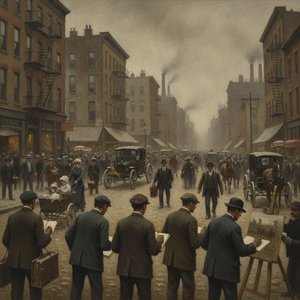
The Ashcan School: Capturing the Raw, Unfiltered Soul of Urban Life through American Realism
Discover the raw beauty of the Ashcan School. Explore how masters like Bellows and Henri captured the gritty, vibrant soul of early 20th-century New York through profound American Realism and evocative urban landscapes.

The Unvarnished Truth: A Cultural Journey Through the Soul of American Realism
Explore the profound beauty of American Realism. From the Ashcan School's urban grit to intimate portraits, discover how artists captured the authentic soul of a nation through unvarnished truth and masterful observation.
Entdecken Sie Kunstwerke, die nach Themen, Stilen und Merkmalen sortiert sind.


