


 In echtem Maßstab anzeigen
 Versenden als Grußkarte
 Teilen
 Details anzeigen
 Leitfaden öffnen

 Herunterladen
 Ähnliche Objekte
 Röntgenaufnahme
 Diashow
 Besucherstatistiken
Model from the Back
 Pointillist Precision
 1886
1886 24.0 x 15.0 cm
Experience the serene beauty of Georges Seurat’s Pointillist masterpiece – ‘Model from the Back,’ capturing a tranquil moment with its luminous blues and greens. Explore this iconic Impressionist work and bring artistic elegance into your home.
 Mehr anzeigen
Erkunden Sie Georges Seurat (1859-1891), Pionier des Pointillismus und Neo-Impressionismus. Entdecken Sie 'A Sunday on La Grande Jatte' und seine revolutionäre Farbbtheorie, die das moderne Leben einfängt. Kaufen Sie handbemalte Reproduktionen!
Giclée / Kunstdruck
Giclée- oder Leinwanddruck in Museumsqualität mit schneller Produktion und flexiblen Veredelungsoptionen. ( Handgemalte Reproduktion kaufen Zum digitalen Bild wechseln)




P118B €10

P118H €10

P118W €10

P438Z €10

P508JH €12

P508YH €12

P805H €10

P805Z €10

P919BZ €10

P919G €10

P919XJ €10

P959ZH €10

P968JZ €12

W106C €8

W218G €10

W218JH €8

W218Y €10

W307PJ €10

W316G €10

W316PJ €8

W316Y €10

W398PJ €8

W4111J €10

W500HY €15

W500JH €15

W692G €12

W849H €8

W940BG €15

W953PJ €8




Standardformat
individuell anpassbar
CM
INCH
Wählen Sie aus unseren vordefinierten Formaten, die den ursprünglichen Proportionen des Kunstwerks entsprechen.
Loading sizes...

Breite
Höhe
Geben Sie die Breite und die Höhe an, die Sie benötigen, damit der Druck perfekt in Ihren Rahmen oder an Ihre Wand passt. Ein Druck kann nur beschnitten werden und niemals größer als das Originalbild gemacht werden; daher verliert ein Format mit einer anderen Proportion einen Teil des Bildes. Wir senden Ihnen ein digitales Mockup zur Freigabe, bevor wir den Druck ausführen. Das auf dieser Seite gezeigte Bild zeigt nicht den tatsächlichen Beschnitt – dies ist nur im Mockup ersichtlich.
Weltweiter Versand () innerhalb von 2 Wochen statt der üblichen 4/5 Wochen. (23 Oktober)

Kostenloser weltweiter Expressversand

Hochwertige Leinenleinwand

Vollständiger Versicherungsschutz beim Versand

Zollgebühren-Rückerstattungsgarantie

Garantie für exakte Farbtreue

100-tägiges Rückgaberecht (nur bei Mängeln)

100% Geld-zurück-Garantie

Angebot für Mengenrabatt
 Die Glasoption ist nur für Größen unter 110 cm verfügbar.

Model from the Back
Giclée / Kunstdruck
Format der Reproduktion
-


Gesamtpreis
€ 61
A Moment Frozen in Light: Exploring Georges Seurat’s “Model from the Back”
The painting "Model from the Back" by Georges Pierre Seurat, completed in 1886, stands as a testament to the revolutionary fervor of Impressionism's final years and embodies the groundbreaking principles of Pointillism. More than just a depiction of a seated man against a wall, it’s an exercise in scientific observation transformed into breathtaking artistic expression—a feat that cemented Seurat’s place among the titans of modern art.The Science Behind Beauty: Understanding Pointillism
Seurat didn't simply dabble in color; he meticulously applied his knowledge of optics to achieve a luminous effect previously unattainable by Impressionists. Influenced by Eugène Chevreuil and Henri Matisse, Seurat championed Pointillism—a technique where pigment is applied in tiny dots rather than blended strokes. This seemingly simple method was underpinned by rigorous mathematical calculations designed to maximize color perception. Researchers like Michel Eugène Chevretuil had begun exploring the science of color perception, demonstrating that the human eye perceives color as a combination of wavelengths, and Seurat sought to recreate this phenomenon on canvas. By layering minuscule dots of complementary colors—primarily blues and greens—he created an illusion of shimmering light and depth, bypassing the traditional mixing process altogether. This approach prioritized scientific accuracy while simultaneously elevating painting to new heights of aesthetic sophistication.A Portrait of Quiet Contemplation: Contextualizing the Artwork
Painted during the Belle Époque, “Model from the Back” reflects the prevailing mood of intellectual curiosity and artistic experimentation that characterized Parisian society at the time. Seurat’s work aligns with the broader movement toward abstraction, albeit subtly achieved through meticulous detail. The subject matter itself—a solitary figure—suggests introspection and stillness—themes prevalent in Symbolist art alongside Impressionism. However, unlike many Symbolists who aimed to convey emotion directly, Seurat prioritized visual precision, believing that color alone could evoke profound feelings. Consider the deliberate positioning of the model’s head turned away; this gesture invites contemplation and subtly emphasizes the importance of observation – mirroring Seurat's own artistic philosophy.Color as Emotion: Decoding the Palette
The dominant hues—blues and greens—are not merely decorative choices but carefully considered elements contributing to the painting’s emotional impact. Blue, often associated with serenity and stability, anchors the composition while simultaneously conveying a sense of coolness. Green, symbolizing growth and renewal, introduces an element of vibrancy that balances the blues' calmness. The subtle gradations achieved through dot placement create an astonishingly realistic rendering of light and shadow—a remarkable feat considering the technique’s inherent limitations. Seurat’s masterful manipulation of color demonstrates his profound understanding of how visual stimuli can influence perception and evoke emotional responses.A Legacy of Precision: Why “Model from the Back” Remains Relevant Today
“Model from the Back” continues to resonate with art lovers and collectors alike, not only for its stunning visual beauty but also for its pioneering spirit. It represents a pivotal moment in artistic history—a decisive step away from Impressionism’s fleeting impressions toward a more durable form of representation rooted in scientific principles. Reproductions offer an exceptional opportunity to experience this masterpiece firsthand, allowing viewers to appreciate the intricate detail and luminous quality that define Seurat's enduring legacy.Fragen & Antworten
Sind die Farben von "Model from the Back" von Georges Pierre Seurat leuchtend oder gedämpft?
"Model from the Back" von Georges Pierre Seurat ist mit einer Sättigung von Subtle Color und einer Intensität von Balanced festgehalten.
Wie alt war Georges Pierre Seurat, als „Model from the Back“ geschaffen wurde?
Georges Pierre Seurat schuf „Model from the Back“ im Alter von 27. Der Künstler wurde 1859 geboren, und das Werk datiert auf 1886.
Ist "Model from the Back" von Georges Pierre Seurat eine Porträt-, Landschafts- oder Quadratkomposition?
"Model from the Back" von Georges Pierre Seurat ist eine Komposition im Tall-Format. Die Proportionen sollten vor der Wahl der Druckgröße überprüft werden.
Ähnliche Kunstwerke


Biografie des Künstlers
Georges Seurat: Ein Pionier des Neoimpressionismus
Frühes Leben und Ausbildung
- Geboren: 2. Dezember 1859 in Paris, Frankreich.
- Seurats Familie zog kurz nach seiner Geburt auf den Boulevard de Magenta um.
- Sein Vater, Antoine Chrysostome Seurat, war ein ehemaliger Jurist, der durch Immobilienhandel reich wurde.
- Er begann seine künstlerische Ausbildung an der École Municipale de Sculpture et Dessin, in der Nähe seines Zuhauses, unter dem Bildhauer Justin Lequien.
- Im Jahr 1878 meldete er sich an der renommierten École des Beaux-Arts an und studierte bei Henri Lehmann.
Künstlerische Entwicklung und Einflüsse
- Seurats künstlerliche Persönlichkeit war eine einzigartige Mischung aus Sensibilität und logischer Abstraktion. Er verband zarte Empfindsamkeit mit mathematischer Präzision.
- Einflüsse: Obwohl spezifische Einflüsse diskutiert werden, studierte er die Farbbtheorien von Wissenschaftlern wie Michel Eugène Chevreul und Ogden Rood.
- Er experimentierte zunächst mit traditionellen Zeichentechniken, bevor er seinen charakteristischen Stil entwickelte.
- Seine frühen Werke zeigen ein Interesse an akademischer Malerei, ging aber allmählich zu einem innovativeren Ansatz über.
Chromoluminarismus und Pointillismus
- Seurat entwickelte die Techniken des Chromoluminarismus (die Wissenschaft der Farbe) und des Pointillismus, indem er kleine, deutliche Punkte reiner Farbe auf eine Leinwand auftrug.
- Er verwendete Conté-Kreide für detaillierte Zeichnungen auf rauer Papiersubstanz als Teil seines Prozesses.
- Ziel des Pointillismus: Die Idee war, dass das Auge des Betrachters diese Farben optisch miteinander mischen und so einen lebendigen und leuchtenden Effekt erzeugt.
Wichtige Leistungen und bemerkenswerte Werke
- Ein Sonntagnachmittag auf der Île de la Grande Jatte (1884-1886): Sein berühmtestes Werk, das den Beginn des Neoimpressionismus markiert. Es veranschaulicht seine Pointillist-Technik und seinen methodischen Ansatz.
- Alfalfa, Saint-Denis (1886-1887): Demonstriert seine Anwendung der Farbbtheorie auf eine ländliche Landschaft.
- Landschaft bei Saint-Ouen (1882-1883): Ein frühes Beispiel, das seinen sich entwickelnden Stil und sein Interesse an Licht und Atmosphäre zeigt.
- Der Eiffelturm (1889): Eine Darstellung des ikonischen Pariser Wahrzeichens, dargestellt mit Pointillist-Techniken.
- Bäderer in Asnières (1884): Ein weiteres bedeutendes Werk, das Freizeit und modernen Lebensstil mit seinem unverwechselbaren Stil erforscht.
Historische Bedeutung und Vermächtnis
- Seureats Werk beeinflusste die Entwicklung der modernen Kunst nachhaltig, insbesondere durch seinen Schwerpunkt auf subjektivem Ausdruck und die Erforschung neuer Techniken.
- Legte den Grundstein: Er legte den Grundstein für Bewegungen wie Fauvismus, Kubismus und Expressionismus.
- Sein wissenschaftlicher Ansatz in der Malerei stellte traditionelle künstlerische Konventionen in Frage.
- Trotz seines kurzen Lebens (er starb im Alter von 31 Jahren) hinterließ Seurat einen unauslöschlichen Eindruck in der Kunstgeschichte und inspirierte Generationen von Künstlern mit seiner innovativen Vision.

Georges Pierre Seurat
1859 - 1891 , Frankreich
Eckdaten zum Künstler
- Beeinflusste Künstler:
- Fauvismus
- Kubismus
- Bemerkenswerte Werke:
- Ein Sonntagnachmittag...
- Bäufer in Asnières
- Der Eiffelturm
- Einflüsse:
- Michel Eugène Chevreul
- Ogden Rood
- Geburtsdatum: 2. Dezember 1859
- Geburtsort: Paris, Frankreich
- Künstlerische Bewegung: Neo-Impressionismus
- Nationalität: Französisch
- Sterbedatum: 1891
- Vollständiger Name: Georges Pierre Seurat
Verwandte Artikel

Claude Monet: Die 25 Meisterwerke des Impressionismus für Ihr Zuhause | TopImpressionists
Entdecken Sie die 25 Meisterwerke von Claude Monet! Tauchen Sie ein in die Welt des Impressionismus, erleben Sie Seerosen, Sonnenaufgänge & Kathedralen. Hochwertige Reproduktionen für Ihr Zuhause – exklusiv auf TopImpressionists.com.

Verdant Visions: Exploring the Symbolism & Aesthetic Impact of Green in Art History
Explore the rich history & symbolism of green in art! Discover iconic paintings, techniques, and how to bring verdant harmony into your home with TopImpressionists's expert guide.

Georges Seurat: Die 25 Meisterwerke des Pointillismus für Ihr Zuhause | TopImpressionists
Entdecken Sie die 25 ikonischsten Meisterwerke von Georges Seurat! Tauchen Sie ein in die Welt des Pointillismus, der Farbtheorie und des Impressionismus. Hochwertige Kunst reproduzieren für Ihr Zuhause – jetzt auf TopImpressionists.com!
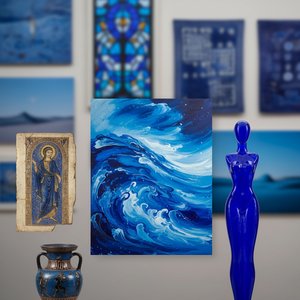
The Allure of Azure: Exploring the Symbolic & Aesthetic Depths of Blue in Art History
Explore the rich history of blue in art! Discover its symbolism, from ancient pigments to modern masterpieces by Kandinsky & Seurat. Uncover the psychological impact and cultural meanings behind this captivating hue.

Die Top 10 Gemälde in Schattierungen von 'Slate Blue': Kunst für Ihr Zuhause
Entdecken Sie die Top 10 Gemälde in faszinierenden 'Slate Blue' Tönen! Von Monet bis Manet – erleben Sie Kunstgeschichte und lassen Sie sich von Meisterwerken inspirieren. Hochwertige Kunstdrucke auf
Entdecken Sie Kunstwerke, die nach Themen, Stilen und Merkmalen sortiert sind.


