In echtem Maßstab anzeigen
 Versenden als Grußkarte
 Teilen
 Details anzeigen
 Leitfaden öffnen

 Herunterladen
 Ähnliche Objekte
 Röntgenaufnahme
 Diashow
 Besucherstatistiken
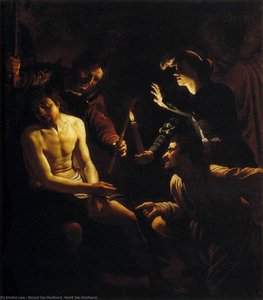
The Procuress


Admire Gerard van Honthorst’s ‘The Procuress,’ a dramatic 17th-century portrait showcasing chiaroscuro & Caravaggist style. Hand-painted reproduction available.
 Mehr anzeigen
Entdecken Sie Gerard van Honthorst (1590-1656), holländischen Goldenen Zeitalter Meister & Schlüsselfigur des Utrechter Caravaggismus! Dramatische Chiaroscuro, nächtliche Szenen & Barockkunst.
Handgefertigte Ölreproduktion
Handgemaltes Ölgemälde auf Leinwand in Ihrer Wunschgröße und mit Rahmen, auf Bestellung von unseren Künstlern angefertigt. ( Zum Druck wechseln Zum digitalen Bild wechseln)




P118B $10

P118H $10

P118W $10

P438Z $10

P508JH $12

P508YH $12

P805H $10

P805Z $10

P919BZ $10

P919G $10

P919XJ $10

P959ZH $10

P968JZ $12

W106C $8

W218G $10

W218JH $8

W218Y $10

W307PJ $10

W316G $10

W316PJ $8

W316Y $10

W398PJ $8

W4111J $10

W500HY $15

W500JH $15

W692G $12

W849H $8

W940BG $15

W953PJ $8




Standardformat
individuell anpassbar
CM
INCH
Wählen Sie aus unseren vordefinierten Formaten, die den ursprünglichen Proportionen des Kunstwerks entsprechen.
Loading sizes...

Breite
Höhe
Sie können Ihre eigenen Maße eingeben, um einen bestimmten Rahmen oder Platz auszufüllen. Wenn die gewählte Größe nicht den Proportionen des Originalbildes entspricht, werden wir das Kunstwerk entweder beschneiden oder das Gemälde durch zusätzliche, handgemalte Elemente erweitern. Ein digitales Mockup wird Ihnen zur Genehmigung zugesandt, bevor die Produktion beginnt.
Bitte beachten Sie, dass die Bildschirmvorschau nicht die tatsächliche Beschneidung oder Erweiterung widerspiegelt. Nur das Mockup zeigt die endgültige Komposition exakt an.
Obwohl Sondermaße verfügbar sind, empfehlen wir, eine Größe aus der vordefinierten Liste zu wählen, um die ursprünglichen Proportionen beizubehalten.
Beispiele für Anpassungsmöglichkeiten: Gesicht durch Kundenfoto ersetzen; Haustier hinzufügen (z. B. Katze durch Hund ersetzen); eine versteckte Nachricht im Hintergrund einfügen; Hintergrundlandschaft oder -elemente ändern.
Nach der Bestellung wird das TopImpressionists.com-Team dem Kunden Anweisungen per E-Mail zusenden und eine Mockup-Vorschau bereitstellen.
Nach der Bestellung wird das TopImpressionists.com-Team dem Kunden Anweisungen per E-Mail zusenden und eine Mockup-Vorschau bereitstellen.
Weltweiter Versand () in nur 3 bis 4 Wochen statt der üblichen 5 Wochen. (26 September). Keine Kompromisse bei der Qualität.

Kostenloser weltweiter Expressversand

Hochwertige Leinenleinwand

Vollständiger Versicherungsschutz beim Versand

Zollgebühren-Rückerstattungsgarantie

Garantie für exakte Farbtreue

100-tägiges Rückgaberecht (nur bei Mängeln)

100% Geld-zurück-Garantie

Angebot für Mengenrabatt
 Die Glasoption ist nur für Größen unter 110 cm verfügbar.

The Procuress
Reproduktionsmedium
Format der Reproduktion
-


Gesamtpreis
$ 269
A Nocturnal Drama Unveiled
In the flickering glow of an unseen flame, Gerard van Honthorst’s The Procuress invites the viewer into a clandestine world of whispered secrets and moral ambiguity. Painted in 1625, this masterpiece serves as a breathtaking testament to the Dutch Golden Age, capturing a moment of theatrical tension that feels almost voyeuristic. The scene unfolds within a dimly lit interior, where the boundaries between light and shadow are not merely stylistic choices but narrative protagonists. As one gazes upon the composition, the eye is immediately drawn to the interplay of figures: a young woman with a provocative allure, an older woman acting as the intermediary, and a man whose presence suggests a transaction of much more than mere currency. It is a painting that does not just depict a scene; it breathes with the heavy, humid atmosphere of a Roman night.
The emotional resonance of the work lies in its ability to evoke a sense of palpable suspense. There is an intimacy here that borders on the uncomfortable, pulling the observer into a private encounter where social graces are stripped away by the raw necessity of desire and greed. For the collector or the lover of fine art, this piece offers more than just visual beauty; it provides a window into the psychological complexities of the human condition, making it an intellectually stimulating addition to any curated collection.
The Mastery of Tenebrism and Light
To understand The Procuress is to understand the genius of the man known as Gherardo delle Notti—Gerard of the Nights. Honthorst’s technical prowess is defined by his profound command of tenebrism, a technique characterized by violent contrasts between deep, impenetrable shadows and brilliant, localized highlights. Influenced heavily by the revolutionary Caravaggio, Honthorst mastered the art of "artificial lighting," where the light source—often a candle or a small lamp hidden from view—sculpts the figures out of the darkness. This method creates a sculptural quality in the flesh tones and a luxurious texture in the fabrics, from the shimmering silks to the heavy velvets.
The technique serves a dual purpose: it directs the viewer's gaze with surgical precision and heightens the dramatic stakes of the narrative. The way light catches the edge of a porcelain bowl or illuminates a seductive smile creates a rhythmic movement across the canvas, ensuring that the eye never rests too long on one spot but instead wanders through the shadows, searching for the next revelation. For interior designers, this dramatic use of chiaroscuro offers an unparalleled sense of depth and luxury, providing a focal point that can anchor a room with its profound architectural weight and classical elegance.
Symbolism and the Moral Landscape
Beyond its technical brilliance, The Procuress is a rich tapestry of social commentary and symbolic meaning. During the 17th century, such genre paintings often functioned as moralizing tales, warning against the vices of lust and avarice. The very title suggests a transaction of questionable morality, where the "matchmaker" facilitates encounters driven by passion and profit. Every element within the frame—the way a hand rests near a purse, the specific arrangement of objects on the table, and the suggestive glances exchanged between characters—contributes to a larger discourse on the fragility of virtue in an era of burgeoning mercantile wealth.
The painting captures the tension of the Dutch Golden Age, a period where unprecedented prosperity met deep-seated religious and ethical scrutiny. By bringing these themes into a domestic setting, Honthorst makes the high drama of morality accessible and intensely personal. Owning a reproduction of such a work is an opportunity to possess a piece of history that continues to provoke thought, offering a sophisticated layer of storytelling to any living space. It is a celebration of the shadows as much as the light, reminding us that the most compelling truths are often found in the dimmest corners of our existence.
Biografie des Künstlers
Frühes Leben und Ausbildung
Gerard van Honthorst, ein bedeutender niederländischer Maler des Goldenen Zeitalters, wurde am 4. November 1590 in Utrecht geboren. Er war der Sohn eines dekorativen Malers und erhielt zunächst die Anleitung seines Vaters. Später setzte er seine künstlerische Ausbildung unter Abraham Bloemaert fort.Karriere und Einflüsse
Van Honthorsts frühe Karriere umfasste einen Besuch in Rom, wo er stark von dem Stil Caravaggios beeinflusst wurde. Dieser Einfluss ist besonders in seinen späteren Werken erkennbar, vor allem durch die Verwendung künstlich beleuchteter Szenen, was ihm den Spitznamen "Gherardo delle Notti" oder "Gerard der Nachts" einbrachte. Nach seiner Rückkehr in die Niederlande wurde van Honthorst zu einem führenden Porträtmaler.Wichtige Aufträge und Patrone
Van Honthorsts Arbeit war sehr gefragt, wobei er bedeutende Patrone hatte, darunter Vincenzo Giustiniani, der ihn beauftragte, "Christus vor dem Hohenpriester" zu malen, das sich heute in der National Gallery in London befindet. Er arbeitete auch für Cosimo II de' Medici, den Großherzog von Toskana, und genoss große Beliebtheit sowohl in der Republik als auch im Ausland.Künstlerische Entwicklung und Vermächtnis
Im Jahr 1620 kehrte van Honthorst nach Utrecht zurück, wo er sich einen beträchtlichen Ruf erwarb. Bereits 1623, im Jahr seiner Hochzeit, war er Präsident der Zunft des Heiligen Lukas in Utrecht geworden. Sein Erfolg führte zu Empfehlungen von Sir Dudley Carleton für den Earl of Arundel und Lord Dorchester. Er entwickelte seinen eigenen Stil, der Elemente des Caravaggismo mit niederländischen Traditionen verband. Seine Fähigkeit, dramatische Lichteffekte einzusetzen und lebendige Szenen darzustellen, machte ihn zu einem gefragten Künstler. Van Honthorst starb 1656 in Utrecht und hinterließ ein bedeutendes Werk, das die Kunst des Goldenen Zeitalters bereicherte.Wichtige Werke und Zusammenarbeit
- Die Ölbergszene: Ein frühes Beispiel für van Honthorsts Caravaggismo mit starkem Lichtkontrast.
- Christus vor dem Hohenpriester: Eine Auftragsarbeit von Vincenzo Giustiniani, die seine Fähigkeit zeigt, künstlich beleuchtete Szenen darzustellen.
- Zusammenarbeiten mit anderen Künstlern wie Peter Paul Rubens: Diese Kooperationen zeugen von seinem Einfluss auf den flämischen Barockstil und demonstrieren seinen Stellenwert in der europäischen Kunstszene.
Künstlerische Bewegung und Stil
Van Honthorst war Teil der Utrechter Caravaggisti-Bewegung, die sich durch die Verwendung dramatischer Beleuchtung und intensiver emotionaler Tiefe auszeichnete. Seine Arbeit spiegelt den Einfluss des italienischen Barock wider, während er gleichzeitig zur Entwicklung des niederländischen Goldenen Zeitalters beitrug. Sein Stil zeichnete sich durch eine Kombination aus Caravaggios Licht- und Schattenspiel mit der Klarheit und Detailgenauigkeit der niederländischen Malerei aus.
Gerard van Honthorst
1590 - 1656 , Niederlande
Eckdaten zum Künstler
- Beeinflusste Künstler:
- Caravaggio
- Abraham Bloemaert
- Bemerkenswerte Werke:
- Christus vor dem Hohenpriester
- Die Abnahme Christi
- Anbetung der Hirten
- Geburtsdatum: 4. November 1590
- Geburtsort: Utrecht, Niederlande
- Künstlerische Bewegung: Utrechter Caravaggisten
- Nationalität: Niederländisch
- Sterbedatum: 27. April 1656
- Vollständiger Name: Gerard van Honthorst
- Von Ihm Beeinflusste Künstler:
- Rembrandt van Rijn
- Georges de la Tour
Verwandte Artikel

Golden Light & Dutch Skies: The Timeless Magic of Dutch Golden Age Landscapes
Discover the breathtaking beauty of Dutch Golden Age landscapes. Explore the mastery of light, chiaroscuro, and 17th-century realism through an expert art history lens, celebrating the enduring legacy of the Dutch Masters for discerning collectors and art lovers.

Mastering Light and Shadow: The Chiaroscuro Revolution of Dutch Baroque Art
Explore the dramatic world of Dutch Baroque art. Discover how masters used chiaroscuro to revolutionize light and shadow, creating timeless psychological depth and texture in every canvas. A journey through the Golden Age for true art enthusiasts.

Mastering Light & Shadow: A Journey Through the Dutch Golden Age's Luminous Legacy
Embark on a cultural journey through the Dutch Golden Age. Explore the masterful interplay of light and shadow in 17th-century masterpieces, from Rembrandt to Vermeer, and discover how this era of profound realism continues to inspire fine art collectors today.
Entdecken Sie Kunstwerke, die nach Themen, Stilen und Merkmalen sortiert sind.