In echtem Maßstab anzeigen
 Versenden als Grußkarte
 Teilen
 Details anzeigen
 Leitfaden öffnen

 Herunterladen
 Ähnliche Objekte
 Röntgenaufnahme
 Diashow
 Besucherstatistiken
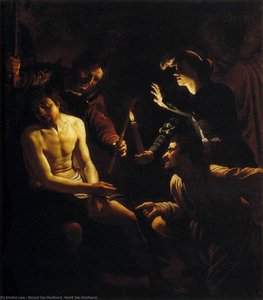
Young Drinker


Experience 'Young Drinker' by Gerard van Honthorst! This captivating Baroque painting showcases a contemplative youth enjoying wine, rich with light and symbolism. Explore its details & artistic context.
 Mehr anzeigen
Entdecken Sie Gerard van Honthorst (1590-1656), holländischen Goldenen Zeitalter Meister & Schlüsselfigur des Utrechter Caravaggismus! Dramatische Chiaroscuro, nächtliche Szenen & Barockkunst.
Handgefertigte Ölreproduktion
Handgemaltes Ölgemälde auf Leinwand in Ihrer Wunschgröße und mit Rahmen, auf Bestellung von unseren Künstlern angefertigt. ( Zum Druck wechseln Zum digitalen Bild wechseln)




P118B €10

P118H €10

P118W €10

P438Z €10

P508JH €12

P508YH €12

P805H €10

P805Z €10

P919BZ €10

P919G €10

P919XJ €10

P959ZH €10

P968JZ €12

W106C €8

W218G €10

W218JH €8

W218Y €10

W307PJ €10

W316G €10

W316PJ €8

W316Y €10

W398PJ €8

W4111J €10

W500HY €15

W500JH €15

W692G €12

W849H €8

W940BG €15

W953PJ €8




Standardformat
individuell anpassbar
CM
INCH
Wählen Sie aus unseren vordefinierten Formaten, die den ursprünglichen Proportionen des Kunstwerks entsprechen.
Loading sizes...

Breite
Höhe
Geben Sie die Breite und die Höhe an, die Sie für Ihren Rahmen oder Ihre Wand benötigen. Da dieses Werk handgemalt ist, kann der Künstler bei einer anderen Form etwas mehr um das Bild herum malen oder etwas abschneiden – Sie entscheiden. Wir senden Ihnen ein digitales Mockup zur Freigabe, bevor mit dem Malen begonnen wird. Das auf dieser Seite gezeigte Bild stellt nicht das tatsächliche Ergebnis dar – dies tut nur das Mockup.
Beispiele für Anpassungsmöglichkeiten: Gesicht durch Kundenfoto ersetzen; Haustier hinzufügen (z. B. Katze durch Hund ersetzen); eine versteckte Nachricht im Hintergrund einfügen; Hintergrundlandschaft oder -elemente ändern.
Nach der Bestellung wird das TopImpressionists.com-Team dem Kunden Anweisungen per E-Mail zusenden und eine Mockup-Vorschau bereitstellen.
Nach der Bestellung wird das TopImpressionists.com-Team dem Kunden Anweisungen per E-Mail zusenden und eine Mockup-Vorschau bereitstellen.
Weltweiter Versand () in nur 3 bis 4 Wochen statt der üblichen 5 Wochen. (16 Oktober). Keine Kompromisse bei der Qualität.

Kostenloser weltweiter Expressversand

Hochwertige Leinenleinwand

Vollständiger Versicherungsschutz beim Versand

Zollgebühren-Rückerstattungsgarantie

Garantie für exakte Farbtreue

100-tägiges Rückgaberecht (nur bei Mängeln)

100% Geld-zurück-Garantie

Angebot für Mengenrabatt
 Die Glasoption ist nur für Größen unter 110 cm verfügbar.

Young Drinker
Reproduktionsmedium
Format der Reproduktion
-


Gesamtpreis
€ 234
A Moment of Quiet Contemplation: Gerard van Honthorst’s “Young Drinker”
Gerard van Honthorst's "Young Drinker," painted circa 1625, is more than a simple depiction of youth indulging in wine; it’s a carefully constructed tableau brimming with symbolism and bathed in the dramatic chiaroscuro that defined the artist’s signature style. This captivating portrait, now housed within the Centraal Museum in Utrecht, offers a glimpse into the complexities of 17th-century Dutch society – its burgeoning mercantile class, its fascination with pleasure, and its underlying tensions between piety and indulgence. Honthorst, a key figure in the Utrecht Caravaggisti School, expertly channels the influence of Caravaggio, particularly his masterful use of light and shadow to create an atmosphere of intense drama and psychological depth.
The painting immediately draws the eye to the young man seated at a table, seemingly lost in thought as he sips from a glass. His posture is relaxed yet alert, suggesting a moment of quiet contemplation amidst the bustle of daily life. The details are meticulously rendered: the delicate curve of his neck, the subtle flush on his cheeks, and the intricate folds of his blue garment all speak to Honthorst’s exceptional technical skill. However, it's not merely a study in realism; the artist employs a sophisticated system of visual cues to convey deeper meaning.
The Language of Light and Shadow: Honthorst’s Chiaroscuro
Honthorst’s mastery lies in his manipulation of light and shadow – a technique known as *tenebrism*. He doesn't simply illuminate the scene; he sculpts it with carefully placed pools of light that dramatically contrast with areas of deep darkness. This creates a powerful sense of depth, drawing the viewer into the intimate space of the room. The candle flame, positioned strategically to highlight the young man’s face and upper body, acts as a focal point, guiding our gaze and intensifying the emotional impact of the scene. The surrounding shadows are not merely absences of light; they contribute significantly to the painting's overall mood – suggesting mystery, introspection, and perhaps even a hint of melancholy.
Notice how the light subtly reveals details while obscuring others. The open book on the table, adorned with illustrations depicting classical scenes, hints at intellectual pursuits, yet these are overshadowed by the immediate pleasure of the drink. This juxtaposition speaks to the central theme of the painting: the tension between reason and desire, knowledge and indulgence.
Symbolism and Social Commentary
Beyond the technical brilliance, “Young Drinker” is rich in symbolic detail. The young man’s attire – a blue hat adorned with a feather – subtly references status and perhaps even a hint of aristocratic aspiration. The book itself offers further clues: its illustrations depict scenes from mythology, suggesting an engagement with classical ideals but also hinting at the potential for these ideals to be corrupted by earthly pleasures. Crucially, the open book is juxtaposed against the young man’s enjoyment of wine – a potent symbol of both celebration and excess.
The inclusion of the small bird in his hand adds an element of surprise and perhaps even a touch of whimsy. Birds are often associated with freedom, hope, and spirituality, yet their presence here seems somewhat incongruous, suggesting a fleeting moment of innocence amidst a world increasingly dominated by worldly concerns.
A Window into 17th-Century Dutch Life
“Young Drinker” provides a valuable window into the social and cultural landscape of 17th-century Holland. It reflects the growing prosperity of the merchant class, their embrace of luxury and pleasure, and their ongoing struggle to reconcile these desires with traditional values. Honthorst’s painting captures not just a portrait but an entire era – a time of artistic innovation, economic expansion, and profound social change. Reproductions of this compelling work offer a chance to bring this evocative scene into your own home, inviting contemplation and sparking conversation about the enduring themes of human experience.
Fragen & Antworten
Inwiefern steht das Sujet von „Young Drinker“ in Beziehung zu den üblichen Themen von Gerard van Honthorst?
Unter den dokumentierten Themen von Gerard van Honthorst – caravaggio’s tenebrism, italian baroque, quaker life, social commentary, dutch golden age portraiture”, “domesticity, family dynamics”, moral contemplation – legt „Young Drinker“ einen ganz eigenen Fokus auf drinking, youth, feathered hat, study, bird, light, reflection.
Welcher Raum passt farblich zu "Young Drinker" von Gerard van Honthorst?
Die Earthy-Farben von "Young Drinker" von Gerard van Honthorst harmonieren perfekt mit dem empfohlenen Raum: einem Living Room.
Welche Farbintensität weist "Young Drinker" von Gerard van Honthorst auf?
Die Farbsättigung von „Young Drinker“ ist Monochromatic. Die Intensität beschreibt, wie kräftig die Farben wirken.
Biografie des Künstlers
Frühes Leben und Ausbildung
Gerard van Honthorst, ein bedeutender niederländischer Maler des Goldenen Zeitalters, wurde am 4. November 1590 in Utrecht geboren. Er war der Sohn eines dekorativen Malers und erhielt zunächst die Anleitung seines Vaters. Später setzte er seine künstlerische Ausbildung unter Abraham Bloemaert fort.Karriere und Einflüsse
Van Honthorsts frühe Karriere umfasste einen Besuch in Rom, wo er stark von dem Stil Caravaggios beeinflusst wurde. Dieser Einfluss ist besonders in seinen späteren Werken erkennbar, vor allem durch die Verwendung künstlich beleuchteter Szenen, was ihm den Spitznamen "Gherardo delle Notti" oder "Gerard der Nachts" einbrachte. Nach seiner Rückkehr in die Niederlande wurde van Honthorst zu einem führenden Porträtmaler.Wichtige Aufträge und Patrone
Van Honthorsts Arbeit war sehr gefragt, wobei er bedeutende Patrone hatte, darunter Vincenzo Giustiniani, der ihn beauftragte, "Christus vor dem Hohenpriester" zu malen, das sich heute in der National Gallery in London befindet. Er arbeitete auch für Cosimo II de' Medici, den Großherzog von Toskana, und genoss große Beliebtheit sowohl in der Republik als auch im Ausland.Künstlerische Entwicklung und Vermächtnis
Im Jahr 1620 kehrte van Honthorst nach Utrecht zurück, wo er sich einen beträchtlichen Ruf erwarb. Bereits 1623, im Jahr seiner Hochzeit, war er Präsident der Zunft des Heiligen Lukas in Utrecht geworden. Sein Erfolg führte zu Empfehlungen von Sir Dudley Carleton für den Earl of Arundel und Lord Dorchester. Er entwickelte seinen eigenen Stil, der Elemente des Caravaggismo mit niederländischen Traditionen verband. Seine Fähigkeit, dramatische Lichteffekte einzusetzen und lebendige Szenen darzustellen, machte ihn zu einem gefragten Künstler. Van Honthorst starb 1656 in Utrecht und hinterließ ein bedeutendes Werk, das die Kunst des Goldenen Zeitalters bereicherte.Wichtige Werke und Zusammenarbeit
- Die Ölbergszene: Ein frühes Beispiel für van Honthorsts Caravaggismo mit starkem Lichtkontrast.
- Christus vor dem Hohenpriester: Eine Auftragsarbeit von Vincenzo Giustiniani, die seine Fähigkeit zeigt, künstlich beleuchtete Szenen darzustellen.
- Zusammenarbeiten mit anderen Künstlern wie Peter Paul Rubens: Diese Kooperationen zeugen von seinem Einfluss auf den flämischen Barockstil und demonstrieren seinen Stellenwert in der europäischen Kunstszene.
Künstlerische Bewegung und Stil
Van Honthorst war Teil der Utrechter Caravaggisti-Bewegung, die sich durch die Verwendung dramatischer Beleuchtung und intensiver emotionaler Tiefe auszeichnete. Seine Arbeit spiegelt den Einfluss des italienischen Barock wider, während er gleichzeitig zur Entwicklung des niederländischen Goldenen Zeitalters beitrug. Sein Stil zeichnete sich durch eine Kombination aus Caravaggios Licht- und Schattenspiel mit der Klarheit und Detailgenauigkeit der niederländischen Malerei aus.
Gerard van Honthorst
1590 - 1656 , Niederlande
Eckdaten zum Künstler
- Beeinflusste Künstler:
- Caravaggio
- Abraham Bloemaert
- Bemerkenswerte Werke:
- Christus vor dem Hohenpriester
- Die Abnahme Christi
- Anbetung der Hirten
- Geburtsdatum: 4. November 1590
- Geburtsort: Utrecht, Niederlande
- Künstlerische Bewegung: Utrechter Caravaggisten
- Nationalität: Niederländisch
- Sterbedatum: 27. April 1656
- Vollständiger Name: Gerard van Honthorst
- Von Ihm Beeinflusste Künstler:
- Rembrandt van Rijn
- Georges de la Tour
Verwandte Artikel

Mastering Light and Shadow: The Chiaroscuro Revolution of Dutch Baroque Art
Explore the dramatic world of Dutch Baroque art. Discover how masters used chiaroscuro to revolutionize light and shadow, creating timeless psychological depth and texture in every canvas. A journey through the Golden Age for true art enthusiasts.

Golden Light & Dutch Skies: The Timeless Magic of Dutch Golden Age Landscapes
Discover the breathtaking beauty of Dutch Golden Age landscapes. Explore the mastery of light, chiaroscuro, and 17th-century realism through an expert art history lens, celebrating the enduring legacy of the Dutch Masters for discerning collectors and art lovers.

Mastering Light & Shadow: A Journey Through the Dutch Golden Age's Luminous Legacy
Embark on a cultural journey through the Dutch Golden Age. Explore the masterful interplay of light and shadow in 17th-century masterpieces, from Rembrandt to Vermeer, and discover how this era of profound realism continues to inspire fine art collectors today.
Entdecken Sie Kunstwerke, die nach Themen, Stilen und Merkmalen sortiert sind.